
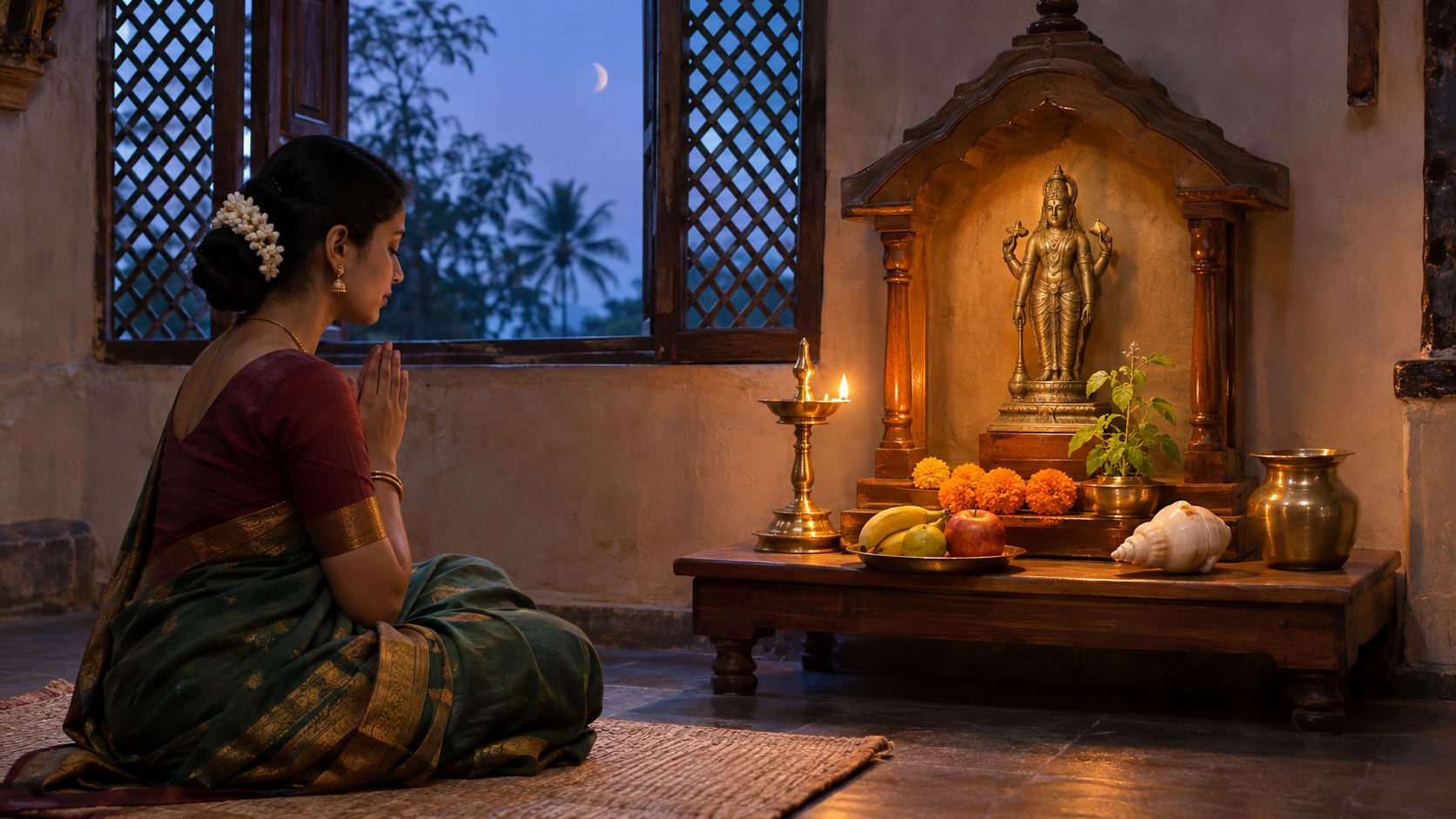
Rama Ekadashi is approaching, and your practical question may be simple: what should you actually do, and why does this particular vrata matter?
Begin with the intention rather than the menu. The fast is meant to make room for remembrance of Vishnu, disciplined conduct, prayer, dana and honest self-examination. Food restraint supports that purpose; it is not a competition over who can endure the most hunger.
Key takeaways
- Rama Ekadashi is governed by a lunar tithi, not a fixed civil date. Confirm both Ekadashi and the Dwadashi parana period in a reliable local panchanga.
- The name is also written Ramaa and is traditionally associated with Lakshmi, while worship and remembrance of Vishnu remain central to the vrata.
- Fasting is a means of directing attention. Prayer, restraint of speech, seva and ethical conduct are not optional decorations around the food rules.
- Choose a form of fasting consistent with your health, capacity and sampradaya. Greater physical severity does not automatically mean greater devotion.
- Complete the observance with parana at the appropriate Dwadashi time rather than ending the fast whenever hunger becomes inconvenient.
What makes Rama Ekadashi spiritually significant
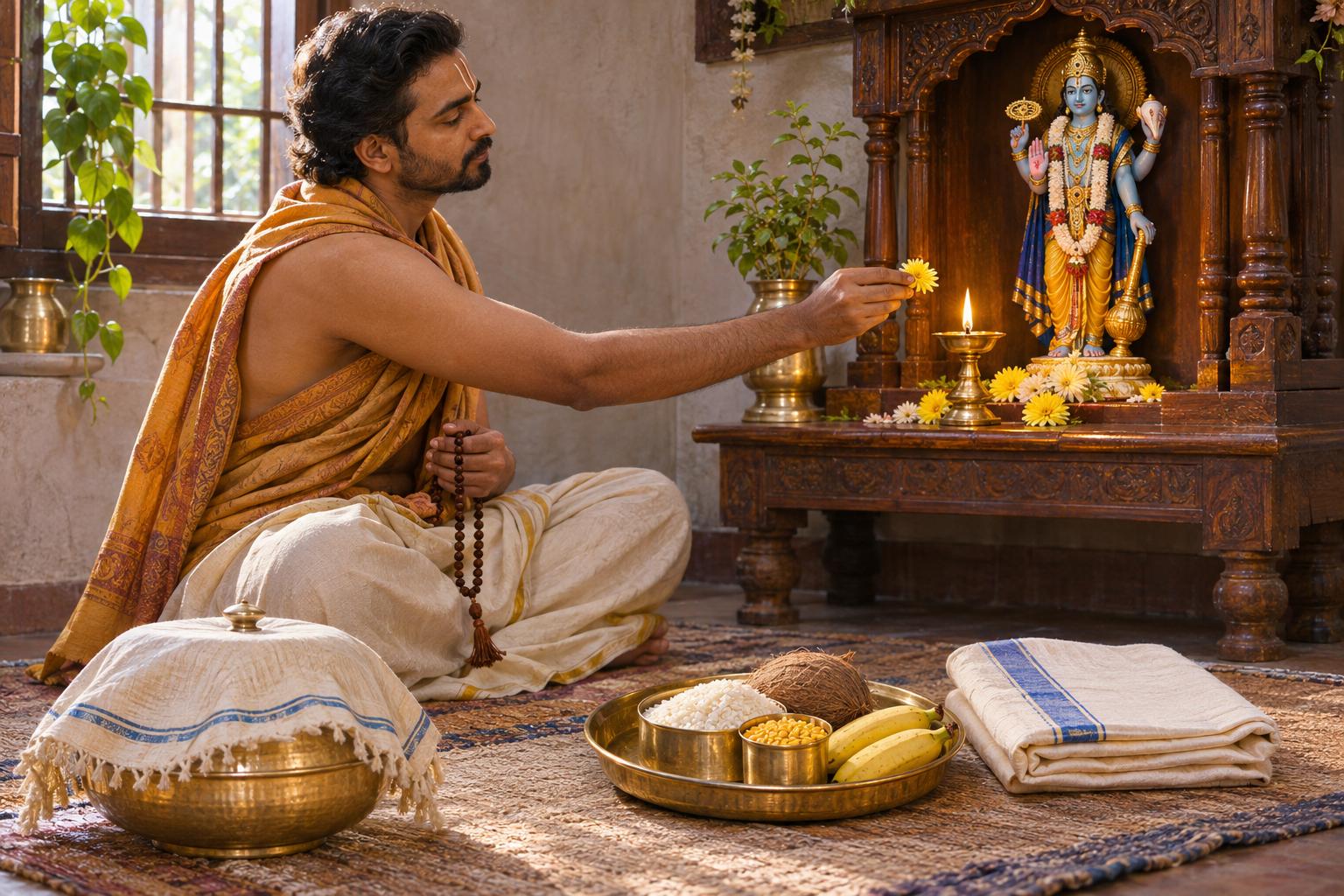
Rama Ekadashi is observed on Krishna Paksha Ekadashi in the Kartika period and usually appears shortly before Deepavali in calendars using the familiar North Indian month convention. Because a tithi is a lunar measure, the corresponding civil date and its start and end times can differ by location. A date copied from an overseas social-media graphic may therefore be wrong for you.
The name can cause a second misunderstanding. Ramaa is traditionally understood as a name of Goddess Lakshmi, the divine consort of Vishnu. Rama Ekadashi should not automatically be treated as a second Rama Navami. You may certainly chant the name of Shri Rama, or worship Narayana or Krishna according to your sampradaya, because the unifying center of Ekadashi is remembrance of Vishnu.
The spiritual mechanism is straightforward. Ordinary appetite repeatedly tells us that every desire needs an immediate answer. Ekadashi interrupts that habit. By limiting food and other forms of consumption, you get a direct view of restlessness, irritability, bargaining and distraction as they arise. The vrata becomes useful when you respond with nama-japa, steadier speech and service instead of simply waiting for the restriction to end.
Traditional descriptions praise Rama Ekadashi as a means of purification, release from papa and reception of divine grace. These promises should not be reduced to celestial bookkeeping. Papa is not cancelled meaningfully if a person avoids grain for one day while preserving cruelty, deceit or arrogance. Use the vrata to identify one pattern that pulls you away from dharma and practise refusing it while the vow is active.
The traditional vrata-katha concerns Chandrabhaga, daughter of King Muchukunda, and her husband Shobhana. Chandrabhaga’s established Ekadashi discipline stands beside Shobhana’s single, physically difficult observance. After Shobhana’s death, he receives a magnificent realm that initially lacks permanence; Chandrabhaga’s steadfast spiritual merit ultimately helps give it stability.
The katha’s moral center is constancy. One dramatic effort is less secure than devotion cultivated repeatedly. It is a sacred narrative about the power of vrata, not an instruction to place your body in danger. If food or water restriction could harm you or conflict with prescribed care, do not imitate physical peril. Seek medical guidance where needed and ask a trusted teacher how to preserve the devotional intention safely.
Build the vrata around remembrance, not hunger
A coherent Rama Ekadashi begins before the fast and ends after it. Planning the whole sequence prevents the common pattern of preparing elaborate special foods while leaving no time for worship.
- Confirm the observance locally. Check the Ekadashi tithi and Dwadashi parana period in the panchanga followed by your temple, guru, family or sampradaya. If two calendars disagree, do not combine the beginning time from one with the ending time from another.
- Decide your discipline on Dashami. Choose the form of fasting before appetite begins negotiating with you. Obtain only the permitted ingredients you need, arrange demanding work sensibly and avoid overeating in anticipation of the fast.
- Make a clear sankalpa. State what you are undertaking and for whom the observance is offered. Include one inward restraint, such as refusing gossip, angry retaliation or unnecessary entertainment. A precise vow is easier to keep honestly than a vague promise to be spiritual.
- Begin Ekadashi with simple worship. Bathe and prepare the place of worship according to your custom. Offer a lamp, water, flowers or other customary items to Vishnu and Lakshmi if available. If you have not learned a formal puja, sincere nama-japa and a respectful prayer are better than an invented ritual.
- Follow your actual food rule. Many Hindu households exclude grains and pulses on Ekadashi, while the permitted ingredients and preparation rules vary. Use the list followed by your lineage or household rather than assuming that every food marketed as vegetarian is Ekadashi-suitable.
- Give the saved time to sadhana. Chant the names of Vishnu, read or hear the Rama Ekadashi katha, recite a familiar stotra, study the Bhagavad Gita or hear Vishnu-katha. Select a manageable practice in advance so the day does not disappear into indecision.
- Fast with your senses as well as your stomach. Keep speech truthful and non-harming. Step back from quarrels, gossip, intoxicants and compulsive entertainment. If the body is fasting while the mind consumes agitation without limit, the central training has been missed.
- Add dana or seva. Feed someone appropriately, support a temple or worthy cause, help a person without seeking recognition, or perform an unglamorous household duty with care. Restraint creates space; service gives that space a Dharmic direction.
- Complete parana on Dwadashi. Break the fast during the period given by your panchanga, after prayer and any customary offering. Eat simply and with gratitude. Turning parana into compensatory overeating weakens the self-command cultivated on Ekadashi.
Choose a form of fasting you can keep honestly
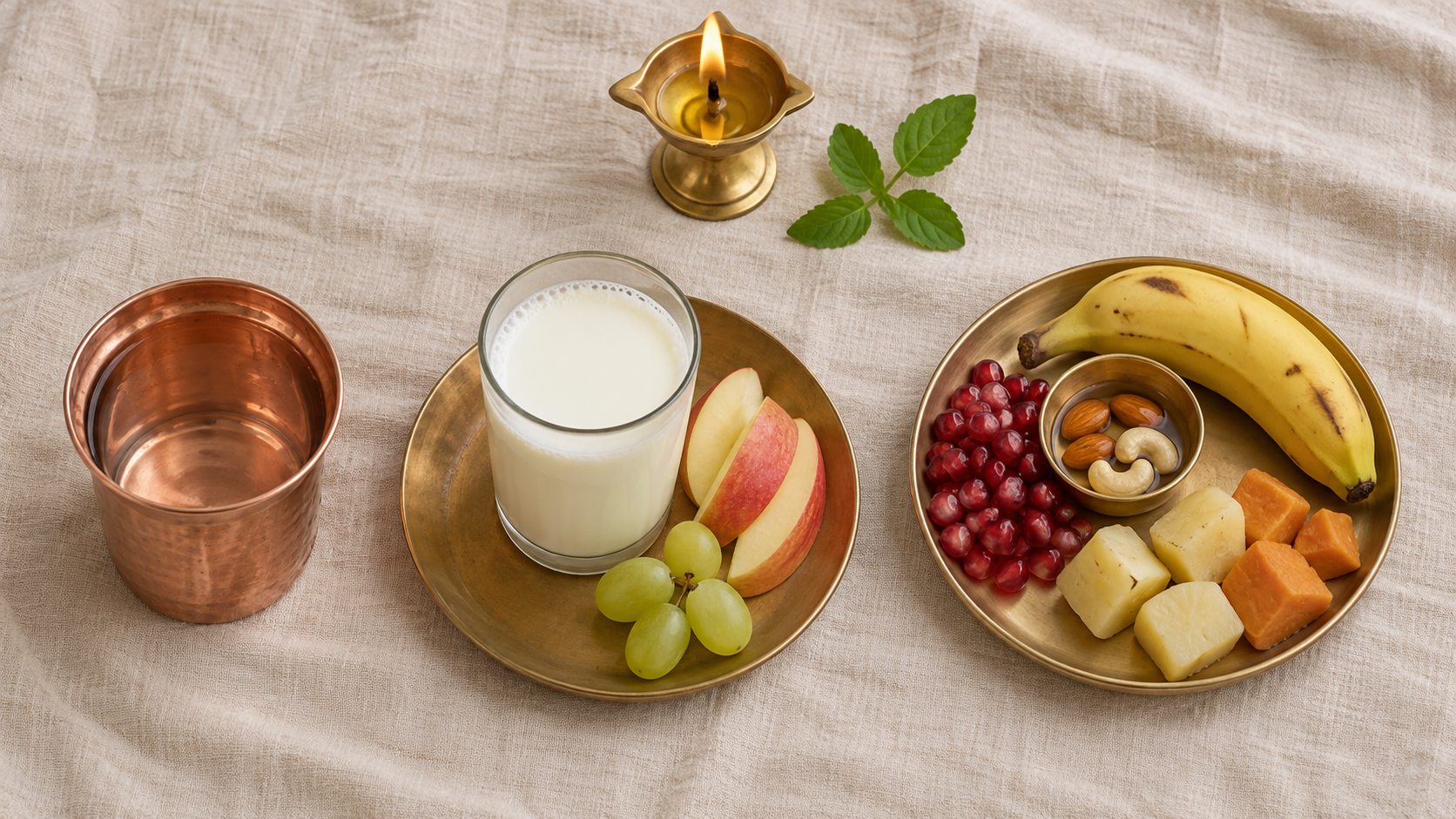
Ekadashi observance is not identical in every household. Some devotees undertake a complete fast, some take water, some follow phalahara, and others eat a limited non-grain meal permitted by their tradition. The correct choice is not automatically the strictest option you have heard about.
- Nirjala or a complete fast: undertake this only when it is already appropriate to your health, experience and religious guidance. Do not begin a waterless fast merely because it sounds spiritually superior.
- Water or phalahara: water, fruit, milk or other permitted items may be used in traditions that allow them. Confirm the household rules rather than constructing a universal menu from unrelated customs.
- A light Ekadashi meal: anukalpa or another permitted non-grain preparation can support observance when a more demanding fast is unsuitable. Simplicity matters; recreating a banquet from substitute ingredients defeats much of the discipline.
- A primarily devotional observance: when dietary restriction would be unsafe, preserve the day through prayer, nama-japa, scriptural hearing, dana, seva and restraint of harmful habits. This is not a claim that every form has identical ritual fruit. It is an honest alternative to risking harm or pretending to keep a vow that you cannot safely undertake.
A practical order of authority helps when instructions conflict. Begin with the discipline given by your guru or sampradaya, then the established custom of your household or temple, and then a reputable local panchanga for timing. Decide before Ekadashi which convention you are following. Switching rules halfway through the day to obtain the easiest interpretation turns discernment into convenience.
If you are new to the vrata, make the devotional schedule as concrete as the dietary one. Write down the text you will read, the prayer you will repeat, the service you will perform and the distraction you will set aside. Otherwise, food planning will occupy the foreground while Vishnu-smriti remains only an intention.
Complete the vrata and carry one restraint forward
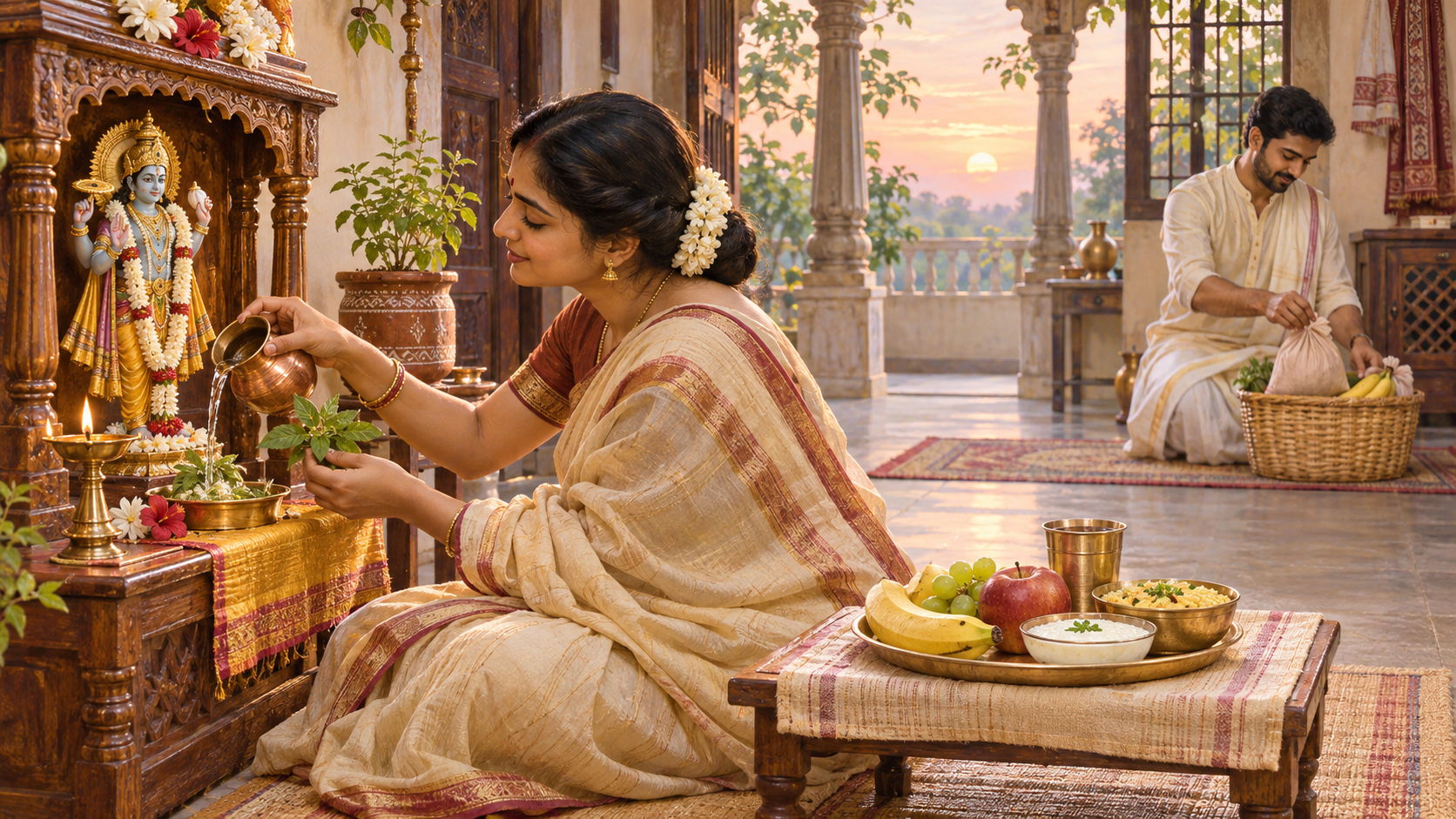
The value of Rama Ekadashi can be diluted by a few predictable mistakes. Notice them before the observance rather than regretting them after parana.
- Using a fixed date without checking the tithi: verify the observance and parana for your location.
- Measuring bhakti by deprivation: do not shame someone whose age, health, duty or tradition requires a different discipline.
- Fasting from grain while feeding every distraction: assign real time to prayer, hearing and silence.
- Treating the vrata as a transaction: a desired result may be included in your sankalpa, but it does not excuse conduct contrary to dharma.
- Displaying the fast: avoid turning private restraint into a public claim of superiority.
- Forgetting Dwadashi: parana is part of the observance, not an administrative detail after the important portion has ended.
After parana, keep one element of the vrata alive until the next Ekadashi. Continue a short daily period of nama-japa, refuse one recurring form of harmful speech, reduce waste at meals or make a modest act of dana regular. Choose only one, but make it observable enough that you will know whether you kept it.
Before Rama Ekadashi begins, do three things: confirm the local tithi and parana, choose your fasting discipline honestly, and select the prayer or sacred reading that will anchor the day. Then keep the vow without display, complete it at the proper time and let one restraint follow you back into ordinary life.
References

Leave a Reply
You must be logged in to post a comment.