
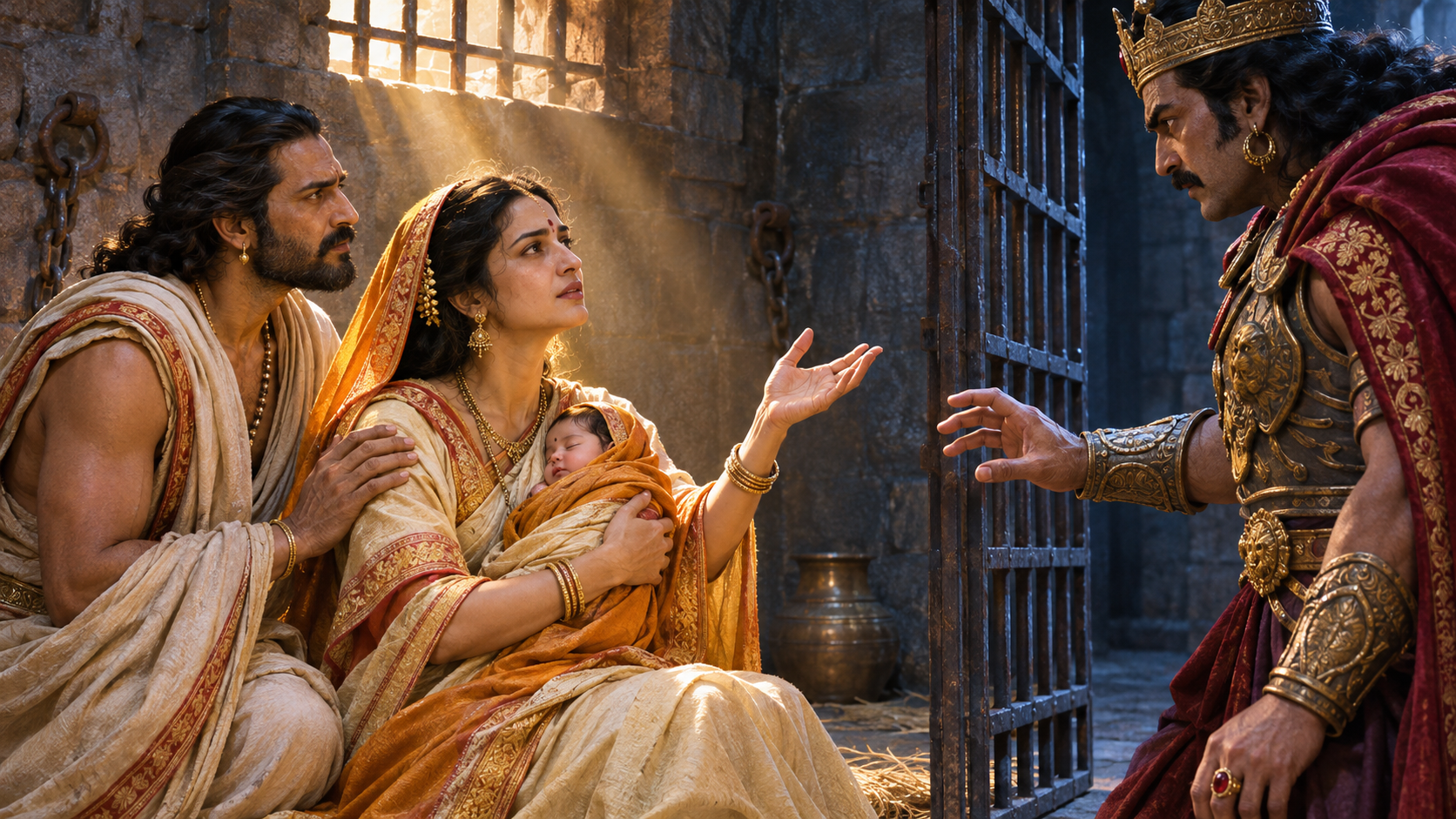
If you have wondered why Devaki pleads with the very brother who has terrorized her family, do not mistake her restraint for passivity. She is trying to protect a child while standing before someone who controls the immediate situation. Speech is the instrument still available to her, so she uses it with precision.
The scene offers more than a lesson about asking for mercy. It shows you how dharmic speech works under coercion: name the act that must stop, appeal to the relationship the wrongdoer has violated, offer a path back to right conduct, and refuse to carry responsibility for the choice that follows.
Devaki is trying to stop one immediate act of adharma
Devaki does not have the luxury of delivering a complete judgment on Kamsa’s character. A vulnerable daughter is before her, earlier children have already been killed, and the danger is immediate. Her first duty in that moment is therefore concrete: prevent this death.
That focus explains the apparent simplicity of her words. Devaki asks Kamsa to spare the child and give the daughter to her as a gift. She is not trying to win an abstract argument about fate, kingship, or justice. She asks for the one action that would preserve life now.
This is the first practical lesson. When harm is unfolding, an appeal can become weaker if it tries to settle every grievance at once. Devaki narrows the moral demand to something Kamsa can do immediately: do not kill this child; let her return to her mother.
Narrowing the request does not narrow the moral truth. The command to stop one act of violence carries an unmistakable judgment that the act is wrong. Devaki’s composure does not make her neutral, and her request for mercy does not make the threatened life negotiable.
The language of a gift gives Kamsa another role to choose
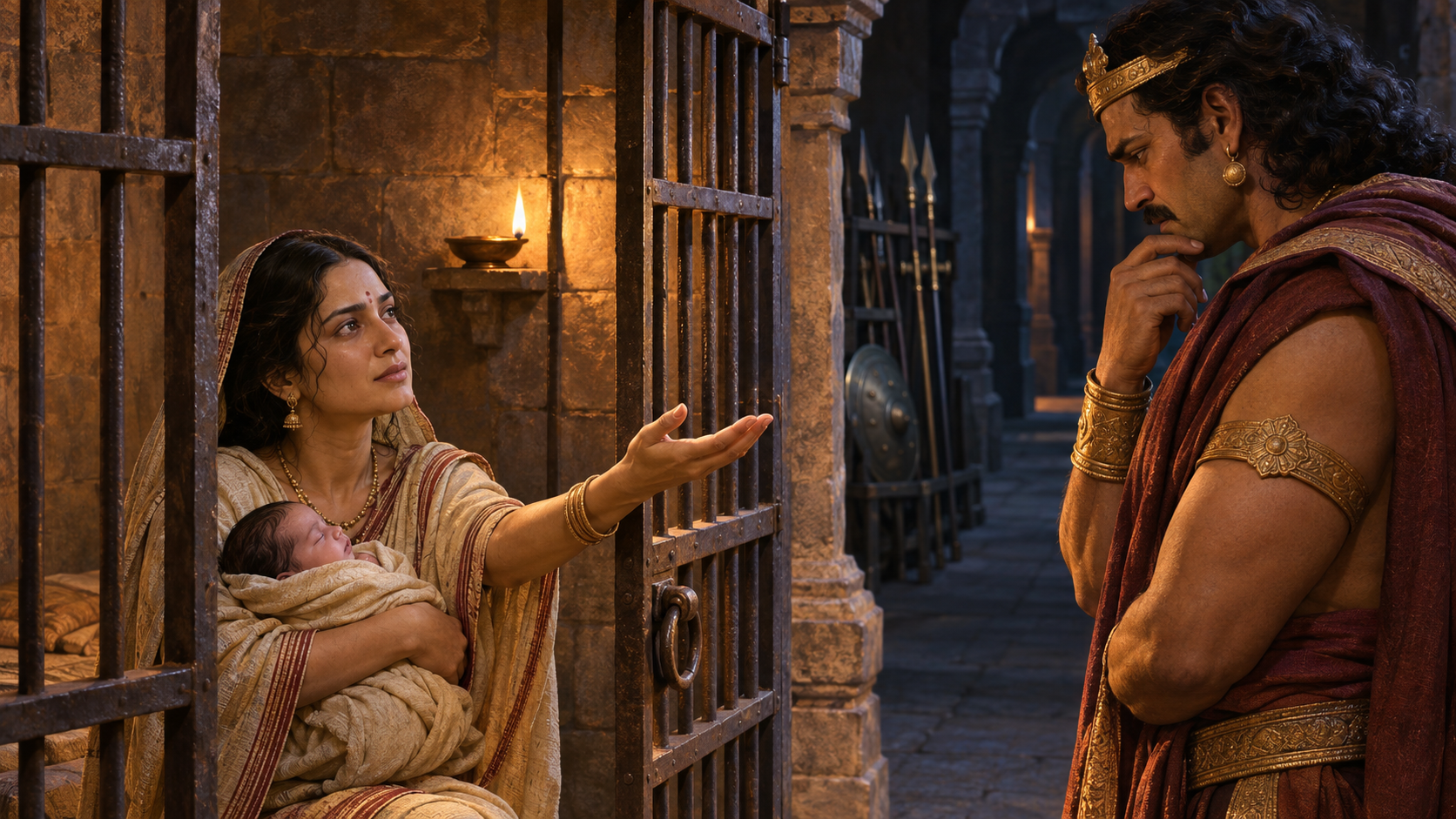
A modern reader may pause at the language of giving a daughter as a gift. Read carelessly, it can sound as though the child is an object or as though Kamsa possesses a legitimate right over her. Neither conclusion is necessary.
Devaki is addressing the power Kamsa is actually exercising, not declaring that power righteous. By asking for the child as a gift, she attempts to move him from the role of killer into the role of giver. The same hand poised to take life is offered an honourable alternative: relinquish the child, protect a family member, and let the act be remembered as generosity rather than bloodshed.
This is morally intelligent speech. Devaki does not flatter the violence itself. She identifies a remaining doorway through which Kamsa could step back toward dharma without first having to confess the full measure of his wrongdoing. In a crisis, such a doorway can matter because a person ruled by fear or pride may resist direct humiliation even when still capable of stopping.
The distinction is important in your own reading of dharmic narratives. A righteous person may speak tactically without speaking falsely. Addressing someone’s better role is not an endorsement of the worse role that person presently occupies. It is an invitation to act according to the relationship and duty already being betrayed.
Mercy does not erase judgment, trust, or accountability
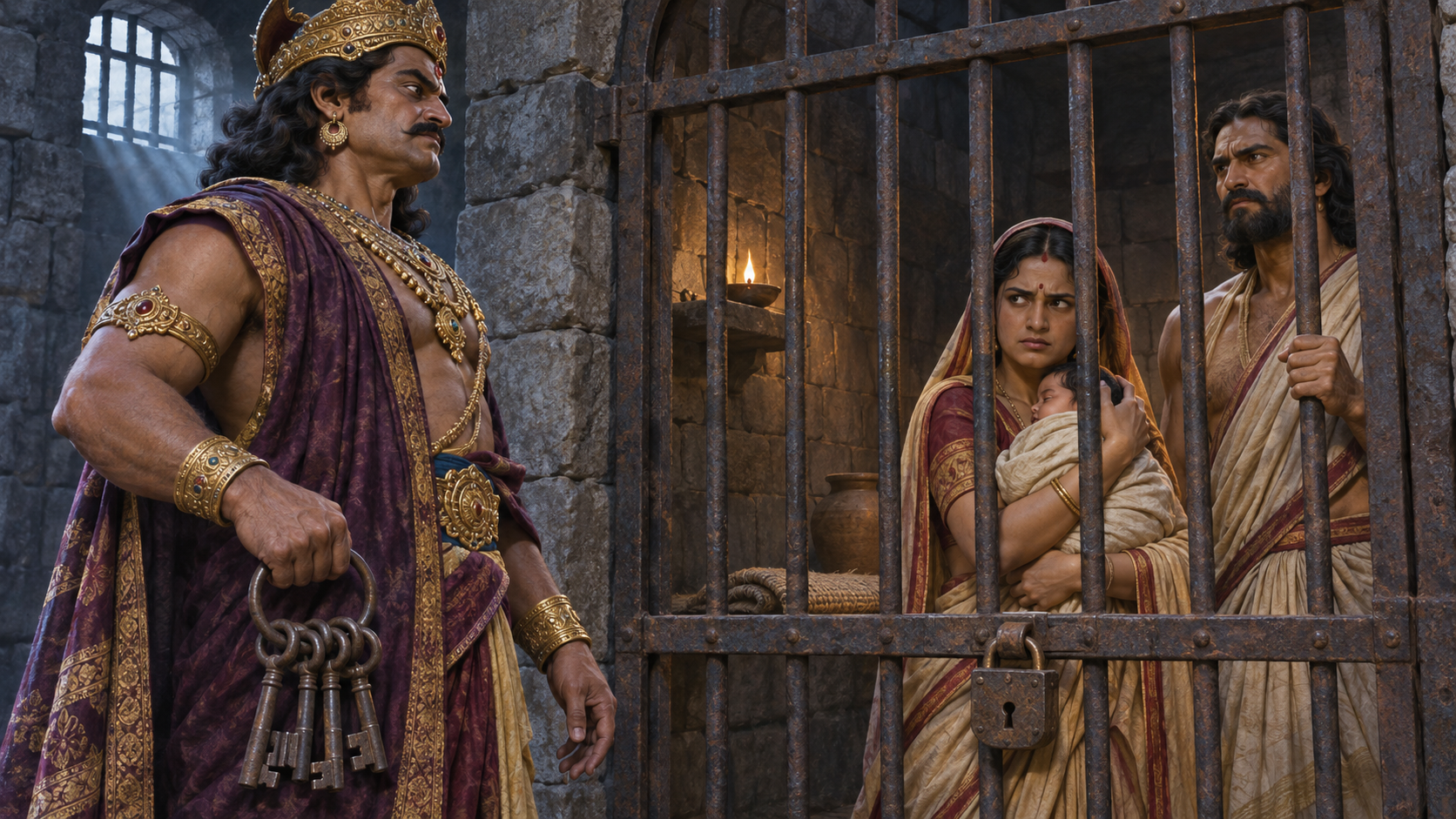
Devaki’s appeal is sometimes easy to flatten into a general instruction to forgive. That misses the structure of the scene. She does not declare Kamsa trustworthy. She does not pretend the earlier violence is harmless. She asks him to refrain from committing another wrong.
Forgiveness, reconciliation, trust, and immediate restraint are different moral questions. You can ask an aggressor to stop without trusting that person. You can desire a person’s return to dharma without restoring access to those who remain vulnerable. You can speak without hatred while still naming a firm boundary.
The appeal also does not become foolish merely because it fails to control Kamsa’s next choice. Devaki is responsible for using the agency available to her in defence of life. Kamsa remains responsible for what he does with that opportunity. Dharma does not require her to possess power over his will before her action can be meaningful.
This protects the scene from a common but damaging misreading: that the person pleading must have used the wrong words if the aggressor refuses. The wrongdoer’s refusal belongs to the wrongdoer. Devaki’s speech reveals the moral boundary clearly; it does not transfer Kamsa’s accountability onto her.
Four questions keep the scene from becoming a shallow moral

When you study Devaki’s appeal, use four questions in order. They separate what the narrative shows from the assumptions a reader may bring to it.
- Who controls the immediate situation? Kamsa holds physical power, while Devaki’s available agency lies chiefly in speech. Judge her words in light of that asymmetry, not as though this were a debate between equals.
- What exact action is being requested? Devaki is not asking Kamsa to approve a doctrine or repair every past wrong before the danger passes. She asks him to spare the daughter and release her. Keeping the request visible prevents vague talk about mercy from obscuring the threatened life.
- What rightful relationship does the appeal invoke? Devaki speaks within a family bond that Kamsa has violated. Her appeal effectively asks him to behave as a brother and relative rather than as an executioner. Kinship becomes a moral claim upon power, not a sentimental decoration.
- Who owns the outcome? Devaki owns the integrity and clarity of her appeal. Kamsa owns his response. This distinction lets you recognise her courage without pretending that gentle speech automatically transforms a person committed to adharma.
Only after answering those questions should you draw an inward allegory about fear, ego, or the struggle between divine purpose and possessive control. The spiritual reading becomes stronger when it does not erase the literal human reality: a mother is defending a child from a powerful relative.
Key takeaways
- Devaki’s restraint is purposeful action under severe constraint, not acceptance of Kamsa’s conduct.
- Her request is concrete: stop the immediate harm and return the vulnerable child to safety.
- Calling the daughter’s release a gift offers Kamsa a dignified way to change roles, from destroyer to giver.
- Mercy toward a wrongdoer does not require restored trust, abandoned boundaries, or denial of past harm.
- The moral worth of Devaki’s appeal does not depend on her ability to control Kamsa’s response.
Before your next difficult conversation, write down four sentences: the action that must stop, the person who needs protection, the rightful duty you can invoke, and the immediate step the other person can take. Then decide your safety boundary before you speak. Devaki’s example supports courageous speech; it does not require you to remain within reach of someone determined to cause harm.
Approach the episode this way and Devaki is no longer reduced to a helpless mother waiting for mercy. You see her doing the demanding work dharma places before her: defending life, speaking truth in language the hearer might still accept, and leaving the wrongdoer’s choice where it belongs.
References

Leave a Reply
You must be logged in to post a comment.