

If you help lead a temple, Hindu organisation, ashram, volunteer network or local committee, your question is not simply whether your institution will be present at Simhastha Kumbh. The harder question is whether it will be ready to serve without confusion, duplication or claims that outrun its authority.
Institutional preparation begins with blessings and consultation, but it cannot end there. You need a clear mandate, an accountable chain of responsibility and a disciplined way to separate confirmed arrangements from proposals still under discussion.
Key takeaways
- A meeting with recognised religious leadership can establish alignment and open a channel for coordination; it does not by itself create an operational mandate.
- Record every commitment with an owner, approval path, dependency, action trigger and escalation route.
- Plan around the pilgrim’s journey rather than your institution’s internal departments.
- Label information as confirmed, awaiting confirmation or an internal proposal before sharing it beyond the planning team.
- Deploy volunteers only after their duty, reporting contact, limits of authority and handoff procedure are clear.
Understand what the first institutional meeting actually establishes
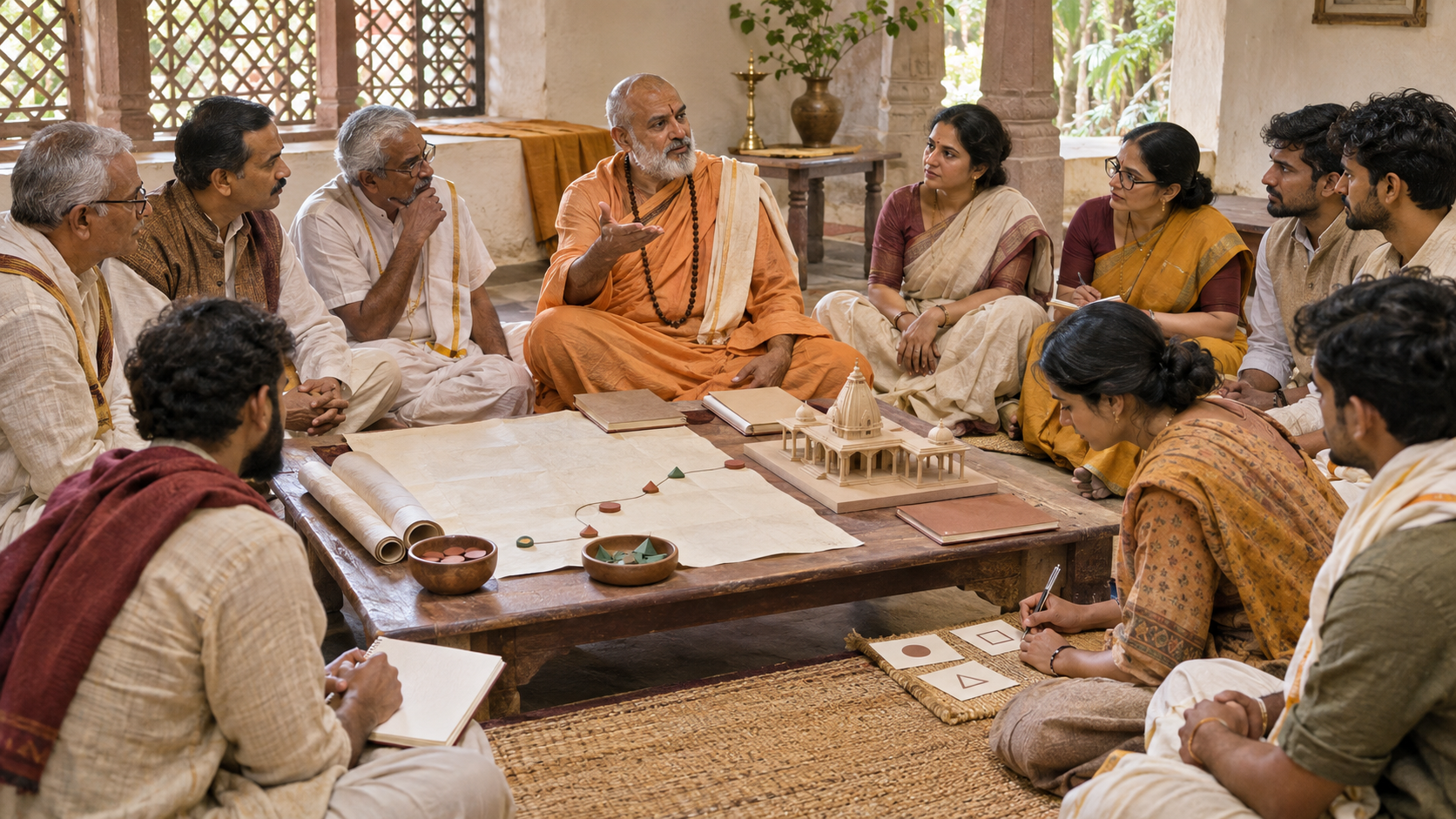
HJS organiser Sunil Ghanwat met Akhil Bharatiya Akhada Parishad president Shrimahant Ravindra Puri in Trimbakeshwar to seek his blessings and discuss preparations for Simhastha Kumbh as HJS approaches its 25th year. This is a meaningful institutional step: consultation is taking place before public activity, and the relationship between religious guidance and organisational participation is being treated seriously.
But a coordinator must read such a development precisely. Seeking blessings expresses respect, alignment and readiness to listen. Discussing preparations establishes contact. Neither action, standing alone, tells you that a particular responsibility has been assigned, that a field plan has been approved or that volunteers have been authorised to speak or act on behalf of another institution.
Keep three questions separate in every internal discussion:
- What has received religious guidance or endorsement? Record the principle, concern or direction accurately.
- What has been operationally agreed? Identify the task, scope, responsible institution and approving authority.
- What remains a proposal? Keep it inside the planning process until the relevant authority confirms it.
This distinction protects both maryada and execution. It prevents a respectful meeting from being inflated into a claim of formal authority, while ensuring that the guidance received is not reduced to a ceremonial photograph or greeting.
Build one chain from religious guidance to field action
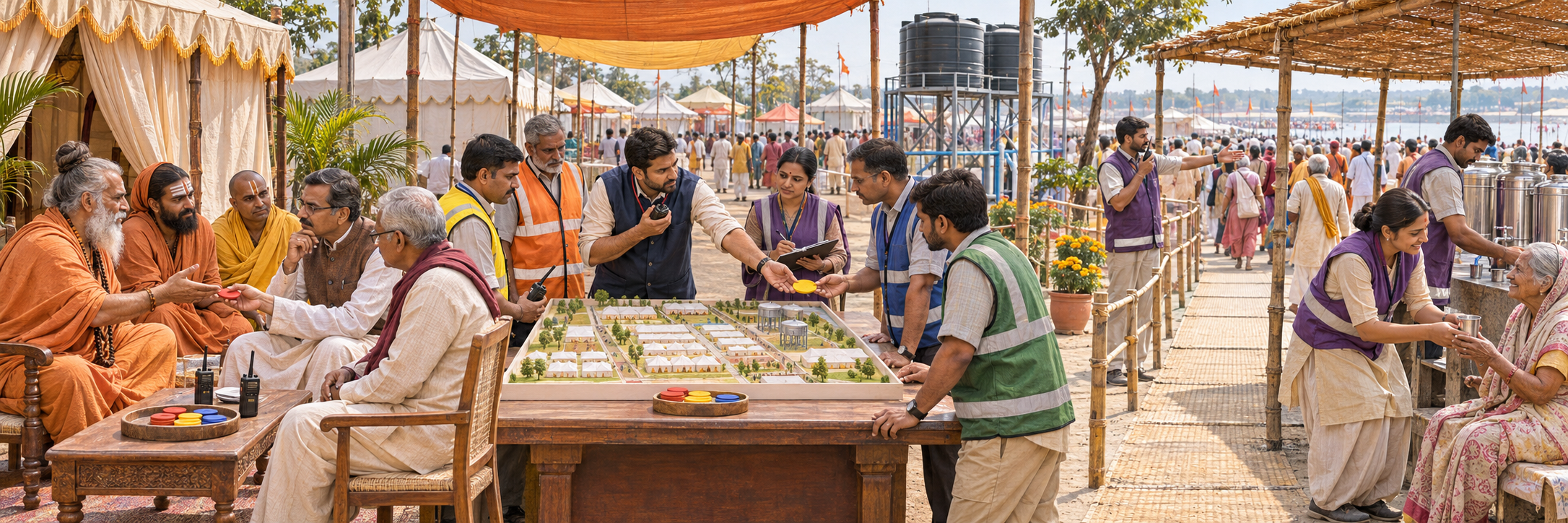
A large sacred gathering creates many interfaces: religious institutions, participating organisations, volunteers, pilgrims and the authorities responsible for public systems. Confusion appears when each group assumes that another group owns the handoff. Your coordination map should therefore name functions, not merely prominent people.
- Religious liaison: carries questions requiring religious guidance and records the response without embellishment.
- Institutional coordinator: maintains the agreed scope of participation and tracks commitments between organisations.
- Operations lead: converts approved commitments into tasks, locations, dependencies and required resources.
- Volunteer lead: assigns duties, gives briefings and confirms where each volunteer reports.
- Public-information lead: releases only verified instructions and withdraws material that is no longer current.
- Escalation liaison: directs health, crowd, lost-person or other safety matters to the officially designated channel instead of allowing volunteers to improvise.
A smaller organisation may combine several functions under the same person. That is workable. Leaving a function unnamed is not. Each function also needs a backup, because a plan that depends entirely on one person’s availability is not an institutional plan.
Maintain a decision register after every consultation. For each item, record the decision or request, its status, the person authorised to approve it, the person responsible for action, the unresolved dependency and the next escalation point. Circulate corrections while the discussion is still fresh. Otherwise, several sincere participants can leave the same meeting with incompatible understandings.
Plan around the pilgrim’s journey, not your committee chart
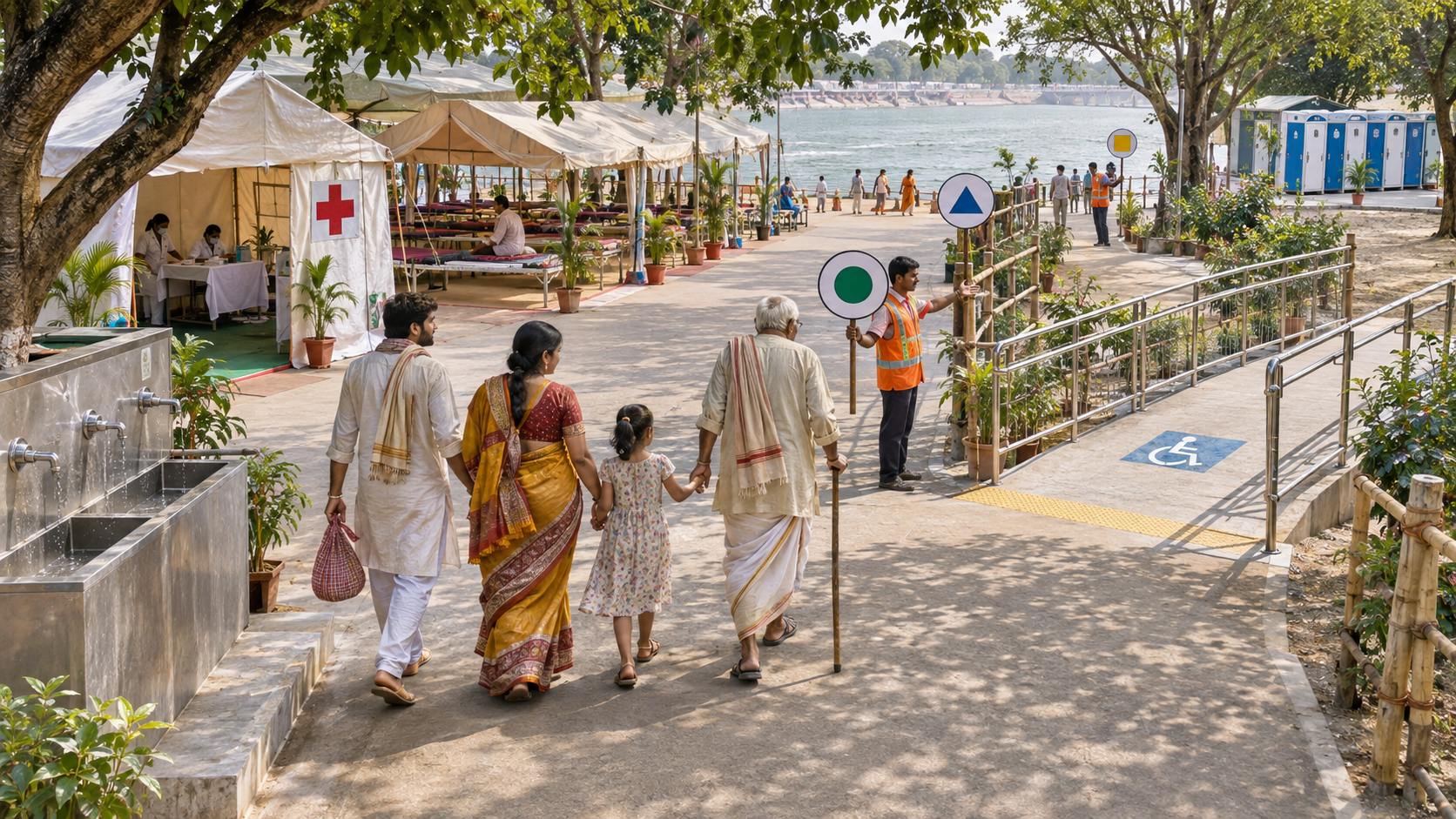
Pilgrims do not experience an organisation through its departments. They encounter a sequence of needs. Test your preparation against that sequence and ask where your institution has a defined role, where it merely provides information and where it must hand the matter to someone else.
- Before travel: What information can your organisation verify? Who checks it before publication? Keep unconfirmed dates, routes, facilities, contact points and access arrangements out of public messages.
- On arrival: Where can a pilgrim obtain current instructions? Volunteers should know which questions they may answer and where to send questions outside their remit.
- During religious participation: What form of seva has actually been approved? Define where the duty begins, where it ends and whose directions prevail at the site.
- When something goes wrong: What is the handoff for a lost person, health concern, crowd problem or safety issue? A volunteer should route the matter to the designated authority, not offer an improvised solution or an unofficial assurance.
- At departure or closure: Who receives unresolved matters, records failures and preserves lessons for the next phase of preparation?
This journey test exposes gaps that a committee-by-committee review often misses. A communications team may have prepared an announcement, for example, while no one has been made responsible for checking whether the underlying instruction is still valid. A volunteer team may be eager to serve while lacking a reporting contact or a clear boundary of authority.
Use a simple status vocabulary in every briefing: confirmed, awaiting confirmation and internal proposal. Only the first category belongs in instructions to pilgrims or volunteers. If an arrangement changes, update the people who received the earlier version; silently replacing a message does not correct the decisions already made from it.
Make every commitment testable before calling it ready

A commitment is operationally ready only when a person who was absent from the original meeting can carry it out without guessing. Before marking any task complete, check that the record answers these questions:
- What result is expected?
- Who authorised the activity?
- What is included, and what is explicitly outside the scope?
- Who owns the task, and who is the backup?
- What event or confirmed instruction triggers action?
- Which dependency could prevent completion?
- What evidence will show that the task is complete?
- Where does the owner escalate a conflict, delay or safety concern?
- Who must be told if the plan changes?
The most revealing readiness test is a handoff drill. Give an approved task to a volunteer who did not attend the planning discussion. If that person must rely on private messages, personal familiarity or assumptions about who is in charge, the task is not ready. Improve the written instruction and repeat the handoff.
Religious consultation and operational discipline strengthen each other. Blessings keep seva anchored in Dharma, humility and proper relationship; clear responsibility prevents that intention from dissolving into disorder. Before your next institutional consultation, prepare a short mandate note, a role map and a decision register. Bring unresolved questions for confirmation, then translate each confirmed decision into an owned and reviewable action. That is how institutional goodwill becomes dependable service at Simhastha Kumbh.
References

Leave a Reply
You must be logged in to post a comment.