

You have probably seen the Avengers-related Diwali clip presented in one of two ways: as a welcome sign of Hindu culture going global, or as evidence that a political project called “global Hindutva” is spreading. Before you repeat either verdict, ask a simpler question: what, exactly, does the clip show?
The answer leaves room for two truths. A major entertainment franchise treating Diwali and its Indian audience as important is culturally meaningful. A short promotional greeting, however, does not by itself establish an international political movement.
The clip is a film promotion built around a real festival
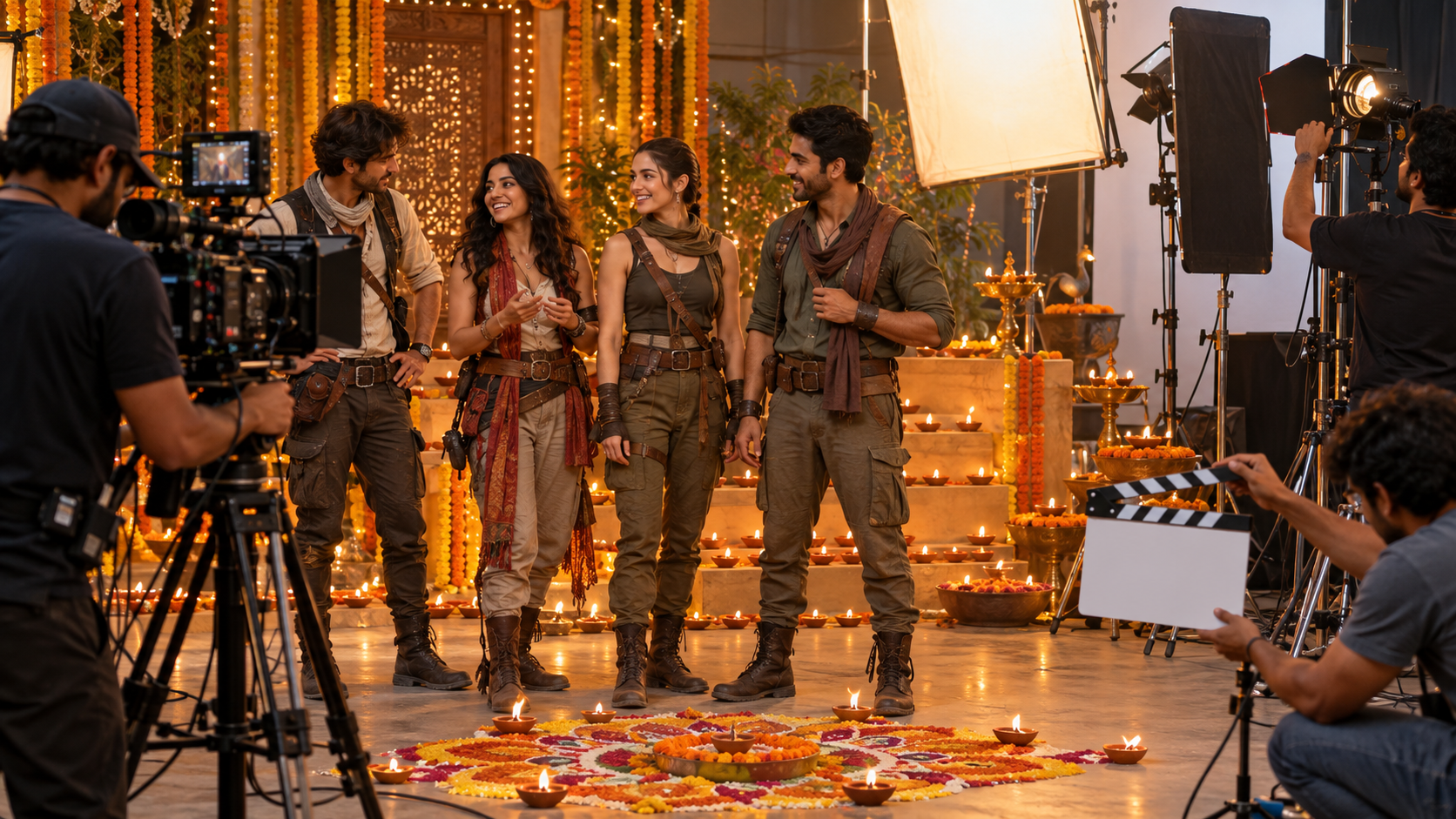
The greeting features Robert Downey Jr. and Chris Evans in a Marvel India promotion for Avengers: Doomsday. In the 40-second video, Downey opens with “Namaste India.” Evans describes Diwali as the closing of one chapter and the beginning of another. Downey then turns the familiar movement from darkness to light into a joke about the darker direction of the coming film.
That distinction matters. The festival supplies the cultural language, while the film supplies the punchline. Downey and Evans offer Diwali wishes, but they are also introducing audiences to the mood of Doomsday. The joke is a promotional device, not a new interpretation of Diwali.
The commercial purpose is explicit. The greeting accompanies the announcement that the film is scheduled to open in India on December 17, one day before its United States release, in English, Hindi, Tamil and Telugu. This is not a stray festive message from two actors. It is a localized campaign with a date, a market and a multilingual release plan.
Commercial calculation does not automatically cancel cultural respect. Large studios speak to audiences through occasions those audiences value. The useful question is not whether marketing is present; it plainly is. Ask instead whether the festival has been treated recognizably, whether the people being addressed are more than decorative scenery, and whether the claims made about the greeting remain proportional to what was actually said.
Cultural recognition is not political endorsement

Before using the phrase “global Hindutva,” decide what you mean by it. You might mean the international visibility of Hindu festivals. You might mean greater confidence among Hindus in presenting their civilization publicly. Or you might mean an organized political ideology operating through identifiable institutions, relationships and objectives. These ideas can overlap, but they are not interchangeable.
The Marvel India clip supports a narrow conclusion: Diwali has enough cultural and commercial importance for a global film campaign to address Indian viewers through it. The clip does not present a political program, endorse an organization, demand a policy change, teach a doctrine or call anyone to mobilize. A greeting cannot bear the evidentiary weight of those larger claims merely because it uses a Hindu festival.
This distinction protects Hindu public life from a familiar distortion. If every diya, namaste or Diwali message is treated as political extremism, ordinary Hindu visibility becomes suspect by definition. Celebration itself is then made to look like conspiracy. That is neither a serious test of political activity nor a fair standard for Hindus.
The reverse exaggeration is also unhelpful. A corporate Diwali greeting is not proof that the world has accepted a Hindu political program. Calling it such may work as satire, especially when answering alarmist rhetoric, but satire should not quietly turn into a factual conclusion. If you mean cultural reach, say cultural reach. If you mean political organization, show the organization.
None of this requires you to dismiss the moment. Cultural normalization has value. Indian viewers are being addressed as an audience whose calendar, languages and festival imagery belong in a global campaign. You can welcome that recognition without handing a film studio the authority to define Diwali for you.
Use five tests before calling anything global Hindutva

The next time a festive celebrity clip becomes an ideological argument, use this sequence before sharing it:
- Name the speaker precisely. In this case, the accurate description is Robert Downey Jr. and Chris Evans appearing in a Marvel India promotion. “The Avengers endorse Hindutva” would convert actors, fictional characters, a studio campaign and a political position into one unsupported claim.
- Classify the message by its actual content. A festival greeting, a theological statement, a civilizational argument and a political endorsement are different kinds of speech. Here, the content is a Diwali wish, a light-and-darkness joke and a film announcement.
- Follow the visible incentive. The earlier Indian release and four-language rollout explain why this audience is being addressed. Recognizing the marketing mechanism does not prove insincerity; it tells you what the campaign is designed to accomplish.
- Match the size of the conclusion to the evidence. One clip can demonstrate targeted cultural recognition. A claim about a coordinated global ideology would require materially different evidence, such as sustained ideological language, institutional relationships, organized activity or a stated political objective.
- Choose a response that adds clarity. If you share the video, call it a Diwali greeting from two Avengers: Doomsday cast members and mention the India release announcement. If you want to discuss Diwali’s meaning, add an explanation grounded in your own tradition rather than treating the studio’s promotional wording as the final word.
The same test works in both directions. If someone presents the mere visibility of Diwali as a political threat, ask which words or actions in the clip are political. If someone presents it as proof of a worldwide Hindutva victory, ask the same question. When the answer is only that famous actors said “Happy Diwali,” keep the conclusion at the level the evidence supports.
Also notice the difference between representation and power. Representation means a festival is seen, named or incorporated into public culture. Power implies some capacity to shape institutions, decisions or material outcomes. The first may contribute to the confidence needed for the second, but it is not the same thing. Confusing them can leave Hindus celebrating a marketing impression while ignoring the harder work of cultural education and institution-building.
Key takeaways for sharing the greeting responsibly
- The video is a Marvel India film promotion featuring Robert Downey Jr. and Chris Evans, not a political declaration by fictional superheroes.
- Its Diwali language shows that Hindu cultural occasions matter to a global entertainment campaign and its Indian market.
- The December 17 India release, one day before the United States, and the English, Hindi, Tamil and Telugu rollout make the commercial incentive clear.
- Cultural visibility, Hindu civilizational confidence and organized Hindutva politics are distinct claims requiring different evidence.
- You can welcome the greeting without exaggerating it, and you can reject alarmist interpretations without pretending the marketing motive is absent.
Your most useful next step is simple. Share the clip with an accurate description, then add one sentence about what Diwali means within the tradition you know. That turns a passing promotional moment into an opportunity for Hindus to speak in their own voice.
If the discussion shifts to “global Hindutva,” ask for the specific message, organization, relationship or action that makes the example political. When none is present, say so plainly. Disciplined claims serve Hindu interests better than either reflexive suspicion or inflated victory rhetoric.
References

Leave a Reply
You must be logged in to post a comment.