
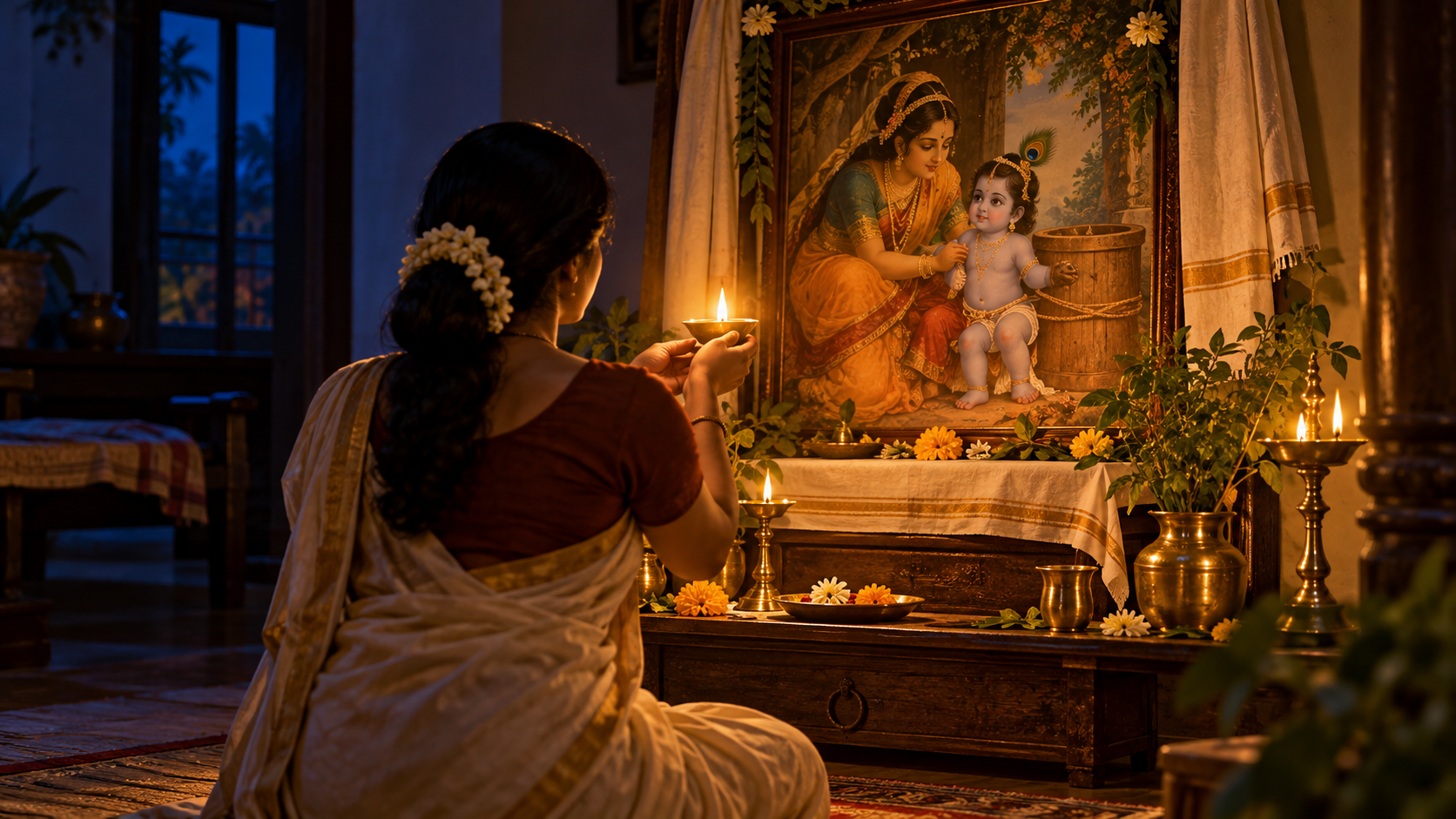
If Damodara month has begun and you are wondering whether a simple lamp offering is enough, do not begin by collecting every vrata you see online. Begin by deciding what you can offer Krishna attentively and repeat without turning devotion into a burden.
A sound observance has three parts: remembrance of Damodara-lila, a steady daily act of worship, and a change in how you live. The form can be modest. What matters is that the ritual and the conduct point in the same direction.
Let Damodara-lila define the month
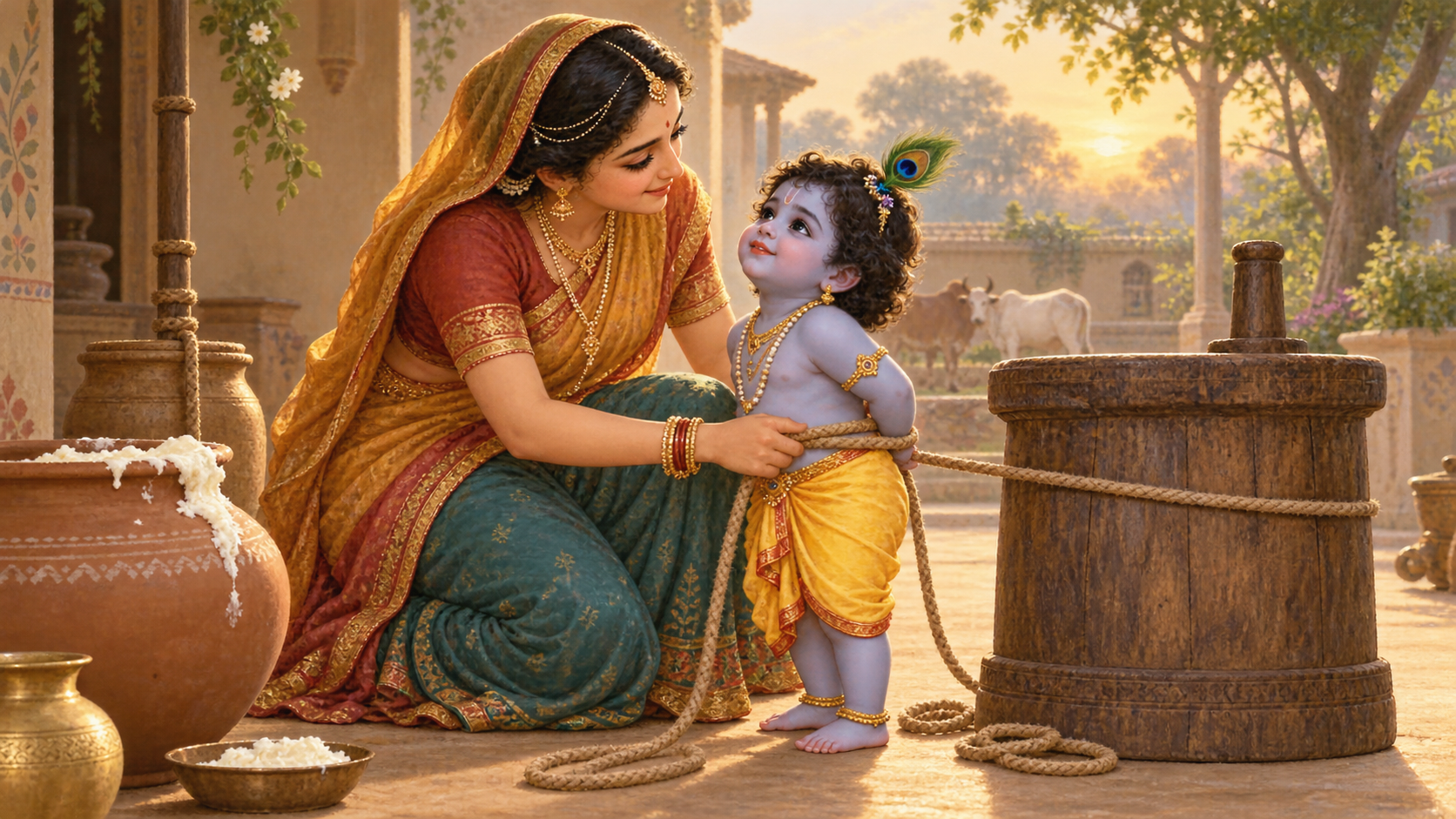
Damodara month is especially important in Vaishnava practice and is commonly associated with Kartika. Its devotional center is Damodara-lila: Mother Yashoda attempts to restrain the child Krishna and finally binds him around the waist.
A central Vaishnava reading of this lila rests on a striking reversal. Krishna is not conquered by status, force, or display. He permits himself to be bound by his devotee’s loving effort. The rope therefore gives the month its name and its practical question: what in your life is actually being bound to Krishna through love?
That question keeps the observance from becoming a seasonal performance. More lamps, longer singing, temple visits, and additional vows may all be meaningful. None of them should become a way to compete with another devotee or hide inattentive conduct behind visible ritual.
The calendar and detailed rules are not identical in every sampradaya, region, temple, or household. Check the calendar followed by your own temple or teacher before deciding when your vrata begins and ends. If your family has an established Kartika practice, learn its reasoning before replacing it with a routine assembled from unrelated online instructions.
Build a daily practice you can actually keep
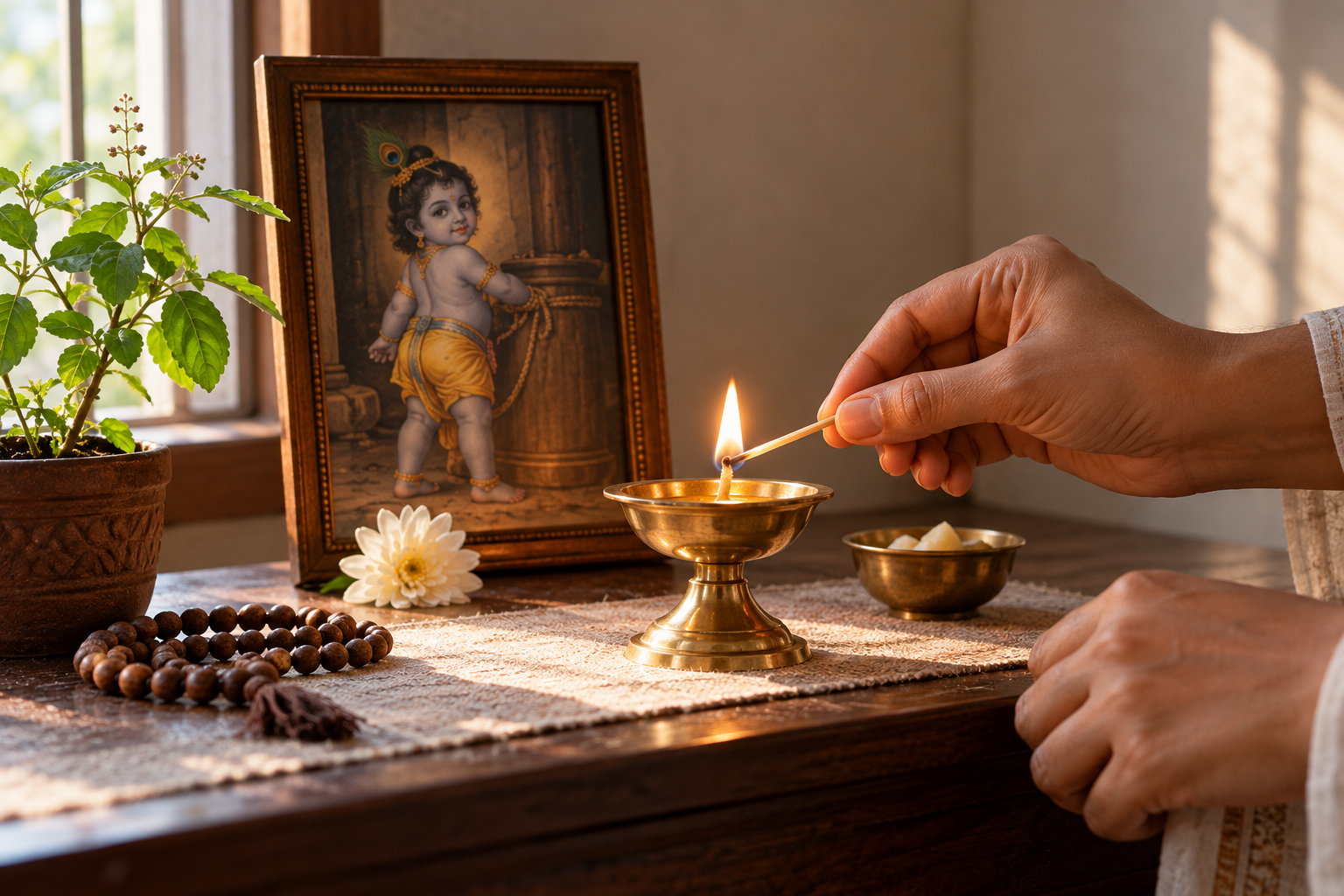
Write the vow before adding activities
A vague intention to do more devotion usually produces an elaborate beginning and an uneven month. Write a sentence that names the cue, the act, and the offering of conduct. For example: During Damodara month, after evening prayer, I will offer a lamp to Krishna, recite or hear a Damodara prayer, and guard my speech from contempt.
Choose a cue already present in your day: after bathing, at the household sandhya, before the evening meal, or when the family gathers at the altar. A fixed cue removes the daily negotiation over whether you are in the mood. If work makes the evening unreliable, choose another stable point rather than promising a time you regularly miss.
Use the same simple sequence each day
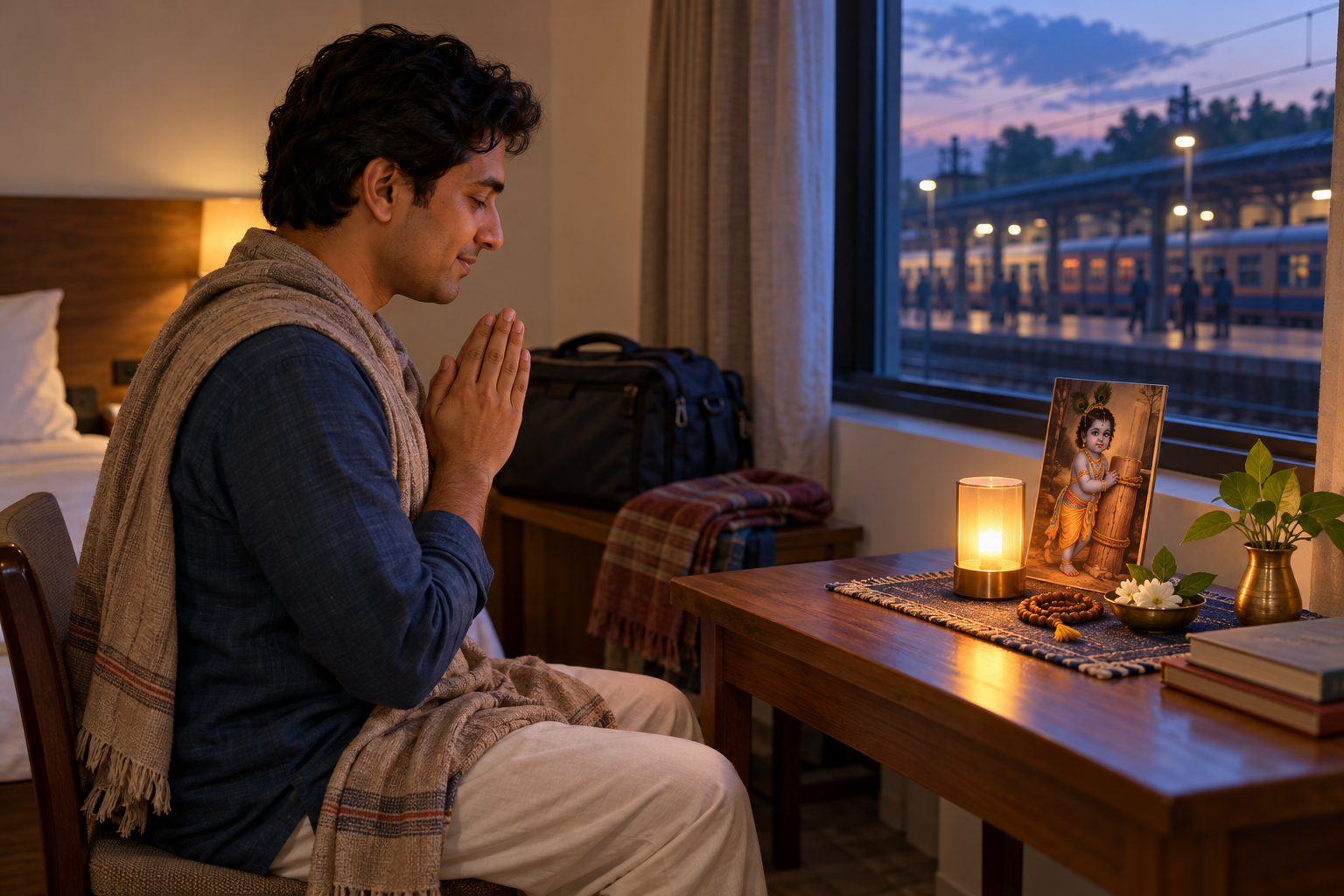
- Prepare the altar and the flame. Place the lamp on a stable, nonflammable surface. Keep it clear of curtains, loose clothing, and anything that can catch fire. Never leave it unattended, and let an adult manage the flame when children participate.
- Become mentally present. Pause before lighting the lamp. Remember Mother Yashoda’s effort and Krishna’s willing response to her love. This brief recollection prevents the offering from becoming a mechanical task.
- Offer the lamp. Follow the method taught in your household, temple, or sampradaya. If that tradition specifies the lamp, wick, substance, mantra, or manner of offering, use those instructions rather than treating one local custom as universal.
- Pray with understanding. You may sing or hear Sri Damodarastakam where that belongs to your tradition. If Sanskrit is difficult, learn it gradually and read a trusted meaning so that the words do not become sound without contemplation. A familiar Krishna prayer or nama-japa can support a modest home observance when you have not yet learned the hymn.
- Name the day’s inner offering. Ask where impatience, pride, anger, or carelessness appeared. Choose one corrective action that can be carried into the next day.
- End cleanly. Complete the worship, manage the flame safely, and mark the practice on a calendar if that helps you remain steady. Do not add new austerities merely because the routine felt easy on one evening.
A lamp is not a devotional attendance stamp. Its physical offering may be brief, but it should gather your attention. If you are rushing through it while speaking harshly to the family waiting behind you, the practice is showing you exactly where the month’s work lies.
If open flame is prohibited or unsafe where you live, do not ignore the restriction. Ask your temple or teacher what practice is appropriate in that circumstance. An electric light may be a useful visual aid, but do not privately declare it ritually identical to a prescribed lamp offering when your tradition makes a distinction.
Join the altar vow to a change in conduct
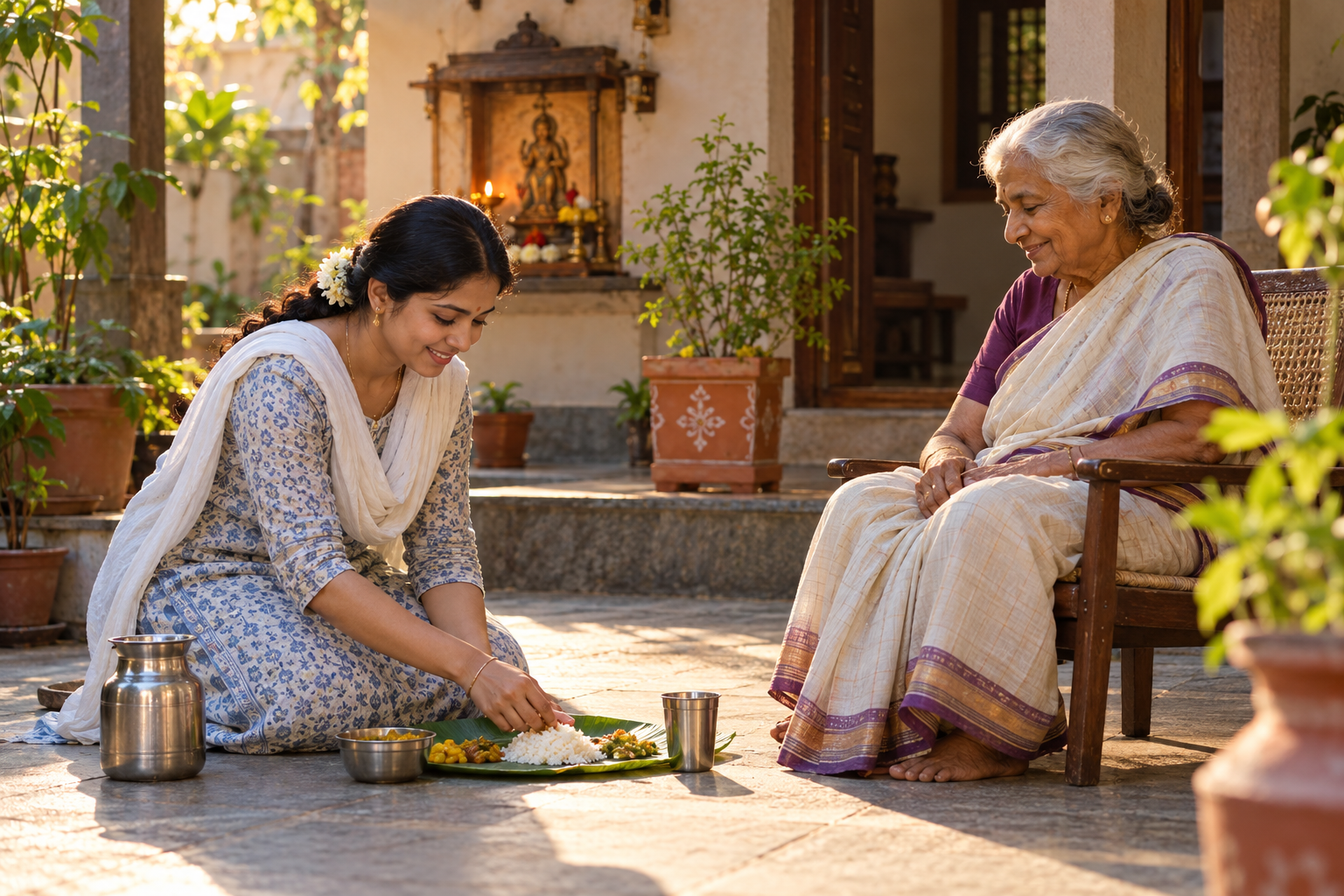
The strongest Damodara vow is not necessarily the longest. It is the one that follows you away from the altar. Select a specific habit that exposes self-centeredness and place it under devotional discipline for the month.
- For speech: stop using ridicule, contempt, or humiliation, especially at home. When anger rises, postpone the reply until you can speak without trying to injure.
- For relationships: make the apology you have delayed, fulfill a neglected duty, or listen without using the conversation to prove your superiority.
- For consumption: simplify what repeatedly distracts you from sadhana. Do not announce the restraint as a badge; use the recovered attention for prayer, study, or service.
- For seva: take responsibility for an unglamorous need at the temple or in the community. Cleaning, preparing worship materials, helping another devotee travel, or quietly supporting prasada service can turn sentiment into care.
- For generosity: set aside something you would otherwise spend on yourself and direct it toward a worthy Dharmic or humanitarian need you have examined responsibly.
Keep this part narrow enough to observe honestly. A promise to become completely free from anger is hard to assess and easy to rationalize. A promise not to send a hostile reply while angry gives you a recognizable moment of choice. When you fail, note the trigger, repair any harm, and return to the discipline.
This is also how Damodara-lila can shape authority inside a family. Yashoda’s parental love is active, persistent, and personal. It does not license adults to use the month’s austerities to shame children or control relatives. Invite participation, explain the meaning, and give children safe roles such as bringing a flower, joining the singing, or listening to the lila. Adults remain responsible for fire safety and for keeping the atmosphere devotional rather than coercive.
Handle fasting, travel, and missed days without confusion
Damodara observance is not one standardized package for every Hindu. Kartika-vrata, Ekadashi practice, food restrictions, temple customs, and the formal taking of sankalpa can differ. Do not copy a severe fast merely because someone presents it as the only serious form of bhakti.
If you are considering dietary austerity, first determine what your own tradition prescribes and what your health permits. Anyone who is pregnant, elderly, managing an illness, taking medication, or living with a history of disordered eating should not improvise a restrictive fast. Seek appropriate medical advice as well as guidance from a qualified religious teacher. Devotion does not require you to conceal a health risk.
Plan a reduced routine for disrupted days before disruption occurs. During travel, you might carry the prayer text, hear the hymn, perform nama-japa, and maintain the conduct vow while following all fire rules. If a physical lamp is essential to a formal vrata in your tradition, ask in advance how travel should be handled; do not invent an equivalence after the fact.
If you miss a day, do not let embarrassment turn one lapse into abandonment. Resume the regular practice at the next suitable opportunity. Do not create a penalty, double an austerity, or restart the entire month on your own authority. If you made a formal sankalpa, ask the teacher or priest connected with that vow whether any corrective observance is expected.
Households with different levels of observance can preserve unity by agreeing on a shared core and leaving additions to each person’s capacity. A common lamp offering and prayer can hold the family together while individual members undertake extra study, temple attendance, japa, or dietary discipline. The person doing more should not police the person doing less.
Key takeaways for your Damodara observance
- Confirm the calendar and formal rules with the sampradaya, temple, or teacher you actually follow.
- Choose a stable daily cue, a manageable act of worship, and a concrete conduct vow.
- Offer the lamp with attention to Damodara-lila, not as a task to complete or display.
- Learn Sri Damodarastakam with its meaning where it belongs to your tradition; do not let pronunciation anxiety prevent sincere, gradual learning.
- Prepare a safe reduced practice for travel and disruption, and resume calmly after an ordinary lapse.
- Seek religious guidance for formal vows and medical guidance before adopting fasting that may put your health at risk.
Write your one-sentence vow now and place it near the altar. If the month is already underway, begin with the next offering rather than waiting for a perfect setup. Let the lamp illuminate one real attachment, one neglected duty, or one harsh habit that you are ready to place in Krishna’s service.
References

Leave a Reply
You must be logged in to post a comment.