

If you are trying to decide whether Hindus are safe in Bangladesh, a simple yes or no will mislead you. The more useful question is whether an allegation against one Hindu can be contained by law, or whether it can still expose unrelated Hindu families to mob punishment.
The violence in Gangachara Upazila, Rangpur, offers a disturbing answer. Police had already taken a Hindu teenager into custody over a social-media allegation, yet Hindu homes were subsequently attacked. That sequence matters: the legal process did not prevent the accusation from becoming a pretext for collective violence.
The sequence shows where protection failed
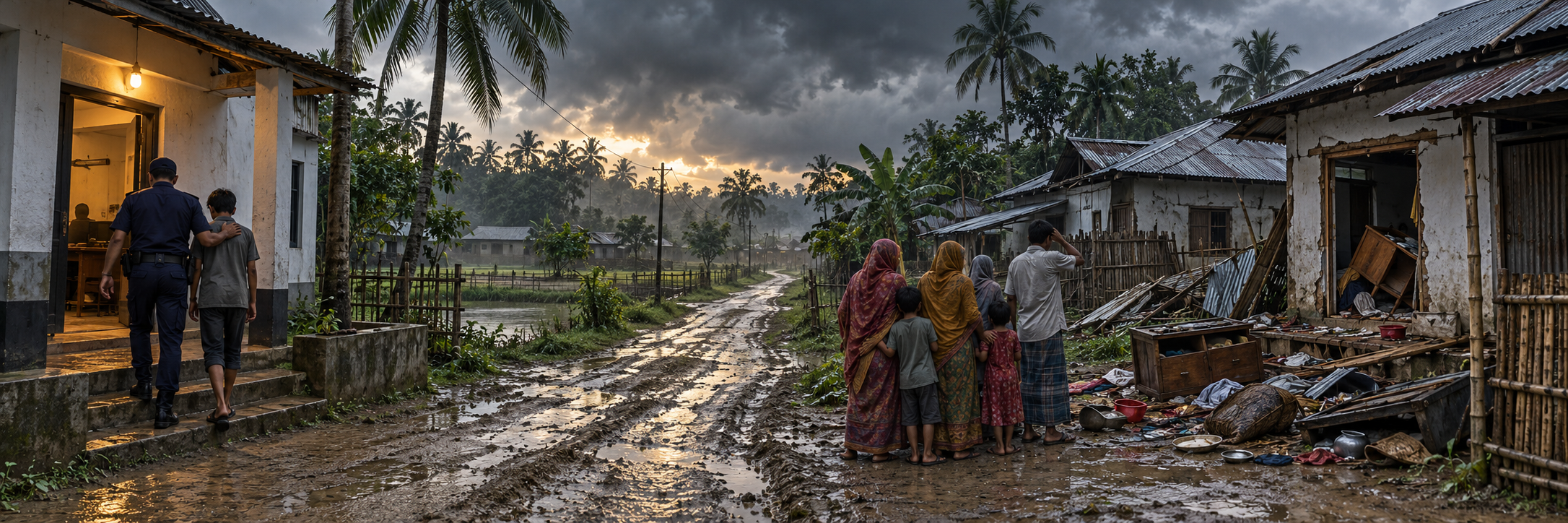
Start with the order of events, not only the images of damaged homes. It reveals when authorities had an opportunity to prevent the wider attack.
- A social-media post allegedly linked to a local Hindu teenager was accused of offending religious sentiments. The allegation must remain an allegation unless established through a lawful process.
- Police arrested the teenager, initiated proceedings under Bangladesh’s cyber laws, and sent him to jail through the courts. The state therefore had control of the accused person before the attacks on Hindu households.
- Inflammatory announcements and local mobilization reportedly continued despite the legal action.
- Multiple episodes of violence reportedly followed from Saturday night into Sunday. At least 22 Hindu families experienced attacks, vandalism, or looting.
- Police and military personnel were then deployed to restore order and deter further escalation.
This was not a situation in which an accused person had disappeared and a crowd was searching for him. Nor was it a spontaneous confrontation confined to the person named in the allegation. Once unrelated homes were targeted after the accused was in custody, the violence took the form of collective punishment.
That distinction should govern how you evaluate similar incidents. Ask when the authorities learned of the allegation, when public mobilization began, whether inciting announcements were stopped, and whether protection reached the threatened neighbourhood before the first attack. A security deployment after homes have been looted can contain further harm, but it cannot be counted as successful prevention.
Do not confuse condemnation with durable safety
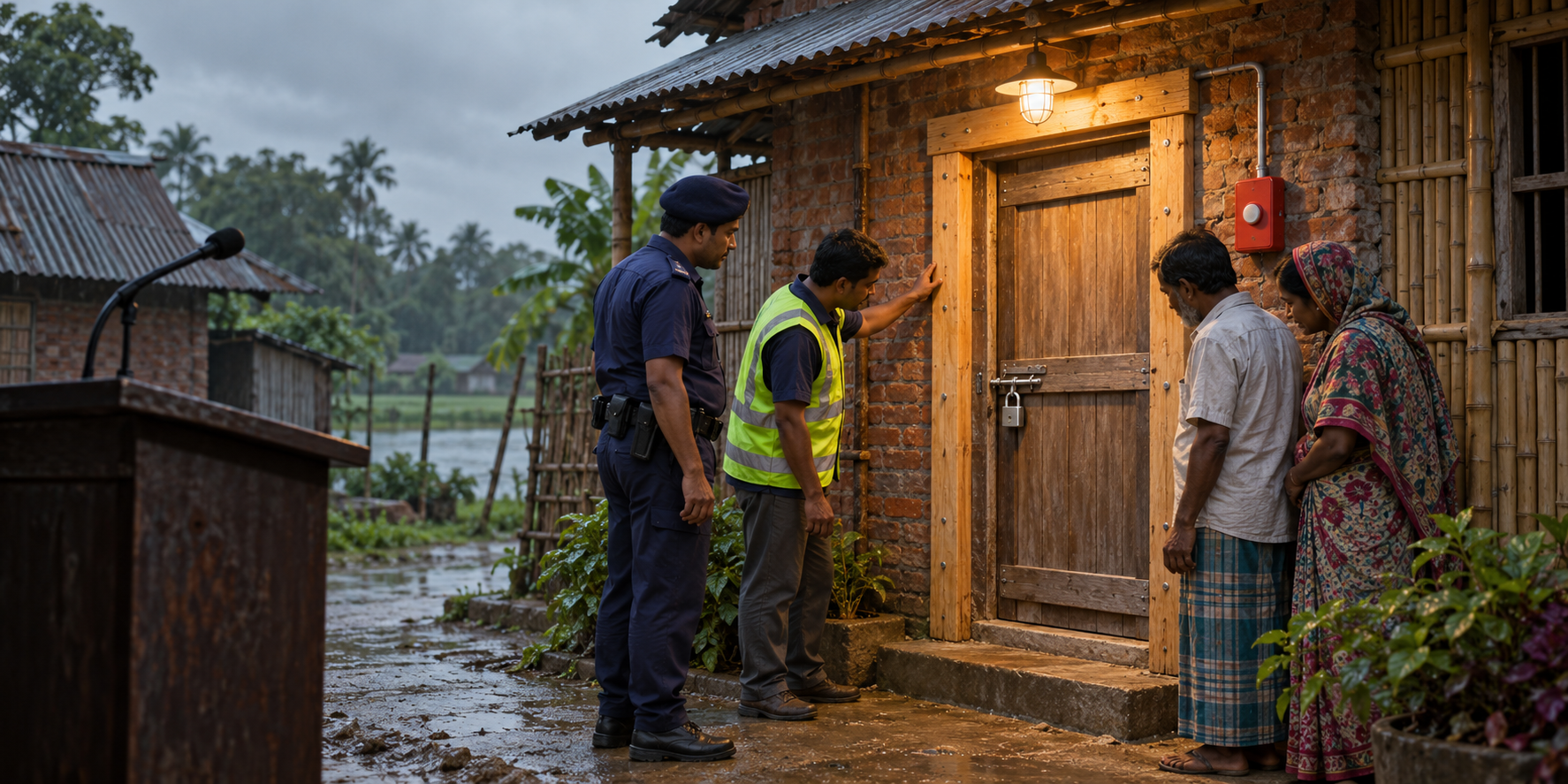
The Rangpur attack does not, by itself, provide a statistical measure of risk for every Hindu in every part of Bangladesh. It does establish something narrower and serious: in this locality, an accusation against one Hindu teenager was able to place numerous Hindu households in danger even after the state had begun legal proceedings.
It also exposed a mechanism that minority families have reason to fear. A disputed online act becomes a religious accusation; the accusation is amplified publicly; responsibility is transferred from an individual to a community; homes and property then become targets. The crucial transition is not from speech to prosecution. It is from an individual allegation to a claim that neighbours of the accused may be punished.
Bangladeshi civil society did not speak with one voice in favour of that logic. Ain o Salish Kendra condemned the violence and demanded prosecution, compensation, and stronger prevention. The Bangladesh Mahila Parishad raised concern about religious allegations being used to justify attacks on minorities. More than one hundred teachers from public universities signed a joint statement calling for an impartial investigation and transparent prosecution.
Those interventions matter because durable protection cannot depend only on criticism from Bharat or the diaspora. It requires people and institutions inside Bangladesh to reject communal punishment as a violation of equal citizenship. Yet condemnation is evidence of opposition to the violence, not evidence that the danger has ended. Statements become protective only when police, prosecutors, courts, administrators, and relief mechanisms act on them.
A five-part test for real accountability

When officials say that a situation is under control, you should ask what kind of control they mean. The immediate absence of a mob is only the first stage. A credible response must move through five distinct tests.
- Protection: Are the affected families physically safe, and can they remain in or return to their homes without intimidation? Security forces should protect victims and threatened neighbours, not merely guard a damaged area after families have fled.
- Identification: Have investigators distinguished the people who spread incitement, organized the mobilization, led the attacks, participated in violence, and handled stolen property? Focusing only on people caught at the scene can leave the organizing structure intact.
- Prosecution: Are cases moving through a transparent legal process based on evidence? An announcement that suspects will be pursued is not the same as charges, hearings, and judgments. The accused teenager’s separate case must not be used to dilute responsibility for attacks on other families.
- Repair: Have losses been recorded household by household, and are victims receiving rehabilitation and compensation? Restoring public order without addressing damaged homes, stolen belongings, displacement, and trauma leaves the cost of communal violence with its targets.
- Prevention: Have authorities examined why mobilization continued after the teenager was arrested? The preventive question is whether police and administrators will intervene when inflammatory announcements, threats, or gatherings begin, rather than waiting for property destruction.
This test keeps attention on outcomes. A visit by senior officials, a temporary deployment, or a promise of harmony may be welcome, but none answers whether the people who organized the violence will face consequences or whether the families can resume ordinary life. Impunity is not merely the absence of a conviction. It is the expectation that the public will stop asking before the process reaches one.
Key takeaways for judging future incidents
- Treat a viral religious accusation as a warning of possible mobilization, not as proof that the accused committed an offence.
- Keep the alleged conduct of an individual legally separate from the rights and safety of the person’s family, neighbours, and religious community.
- Reconstruct the timeline. If mobilization continued after an arrest, ask why preventive protection did not follow.
- Do not equate a post-attack deployment with accountability. Look for protection, identification of organizers, prosecution, repair, and prevention.
- Recognize principled Bangladeshi voices as essential allies, while continuing to verify whether their demands produce institutional action.
- Be cautious with national conclusions. One incident can reveal a dangerous mechanism without supplying a complete risk estimate for every district.
How families and supporters can act without raising the risk
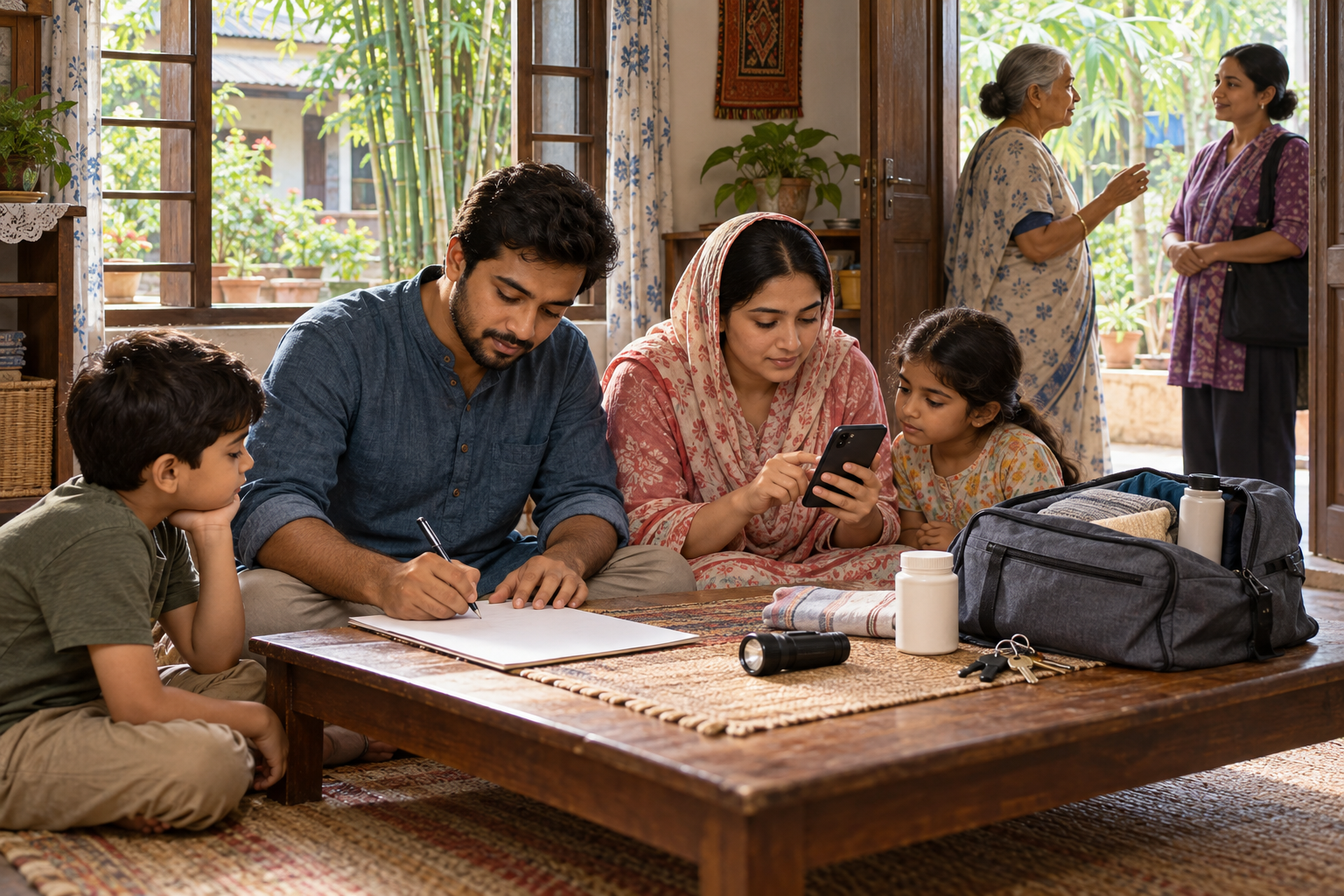
If violence appears imminent, immediate safety takes priority over recording evidence or posting online. Move away from the threatened location when a safe route is available, seek help from local emergency authorities and trusted local networks, and do not return simply to photograph damage. No image is worth exposing a family member to a crowd. A qualified local lawyer or rights organization should guide decisions involving complaints, evidence, or legal deadlines.
Once people are out of immediate danger, families and trusted supporters can reduce confusion by separating four kinds of work.
- Preserve verifiable information: Record times, locations, damage, missing property, threats, and potential witnesses while memories are fresh. Keep original files and a backup with a trusted person. Do this only when it is safe, and let local legal counsel advise on evidentiary requirements.
- Protect personal details: Do not publish a victim’s current location, telephone number, identity documents, or plans to return home without consent. Do not circulate the teenager’s alleged post merely to denounce it; repetition can intensify the same mobilization that endangered the community.
- Track needs by household: Separate urgent shelter, medical, food, document, schooling, and property-repair needs. A single total for an affected village can conceal which family has nowhere safe to sleep or has lost essential papers.
- Label uncertainty honestly: Distinguish what a witness directly observed, what authorities confirmed, what a rights organization documented, and what is only circulating online. Accurate advocacy is more durable than an exaggerated claim that opponents can easily discredit.
If you are in Bharat or the wider dharmic diaspora, your most useful role is sustained, specific attention. Ask whether all affected households have been assessed, whether alleged organizers as well as direct attackers have been identified, whether prosecutions are progressing, whether compensation has reached families, and whether residents can live at home without intimidation. Repeat those questions after the first wave of outrage has passed.
A pro-Hindu response should keep Hindu lives, homes, dignity, and equal citizenship at the centre. It should not expose victims through careless publicity, turn an unverified allegation into another viral spectacle, or answer communal punishment with rhetoric that makes local families more vulnerable. The firm position is also the precise one: investigate the teenager’s alleged conduct lawfully, prosecute the people responsible for mob violence, restore every affected household, and prevent the next accusation from becoming permission to attack a Hindu neighbourhood.
For every future update from Rangpur, record what has changed under four headings: safety, prosecution, rehabilitation, and prevention. If an official claim cannot answer those four questions, do not mistake calm streets for completed justice.
References

Leave a Reply
You must be logged in to post a comment.