
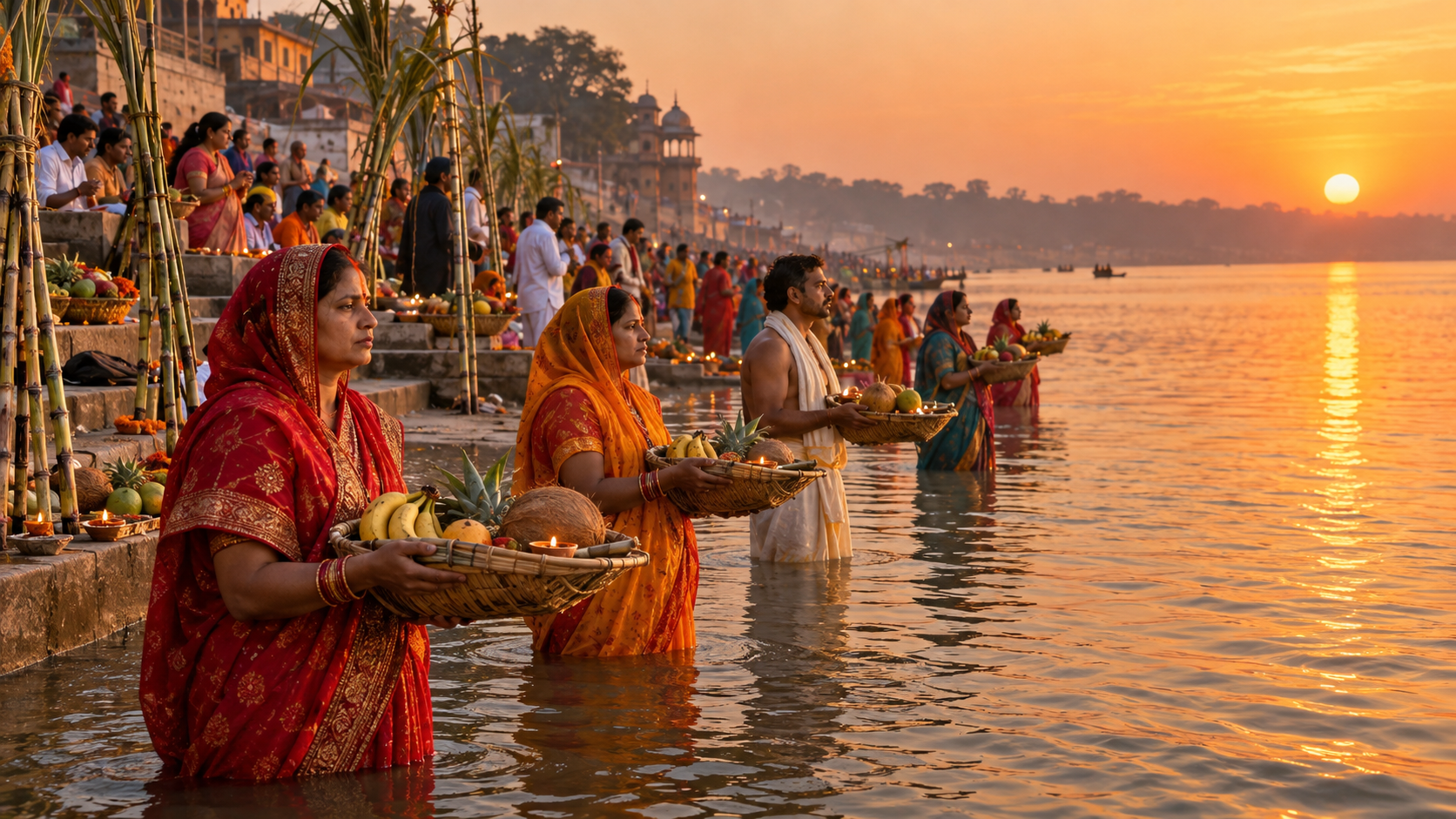
You are probably trying to settle two practical questions: which ritual falls on which date, and exactly when your family should reach the ghat. For Chhath Puja 2026, the calendar dates are fixed, but a clock time without a location is incomplete.
The two main anchors are straightforward: Sandhya Arghya is on 15 November 2026 and Usha Arghya is on 16 November 2026. The evening offering is aligned with sunset at the place of worship; the morning offering is aligned with sunrise there. Use your local solar time, not a time forwarded from another city.
Chhath Puja 2026 dates at a glance
| Observance | Date in 2026 | Timing to use | Practical focus |
|---|---|---|---|
| Nahai Khai | 13 November | Ritual bathing is traditionally performed early, before sunrise | Purification, a clean kitchen and the opening meal |
| Kharna and preparation | 14 November | Follow your household or community tradition | Vrat discipline, prasad preparation and final arrangements |
| Sandhya Arghya | 15 November | Local sunset | Arghya to the setting Surya |
| Usha Arghya | 16 November | Local sunrise | Arghya to the rising Surya and completion of the observance |
The distinction between a date and a clock reading matters. Everyone observes Sandhya Arghya on 15 November, but sunset does not occur at the same Indian Standard Time in every city. The same principle applies to sunrise on 16 November.
Key takeaways
- Begin the observance with Nahai Khai on 13 November 2026.
- Keep 14 November for Kharna and the preparations followed in your family tradition.
- Offer Sandhya Arghya at your location’s sunset on 15 November.
- Return before dawn and offer Usha Arghya at your location’s sunrise on 16 November.
- Confirm the city and date beside every clock time before forwarding it to relatives or volunteers.
Follow the four-day ritual sequence
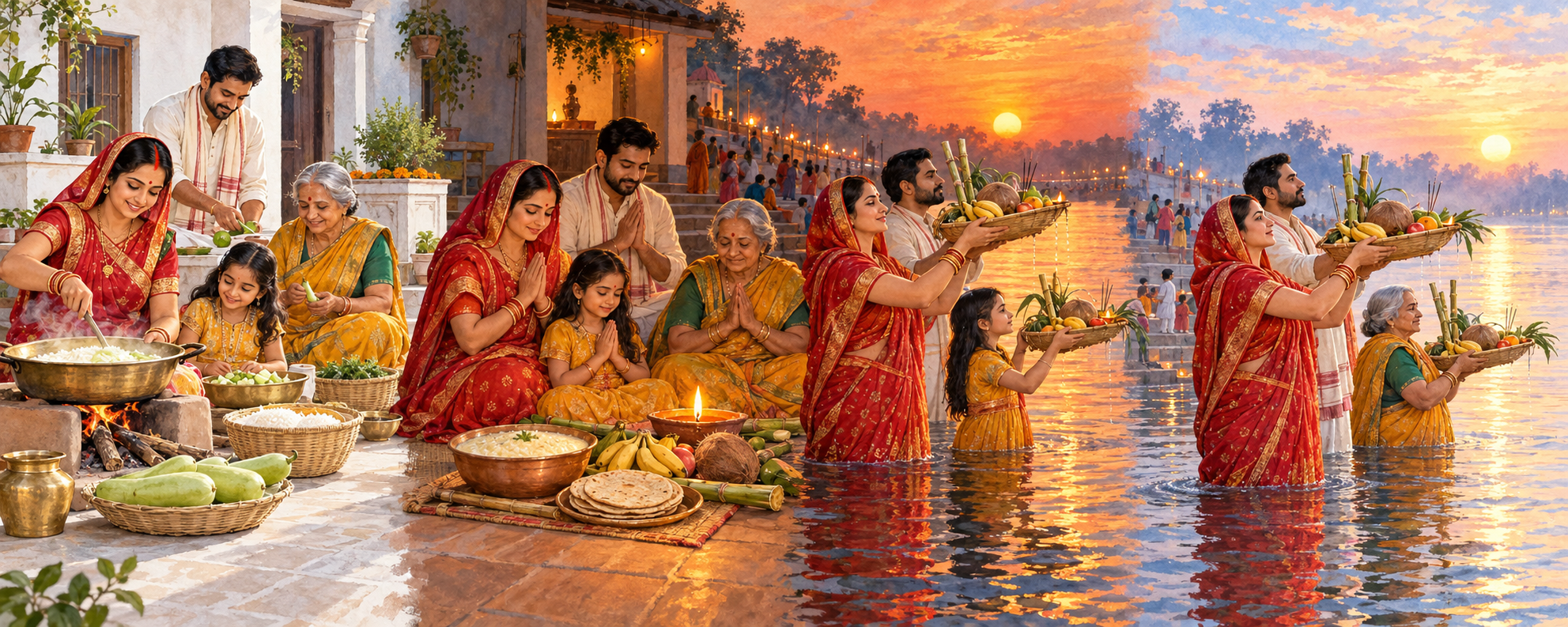
Chhath works as a continuous discipline rather than two isolated visits to the water. Plan the household work across all four days so that cooking, travel and crowd pressure do not disrupt the worship.
- Open with Nahai Khai on 13 November. The name joins bathing with eating: purification comes first, followed by the day’s prescribed food. The traditional observance includes an early-morning ritual bath before sunrise and a meal such as lauki bhat. Bathing in the Ganga has particular devotional importance where it is accessible, but families elsewhere should follow the established practice of their household or local community.
- Use 14 November for Kharna and disciplined preparation. Customs concerning fasting, the Kharna meal and the handling of prasad can differ between families. Settle those details with the vrati and experienced elders before shopping or cooking. This avoids imposing an internet checklist on a living family tradition.
- Prepare offerings before leaving for Sandhya Arghya. Keep the prasad, fruits, vessels and other samagri clean, covered and organised in the form customary to your family. Make one person responsible for checking the complete set before departure. At a crowded ghat, a forgotten item is much harder to replace than it is at home.
- Offer Sandhya Arghya on 15 November at local sunset. Reach the worship place early enough to arrange the offerings and enter only the permitted area. The relevant solar event is sunset where you are standing, not sunset in Patna, Varanasi or another city unless that is your actual location.
- Offer Usha Arghya on 16 November at local sunrise. Pack and arrange the morning set the previous night. Leave enough time for darkness, traffic, parking and the walk to the ghat. Complete the vrat afterward according to the practice observed by your family.
Nahai Khai’s pre-sunrise bath should not be confused with Usha Arghya. They occur on different days and serve different places in the ritual sequence: the former opens the observance on 13 November, while the latter is the sunrise offering on 16 November.
How to find the correct Arghya clock time
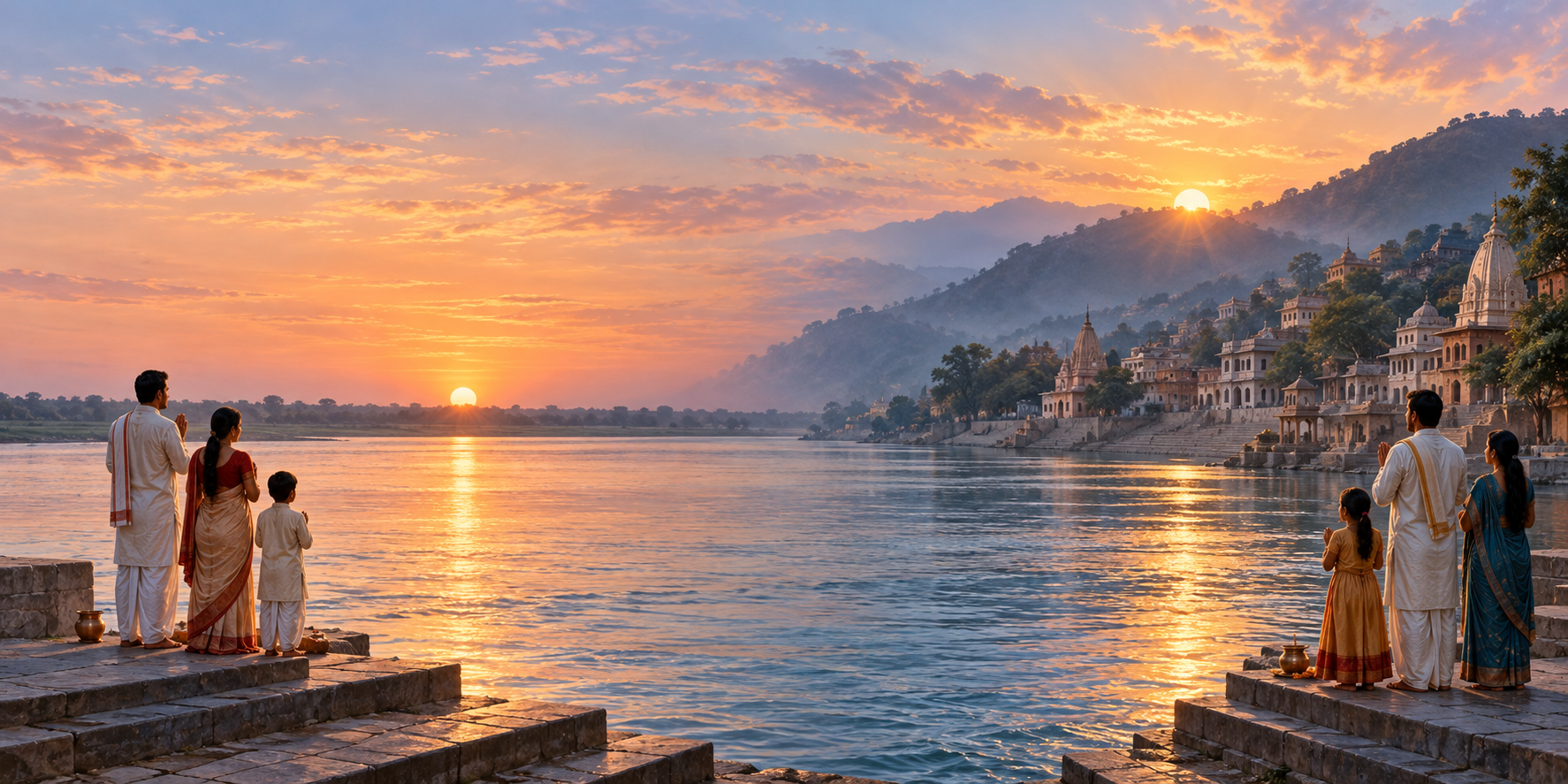
Start with the place where the offering will actually be made. Then find that location’s sunset for 15 November and sunrise for 16 November. The city-specific schedule covers Patna, Ranchi, Varanasi and Kolkata; use the entry for your city rather than transferring another city’s clock reading.
- Name the worship location. If you live in one city but will travel to a family village or another ghat, calculate from the destination.
- Match the event to the correct date. You need sunset on 15 November for Sandhya Arghya and sunrise on 16 November for Usha Arghya. A generic daily sunrise displayed by a phone is not enough unless its location and date are correct.
- Confirm the local convention. If two calendars show slightly different clock readings, ask the temple, purohit or ghat committee which panchang the organised worship will follow.
- Treat the listed time as the ritual anchor, not the departure time. Work backward for travel, parking, walking, security arrangements and setting out the offerings.
- Share the complete instruction. Write the city, date, solar event and clock time together. “Usha Arghya — 16 November — sunrise — [local time]” is far safer than forwarding an unexplained time.
Buildings, trees or hills may block your view of the solar disc. Do not substitute the moment when the Sun becomes visible to you for the locally accepted sunrise time without consulting the person guiding the puja. The same caution applies when the western horizon is obstructed at sunset.
Prepare for the ghat, the vrat and the return home
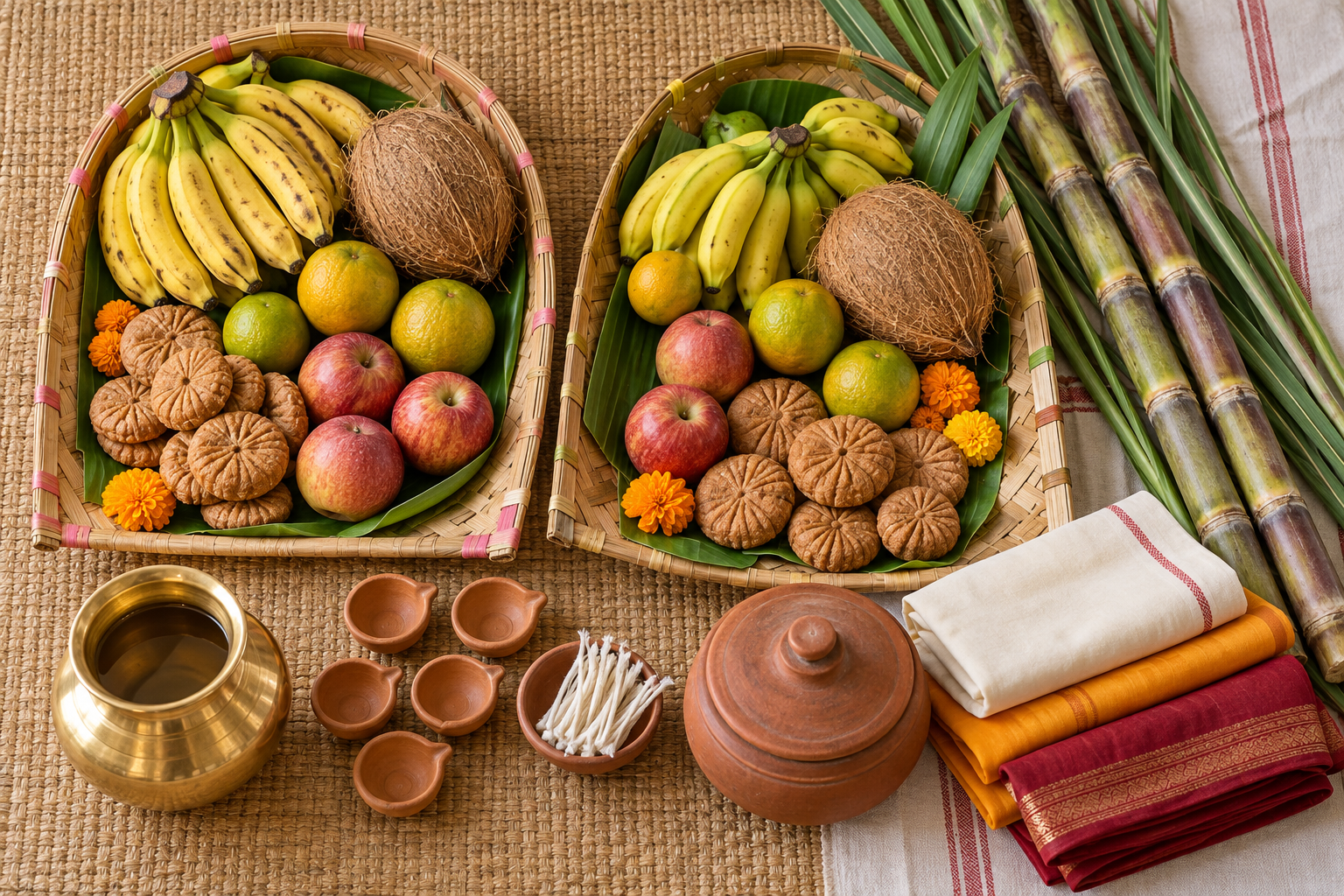
The most useful preparation is a short household plan made before Nahai Khai. It should identify who is observing the vrat, who is preparing and carrying each set of offerings, which route the family will use, and who will assist children or elders near the water.
- Confirm access: Check the permitted entry point, parking arrangement and any community instructions before both Arghya visits.
- Protect the offerings: Carry prasad and ritual materials in clean, stable containers. Keep a separate covering ready for dust, rain or crowd movement.
- Plan for darkness: Usha Arghya requires arrival before sunrise. Carry dependable lighting and keep footwear, bags and valuables with a designated family member.
- Respect water safety: Use only an authorised, stable section of the bank or steps. Do not enter deep, fast-moving or poorly lit water for the sake of obtaining a particular position.
- Follow the vrati’s tradition: Ask before changing recipes, utensils, ingredients or the order of offerings. Local and family practice can carry details that a general calendar cannot supply.
- Adapt fasting safely when necessary: Pregnancy, diabetes, illness or medicines can make strict fasting unsafe. The person concerned should obtain medical advice and agree on an appropriate observance with the family; prescribed medicine should not be stopped merely to reproduce someone else’s vrat.
Before 13 November, save the two local clock readings, send the complete schedule to everyone travelling with you, and assign the offering baskets for each visit. That small amount of coordination leaves the four days centred on Surya worship rather than last-minute corrections.
References
- Hindu Pad — Chhath Puja Muhurat 2026: Sandhya Arghya, Usha Arghya Timings on 15/16 November 2026
- Hindu Pad — Chhat Nahai Khai 2026, Lauki Bhat during Chhath Puja

Leave a Reply
You must be logged in to post a comment.