
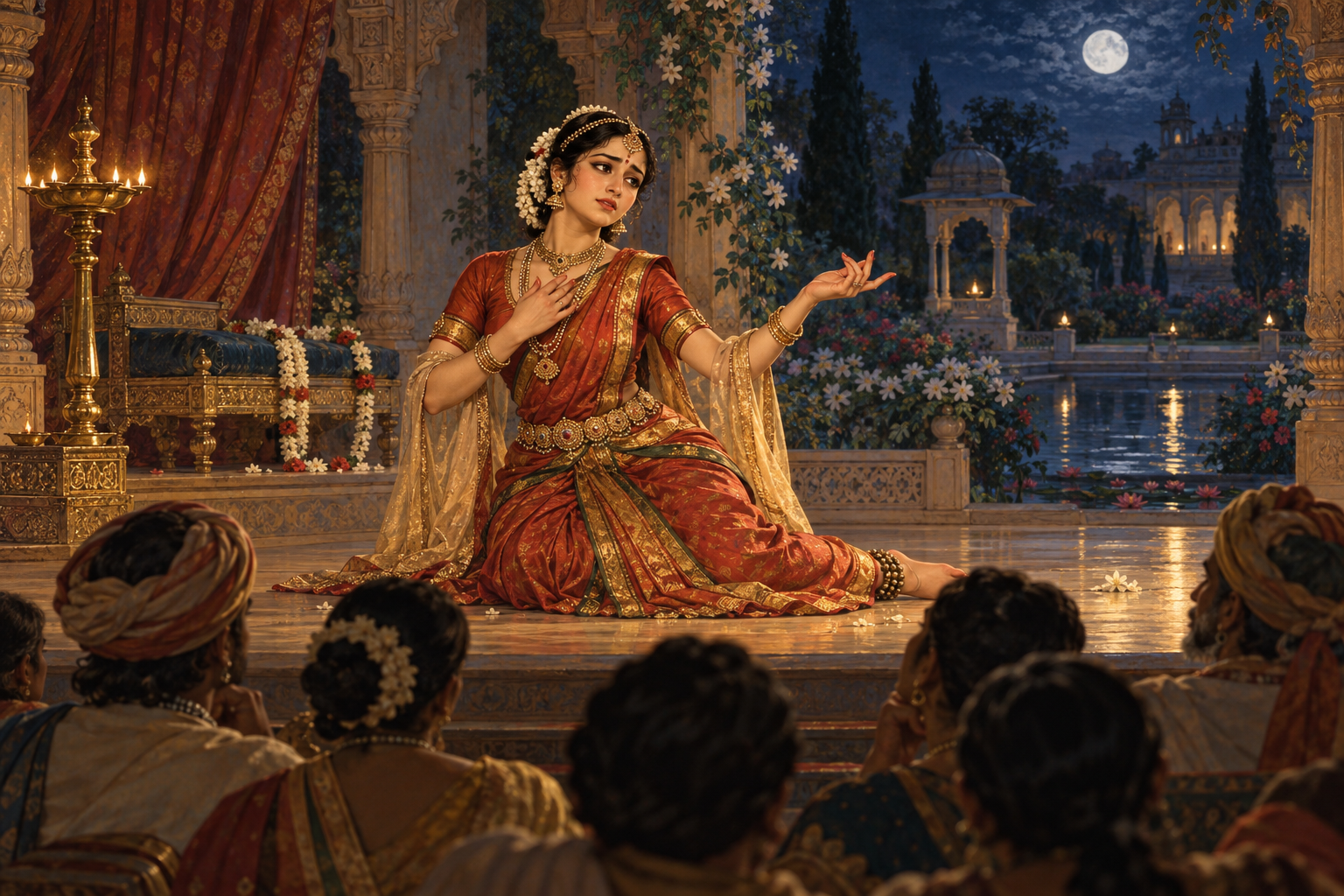
You have probably encountered Utpattivada and Upacayavada in a list of rasa theories and wondered whether you are expected to learn two different doctrines. Usually, in this context, they are two names for the same account. Utpattivada identifies what happens: rasa is produced or brought into being. Upacayavada identifies how it happens: a durable emotion is nourished, intensified, and developed into rasa.
That distinction is the key to using the theory rather than merely memorising its terminology. Once you can trace how a scene’s determinants, expressions, and passing states develop its underlying emotion, you can explain why the scene yields rasa instead of simply naming the rasa after the fact.
Two names describe one transformation
The starting point is the rasa formula: rasa results from the conjunction of vibhava, anubhava, and vyabhicaribhava. The interpretive difficulty lies in the word translated as “result” or “coming into being.” What exactly comes into being, where does it arise, and what kind of change has occurred?
Utpattivada answers by treating rasa as a developed condition of the sthayibhava, the durable or abiding emotion associated with the represented character. The stable emotion does not remain in its ordinary, undeveloped condition. Determinants awaken and orient it, expressive consequences make it perceptible, and transitory states sustain and enrich it. Once developed through their conjunction, the sthayibhava becomes rasa.
Upacayavada draws attention to the development within that account. Upacaya means growth, increase, accumulation, or intensification. It therefore guards against a misleading interpretation of production: rasa is not manufactured out of nothing. A durable emotional basis is already present, but it must be nourished into an aesthetically realised form.
A compact distinction will keep the terminology clear:
- Utpatti names the emergence of rasa as the result.
- Upacaya names the growth or intensification by which the durable emotion reaches that result.
- Utpattivada and Upacayavada therefore emphasise different sides of one explanatory movement, rather than supplying two competing accounts of rasa.
Trace the mechanism through five distinct elements

The easiest way to misread this theory is to treat all emotional features in a scene as interchangeable. They are not. Each element answers a different question, and the analysis works only when you preserve those differences.
| Element | Question to ask | Function in the process |
|---|---|---|
| Sthayibhava | What durable emotion organises the scene? | It is the emotional basis that is developed into rasa. |
| Vibhava | Who, what, or which situation awakens and directs that emotion? | It supplies the determining persons, objects, and circumstances. |
| Anubhava | Through which observable signs does the emotion become perceptible? | It gives the emotion an enacted or expressed form. |
| Vyabhicaribhava | Which passing states enter, support, and then recede? | They nourish and vary the durable emotion without replacing it. |
| Rasa | What aesthetic sentiment results from their organised conjunction? | It is the developed culmination, not one more ingredient in the list. |
Consider a dramatic scene in which a prince is ordered into exile and must leave his family and city. Sorrow is not established merely because a performer sheds tears. The impending separation, the loss of home, and the relationships being broken supply the determinants. A lowered gaze, interrupted speech, tears, and hesitant movement make the sorrow perceptible. Recollection, anxiety, weariness, helplessness, and similar passing states can enter and withdraw while continuing to nourish the central sorrow.
Under the production-and-growth account, the durable sorrow is strengthened through this whole arrangement until karuna, the rasa of pathos, is realised. The important verb is not simply “added.” The components do not sit beside one another like objects in a container. They work upon the durable emotion in different ways and bring it to an aesthetically developed condition.
You can test your analysis by removing one layer at a time. Without the determining loss and separation, the tears lack a clear emotional object. Without expressive signs, the sorrow may be asserted but not dramatically embodied. Without passing states, the presentation can become thin and monotonous. If you cannot say what each layer contributes, you have catalogued the scene but have not yet explained its rasa.
Keep the character, performer, and spectator separate
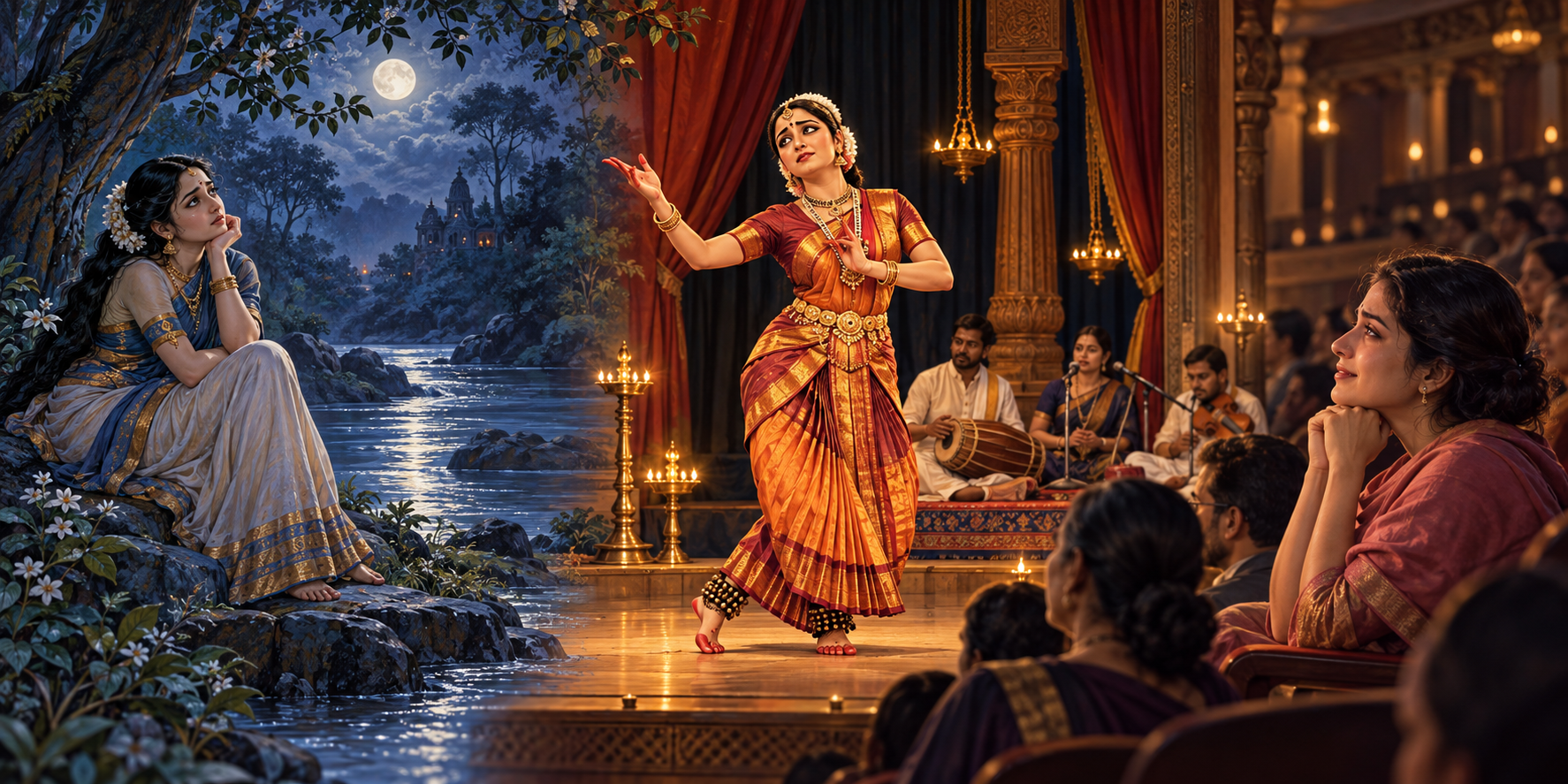
Utpattivada becomes much clearer when you ask where the durable emotion belongs. In drama, three positions must not be collapsed: the represented character, the performer who enacts that character, and the spectator who receives the performance.
The represented character is the primary emotional locus in this account. It is the character who confronts exile, bereavement, love, danger, or victory within the dramatic world. The performer presents that condition through voice, gesture, movement, and other signs. Good performance does not require the performer to undergo the character’s actual worldly circumstances. It requires a convincing organisation of the signs through which those circumstances and emotions become intelligible.
The spectator occupies another position. A spectator can recognise the enacted situation and respond aesthetically without becoming the exiled prince or suffering the prince’s literal loss. The larger theory of rasa therefore depends upon the receptivity of the sahridaya: the reader or spectator whose heart is capable of attunement to the imaginative world shaped by the poet or dramatist.
This is also where you can see the pressure point in Utpattivada. Its strongest explanation concerns the development of the represented character’s durable emotion. A further question remains: how does an emotion located there become an aesthetic experience for the spectator? Do not quietly answer that question by moving rasa into the audience and still call the whole explanation Utpattivada. Mark the boundary honestly: production and growth explain the transformation of the sthayibhava, while the spectator’s relish demands an additional account of reception.
Avoid four common misreadings
Most confusion around these terms comes from translating them too quickly. Four corrections will keep your reading precise.
- Production does not mean creation from nothing. The sthayibhava supplies the durable emotional basis. What is produced is its developed condition as rasa.
- Growth does not mean louder acting. More tears, longer speeches, or exaggerated gestures do not automatically create greater rasa. Upacaya concerns the organised nourishment of the central emotion, not a mechanical increase in theatrical volume.
- A passing state is not a second permanent centre. Anxiety, recollection, fatigue, doubt, or agitation may colour a scene, but each must be related to the sthayibhava. If one takes over as the organising emotion, your identification of the scene’s durable basis may need revision.
- The spectator’s private feeling is not automatically the rasa. A viewer may remember a personal loss during a sorrowful scene, but that biographical reaction does not by itself explain the aesthetic structure. First analyse what the work presents; then consider how a receptive spectator participates in it.
There is one further linguistic trap. “Permanent emotion” can sound as though the character must display one feeling continuously. “Durable emotion” is often a more useful working expression. The sthayibhava can remain structurally central even while many temporary states pass through the scene. Its durability lies in its organising role, not in an unchanging facial expression.
Use a five-pass method on any poem or performance
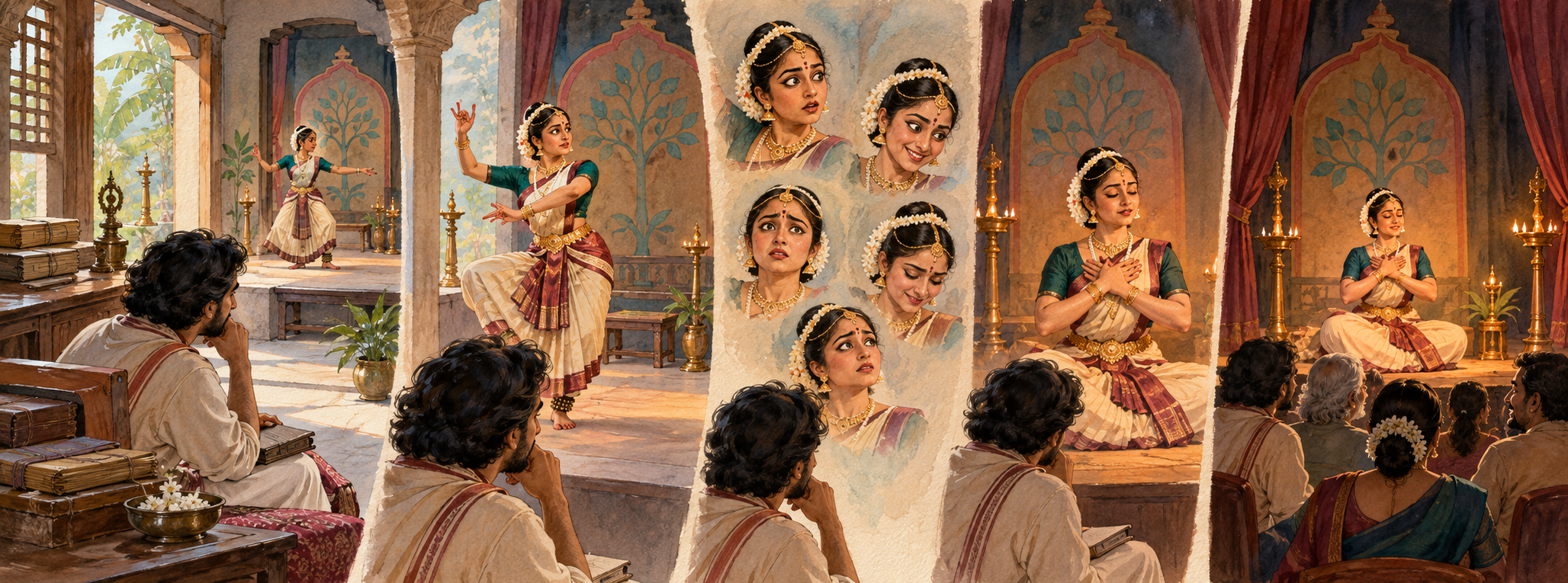
You can turn the theory into a practical reading method. Work through a scene in this order:
- Name the durable emotion. Ask which emotional disposition continues to organise the scene after its momentary variations are removed.
- Identify its determinants. List the persons, objects, relationships, and circumstances that give the emotion an object and a cause within the represented world.
- Mark the expressive consequences. Note the gestures, speech patterns, movements, silences, or bodily signs through which the emotion becomes perceptible.
- Follow the passing states. Track which temporary conditions intensify, interrupt, soften, or otherwise nourish the durable emotion. Explain their function instead of merely naming them.
- State the transformation. Show how the conjunction of these elements develops the sthayibhava into rasa. This final sentence is the argument your earlier observations support.
A reliable answer can take this form: “Under Utpattivada, the durable emotion of [name the sthayibhava] in [name the represented character] is awakened by [identify the vibhavas], made perceptible through [identify the anubhavas], and nourished by [identify the vyabhicaribhavas] until it reaches the developed condition of [name the rasa]. The designation Upacayavada emphasises this process of nourishment and intensification.”
Key takeaways
- Utpattivada and Upacayavada normally name the same rasa account from the viewpoints of result and process.
- The sthayibhava is the durable emotional basis; rasa is that basis in its aesthetically developed condition.
- Vibhava determines the emotion, anubhava makes it perceptible, and vyabhicaribhava nourishes it through supporting variations.
- The represented character, performer, and spectator perform different roles and should not be treated as one emotional subject.
- A complete analysis explains the contribution of every element instead of merely attaching a rasa label to a scene.
Choose one scene you know well and analyse no more than a few lines or moments at first. If you can identify its durable emotion and show exactly how each supporting element develops it, the two unfamiliar labels will stop being definitions to memorise. They will become a usable way of seeing how Indian art turns represented emotion into rasa.
References

Leave a Reply
You must be logged in to post a comment.