
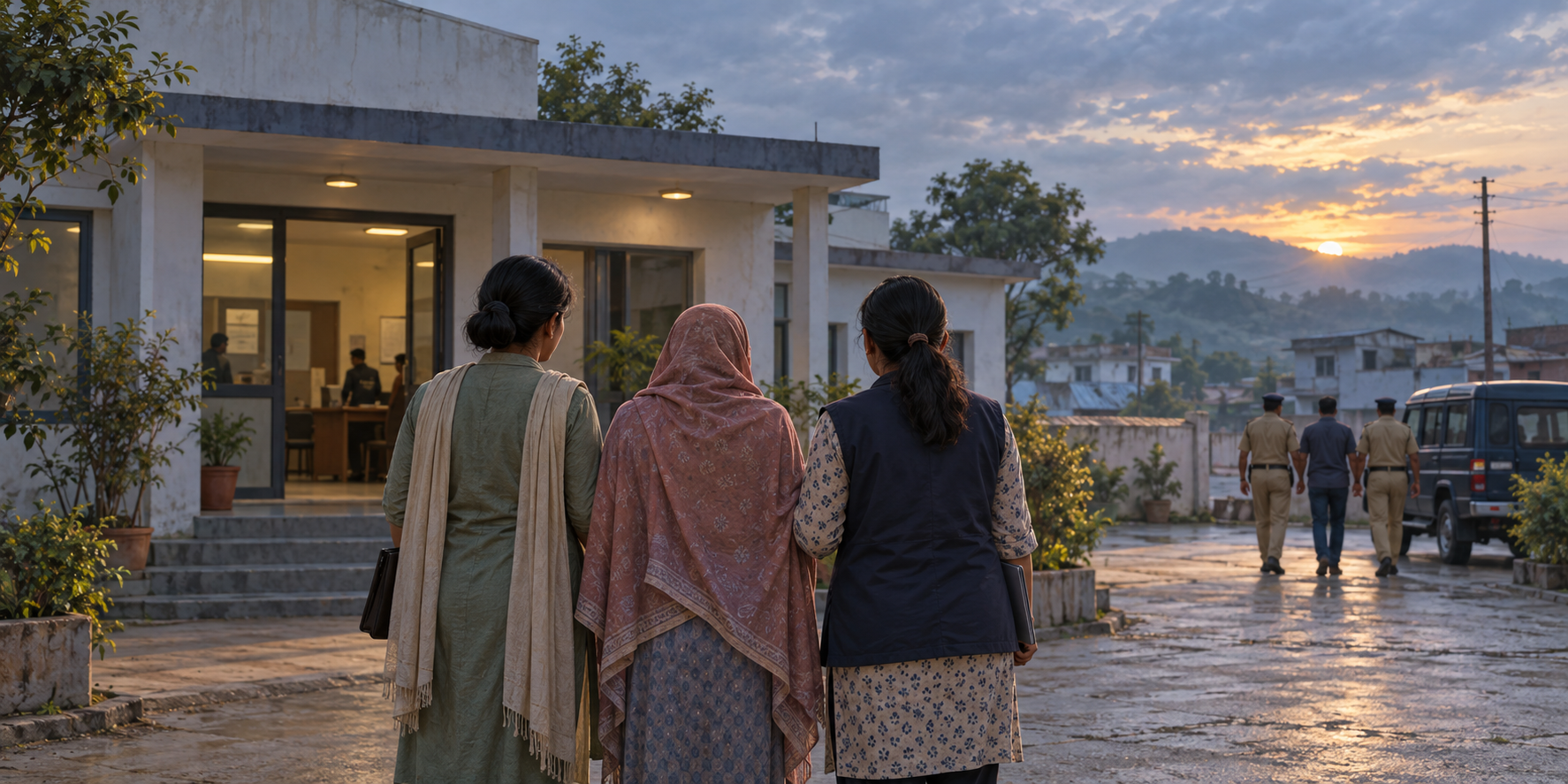
If you came looking for the basic outcome, the missing Hindu woman in Chagolia has been rescued and a local man has been arrested. That is the welcome part of the story. It is not, however, the same as knowing exactly what happened to her.
You can respond responsibly by holding two duties together: take the family’s allegation seriously, and do not turn preliminary information into a verdict or communal narrative. That discipline protects the survivor, preserves the credibility of Hindu advocacy, and keeps attention on evidence that can establish accountability.
What has been established in the Chagolia case
The woman, described as a married Hindu mother, went missing from Chagolia in Assam’s Dhubri district on 20 October. Her family alleges that she disappeared after going out to view Durga Puja murtis. Relatives searched for her and contacted people who might know her whereabouts before lodging a complaint with Chagolia Police on 22 October.
Police then conducted a search, gathered information and followed leads. They traced and rescued the woman on 25 October. Jinnat Ali, a resident of Boterhat village, was detained and subsequently arrested on suspicion of involvement.
Ali was produced before the Dhubri Court on 26 October. The investigation was still continuing, with evidence and witness statements yet to establish the full circumstances. An arrest is a significant police action, but it is not a judicial finding of guilt.
The timeline shows where families can lose critical time

| Date | Reported development | What it means |
|---|---|---|
| 20 October | The woman went missing after reportedly leaving to view Durga Puja murtis. | This is the last reported starting point of the disappearance. |
| 22 October | Her family filed a complaint after its own search did not locate her. | The formal police investigation began two days after she disappeared. |
| 25 October | Police rescued the woman and detained the accused. | The immediate priority of locating her was achieved. |
| 26 October | The accused was produced before the Dhubri Court. | The case entered the judicial process while the investigation continued. |
The family’s independent search is understandable, especially when relatives initially hope that a missing person has simply been delayed or gone somewhere unexpectedly. The practical lesson is that a family search and a police report should not be treated as strictly consecutive stages when the circumstances appear suspicious. If you have reason to fear coercion or immediate danger, contact the police promptly while relatives check familiar places and trusted contacts.
Record the last verified time and place, what the person was wearing, who last saw them, and any known phone or travel information. Keep original messages, call records, images and screenshots intact. Separate what a witness directly knows from what the family suspects. That distinction makes information more useful to investigators and prevents a rumour from being repeated until it is mistaken for evidence.
Do not confront a suspected person yourself. A confrontation can expose the missing person or family members to further danger, alert someone who may destroy evidence, and complicate the police search. Give the information to investigators and retain a clear record of when and to whom it was provided.
Important questions remain unanswered

The family’s complaint alleges abduction, and the preliminary police inquiry led to an arrest. The known facts do not yet explain how the woman disappeared, whether force, threats or deception were allegedly used, where she was taken, whether she previously knew the accused, or what evidence connects him to the event. Her own account has not been publicly detailed in the information presently available.
The religious identities surrounding a case can matter, particularly when a Hindu woman disappears during a major Hindu festival. They must not be erased to make the incident seem less sensitive. But they must not be used to invent a motive either. A disappearance during Durga Puja and the name of an accused person do not, by themselves, establish that the alleged crime was communally motivated or religiously targeted.
Watch for evidence that can answer the real questions: the woman’s statement, witness accounts, phone or location records if obtained lawfully, surveillance footage if any exists, the precise allegations entered in the case, and later findings of the court. Until such facts emerge, describe Ali as the accused or arrested suspect, not as a convicted abductor.
The survivor’s privacy deserves the same care. Rescue does not create a public entitlement to her name, image, address or personal account. Do not forward material that could identify her merely because it has appeared in a local group. If community organisations assist the family, they can appoint one liaison, pass verified information to police, and offer practical support privately rather than pressuring the woman to narrate her experience in public.
Key takeaways for residents and community organisations

- Keep the outcome and the allegation distinct. The woman was rescued; the allegation of abduction still has to be established through evidence and legal proceedings.
- Report suspicious disappearances promptly. Family enquiries can continue at the same time as police notification when there is a credible concern about danger or coercion.
- Preserve facts in their original form. Save messages, call details, photographs and timelines without editing them, and identify which details were directly witnessed.
- Protect the woman, not public curiosity. Do not circulate identifying details, demand a public statement or speculate about what she experienced.
- Do not infer motive from identity alone. A communal or religious motive requires evidence; repeating one without evidence can obscure the specific conduct investigators must prove.
- Direct useful information to police. Avoid amateur confrontation, collective blame and social-media accusations that could endanger people or interfere with the inquiry.
For future festivals and crowded community events, agree on a meeting point, a check-in plan and the person who will raise an alert if someone cannot be reached. Those precautions cannot prevent every deliberate crime, but they reduce uncertainty and help families establish a reliable timeline quickly.
In Chagolia, the immediate relief is that the woman was found. The next responsible step is to follow the investigation without getting ahead of it: support her privacy, preserve relevant evidence, and insist that accountability rest on facts capable of surviving scrutiny.
References

Leave a Reply
You must be logged in to post a comment.