

If you want to observe the closing days of Kartik in 2026, the hardest part may be translating several devotional names and lunar calendars into one workable household plan. One family says Kaisika, another says Prabhodhini; one calendar closes Kartik on Purnima, while another continues the month. You do not have to settle every regional difference before you can begin.
For advance planning, reserve 20 November for Ekadashi, 21 November for Dwadashi and 24 November for Kartik Purnima. Then confirm the tithi boundaries and any fasting or parana window for your location. This keeps the Gregorian dates useful without allowing them to replace the panchanga followed by your family, guru or temple.
First, separate the planning date from the ritual time

A tithi is a lunar day, not a midnight-to-midnight civil date. A published festival date therefore helps you reserve time, buy puja materials and coordinate with family, but it may not tell you when a particular vrata begins or when an Ekadashi fast should be concluded. Use this sequence as your planning map:
| 2026 planning date | Observance | What to prepare |
|---|---|---|
| 20 November | Kaisika Ekadashi, the Shukla Paksha Ekadashi of Kartika in Telugu reckoning | Your normal Vishnu worship, an appropriate vrata and the local parana information |
| 21 November | Chiluku Dwadashi, also known as Ksheerabdi Dwadashi or Yogini Dwadashi | Tulsi and Damodar worship; your household’s materials if it celebrates their symbolic marriage |
| 22-23 November | Days between Dwadashi and Purnima | Continue the simple daily practice chosen for your late-Kartik vrata |
| 24 November | Kartik Purnima, also called Tripuri Purnima or Tripurari Purnima | A concluding puja or offering appropriate to your tradition |
The names do not need to be forced into one uniform vocabulary. Chiluku Dwadashi is observed immediately after Prabhodhini Ekadashi, while the Ekadashi of this period is observed as Kaisika Ekadashi in Telugu and South Indian Vaishnava settings. If your household uses one name and a nearby temple uses another, first compare the tithi and tradition rather than assuming that one side has the wrong date.
Kartik Purnima requires the same care. It ends Kartik in North Indian calendar systems, but other calendars treat it as the fifteenth day of Kartik rather than the month’s final day. If your family’s calendar continues after Purnima, you are not late or mistaken; you are following a different calendrical convention.
Build one five-day vrata instead of disconnected festival tasks
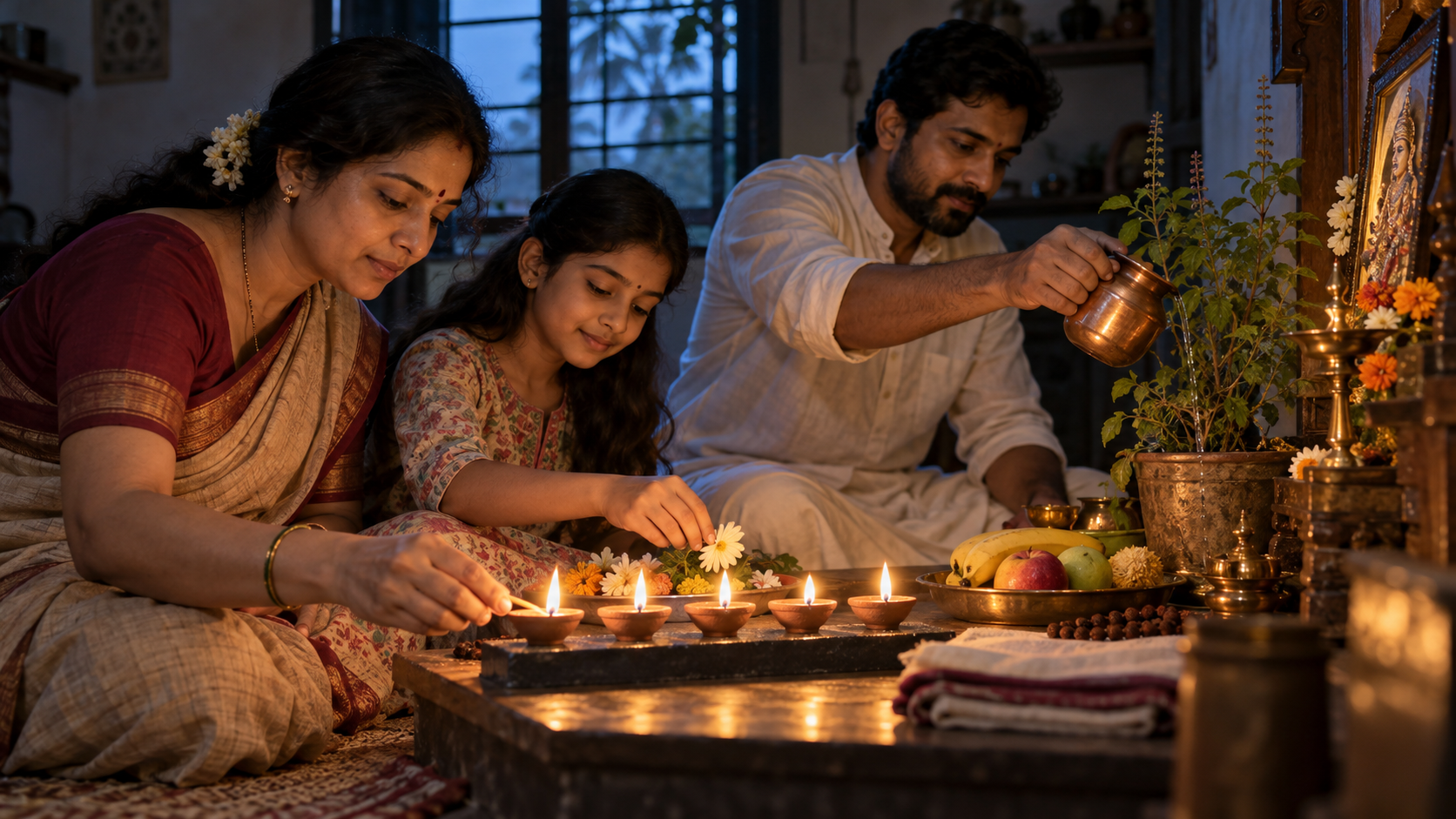
A crowded ritual checklist is difficult to sustain and easy to abandon. A clearer approach is to make one modest sankalpa for the whole period, then let each tithi give that commitment a distinct emphasis.
- Before Ekadashi, choose one repeatable commitment. Decide what you can actually maintain from 20 through 24 November: your regular Vishnu nama-japa, a short household puja, a lamp at the family shrine, a period of sacred reading, an act of seva, or greater restraint in speech and consumption. State the commitment plainly and decide when you will do it each day.
- On Ekadashi, reduce distraction and turn toward Vishnu. Kaisika Ekadashi has particular importance at Tirumala Tirupati, Srirangam and other South Indian Vaishnava temples. If you belong to such a temple tradition, check its own programme and observance rules. At home, your established Vishnu puja is a firmer foundation than an elaborate rite copied at the last minute.
- On Dwadashi, give Tulsi and Damodar the central place. The day is specifically associated with worship of Tulsi and Damodar and the celebration of their marriage. If your family already performs Tulsi Vivaha, follow its inherited sequence. If it does not, offer a simple, attentive puja rather than improvising a ceremony whose mantras and procedures you have not learned.
- On 22 and 23 November, protect continuity. Keep the same short practice at the same time. These quieter days prevent the observance from becoming two intense rituals separated by neglect. If guests, work or travel intervene, shorten the practice rather than silently dropping it.
- On Purnima, complete what you actually undertook. Make the final observance proportionate to your sankalpa. You might perform the last puja, offer gratitude, share prasad or complete a planned act of dana according to your means. If your calendar does not end Kartik on Purnima, treat this as the completion of the five-day observance, not necessarily the end of your entire Kartik discipline.
If you fast on Ekadashi, Dwadashi also contains the practical matter of parana. Do not assume that midnight, sunrise or your normal breakfast time is automatically correct. Ask for the locally applicable window before the vrata begins, so that the conclusion is part of your preparation rather than an afterthought.
When calendars disagree, use a clear order of authority
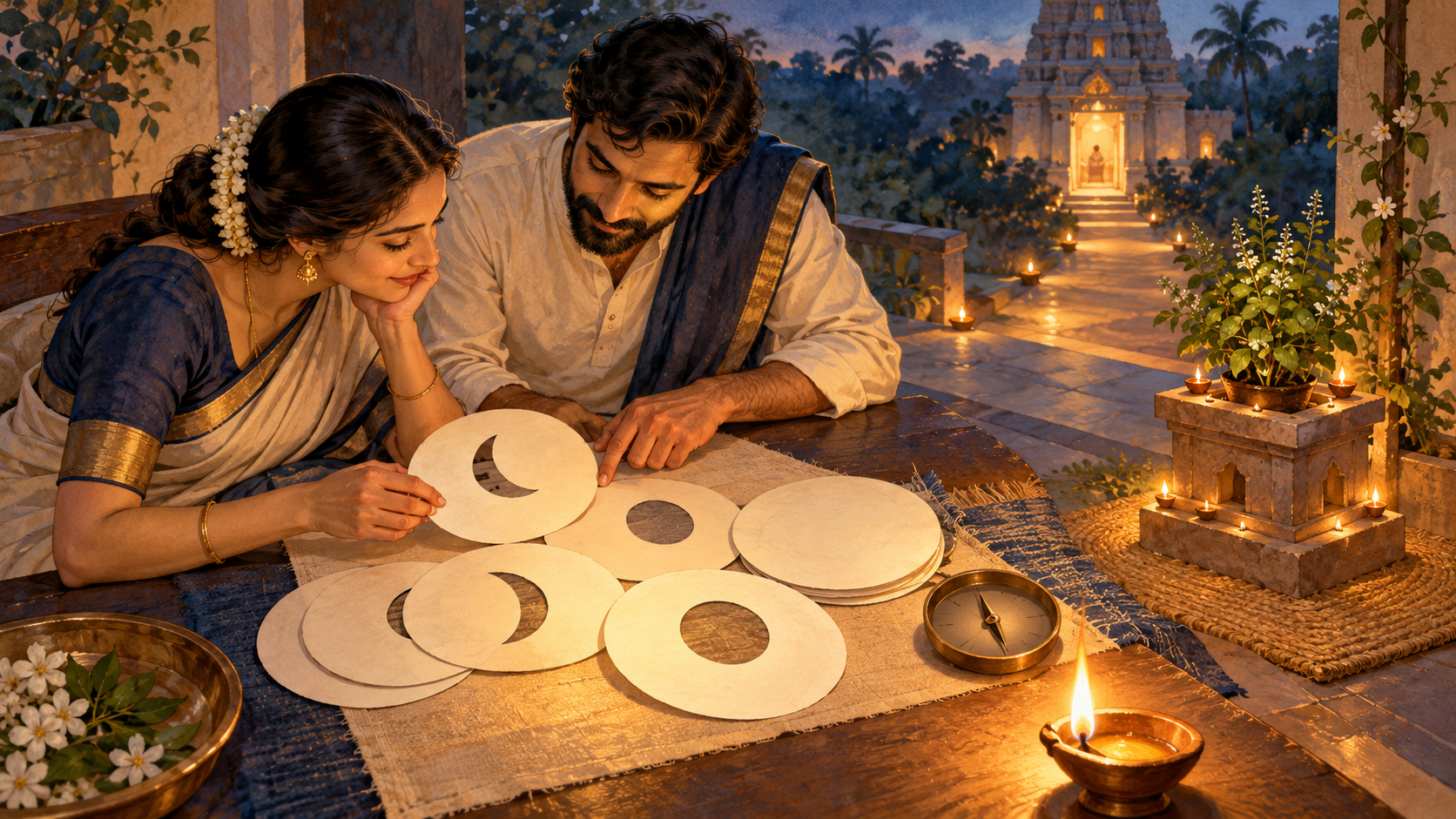
An online date can tell you which day to keep free, but it cannot know every household lineage or local rule. When two calendars produce different instructions, work through the difference in this order:
- Your established sampradaya or guru: use the vrata form, deity focus and parana rule already transmitted to you.
- Your family’s living practice: preserve inherited customs unless a trusted religious authority has given a reason to change them.
- The temple where you will participate: follow its announced schedule for attendance and seva rather than arriving with timings taken from another region.
- A location-specific panchanga: check that it is calculated for your city or time zone, especially if you live outside Bharat.
- The Gregorian festival date: use it as a planning anchor, not as a complete ritual instruction.
You can resolve most uncertainty by asking your temple or purohit three precise questions: When does the relevant tithi apply here? What fasting and parana practice does our sampradaya use? Does our calendar conclude Kartik on this Purnima? Those questions are more useful than asking only whether 20, 21 or 24 November is the correct date.
Keep fasting subordinate to health and dharmic responsibility

A vrata should not become a competition in hunger. A shared Ekadashi date does not create one universal food rule for every Vaishnava community, household or individual. If a strict fast belongs to your tradition and is suitable for you, prepare for it deliberately. Do not copy another person’s level of abstinence merely because it appears more austere.
If you are pregnant, are responsible for a child’s observance, live with a condition affected by fasting, or take medicine that must accompany food, do not improvise a strict fast or alter medication timing to fit the calendar. Ask a qualified clinician what is safe, and separately ask your religious teacher how to preserve the vrata’s devotional intention. Medical safety and ritual adaptation are different questions, and both deserve a competent answer.
Where food restriction is unsuitable, you can still keep a disciplined period through appropriate dietary simplicity, nama-japa, puja, sacred reading, seva, dana, or restraint from habitual distractions. Choose the form before Ekadashi. A defined alternative prevents an honest health accommodation from dissolving into no observance at all.
Key takeaways for late Kartik in 2026
- Reserve 20 November for Kaisika Ekadashi, 21 November for Chiluku or Ksheerabdi Dwadashi, and 24 November for Kartik Purnima.
- Confirm local tithi boundaries and the Ekadashi parana window; the civil date alone is not a full ritual timetable.
- Use one manageable sankalpa across the five-day period, with Vishnu devotion on Ekadashi, Tulsi-Damodar worship on Dwadashi and a clear completion on Purnima.
- Respect regional terminology and calendar systems instead of treating different names as automatic contradictions.
- Follow your sampradaya and household tradition for the vrata’s details, and adapt food restrictions safely when health requires it.
Put the three dates in your calendar now, then contact your temple or family purohit before 20 November with the timing, parana and month-ending questions above. Once those points are settled, choose one daily practice small enough to keep through Purnima. That is how a cluster of calendar entries becomes a coherent observance.
References
- Hindu Pad – Kaisika Ekadashi 2026
- Hindu Pad – Chilku Dwadashi 2026 | Chiluku Dwadashi Vrat
- Hindu Pad – Kartik Purnima 2026 | Tripuri Poornima | Tripurari Purnima

Leave a Reply
You must be logged in to post a comment.