
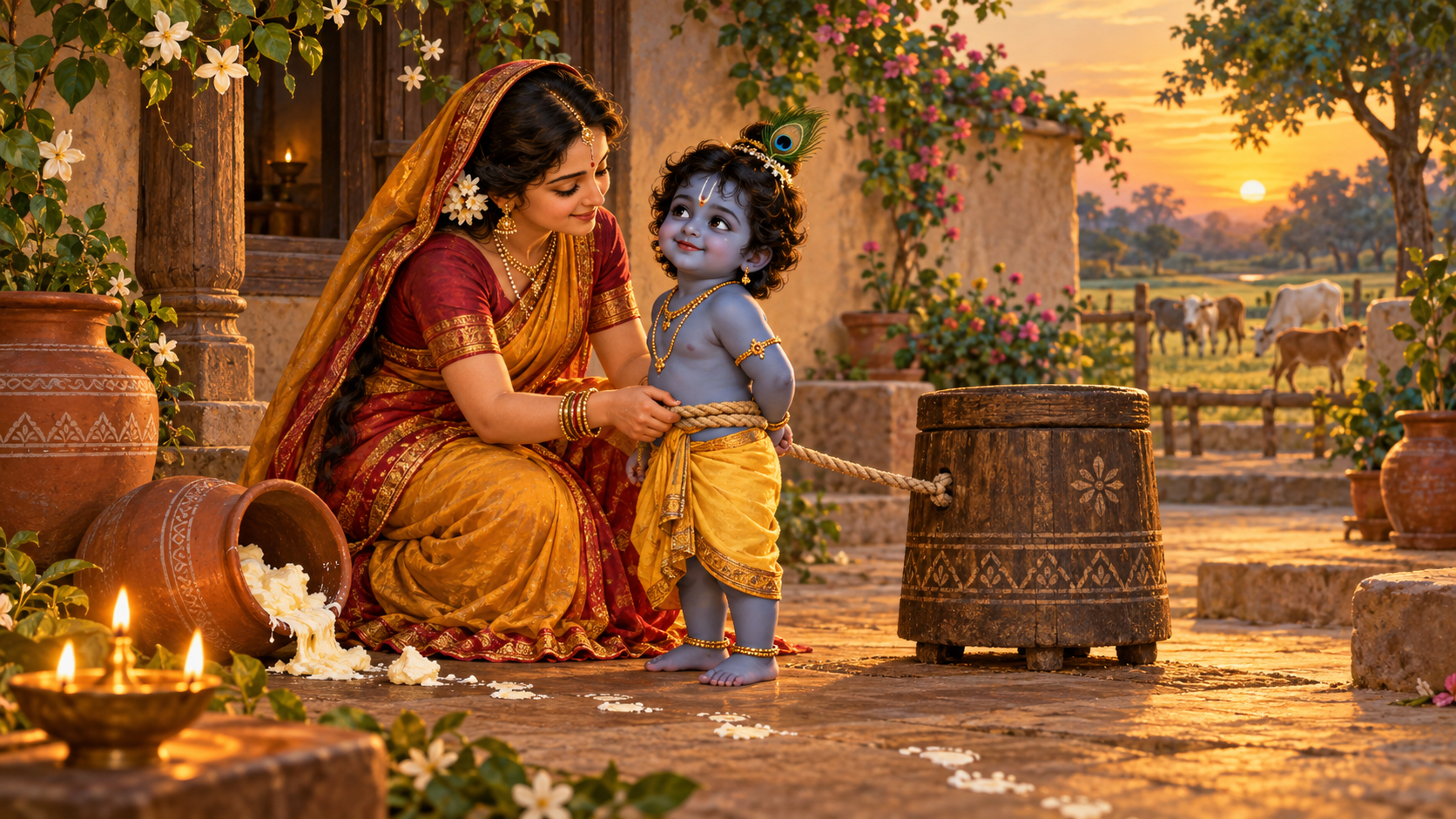
You may have heard that Damodar month is especially sacred, yet still be unsure what you are meant to do differently. The heart of the month is not ritual quantity. It is the startling image of Krishna, whom no worldly power can contain, allowing himself to be bound by the loving effort of Mother Yashoda.
For you, that turns a sacred season into a personal question: can devotion become steady, attentive, and concrete in your daily life? A lamp offered with awareness, a prayer you understand, a sustainable vrata, and a deliberate act of service can answer that question better than an ambitious schedule abandoned midway.
The name Damodara reveals the spiritual centre
Damodara is commonly understood through dama, meaning rope, and udara, meaning belly. The name remembers the childhood lila in which Mother Yashoda tries to bind Krishna after his mischief. What appears to be a small domestic scene carries an immense theological claim: the Supreme, unlimited by material force, freely becomes accessible within a relationship of love.
Krishna is not overcome by a stronger opponent. He consents to the bond of his devotee. The rope therefore represents more than restraint. It shows that bhakti does not approach Bhagavan as an impersonal power to be manipulated. It approaches him as a person to be loved, served, remembered, and trusted.
This is why the lila is especially meaningful for householders. Yashoda’s devotion unfolds amid ordinary responsibilities rather than outside them. The home, daily labour, parental care, correction, fatigue, and affection all become places of encounter with the divine. You do not have to wait for an ideal retreat from life before beginning serious spiritual practice.
When you stand before Damodara, begin with relationship rather than reward. Ask what you are bringing to Krishna today: gratitude, repentance, dependence, affection, or a willingness to correct one habit. That question moves worship away from performance and towards genuine address.
The short rope teaches effort without entitlement
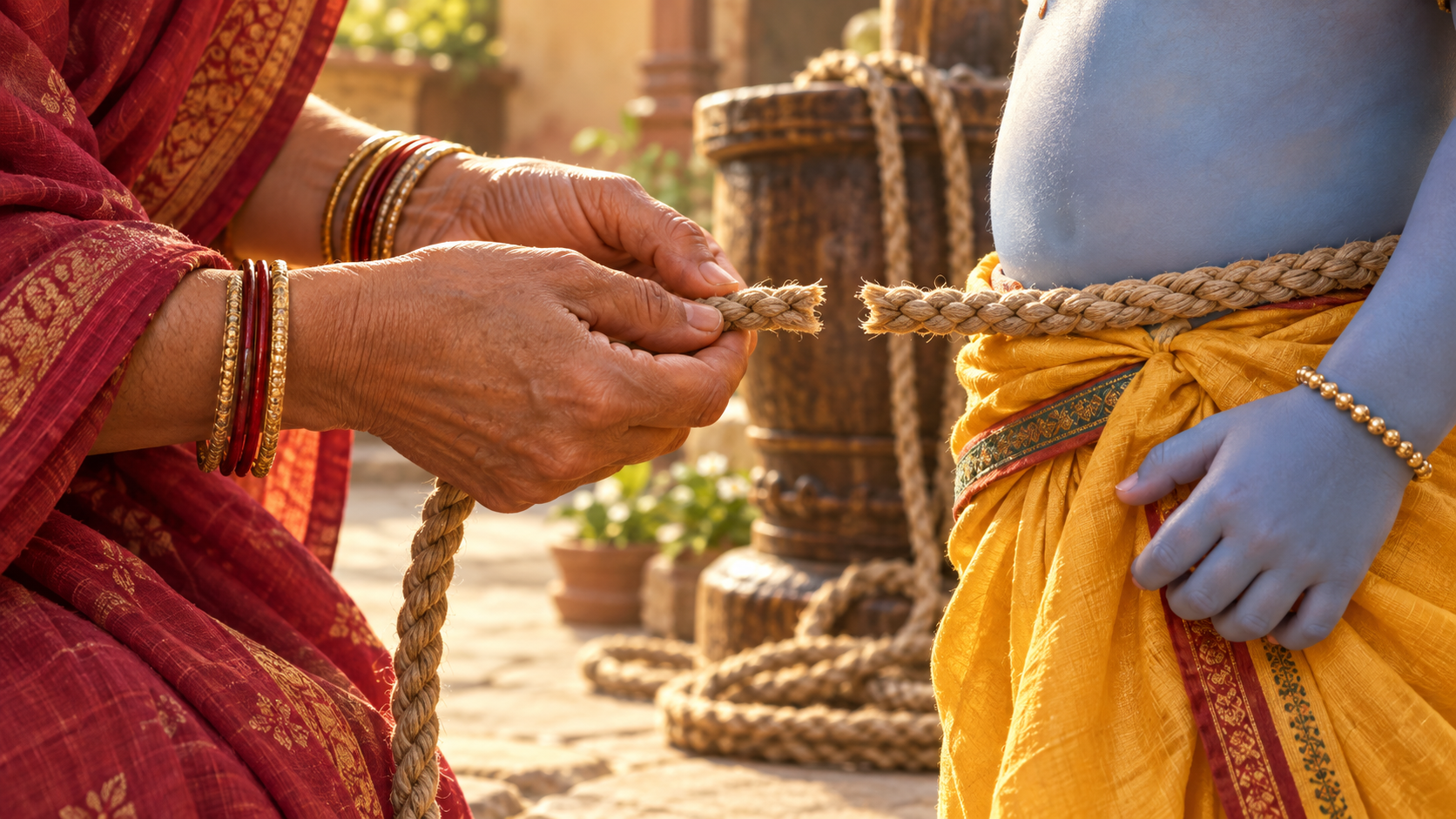
One of the lila’s most memorable details is that the rope repeatedly remains two fingers short. Mother Yashoda continues her effort, and Krishna eventually allows himself to be bound. A widely taught Vaishnava interpretation sees the two-finger gap as the meeting of sincere human endeavour and divine grace.
This is a devotional interpretation, not a mechanical formula. Effort does not purchase grace, and grace is not an excuse for passivity. Your part is to show up, direct your attention, restrain what pulls you away, and offer what you can. The result remains a gift rather than a debt that Bhagavan owes you.
Damodar month exposes two common errors. The first is waiting to feel devotional before practising. The second is treating practice as spiritual bookkeeping: perform an observance, expect a benefit, and judge the month by whether the desired outcome appears. The rope corrects both. Yashoda acts with determination, but the bond becomes possible through Krishna’s consent.
Apply that lesson when enthusiasm fluctuates. Keep your chosen observance on distracted days as well as peaceful ones. If you miss it, acknowledge the lapse and resume at the next opportunity. Do not turn one imperfect day into permission to abandon the month. This is abhyasa in a devotional key: the disciplined return of attention rather than a brief display of intensity.
A lamp is an offering of attention, not a substitute for it
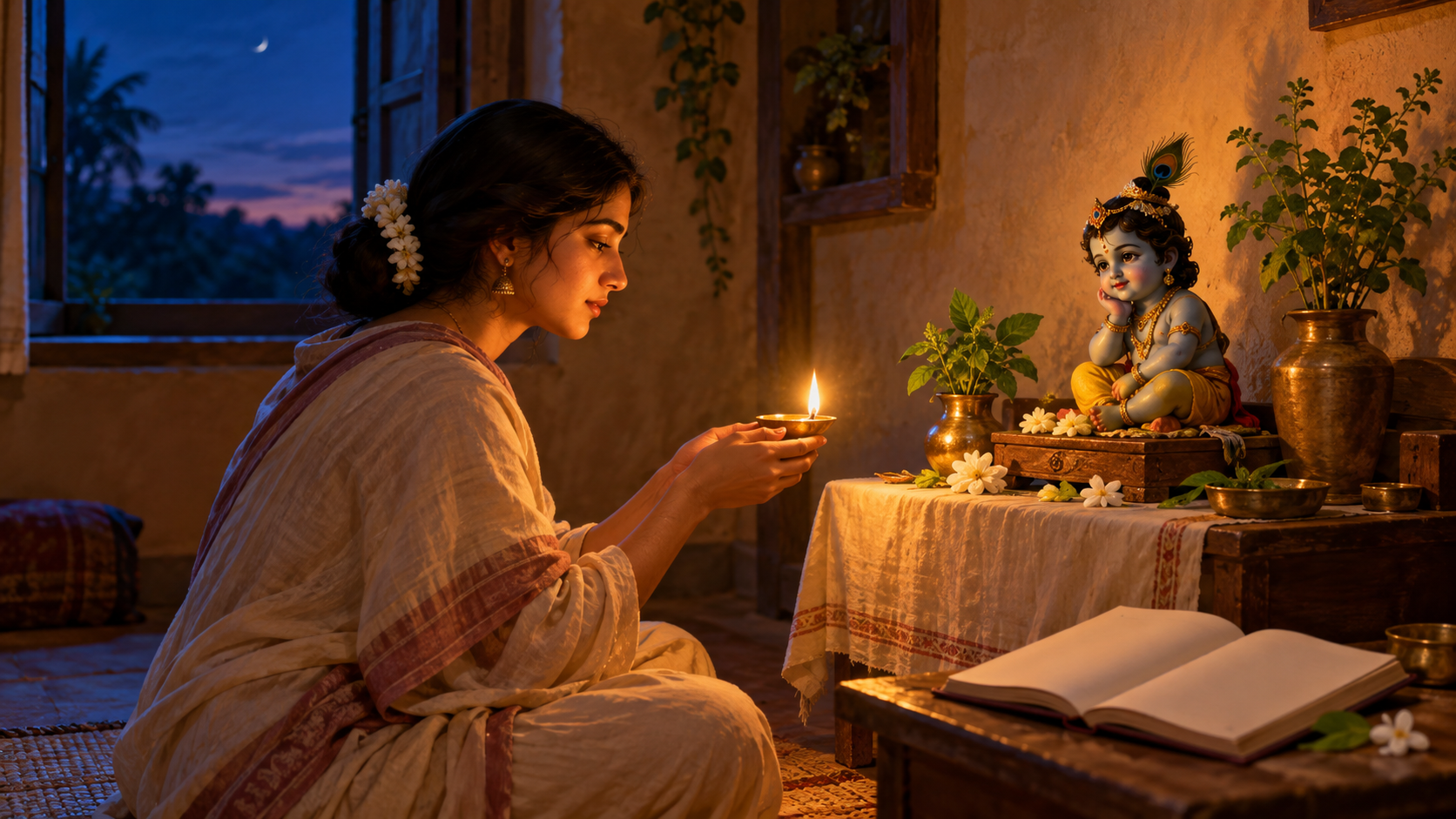
Offering a lamp and singing or hearing the Damodarashtakam are characteristic observances of this season in Vaishnava practice. The lamp gives devotion a physical form. You prepare it, light it, protect the flame, and offer its light rather than merely thinking a devotional thought and moving on.
The outer act should gather your attention. Put the phone aside. Look towards the deity or image of Damodara. Remember Yashoda’s loving persistence. Offer the lamp with the mantra, prayer, or aarti procedure taught in your sampradaya. If you sing the Damodarashtakam, read a trustworthy translation as well. Pronunciation matters, but understanding whom you are addressing prevents the prayer from becoming sound without intention.
An elaborate setup is not the measure of devotion. A simple, properly offered lamp can be spiritually serious when it is accompanied by remembrance and humility. A larger display can remain superficial when attention is elsewhere. Let your circumstances determine the scale, while the meaning determines the quality.
Use an appropriate lamp on a stable, heat-resistant surface, keep fabric and decorations away from the flame, and never leave it unattended. If open flames are prohibited where you live, ask a trusted temple or teacher how your tradition handles that limitation. Do not quietly invent ritual equivalence and then worry whether the observance was valid.
The offering should also reach beyond the shrine. A lamp cannot compensate for harsh speech, dishonesty, neglect, or avoidable cruelty during the rest of the day. Let the flame illuminate one conduct-level change: speak more carefully at home, repair a strained duty, give time to seva, share food, or stop feeding a habit that makes remembrance harder.
Build a Damodar-month practice you can actually keep
Confirm the calendar and your tradition
Damodar month is closely associated with Kartika, but calendars, start and end conventions, and details of observance can differ among regions and Vaishnava lineages. Follow the panchanga, temple, guru, or family tradition you actually practise. Combining instructions from several lineages often creates anxiety rather than depth.
If you are new to the observance, ask a precise question: which dates and daily practices does this temple or sampradaya follow? That gives you a coherent framework without pretending that every Hindu household observes the month identically.
Give each day a stable devotional shape
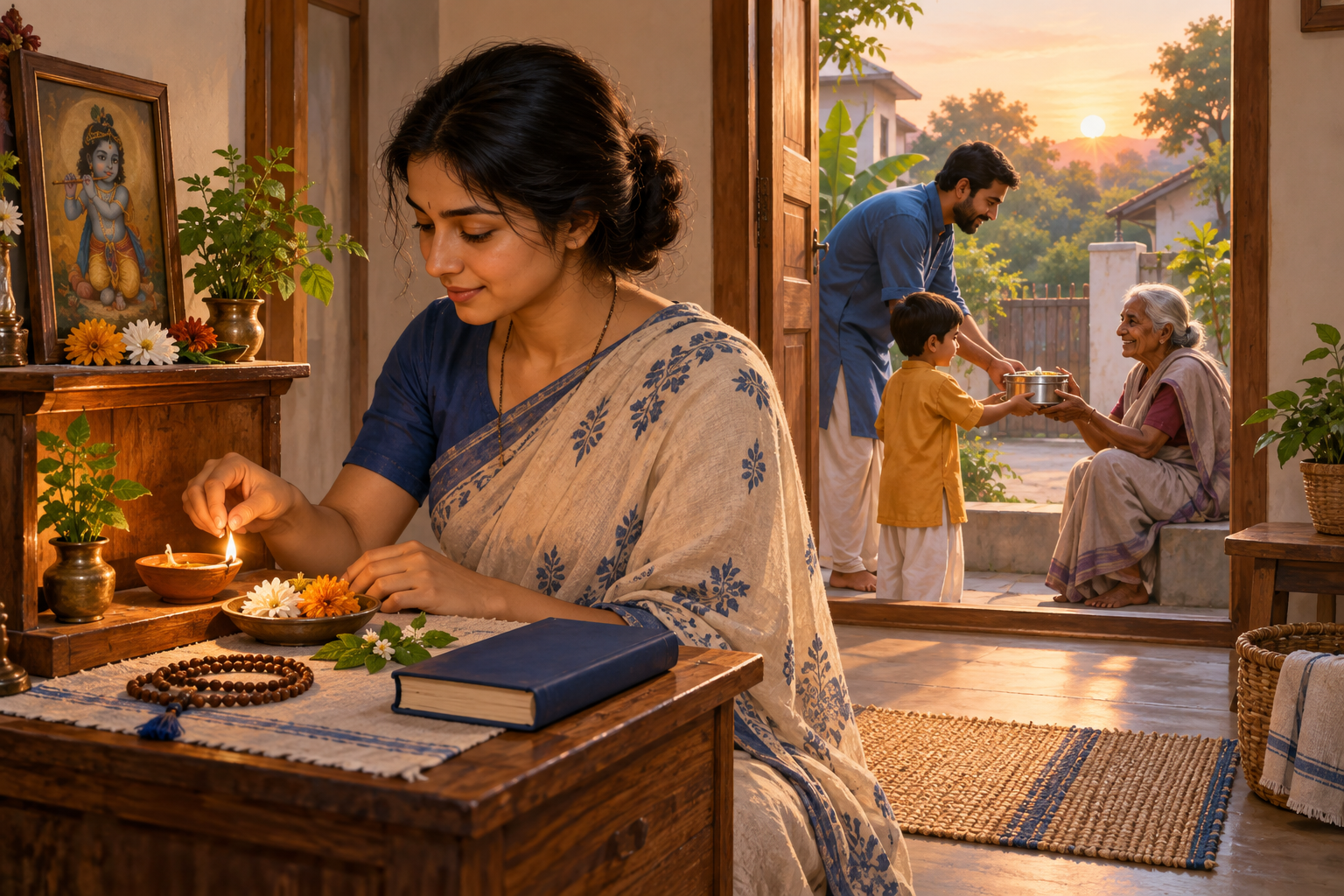
Attach the practice to a dependable part of your day, such as worship after bathing or the household’s evening prayer. Then use the same sequence consistently:
- Prepare the worship space and set distractions aside.
- Offer the lamp according to the practice you have received.
- Sing, recite, or hear the Damodarashtakam, or use the authorised prayer and divine name taught in your tradition.
- Recall the meaning of the lila and make one direct prayer rather than a long list of demands.
- Dedicate a concrete act of restraint, charity, study, or seva to Krishna.
This sequence is intentionally simple. Add to it only when the additions strengthen attention and can be maintained. If family duties make a long observance unrealistic, choose a shorter coherent practice rather than rushing through many items with resentment.
Choose a vrata that serves remembrance
A useful vrata is clear enough that you know what you promised, modest enough to repeat, and closely connected to devotion. You might protect time for nama-japa, read a passage of Krishna-lila, reduce recreational distraction, refrain from gossip, support temple service, give dana, or repair a neglected responsibility. Choose the discipline that addresses the attachment actually interfering with your practice.
Food restrictions and fasting rules are not interchangeable across traditions. Follow the rule you have genuinely received rather than borrowing an austerity because it sounds impressive. If you are ill, pregnant, managing a health condition, or taking medication, do not improvise a restrictive fast. Seek appropriate medical advice and ask your spiritual teacher for a suitable non-food vrata or modified observance.
Keep a missed observance in proportion. Resume sincerely, and consult your teacher if your lineage prescribes a formal response to a broken vow. Neither conceal the lapse nor create a dramatic punishment of your own. The purpose is renewed surrender, not self-absorption through guilt.
Key takeaways
- Damodara remembers Krishna accepting Mother Yashoda’s rope, revealing that divine majesty and intimate love are not opposites.
- The rope’s two-finger gap is widely understood as a lesson in sincere endeavour joined by grace, not as a formula for earning divine favour.
- A lamp, prayer, and vrata matter when they collect your attention and reshape your conduct; ritual scale by itself proves nothing.
- Follow one coherent calendar and sampradaya rather than assembling conflicting rules from unrelated traditions.
- Choose a practice sustainable enough to survive distracted days, family duties, and the fading of initial enthusiasm.
Before the month begins, make four decisions: which calendar you will follow, when your daily worship will happen, what its essential offering will be, and which vrata will support it. Write them down or share them with your household. Removing those daily decisions makes consistency much easier.
When the month ends, do not let every practice disappear at once. Keep the one that most clearly changed your attention or conduct. The deepest sign that Damodar month mattered is not that you completed a seasonal programme. It is that an ordinary day now contains a little more remembrance, service, and loving accountability than it did before.
References

Leave a Reply
You must be logged in to post a comment.