
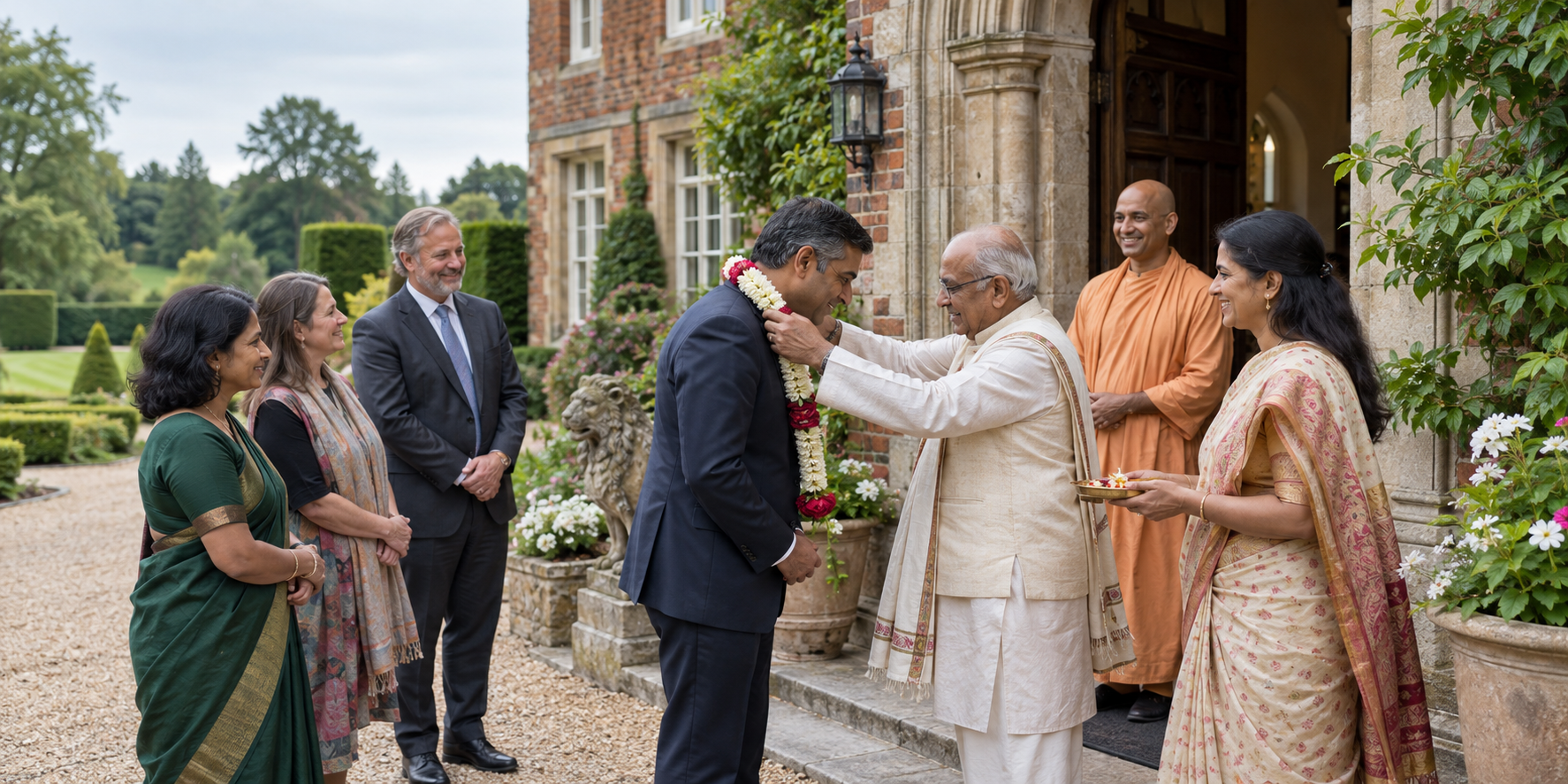
If you heard that a West Bengal minister visited Bhaktivedanta Manor, you may be asking what the encounter actually means for the community. The honest answer begins with a distinction: an official welcome can open a relationship, but it is not itself a policy result.
The confirmed fact is narrow: Agnimitra Paul, identified for the occasion as West Bengal’s Minister of Urban Development, visited Bhaktivedanta Manor and was welcomed by the community. No publicly stated agenda, undertaking, programme, funding decision, or follow-up accompanies that announcement. That does not make the visit meaningless. It means its significance should neither be dismissed nor exaggerated.
Read the encounter at the level the evidence supports

Public visits are often described with language that quietly turns access into achievement. You can avoid that mistake by separating three levels of engagement:
- Contact: an office-holder visits, receives hospitality, and becomes acquainted with an institution. The Bhaktivedanta Manor welcome establishes this level.
- Consultation: named participants discuss defined issues that fall within the visitor’s public responsibilities. Establishing this level requires at least a subject, participants, and some account of the exchange.
- Commitment: one or more parties accept a specific next action, with an owner and a date or other test of completion. A photograph, greeting, or expression of goodwill cannot establish this level.
For now, describe the event as a visit and welcome. Do not silently upgrade it to policy talks, institutional backing, a partnership, or an official commitment. Precise wording protects both the temple and the visitor from claims neither has publicly made.
The same discipline applies to political interpretation. Religious hospitality is not automatically electoral endorsement. If an encounter is ceremonial, call it ceremonial. If it concerns public policy, identify the issue. If it is partisan activity, label that clearly rather than allowing devotional respect and political support to blur together.
Why a ceremonial visit can still create public value
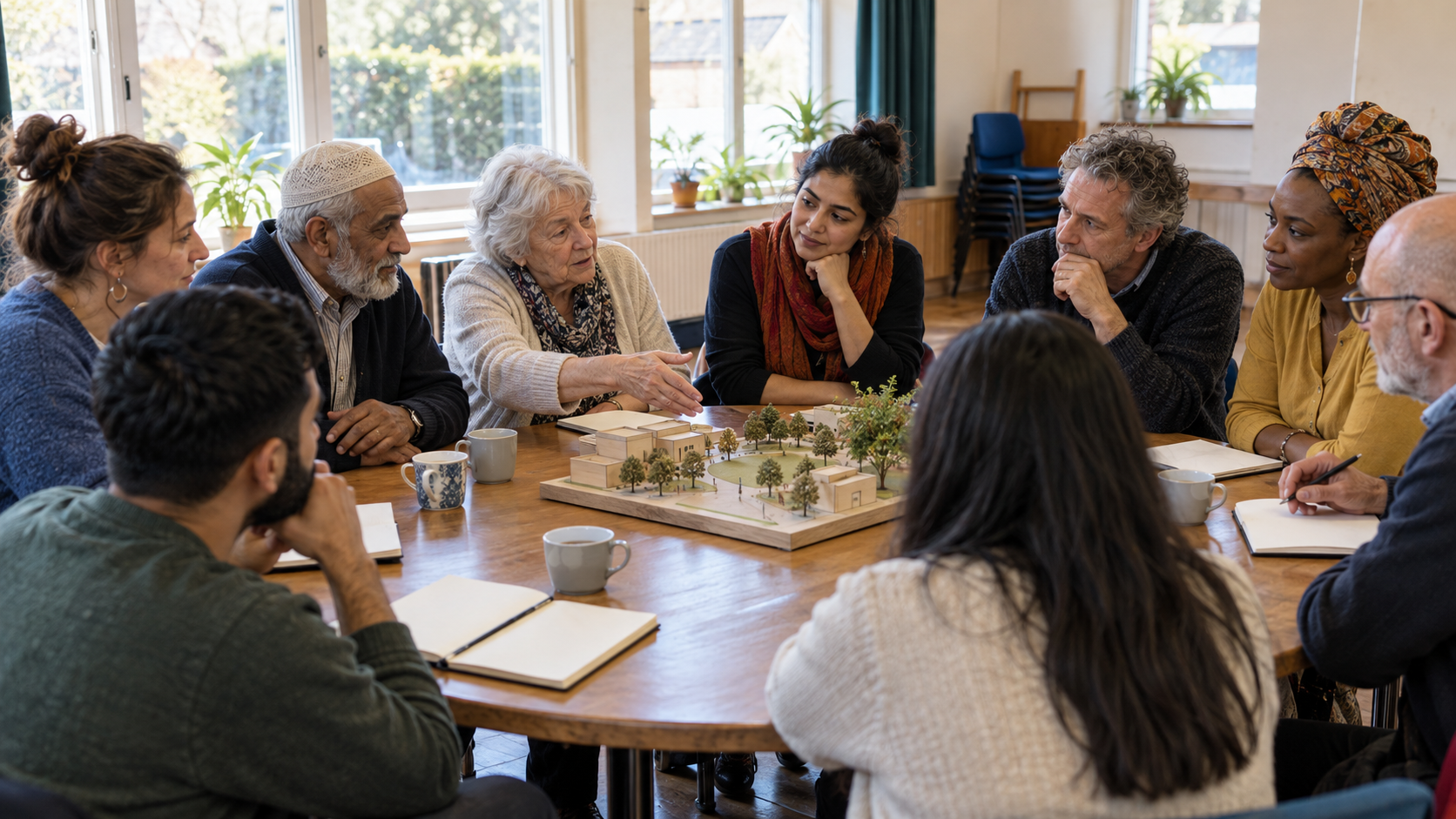
A first encounter can matter even when it produces no immediate decision. It can give an office-holder a clearer understanding of a Dharmic institution, establish a reliable contact on each side, and make a later substantive meeting easier to arrange. These are opportunities created by access, not outcomes that should be claimed in advance.
The next step determines whether the opportunity matures. If future engagement is connected to an urban-development portfolio, the discussion should concern matters within that office’s West Bengal jurisdiction. A focused question about heritage, civic access, public infrastructure, or the public realm is more useful than a broad request to “support Dharma.” The first task is to identify the responsible authority; an official cannot deliver something outside that authority’s remit.
A temple or cultural institution should also explain why its request serves a public purpose. Officials need more than an account of religious importance. They need to know what the practical issue is, who is affected, what administrative decision is sought, and how success could be recognised. That translation from spiritual concern to a workable civic request is where public engagement becomes serious.
Key takeaways: five tests for meaningful engagement
- Purpose: Can you state in one sentence why the visit took place, beyond goodwill and hospitality?
- Representation: Is it clear who participated and whether they spoke for the institution, an informal group, or only themselves?
- Jurisdiction: Does the request fall within the public body’s actual powers, or does it need referral elsewhere?
- Commitment: Was anything agreed, and can you name the responsible party, action, and expected completion point?
- Record: Can a community member distinguish what was discussed, what was referred, and what was formally accepted?
If only the first two answers are available, you have a relationship-building encounter. If all five are available, you have the beginnings of accountable public engagement. Both can be worthwhile, but they should not be presented as the same thing.
Turn the next visit into accountable follow-through

If you help organise Dharmic community engagement, the useful work begins before the guest arrives. A simple sequence keeps ceremony and substance in their proper places:
- Define the desired outcome. Write one sentence describing the decision, referral, information, or future meeting you want. If the sentence contains several unrelated requests, narrow it.
- Prepare a one-page brief. State the issue, the affected constituency, the reason it belongs within the official’s remit, and the precise action requested. Attach supporting material separately rather than burying the request in a long presentation.
- Name the roles in the room. Record who represents the institution, who represents the public office, and who is responsible for notes. Obtain consent before publishing personal names or photographs.
- Separate discussion from agreement. In the outcome note, use distinct labels such as “discussed,” “referred,” and “agreed.” A polite response during a visit is not necessarily an undertaking.
- Assign the next action before closing. Record who will act, what that person will do, and when an update is expected. If no action was accepted, say that plainly.
A concise public note can follow this structure: “On [date], [name and dated official title] met [participants] at Bhaktivedanta Manor to discuss [defined matters]. [Named party] agreed to [specific action] by [date]. [Other matters] were discussed without a commitment.” If nothing was agreed, omit the agreement sentence instead of filling the gap with promotional language.
As a reader or community member, you can ask four neutral questions: What was discussed? What was agreed? Who owns the next step? When should the public expect an update? Those questions are not hostile. They prevent ceremonial access from being mistaken for institutional influence and help genuine commitments remain visible.
The useful next move after the Bhaktivedanta Manor welcome is modest: preserve the occasion as a welcome, then request a short outcome note. If another engagement follows, judge it by whether a defined West Bengal matter, the responsible office, and the next action are placed on record. That is how courtesy develops into a public relationship the community can understand and evaluate.
References

Leave a Reply
You must be logged in to post a comment.