
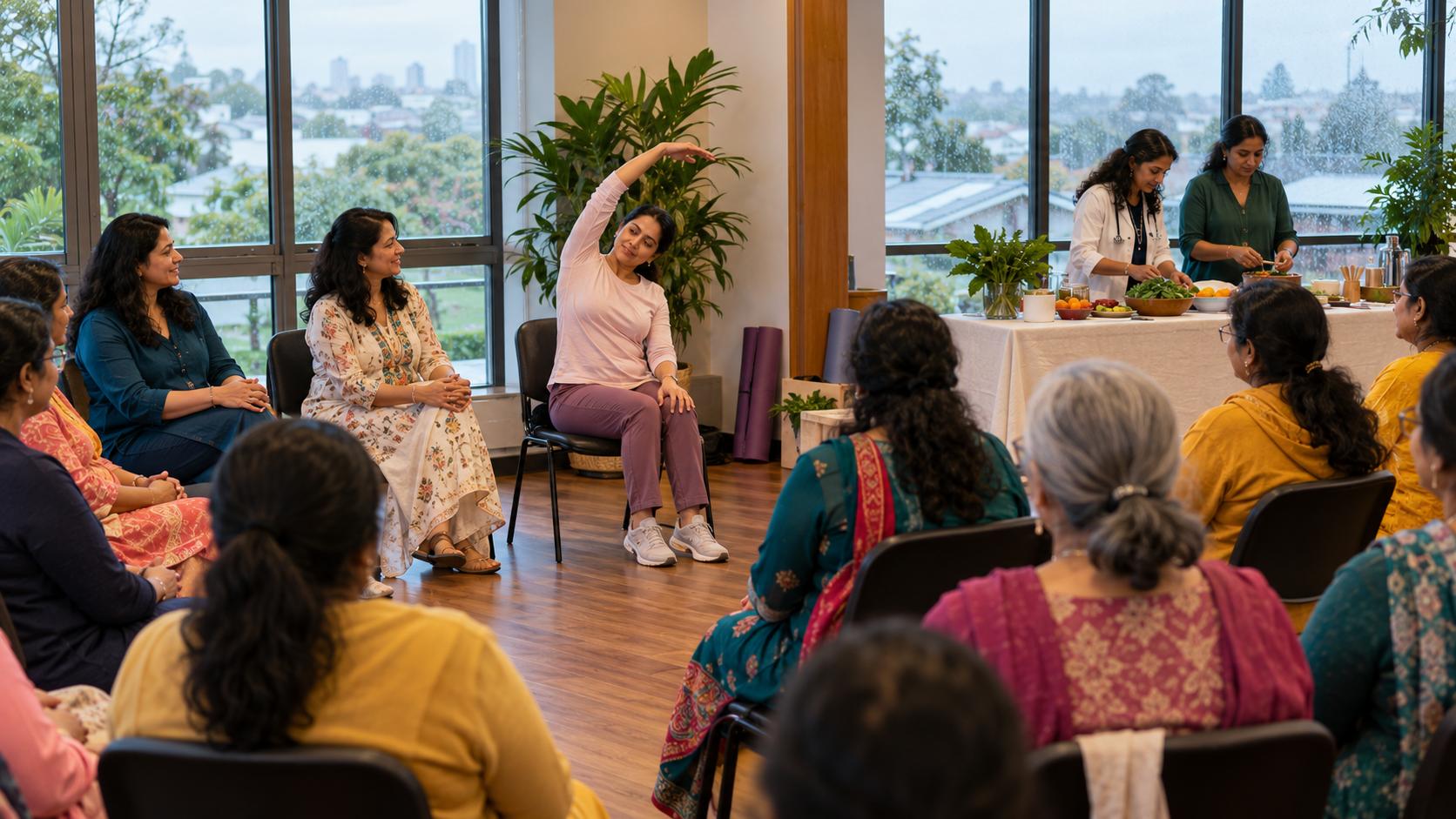
You may be wondering whether a 105-minute community seminar can offer more than general wellness advice. This Auckland gathering can be useful if you arrive with a real question: it brings reproductive health, nutrition, holistic care, yoga and dance-based movement into the same room, with opportunities to question specialists and see practical demonstrations.
The seminar is educational rather than a personal medical consultation. Keep that distinction clear, and you can use the afternoon to understand your options, identify the right kind of professional help and choose a realistic next step.
Check the format before reserving your place
The seminar will run from 4:15 pm to 6 pm on Saturday, November 14, 2026, in the Acacia Room at Sunnynook Community Centre on Auckland’s North Shore. Admission is free and the program is open to the public, but advance registration is compulsory because the venue has limited capacity.
- Event: A Healthcare Wellness Conversation for YOU!
- Date: Saturday, November 14, 2026
- Time: 4:15 pm to 6 pm
- Venue: Acacia Room, Sunnynook Community Centre, North Shore, Auckland
- Admission: Free, with advance registration required
- Format: Specialist discussion, audience questions, live demonstrations, refreshments and community networking
The New Zealand Hindu Women Forum, a service division of the Hindu Council of New Zealand, is organizing the gathering with the Hindu Professionals Association of New Zealand. Education specialist, holistic counsellor and author Sarisha Rameshlall Komal will coordinate the program and serve as master of ceremonies.
You can register through the Hindu Council of New Zealand event page. Register before arranging your journey; free admission does not mean that walk-in space will be available.
Use the five perspectives for five different purposes
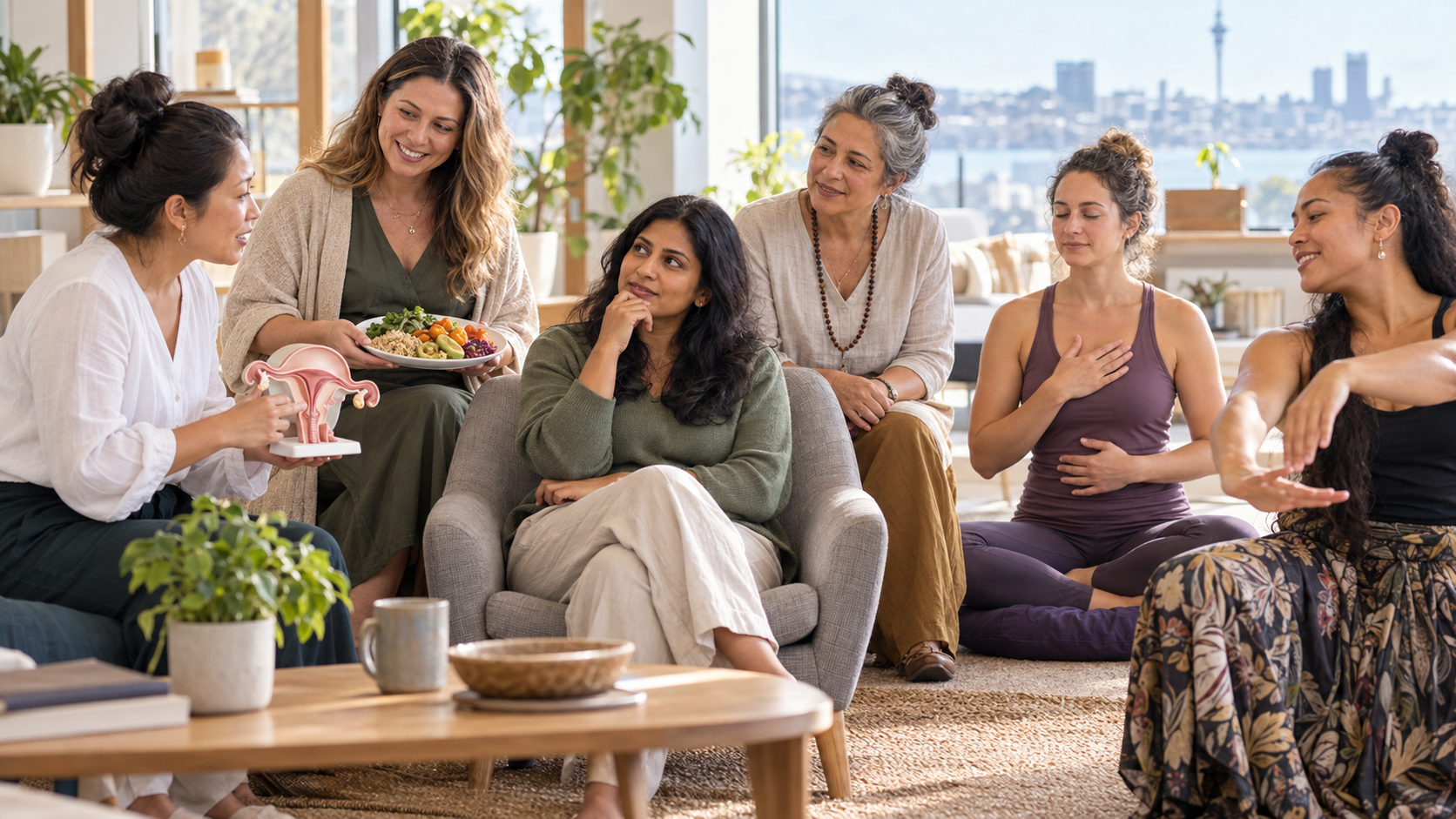
The breadth of the panel is valuable, but only if you distinguish what each contributor can help you understand. A gynaecologist, dietitian, holistic practitioner, yoga teacher and dance therapist do not perform interchangeable roles. Listen for the scope and limits of each approach rather than combining every suggestion into one undifferentiated wellness plan.
| Area | Contributor | How to use the session |
|---|---|---|
| Reproductive health | Dr Reshma Desai, obstetrician and gynaecologist | Ask which changes are commonly associated with your stage of life and which concerns need an individual medical appointment. |
| Everyday nutrition | Nivedita Sharma Vij, registered nutritionist and dietitian and co-founder of Muskaan Care Trust NZ | Look for one realistic food decision you can apply at home, then ask when personalised nutrition advice is necessary. |
| Ayurveda, energy healing and holistic self-care | Prabha Patel, director of Energy Healthcare and facilitator at The Reconnect | Ask what a practice is intended to support, what its limits are and how it should sit alongside clinical care. |
| Hatha yoga, mindfulness and relaxation | Amita Changoiwala, Hatha yoga teacher | Observe the demonstrations and ask how movement can be adapted for pregnancy, injury, restricted mobility or an existing condition. |
| Dance, cultural arts and emotional expression | Swetha Chepur, dance therapist and owner of Bazinga- The Dance Rapsody | Consider whether expressive movement could become a sustainable part of your routine rather than a one-time activity. |
Ayurveda, energy healing, yoga and dance may be explored as supportive wellness practices; they should not be treated as substitutes for diagnosis or necessary medical or psychological care. If a suggestion could affect prescribed treatment, pregnancy, an injury or an established health condition, discuss it with the qualified clinician responsible for that care before acting on it.
The same boundary applies to nutrition. General food education can help you make better everyday choices, but a public conversation cannot account for your complete health history, medication, allergies or individual nutritional needs.
Bring a question that leads to a decision
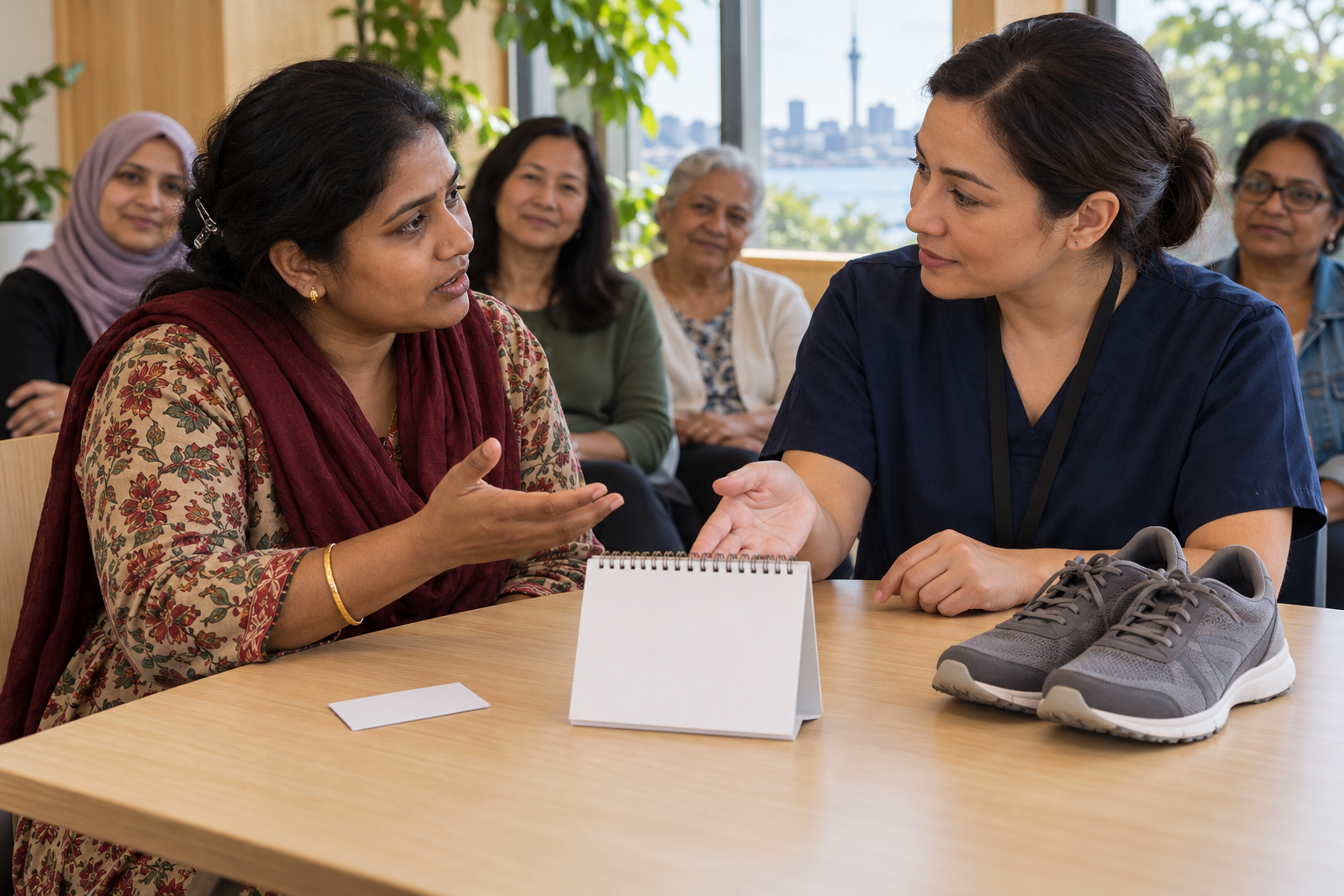
Five subject areas, demonstrations, questions and networking must fit into one hour and 45 minutes. You will get more from that limited time if you decide in advance what you most need to understand.
- Choose one primary area: reproductive health, food, holistic self-care, stress relief or movement.
- Name the decision in front of you. Are you trying to decide whether to book an appointment, change a daily habit, begin a practice or seek more specialised support?
- Phrase your question around scope. Ask what is generally appropriate, what the warning signs or limitations are and which professional should handle an individual assessment.
- Keep private details private. A public question-and-answer session is not the place to disclose a full medical history. Ask for the general principle and arrange a confidential consultation if your circumstances require one.
- Write down one follow-up action before moving to the next topic.
Useful questions might include:
- Which changes are commonly expected at my stage of life, and which ones deserve a separate medical appointment?
- What is one practical nutrition change that can fit a normal family routine, and when would individual dietary advice be more appropriate?
- Is this holistic practice intended for comfort, relaxation or treatment, and what should it never replace?
- What modification should someone request before trying this yoga or dance movement during pregnancy, after an injury or with limited mobility?
- What is the safest next step if the general information sounds relevant to my situation?
If you already have a worrying, worsening or urgent health concern, do not wait for the seminar or rely on a public panel to assess it. Seek appropriate medical help. The event is better used to improve your health literacy and follow-up questions than to obtain an on-the-spot diagnosis.
Key takeaways
- Register in advance even though admission is free; capacity is limited.
- Arrive with one primary question and one decision you want to make afterward.
- Use the reproductive-health and nutrition discussions to learn when general education should become an individual consultation.
- Evaluate Ayurveda, energy healing, yoga and dance as supportive practices with defined limits, not replacements for necessary care.
- Stay for the community conversation if you want to exchange experiences and build local connections, but protect your medical privacy in the public setting.
- Leave with one concrete follow-up action rather than an unmanageable list of wellness intentions.
Put Nari Shakti into everyday health practice
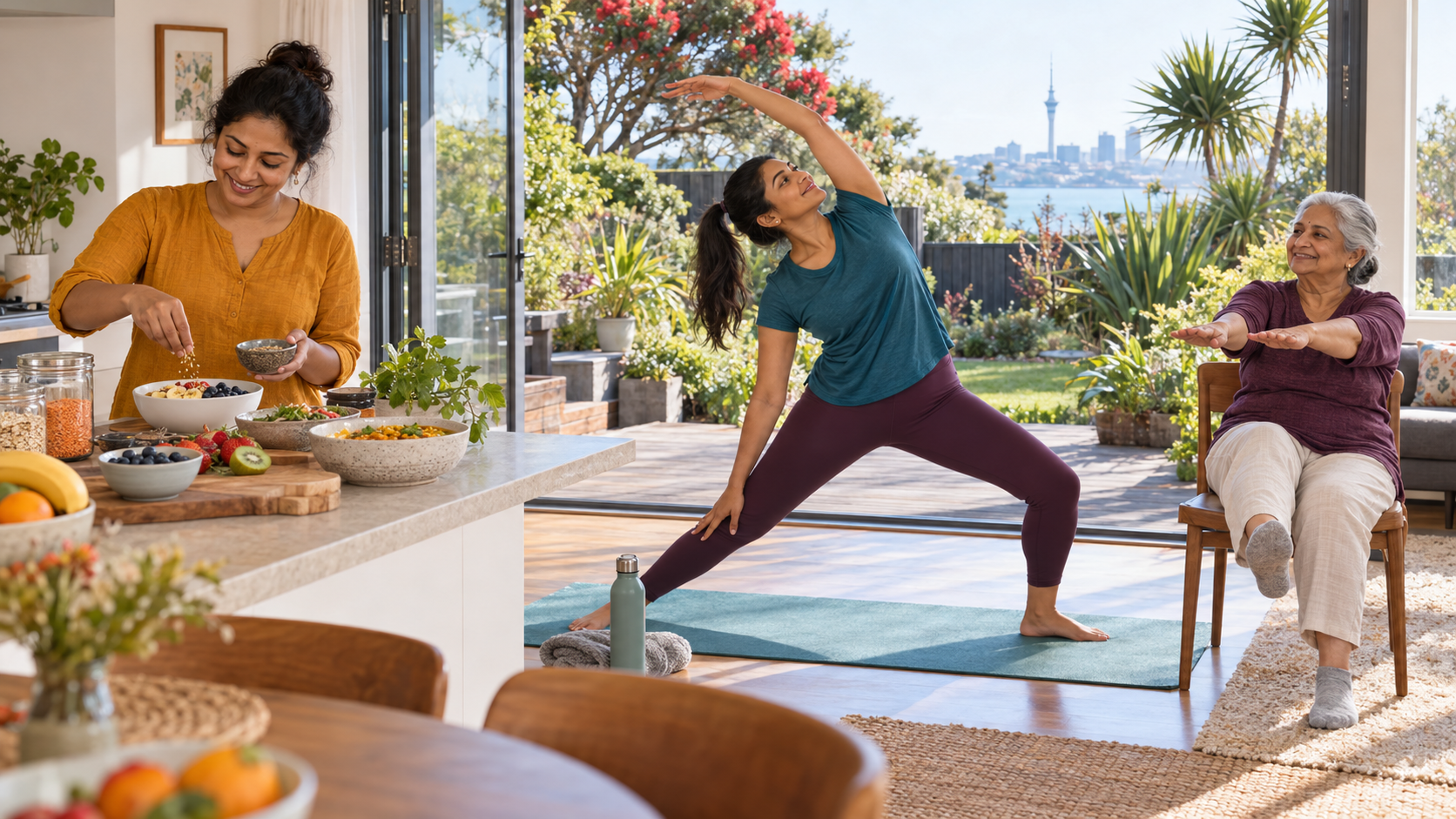
Hindu tradition recognizes the feminine through the many dimensions of Shakti: courage, wisdom, sustenance, prosperity and protection. That reverence has practical consequences. A community cannot praise women’s strength while expecting women to postpone their own physical, emotional and mental well-being indefinitely.
Making time for health education is therefore not self-indulgence. It helps a woman ask informed questions, recognise the limits of general advice and seek appropriate care before an ignored concern becomes harder to address. Families can support that responsibility in simple ways: protect the time needed to attend, share domestic duties and treat follow-up care as a legitimate priority.
The Auckland gathering also belongs to a wider effort. It follows community engagement in Wellington and other parts of New Zealand, strengthens networks concerned with women’s physical, emotional, mental and spiritual well-being, and contributes to preparations for the third New Zealand Hindu Women Conference in Christchurch in 2027.
If this format meets your needs, reserve your place and write down your question now. Before leaving the seminar, choose the next action that belongs on your calendar – whether that is arranging qualified care, seeking individual nutrition guidance, exploring an appropriately modified movement practice or continuing a useful community connection.
References
- Hindu Post – New Zealand Hindu Women Forum to host women’s health and wellness seminar in Auckland on November 14
- Hindu Council of New Zealand – Women’s Health & Wellbeing Seminar registration

Leave a Reply
You must be logged in to post a comment.