
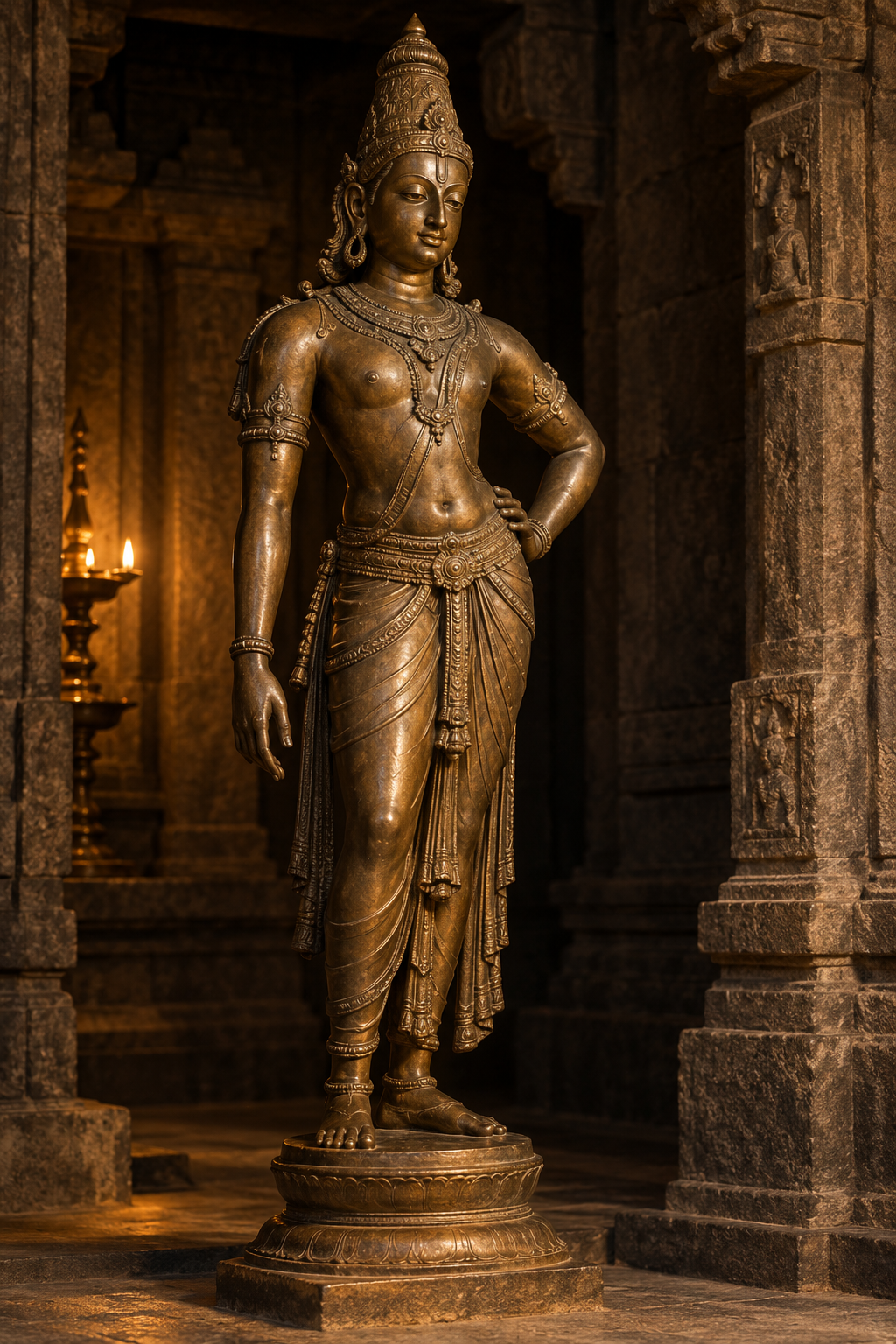
You are standing before a murti when one arm catches your attention. The hand rests at the waist, the elbow opens away from the body, and the figure appears composed rather than passive. Is that position merely decorative, or are you looking at a meaningful gesture?
It is often Kati Hasta, also called Kati Avalambita Hasta. Once you know what to examine, you can identify it without treating every hand position as a secret code. More importantly, you can see how the gesture contributes to the presence of the whole divine form.
Identify the physical gesture before assigning a meaning
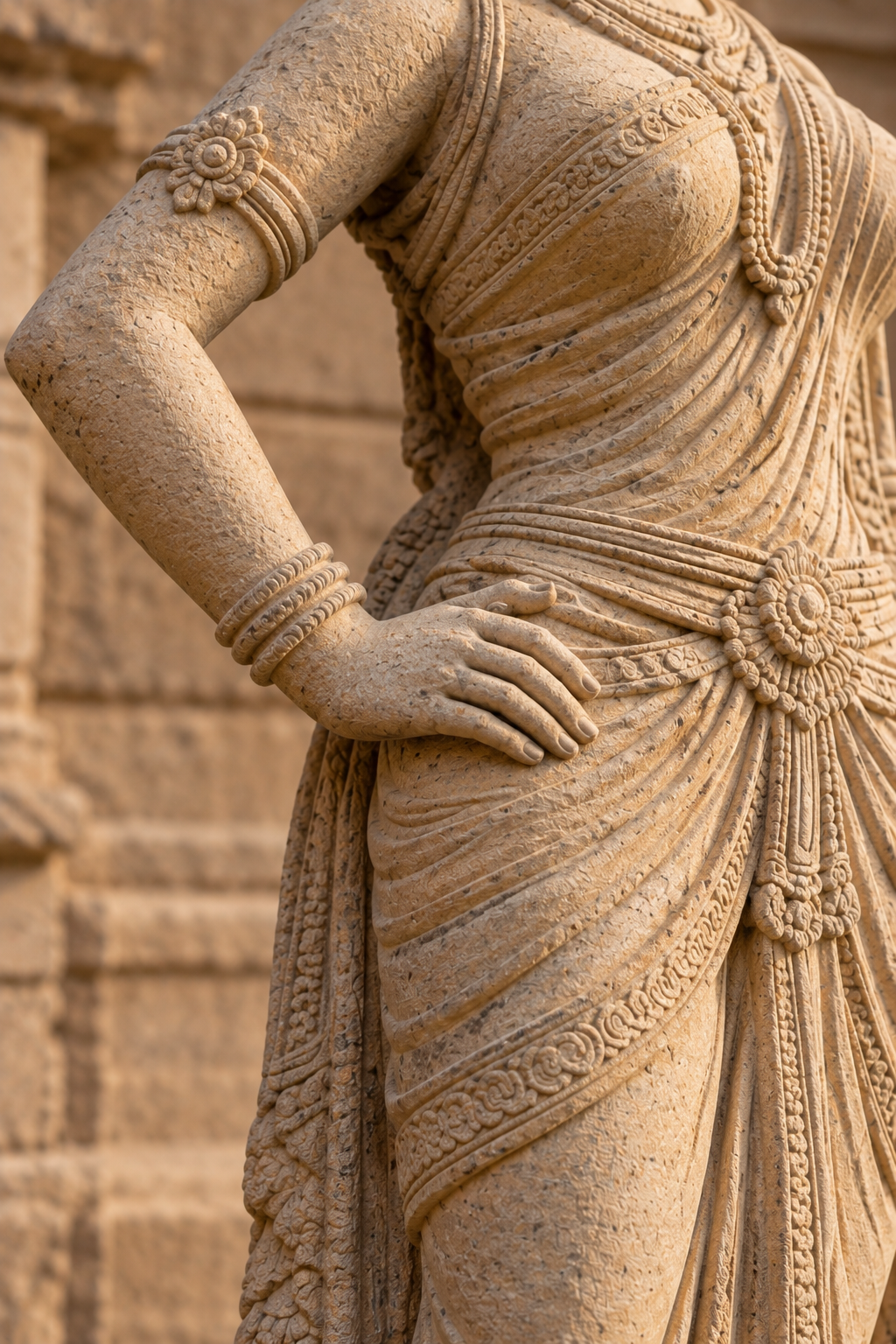
Begin with placement, not interpretation. In the name Kati Hasta, kati refers to the waist, while the hand rests upon or is supported at the hip or waist. Depending on the sculpture and your viewing angle, the palm, fingers, wrist, or side of the hand may provide the most visible point of contact.
Use this short visual check:
- Trace the arm from shoulder to elbow. The arm should lead deliberately toward the waist rather than simply hang beside the torso.
- Look for contact or clear support at the hip or waist. Proximity alone is not enough.
- Notice the elbow. Its outward angle often helps create the gesture’s confident silhouette.
- Inspect the fingers and palm for an object. If the hand is carrying an attribute, gripping clothing, or touching another figure, that action may be more important than the apparent hip placement.
- Check the stone or metal for damage. A broken forearm or missing object can make a different gesture resemble Kati Hasta.
Do not decide from a frontal photograph if another view is available. A shallow carving can compress the apparent distance between hand and waist, while a sculpture in the round may reveal the contact clearly from the side.
Why repose here does not mean weakness or inattention
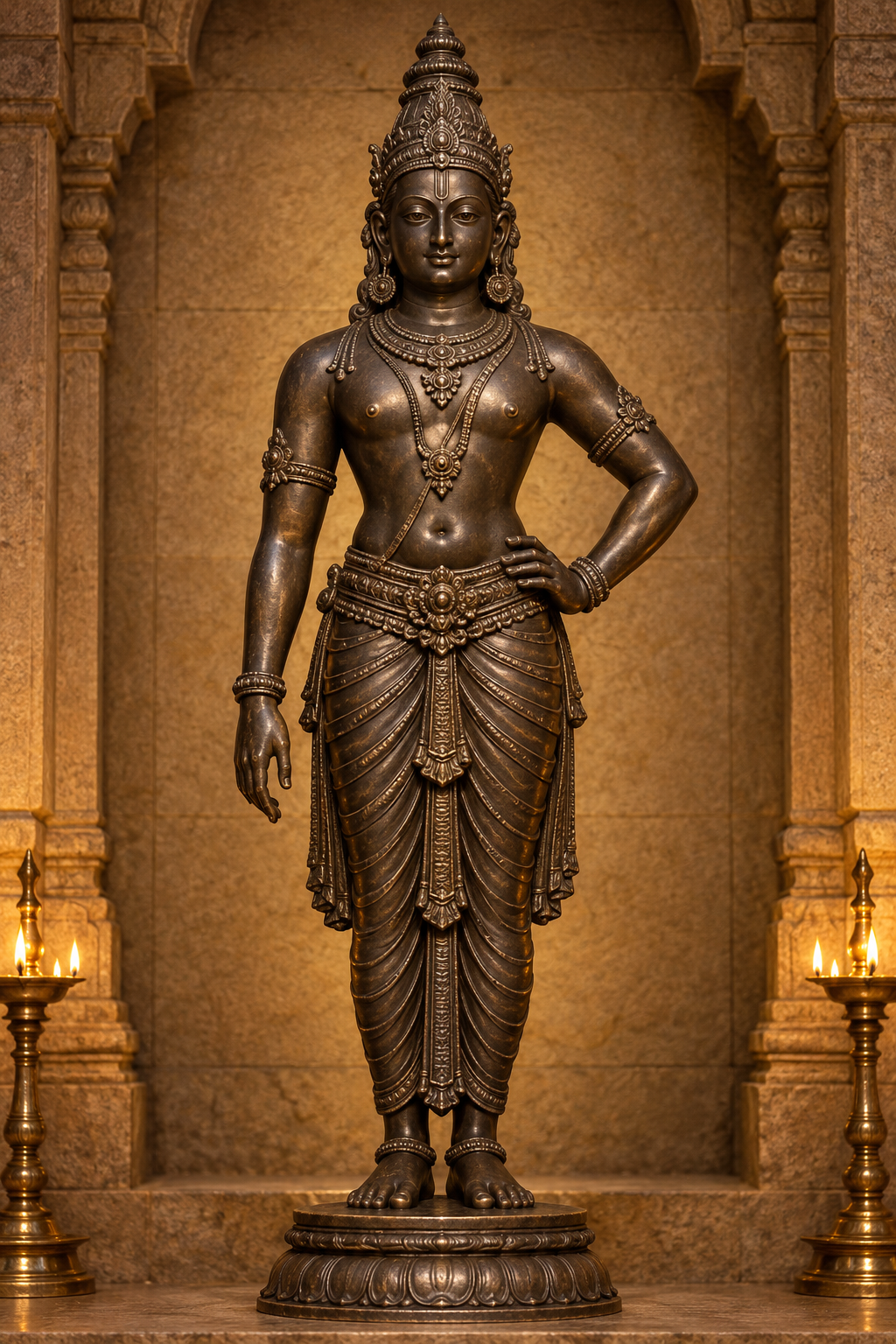
A hand at the hip can look casual in ordinary modern body language. That assumption is unreliable in Hindu sacred art. Kati Hasta brings repose into a deliberately ordered form. The arm is at rest, but the figure’s presence is not diminished.
The most useful interpretive words are poise, self-possession, steadiness, and controlled power. The gesture can make a divine figure appear entirely at ease while remaining fully capable of action. Its force comes from the union of rest and readiness: nothing needs to be proved through strain.
You can notice that effect by temporarily covering the arm in an image. The figure will often lose part of its lateral balance and assurance. Restore the arm, and the projecting elbow gives the body breadth while the supported hand settles the composition. The meaning is carried not only by the fingers but by the arm’s complete line.
This is why “resting on the hip” is an incomplete description. It tells you where the hand is, but not what the sculptor achieves through that placement. The pose can make stillness feel sovereign rather than empty.
Read Kati Hasta as one part of the complete murti
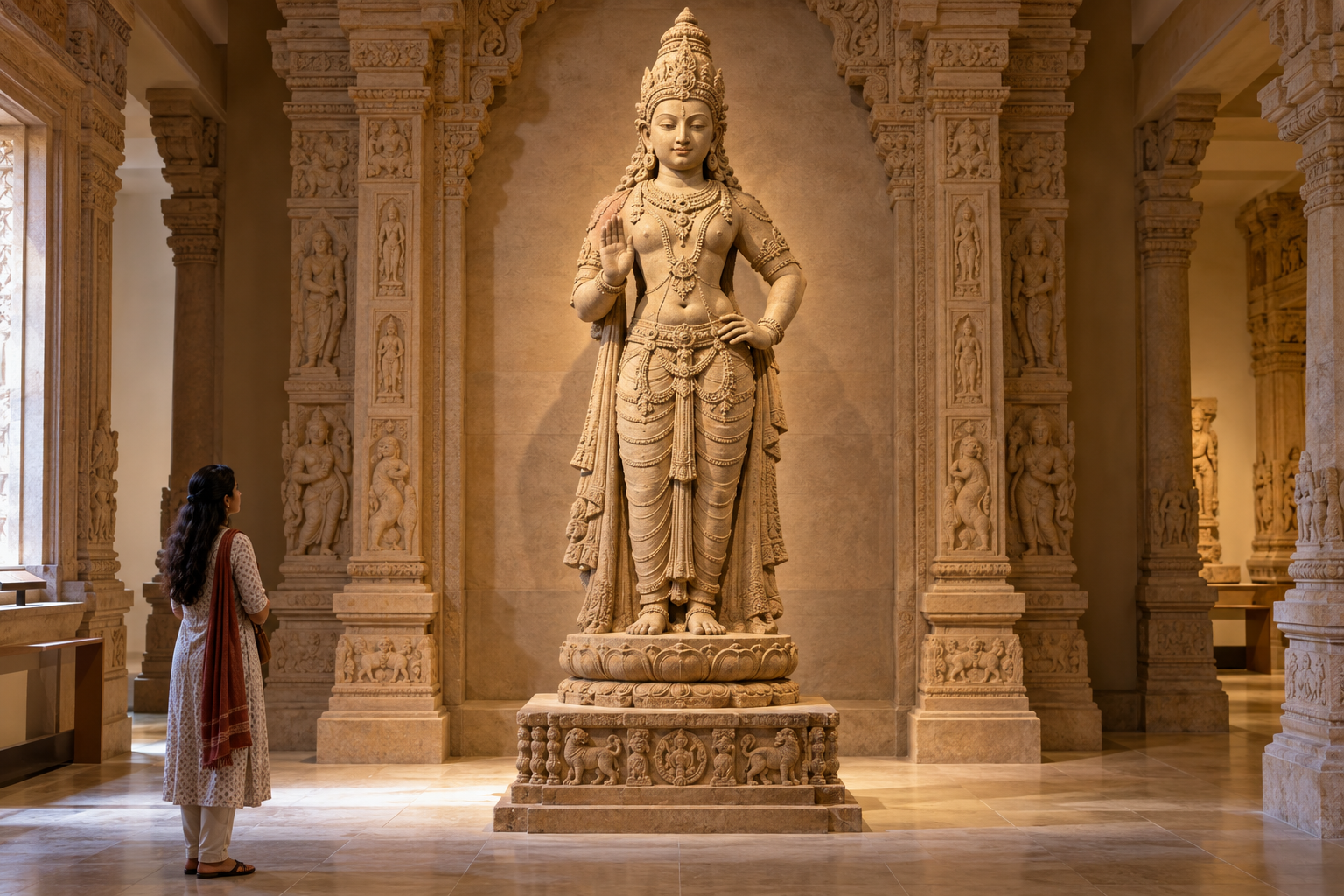
Kati Hasta does not carry one rigid message in every image. Hindu iconography is relational: a hand acquires force from the stance, face, other hands, attributes, attendants, and architectural setting around it. Treat the gesture as one word in a visual sentence.
Ask these questions in order:
- What is the other hand doing? A hand that blesses, holds an attribute, or performs another action can place the resting arm in contrast with active divine agency.
- How is the body’s weight arranged? A firmly planted stance can make the gesture feel authoritative. A more fluid bend can make the same hand placement contribute to grace and rhythmic movement.
- What does the face contribute? A tranquil expression strengthens the sense of effortless composure. A more forceful expression can turn the resting arm into a sign of contained energy.
- Is the form symmetrical? Kati Hasta often matters because it interrupts symmetry. That asymmetry can animate an otherwise frontal figure without destroying its stability.
- What surrounds the figure? Attendants, weapons, ornaments, a pedestal, and the shrine context may clarify what kind of presence the sculptor is establishing.
This method keeps you from making two common errors. The first is reducing the murti to a catalogue of isolated mudras. The second is reading a familiar modern attitude into a sacred form. In both cases, the cure is the same: return the hand to the body and the body to its iconographic setting.
Avoid the three most common misreadings
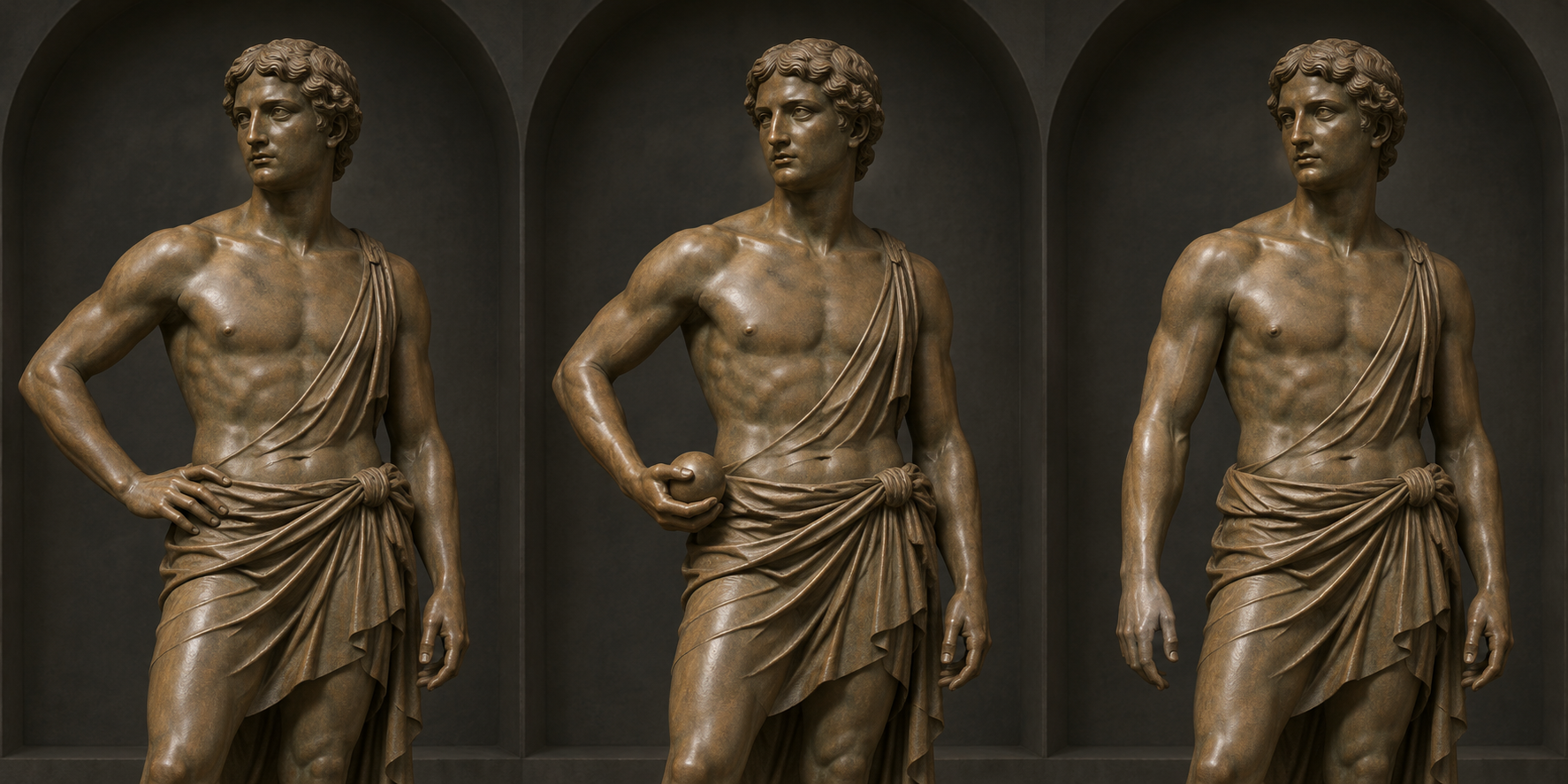
The first misreading is to call every hand near the waist Kati Hasta. A hand may instead hold a garment, grasp an attribute, rest against a support, or survive only as a damaged fragment. Follow the forearm, establish contact, and look for the original action before naming the pose.
The second is to make the gesture identify a deity by itself. Kati Hasta describes an arm-and-hand position, not a complete identity. Establish identity from the full combination of attributes, bodily form, companions, ornaments, mount, and shrine context. If those indicators are missing, “a figure displaying Kati Hasta” is more accurate than a confident but unsupported identification.
The third is to translate repose as indifference. Sacred stillness can communicate mastery. When the remaining features are alert and ordered, the supported hand may show that power is present without agitation. Look for tension in the whole composition before attaching an emotion to one limb.
When writing a caption or explaining the image to someone else, separate observation from interpretation. First say, “The hand rests at the waist in Kati Hasta.” Then add, “Within this composition, it contributes to an impression of poise and assured stillness.” That distinction makes your explanation both clearer and more honest.
Key takeaways
- Kati Hasta, or Kati Avalambita Hasta, is recognized by a hand deliberately resting upon or supported at the hip or waist.
- Confirm the arm’s path, the point of contact, the elbow’s angle, and the absence of a held object before assigning the name.
- Read the gesture through the whole figure. Stance, expression, other hands, attributes, and setting determine its particular effect.
- Its repose can convey poise, self-possession, stable authority, or power held without strain.
- Do not use Kati Hasta alone to identify a deity, and do not mistake damage or a hand near the waist for a complete gesture.
The next time you encounter this pose, pause before searching for a fixed translation. Trace the arm, verify the contact, and then widen your gaze to the complete murti. Kati Hasta becomes intelligible at that scale: not as an isolated hand sign, but as repose made visible within divine form.
References

Leave a Reply
You must be logged in to post a comment.