
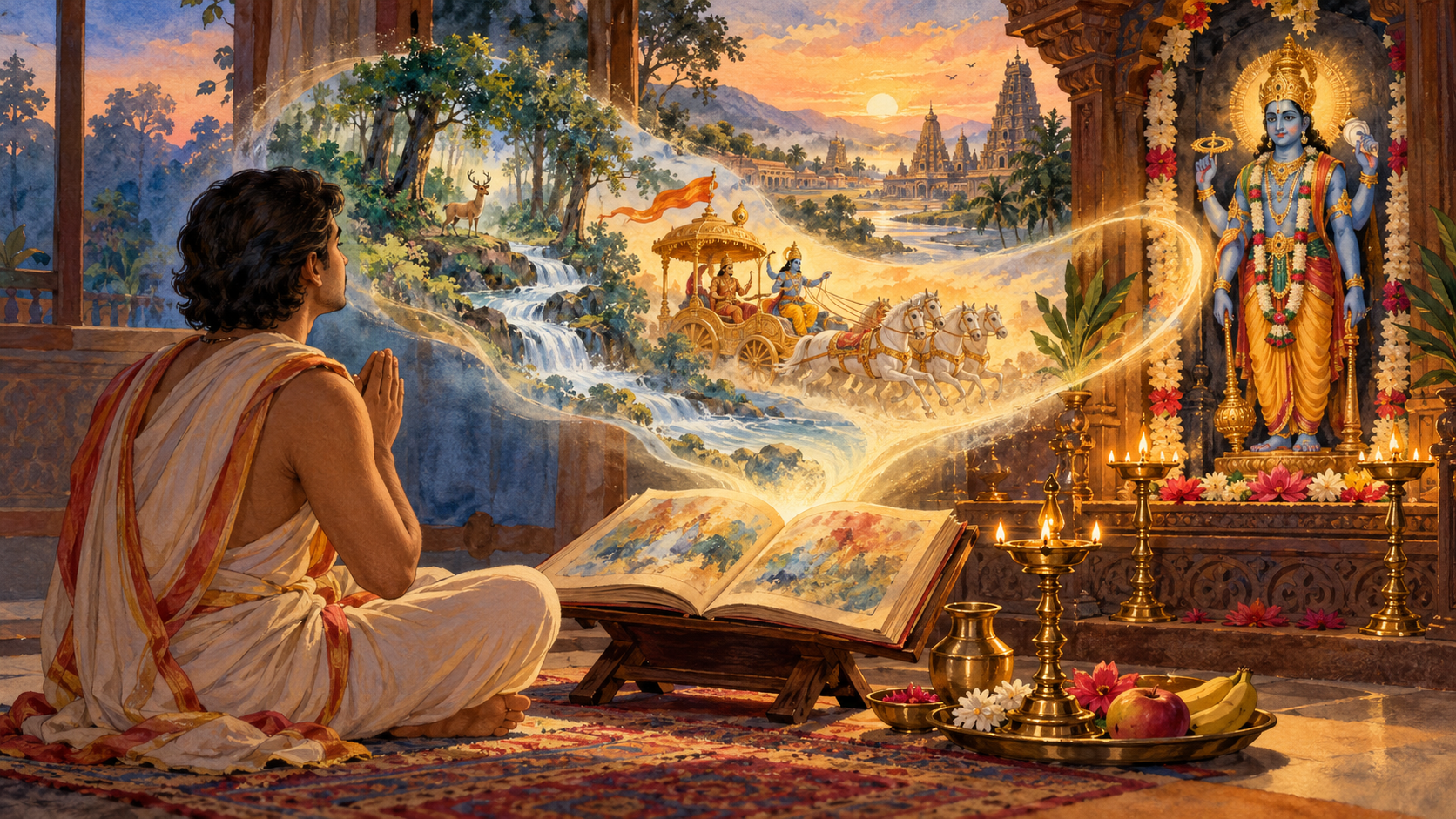
If you value Hindu stories but have been told that serious philosophy begins only after you leave the stories behind, you have been handed a false choice. The same problem appears in worship: puja can feel like a transaction unless you understand why an infinite, complete Divine would receive a lamp, a flower, food, or prayer.
Vedanta lets you approach narrative and worship as parts of one discipline. The story gives philosophical truth a form you can remember; worship asks you to embody that truth. The aim is not to turn every deity into an abstraction. It is to notice how sacred form, devotion, self-knowledge, and daily conduct illuminate one another.
Hindu narrative does not force you to choose between story and philosophy
A Purana may present celestial beings, cosmic conflict, immense spans of time, divine descents, boons, curses, ordeals, and restoration. Those elements are not philosophical embarrassments that must be discarded before the narrative becomes meaningful. Mythic form can carry Vedantic insight through character, image, consequence, and remembrance.
Vedantic meaning is deeper than a hidden moral such as “pride is bad” or “good defeats evil.” Vedanta asks more searching questions: What is ultimately real? What is the self? Why does a being that seeks lasting fulfilment become attached to temporary powers and identities? What is bondage, and what makes liberation possible? What is the relationship among the individual, the world, and the Divine?
A narrative can place those questions before you without reducing them to a proposition. A character may possess knowledge but remain ruled by self-importance. Another may appear powerless yet remain inwardly anchored in the Divine. A victory may restore outward order while also revealing that control, status, and exceptional ability cannot make a finite ego absolute.
Three common reading habits prevent that depth from becoming visible:
- Dismissing the account as fantasy: This notices unusual imagery but never asks what the imagery allows you to see about consciousness, attachment, devotion, or reality.
- Reducing everything to an allegorical code: A deity becomes “only” a mental faculty, a demon becomes “only” an emotion, and the sacred relationship disappears. This can be as flattening as a purely literal reading.
- Demanding one exclusive layer: Narrative, ethical instruction, devotion, and metaphysical inquiry can operate together. You do not have to destroy one level to attend to another.
Vedantic traditions do not interpret every divine form or every relationship in exactly the same way. Some stress the nondual ground of reality. Some understand the individual and world as inseparable from, yet not simply identical to, the Supreme. Some insist on an enduring distinction between the worshipper and the Lord. That disagreement matters. A responsible reading therefore begins within the narrative and its lineage rather than announcing that every story secretly teaches the same formula.
Read each sacred story on three connected levels
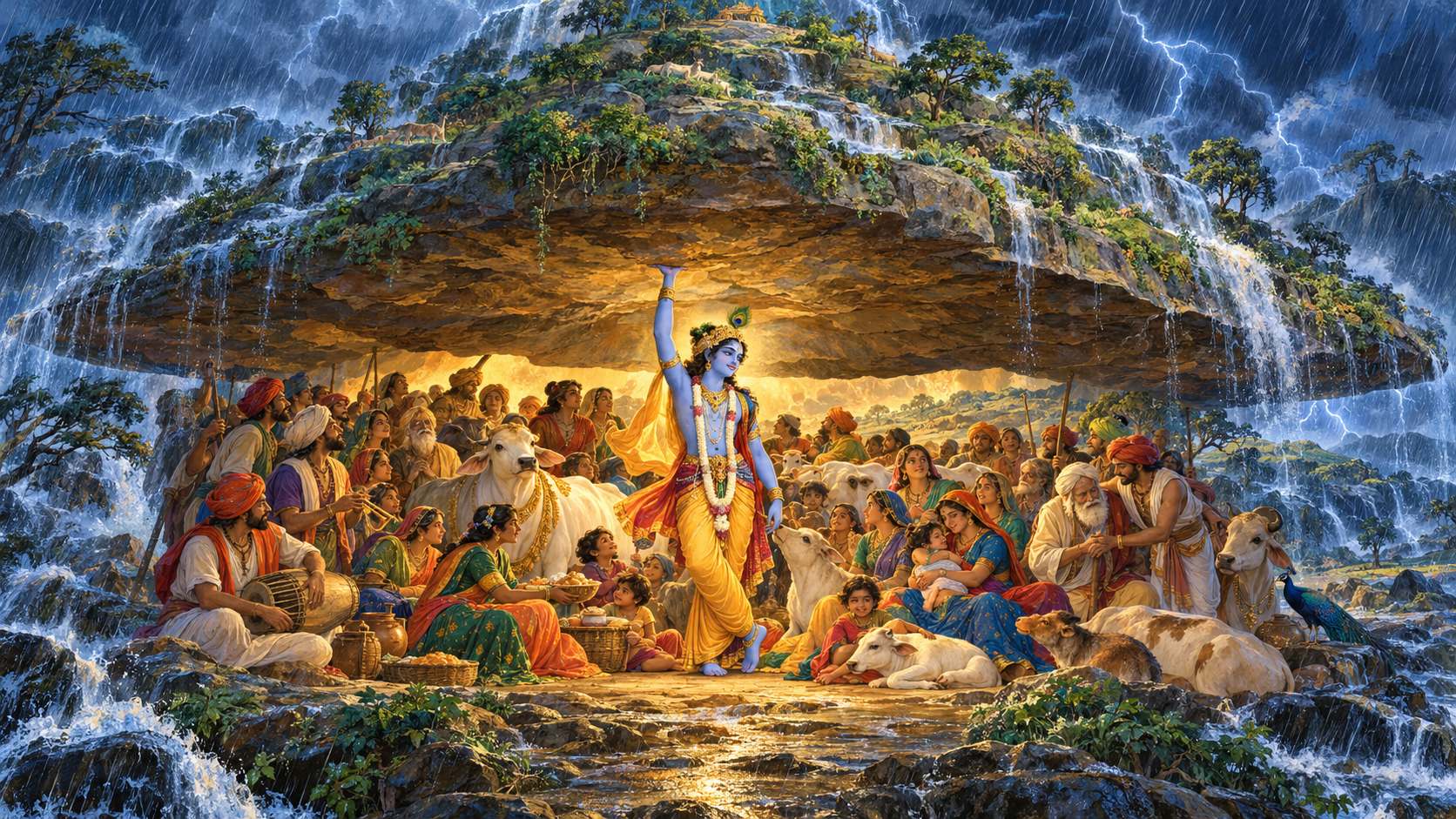
You can recover philosophical depth without treating the Purana as a puzzle book. Read it on three levels, in order. Each level corrects a weakness in the others.
First, respect the narrative and devotional level
Begin with what actually happens. Who seeks what? What promise, discipline, mistake, conflict, or act of grace changes the situation? Which form of the Divine is central? What qualities does that form reveal to the devotee?
Do not rush to translate the deity into an impersonal concept. The form, name, relationship, and emotional force of the account are part of its meaning. If the story evokes trust, awe, gratitude, dependence, or surrender, notice that before you interpret it. Bhakti is not decorative packaging around philosophy; it is itself a way of knowing and relating.
Second, identify the ethical and psychological movement
Now ask what changes within the persons in the narrative. Does discipline become a means of self-aggrandisement? Does fear narrow perception? Does devotion remain steady when circumstances deteriorate? Does a boon increase freedom, or merely enlarge the character’s ability to act from ego?
Suppose a powerful being gains an extraordinary capacity, treats that capacity as proof of independence, and begins to dominate others. The ethical lesson concerns power without restraint. The psychological lesson concerns identification: the character no longer sees power as a conditional possession but builds an entire self around it. You can then ask where you make the same movement on an ordinary scale – with knowledge, professional authority, family status, physical ability, or religious learning.
Third, ask the Vedantic question
At this level, look for confusion between the dependent and the absolute. Which character treats a temporary condition as the foundation of the self? What remains when possessions, roles, praise, strength, and control change? Where does the narrative expose the limits of acquisition? Does liberation appear as getting a larger object, or as freedom from a mistaken identification?
This is where the great Vedantic declarations, often called the mahavakyas, become relevant. Their purpose is not to flatter the everyday ego with the claim that it is already all-powerful. They direct inquiry beyond the body, social persona, passing thought, and possessive self-image toward the deepest truth of being and consciousness.
A sound Vedantic reading should make the narrative more exact, not more vague. It should explain why pride produces bondage, why surrender can disclose freedom, why divine grace matters, or why the apparent triumph of ego cannot be final. If an interpretation could be pasted onto any story without changing a word, it is probably too generic to be useful.
There is also an ethical test. Nonduality cannot honestly be used to excuse cruelty, indifference, or irresponsibility on the grounds that distinctions are ultimately transcended. If your interpretation makes another person’s suffering easier to dismiss, you have probably used metaphysics to protect the ego rather than examine it.
Worship changes your orientation; it does not complete Brahman
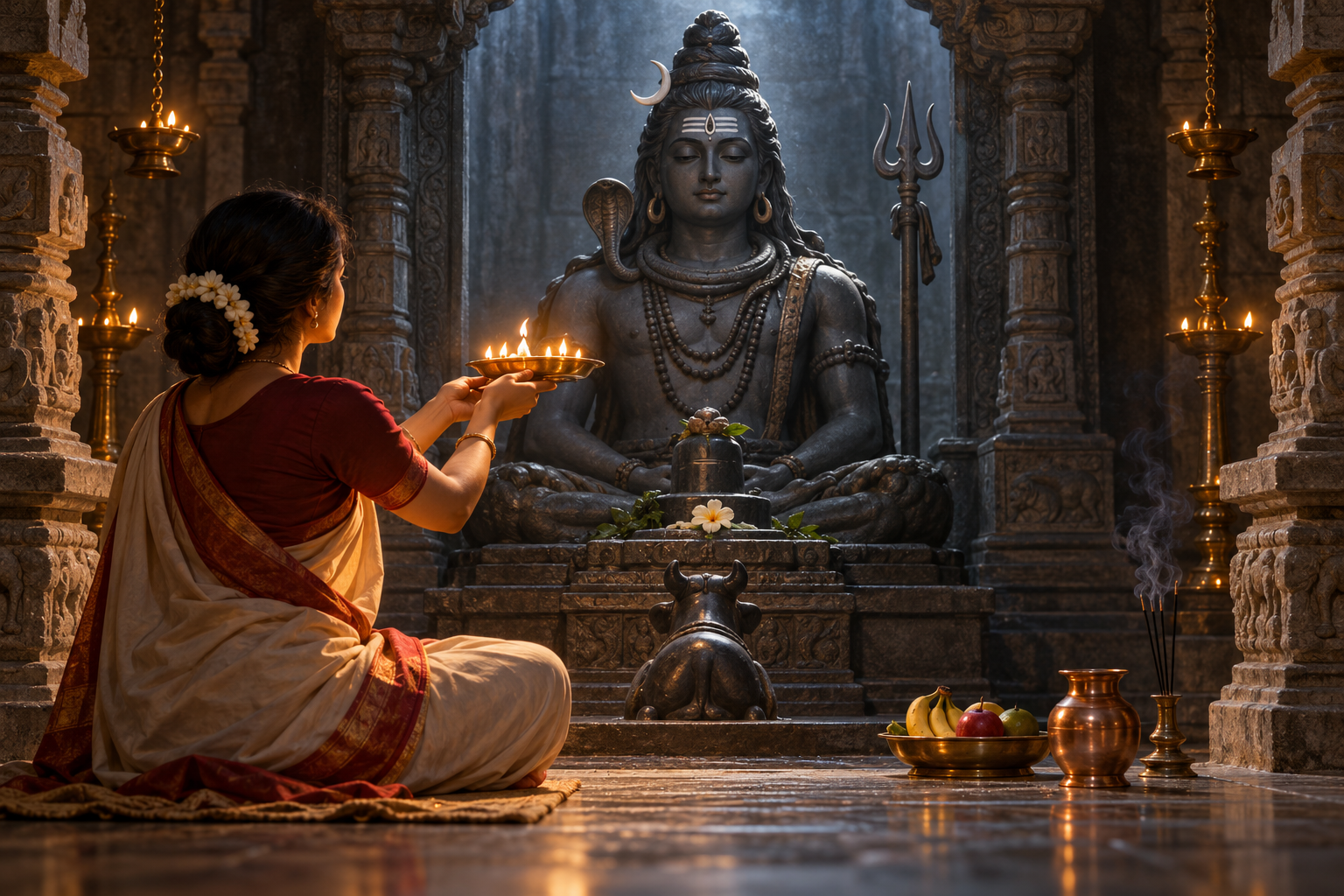
The central paradox of worship is simple. Brahman is not an incomplete being waiting to receive something from you. Infinite reality cannot become more complete because you offer a flower, nor less complete because you forget to do so. In that sense, prayer is needed by the worshipper rather than by the Divine.
That does not make puja unreal or merely therapeutic. Within devotional traditions, the relationship with the Divine is not a fiction invented for self-improvement. The more precise point is that the ritual works on your capacity to perceive, receive, offer, and act. You bring a restless mind, a possessive will, and a fragmented sense of self into an ordered encounter with sacred presence.
The Bhagavad Gita 9.22 places constant devotion and worship at the centre of the divine-human relationship. Constancy matters because a single elevated feeling rarely overturns a deeply rehearsed habit. Repeated worship gives the body, speech, attention, and intention a common direction.
The following connections are aids to reflection, not exclusive definitions of ritual:
| Act of worship | What you outwardly do | What you can inwardly notice |
|---|---|---|
| Lighting a lamp | Place light before the deity | Whether attention is becoming clearer or merely continuing its usual distractions |
| Offering water, flowers, or food | Give what could have been treated as “mine” | Where gratitude replaces possession, and where possessiveness still resists |
| Repeating a mantra or divine name | Return speech and attention to a sacred focus | How quickly the mind wanders, and how gently but firmly it can be brought back |
| Performing or receiving aarti | Attend to the illuminated divine form | Whether you are learning to see life in relation to the sacred rather than merely as material for the ego |
| Offering pranam | Bow the body | Whether the inward claim to superiority bows with it |
The distinction between saguna and nirguna Brahman can clarify what is happening. Nirguna points to the Supreme beyond limiting attributes and conceptual containment. Saguna names the Supreme approached with qualities, form, relationship, and devotion. These are not permission to rank sincere worshippers as philosophically inferior. Sacred form can gather the whole person – senses, memory, affection, will, and understanding – into a relationship that bare abstraction may not sustain.
Nor should “God needs nothing” become an excuse for careless worship. The care is for your formation. Attention, cleanliness, sequence, reverence, and regularity reveal what you are actually willing to give. The offering may be materially small while the relinquishment it represents is substantial.
Use one method to connect a narrative with your worship

On your next reading, temple visit, or home puja, work through the following sequence. Write the answers if you tend to settle for attractive but vague interpretations.
- State the narrative plainly. Summarise the central movement without symbolism. Name the desire, conflict, choice, consequence, and divine response. If you cannot do this, you are not yet interpreting the actual story.
- Find the false centre. Ask what a character treats as ultimate: power, bodily survival, prestige, knowledge, control, pleasure, or even spiritual achievement. Then identify the cost of that attachment.
- Find the point of reorientation. Look for remembrance, surrender, insight, grace, devotion, or the collapse of self-sufficiency. Do not assume that outward defeat means spiritual failure or that outward victory means liberation.
- Frame the Vedantic question. Ask, “What is this character taking to be the self, and what does the narrative show to be more fundamental?” Keep the answer appropriate to the theological tradition in which you are reading.
- Choose one ritual gesture that embodies the insight. If the story exposes possessiveness, make the offering consciously rather than mechanically. If it exposes distraction, attend closely during mantra. If it exposes pride, let pranam become an actual relinquishment rather than a physical formality.
- Carry the worship into one act of dharma. Decide what will change after the ritual: an apology without self-defence, restraint in using authority, honest fulfilment of a duty, generosity without display, or attention offered to someone you normally overlook.
This last step matters. A beautiful interpretation can become another possession of the ego. The measure of understanding is not how ingenious your symbolism sounds but whether it produces clearer discrimination, steadier devotion, less possessiveness, and more truthful conduct.
Be equally cautious about turning worship into bargaining. You may certainly pray for help, protection, clarity, or relief. The problem begins when devotion is treated as a payment intended to control the Divine: “I gave this, so I must receive that.” An offering becomes Vedantic practice when it loosens the demand that reality conform to the ego’s contract.
Do not grade a puja only by the emotion it produces, either. Some days bring tenderness or absorption; others expose agitation. The exposed agitation is not necessarily failure. It may be the first honest sight of what usually directs your mind. Notice it, return your attention, and continue the practice without theatrical self-condemnation.
Key takeaways
- A Hindu sacred narrative can be simultaneously a story, an object of devotion, an ethical teaching, and a vehicle of Vedantic inquiry.
- Do not reduce a deity to “only a symbol.” Form and relationship carry theological meaning, even when you also explore an inward or metaphysical level.
- Ask where a character mistakes a temporary power, role, or condition for the foundation of the self. That question often opens the Vedantic dimension.
- Brahman is not completed by an offering. Worship disciplines your attention, possessiveness, identity, and capacity for surrender.
- Interpretation becomes spiritually useful when it changes a concrete act of worship and then changes a concrete act of life.
When you next encounter a Purana or stand before a murti, choose one moment instead of trying to decode everything. Ask what false identity is being exposed, what truth or relationship replaces it, and which gesture of worship can make that movement real in you. Then leave the shrine with one corresponding act of dharma to perform.
References
- Hindu Blog – Beyond the Story: Uncovering the Vedantic Truth Hidden in the Puranas
- Hindu Blog – God Doesn’t Need Your Prayers; You Do: The True Purpose of Hindu Worship

Leave a Reply
You must be logged in to post a comment.