
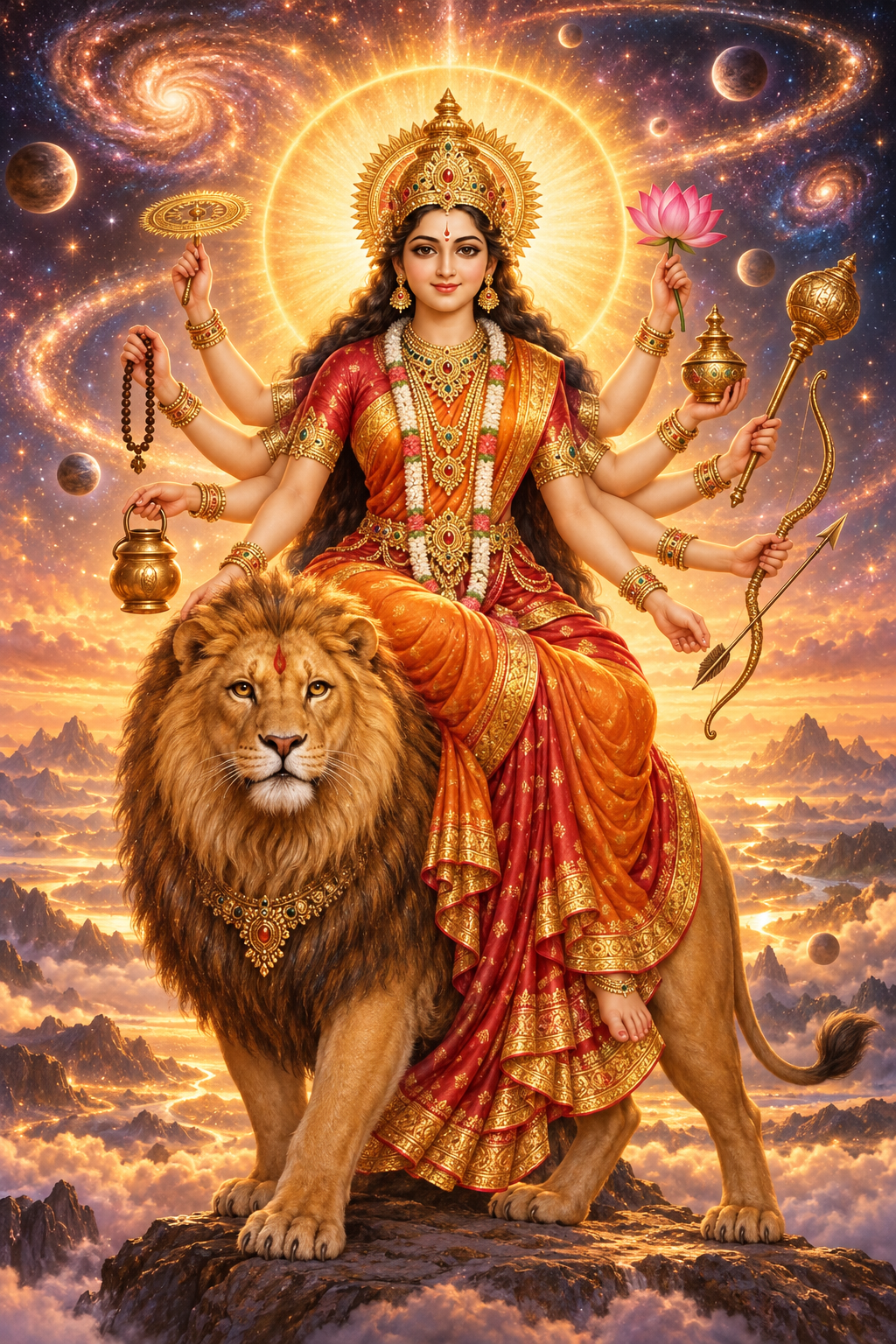
You have reached Navratri’s fourth day, but perhaps you are unsure which details matter and which ones merely make the puja feel complicated. Keep the centre clear: this day is for Maa Kushmanda, and the worship should turn your attention toward sacred energy, life-giving warmth and the power through which creation begins.
For Sharad Navratri in 2026, the fourth-day observance falls on 14 October 2026. If your family, temple or local panchang gives you a particular puja time, follow that inherited guidance rather than treating the civil date as the whole ritual.
Keep the focus on warmth, energy and creation

Maa Kushmanda is worshipped as the fourth manifestation of Navadurga. Her name is commonly associated with ku, meaning a little, and ushma, meaning warmth or energy. She is also connected with the cosmic egg from which the universe emerged. The combined image is striking: a seemingly small concentration of sacred warmth becomes the beginning of an entire cosmos.
Use that image to shape your worship. Energy here need not mean restless activity. Warmth need not mean emotional excitement. The fourth day invites you to gather scattered attention and place it behind something that gives life: prayer, duty, care, learning or a constructive beginning.
You may encounter images of Maa Kushmanda with eight arms and others with ten. That variation need not become an obstacle to worship. Receive the murti or image used by your household or temple with reverence; the purpose of darshan is not to turn iconography into a fault-finding exercise.
Devotees associate her worship with health, wealth and prosperity. Hold these as prayed-for blessings, not as contractual promises. A sincere puja can orient your conduct and strengthen your resolve, but it should never be treated as a substitute for medical care or as a guaranteed method of obtaining money.
A simple Maa Kushmanda puja you can perform at home
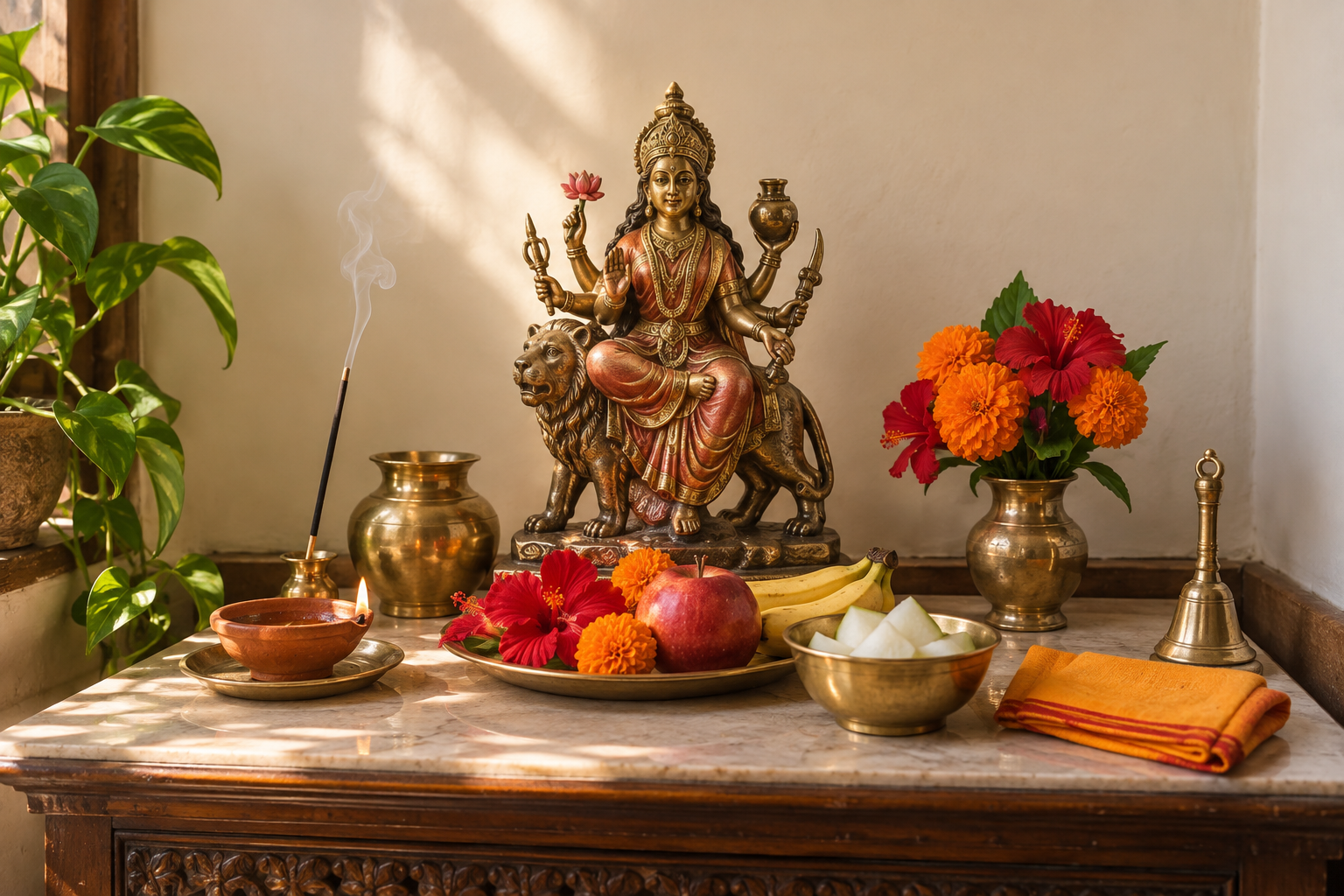
Your family’s established paddhati should come first. If you have no detailed household procedure, the following sequence gives you a restrained form of worship without pretending that every regional or sampradaya tradition is identical.
- Prepare one clean focal place. Tidy the worship area and place the image or murti you already use there. A dedicated space helps you stop moving between household tasks and give the puja your full attention.
- Settle before beginning. Silence your phone, sit steadily and allow the rush of preparation to subside. You do not need to manufacture a dramatic mood. Quiet attention is enough.
- Light the lamp safely if this belongs to your practice. Keep it on a stable surface, away from loose cloth, children and pets, and never leave the flame unattended. Incense may likewise be used according to household custom and practical safety.
- State a clear sankalpa. Name Maa Kushmanda, identify this as your fourth-day Navratri worship and express one honest intention. You might pray for steady energy to fulfil your dharma, warmth in your dealings with others, or wisdom in the use of prosperity. The wording can be simple; clarity matters more than ornament.
- Make familiar offerings. Offer water, flowers or simple food if these are customary and available in your home. Do not turn the absence of a particular item into a reason to abandon the puja. Reverence should guide the offering, while your lineage or family practice determines its form.
- Contemplate and recite. Bring to mind the small warmth associated with Maa Kushmanda and the immeasurable creation connected with her. Recite the mantra below slowly, or use the mantra taught in your family or sampradaya.
- Close deliberately. Offer pranam and perform aarti if that is part of your practice. Sit silently for a moment instead of rushing straight back to a screen or chore. Receive or share prasad reverently, and decide how the puja will affect one action before the day ends.
This sequence is intentionally modest. Navratri worship is not improved by collecting disconnected rules until you are afraid to begin. If your vrata includes additional disciplines or your priest has given you specific instructions, preserve those commitments. Otherwise, perform a coherent puja with the materials, time and knowledge you actually have.
Use the mantra without turning it into a performance
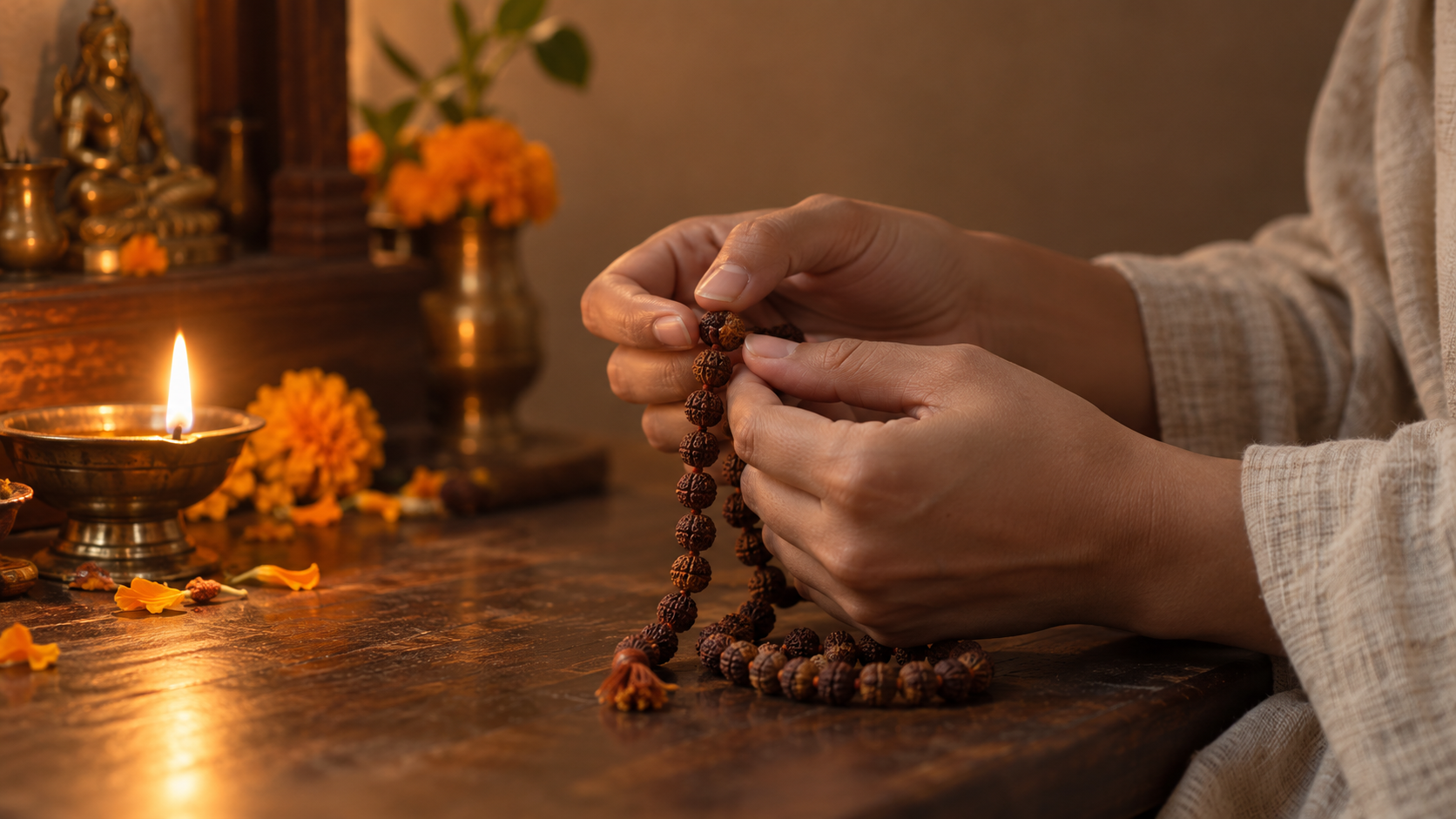
You may use this Maa Kushmanda Mool Mantra during the puja:
Surasampurnakalasham Rudhiraplutameva cha |
Maa Kushmanda Mool Mantra
Dadhana hastapadmabhyam Kushmanda Subhadastume ||
Read the transliteration silently once before reciting it aloud. Treat each vertical mark as a natural division, slow down at unfamiliar clusters and keep the same version throughout the sitting. Roman spellings can differ because they are trying to represent sounds from another script; switching spellings mid-recitation usually creates more confusion than clarity.
If your family or guru has taught you a pronunciation or repetition count, use it. If not, do not invent a large count merely because it appears more impressive. A smaller number of attentive recitations is more honest than a hurried tally performed while the mind is elsewhere.
If the Sanskrit remains difficult, begin by listening within your own tradition and learning gradually. You can still offer a sincere prayer to Maa Kushmanda in the language you understand. Pronunciation deserves care, but anxiety about pronunciation should not become the object of worship.
Carry the fourth day’s worship beyond the altar
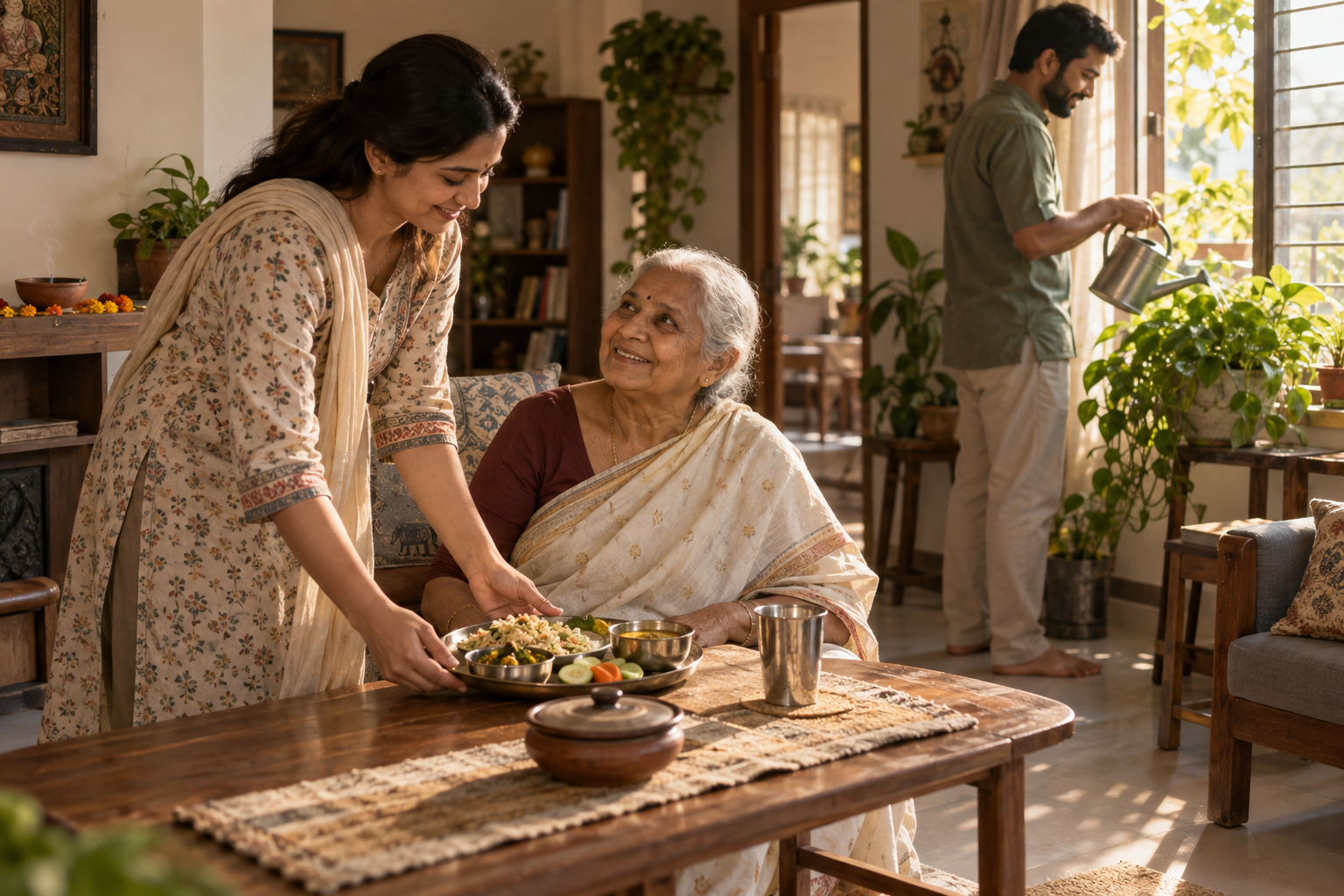
Maa Kushmanda should not be reduced to a metaphor for productivity. She is worshipped as Devi, not merely used as a motivational device. Yet puja naturally asks something of the worshipper. If you invoke sacred energy and warmth before the altar, let your conduct make room for them afterward.
Give your energy one defined direction
Choose one neglected duty that can be advanced today and define the next visible action. Do not make a grand promise to transform your whole life. Send the necessary message, complete the pending page, prepare the needed material or restore order to one small area. Concentrated energy is more useful than a long list of intentions.
Let warmth change one encounter
Identify one relationship in which impatience has become habitual. Before speaking, remove the needlessly sharp sentence without surrendering truth or boundaries. Warmth is not passivity. It is the discipline of refusing to add avoidable cruelty to a necessary conversation.
Treat prosperity as something to steward
If you pray for abundance, decide how you will handle what is already in your care. Use food without waste, complete a responsibility attached to your livelihood, support someone within your means or set aside a resource for a worthy purpose. This keeps the prayer from collapsing into a demand for acquisition.
The inner movement is from scattered heat to sustaining warmth, and from private desire to constructive action. That movement gives the fourth day a form you can recognise even after the lamp has been extinguished.
Key takeaways for the fourth day
- Maa Kushmanda is the fourth form of Navadurga and is worshipped on Navratri’s fourth day.
- For Sharad Navratri 2026, the fourth-day observance is listed for 14 October; follow your household or local panchang for the applicable ritual timing.
- Her central associations are warmth, energy and the cosmic beginning of creation.
- A workable home puja needs a clean focal place, a sincere sankalpa, customary offerings, attentive mantra recitation and a deliberate closing.
- Images with eight or ten arms represent an established variation, not a reason to doubt your chosen form.
- Health, wealth and prosperity are devotional aspirations associated with her worship, not guaranteed outcomes.
Before you begin, choose the one quality you most need from this fourth day: steadiness, warmth or the courage to start something constructive. Place that intention before Maa Kushmanda, complete the puja without hurry, and give the prayer a visible expression before the day is over.
References
- Hindu Pad – What to do on 4th day of Navratri Puja, 14 October 2026
- Hindu Pad – Aspects of Kushmanda Navadurga
- Hindu Pad – Kushmanda Mantras – Mool Mantra, Dhyana Sloka, Stotra
- Hindu Pad – 4th day of Navratri 2026, October 14

Leave a Reply
You must be logged in to post a comment.