
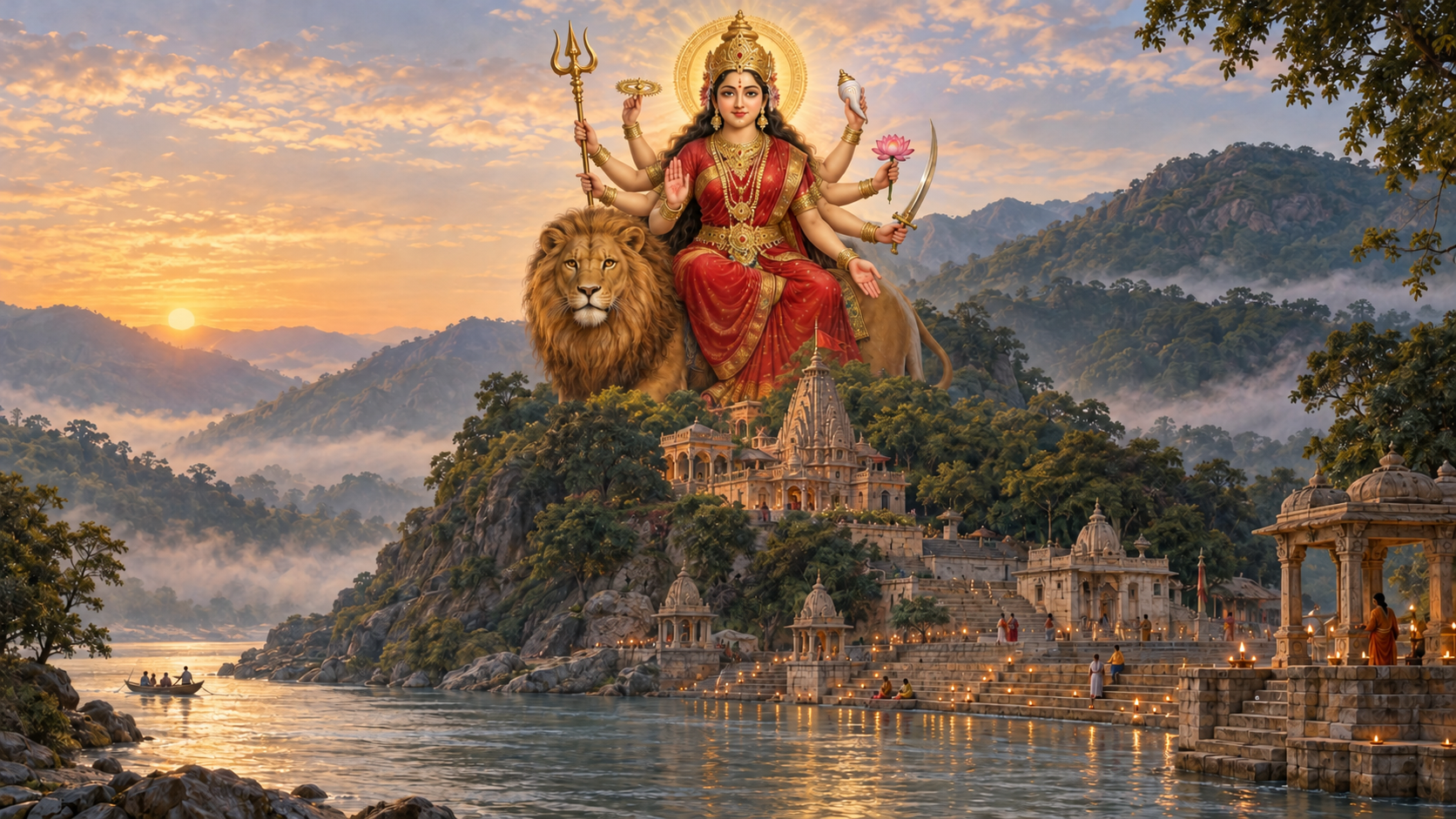
If you know Vindhyavasini only as another name in a long list of Devi’s forms, a visit to Vindhyachal can leave you with more facts but little understanding. The essential point is not merely that a Durga temple stands there. Vindhyavasini’s name, identity and sacred place belong together.
The shortest reliable explanation gives you the key to the entire tradition: Vindhyavasini is Durga manifest as the goddess who dwells in Vindhyachal, where her temple stands beside the Ganges in Uttar Pradesh. Keep that relationship in view and you can approach her narratives, shrine and worship without confusing a living regional tradition with a collection of disconnected legends.
Her name is also a map
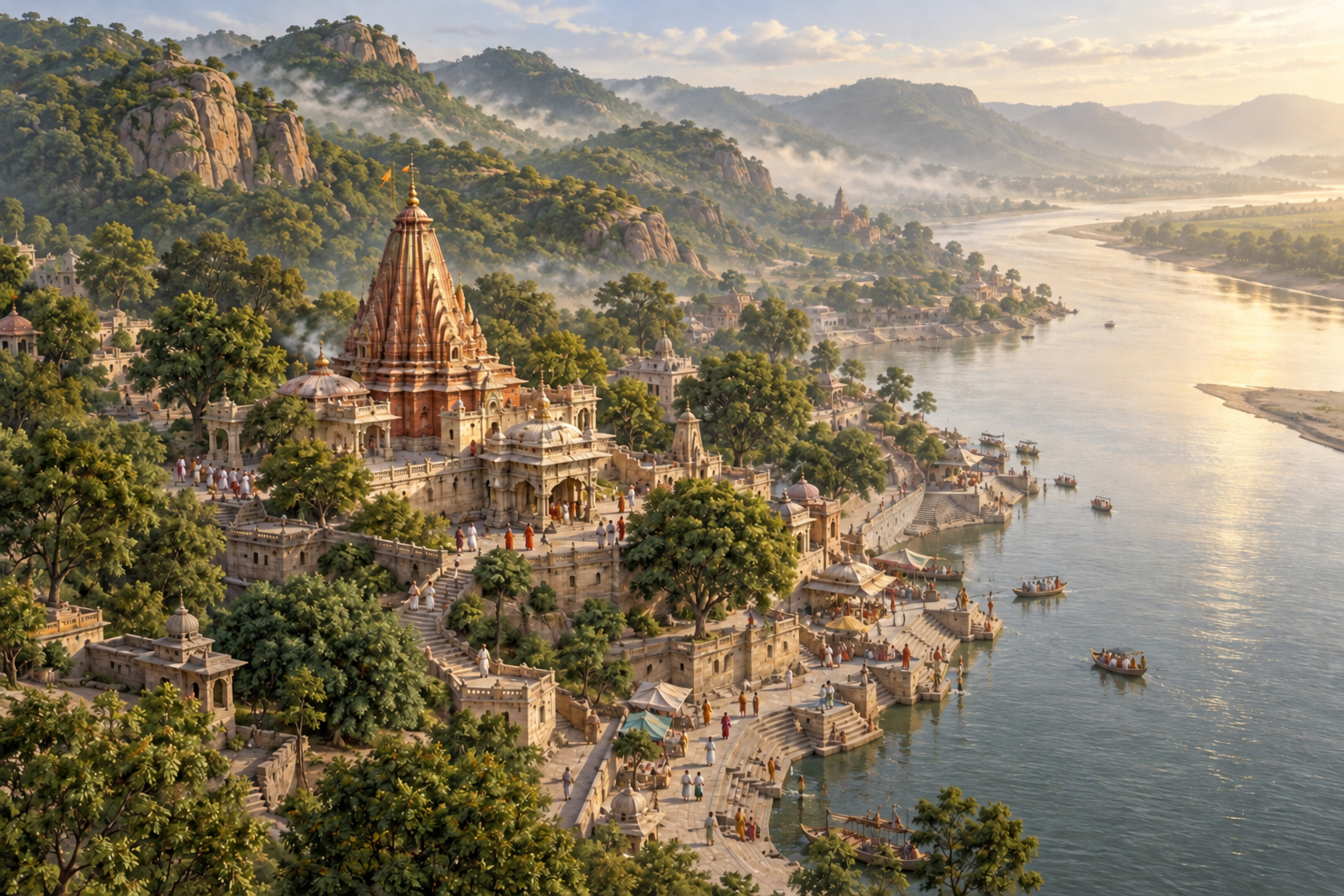
Names of Devi can identify a quality, an action, a relationship or a sacred location. Vindhyavasini is distinctly geographical: the name presents the Goddess as the one who resides in Vindhyachal. Place is therefore not incidental information added to her identity. Her dwelling is part of how devotees know her.
This corrects two common misunderstandings. The first is to treat Vindhyavasini as a goddess unrelated to Durga merely because she has a local name. The second is to treat Vindhyavasini as a replaceable synonym for Durga, as though Vindhyachal made no difference. The tradition holds identity and particularity together: she is Durga, encountered in a place-specific manifestation.
That distinction matters whenever you read about a regional form of Devi. Begin with two questions: who is the deity understood to be, and what does the local name disclose? Here the answers are unusually close. The deity is Durga; the name discloses her dwelling in Vindhyachal. This is a more dependable starting point than trying to memorise every story attached to the shrine.
Vindhyachal and the Ganges form a sacred setting, not a backdrop
A modern itinerary can make a temple look like a point on a map: arrive, queue, see the sanctum and leave. The Dharmic understanding of pilgrimage asks you to notice more. A sacred place is formed through the relationship among deity, land, water, worship and the community that sustains them.
At Vindhyachal, the temple’s location on the banks of the Ganges gives the tradition a double geographical focus. Vindhyavasini is known through her residence in Vindhyachal, while the river places the shrine within the wider sacred geography of Bharat. You do not need to invent a symbolic meaning for every feature. You only need to avoid reducing the setting to scenery.
If you visit, begin paying attention before you reach the sanctum. Notice how devotees address the Goddess, where they pause, which actions are treated as preparation and which belong to darshan itself. Observe before imitating. Local maryada, or proper conduct, is learned more accurately from the functioning shrine than from a generic checklist copied from another temple.
This approach also changes photography and sightseeing. A useful test is simple: are you treating worshippers as participants in a sacred relationship or as visual material? Follow posted rules, ask before photographing people or ritual activity, and put the camera away when it interferes with darshan. Respect here is not an ornamental gesture. It is part of recognising the temple as a place of worship rather than a religious exhibit.
Read the Puranic identity without forcing one flat biography
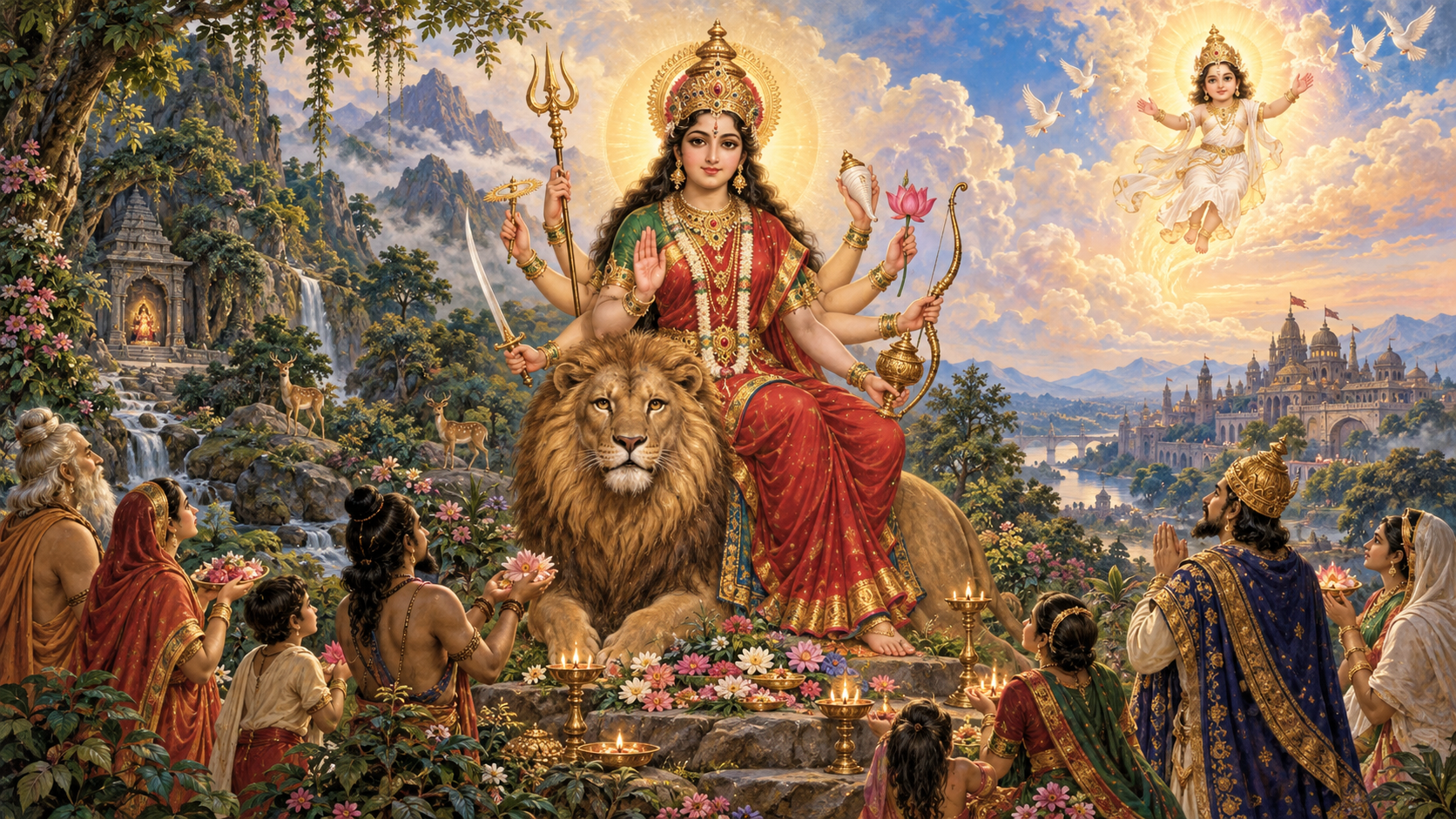
Puranic traditions describe Durga taking the form of Vindhyavasini. The first purpose of that claim is theological: it identifies the power present at Vindhyachal with Durga herself. The language of manifestation explains continuity rather than creating distance. The Goddess worshipped here is not a lesser substitute for Durga.
Problems arise when a broad Puranic claim is expanded into one supposedly universal account without identifying the text or tradition carrying the details. A retelling may contain a sequence of events, names and interpretive emphases that belong to a particular textual or local transmission. Those details may be meaningful, but they should not be presented as though every Hindu community narrates them identically.
You can evaluate a detailed account with three questions. Which Purana or recognised tradition is being invoked? Which elements are actually attributed to it? Which explanations come from local oral practice or later devotional interpretation? If the teller cannot identify a textual basis, you do not have to dismiss the account. Call it a local or devotional telling instead of giving it a false precision.
This distinction protects both scripture and living tradition. It prevents an unattributed internet retelling from being mistaken for the only authoritative version, while leaving room for communities to preserve inherited ways of speaking about Maa. Hindu tradition does not become stronger when every layer is made to sound identical. It becomes easier to understand when each layer is named honestly.
How to approach Vindhyavasini as a pilgrim or student
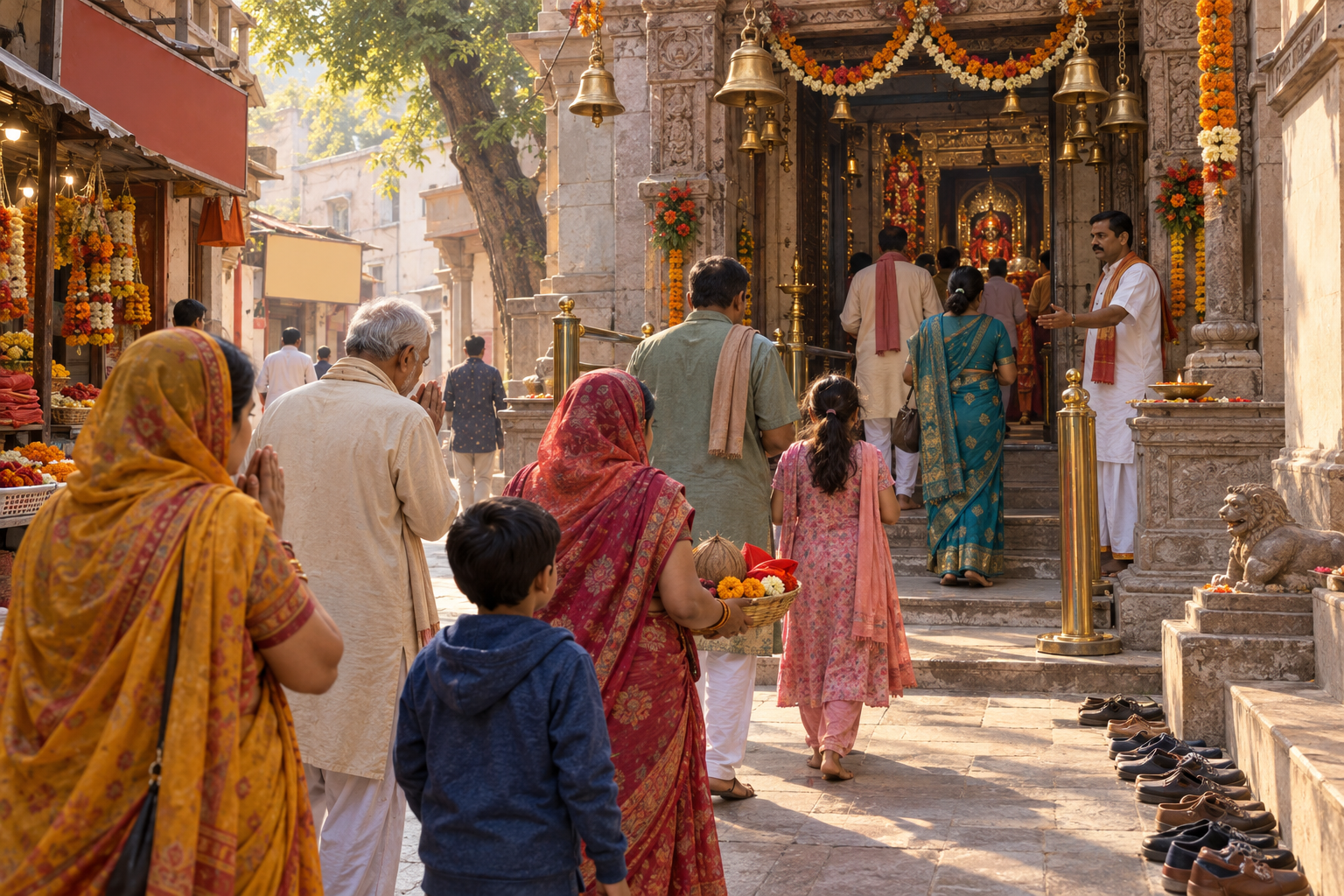
You do not need exhaustive knowledge before approaching Vindhyavasini. You do need a sound frame. The following sequence keeps devotion, inquiry and temple conduct aligned.
- Hold on to the central identity. Remember that Vindhyavasini is Durga in her Vindhyachal manifestation. Let later details deepen that understanding rather than displace it.
- Learn the place before collecting legends. Locate the temple within Vindhyachal and recognise its setting beside the Ganges. This gives you the geographical structure of the tradition before you encounter competing summaries online.
- Ask precise questions. Instead of asking for the complete story, ask how Maa is understood at this shrine, which account a speaker is following, or whether a practice is textual, local or familial. Precise questions produce answers you can preserve without flattening their context.
- Follow the shrine’s present maryada. Look for current instructions and take guidance from authorised temple personnel where necessary. Do not assume that procedures learned at another Durga temple automatically apply here.
- Keep darshan central. Information can prepare you, but it should not turn the encounter into a fact-finding exercise. Allow time for attentive presence rather than measuring the visit by the number of rituals, photographs or stories you acquire.
- Record what you learned with attribution. Afterward, note whether a teaching came from a named Purana, a temple representative, a local devotee or your own reflection. That small discipline prevents memory from merging different kinds of claims into one.
The same method works if you are studying from home. Start with the stable relationship among Durga, Vindhyavasini and Vindhyachal. Add particular narratives only when you can retain their stated context. If two tellings differ, compare their provenance before deciding that one must be an error. Difference can reflect distinct layers of transmission rather than a failure of the tradition.
Key takeaways
- Vindhyavasini is Durga known through her residence and manifestation in Vindhyachal.
- Her temple’s setting beside the Ganges in Uttar Pradesh is part of the tradition’s sacred geography, not incidental travel information.
- Puranic accounts establish her identity as a manifestation of Durga, but detailed retellings should be connected to a named text or local tradition.
- A respectful visit begins with observation, local maryada and darshan rather than a universal ritual checklist.
- When studying the tradition, distinguish scriptural attribution, local transmission and personal interpretation instead of blending them together.
Your next step can be modest: remember the core relationship before seeking more detail. Approach Vindhyavasini as Durga dwelling in Vindhyachal, attend to the temple’s living discipline, and ask where each narrative comes from. That is enough to turn either a pilgrimage or an evening of reading into a more grounded encounter with Maa.
References

Leave a Reply
You must be logged in to post a comment.