
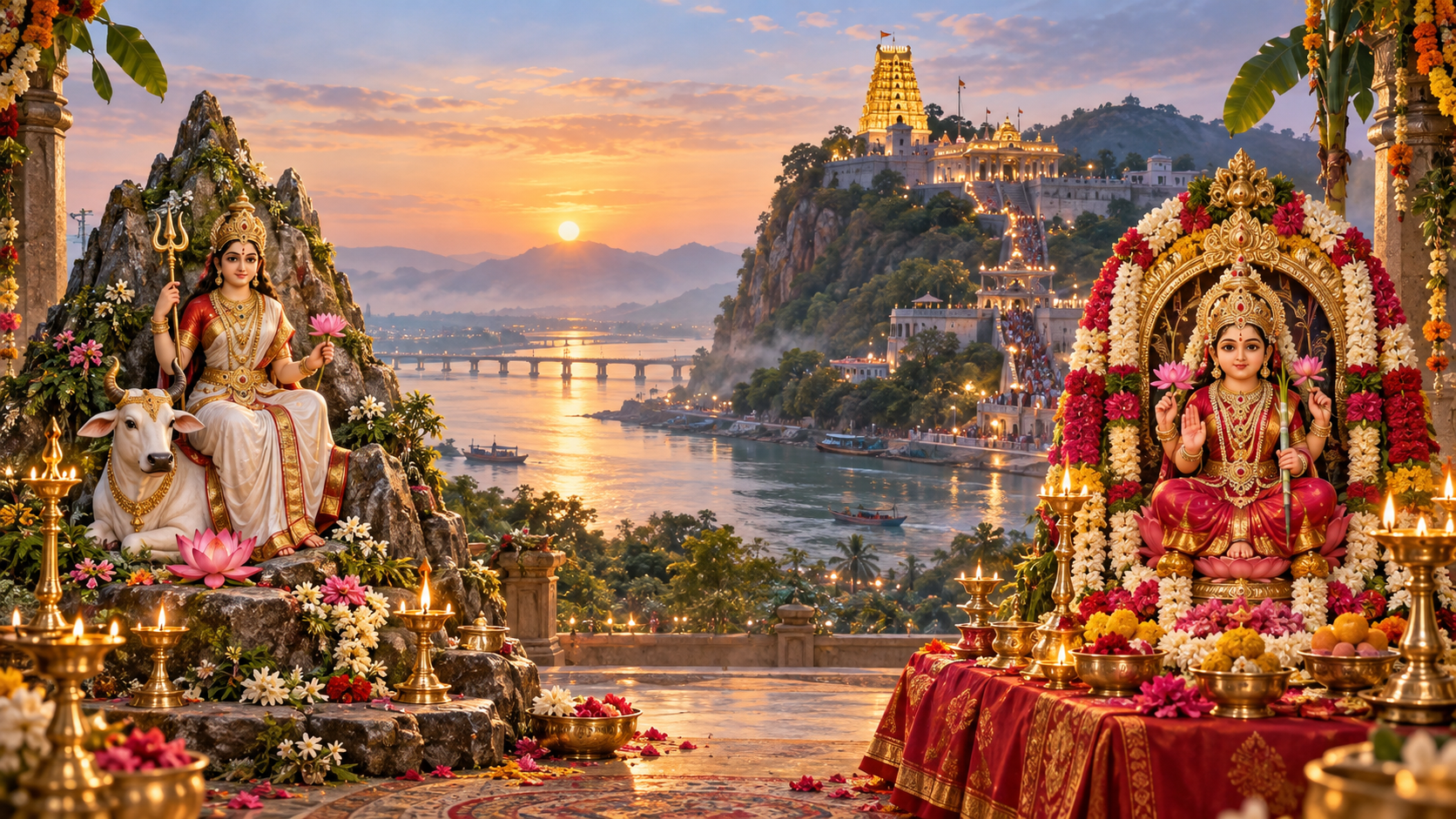
If you are planning the opening of Sharad Navratri 2026, mark two dates first: 11 October for Pratipada and Kalasha Sthapana, followed by 12 October for the second day’s observances.
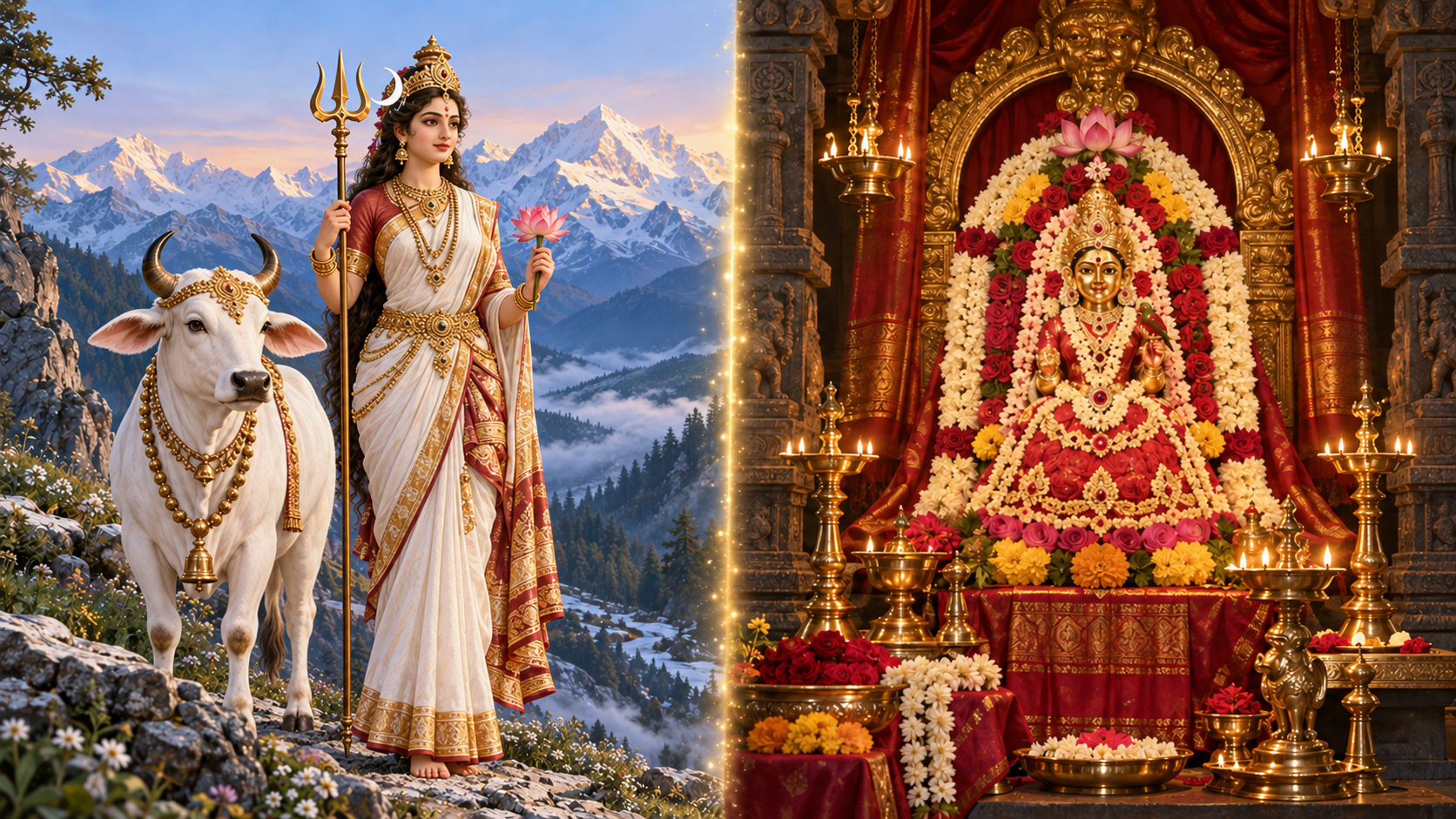
The part most likely to cause confusion is the Goddess’s name. The wider Navratri sequence identifies Shailaputri and Brahmacharini for these days, while Vijayawada’s Kanaka Durga Temple presents Balatripura Sundari Devi and Gayatri Devi as its daily alankarams. You do not have to choose one calendar and reject the other. You need to know which observance each name describes.
The opening two days at a glance
| Navratri day | Date in 2026 | Navratri observance | Vijayawada alankaram | Your planning cue |
|---|---|---|---|---|
| Day 1 | 11 October | Pratipada, Kalasha Sthapana and Shailaputri Puja | Balatripura Sundari Devi | Prepare for the formal opening of your household or community observance. |
| Day 2 | 12 October | Brahmacharini Puja; Preethi Dwitiya, Sthana Vriddhi Gauri Vrata and Sindhara Dooj are also associated with the date | Gayatri Devi | Continue the Navratri discipline while changing the day’s devotional focus. |
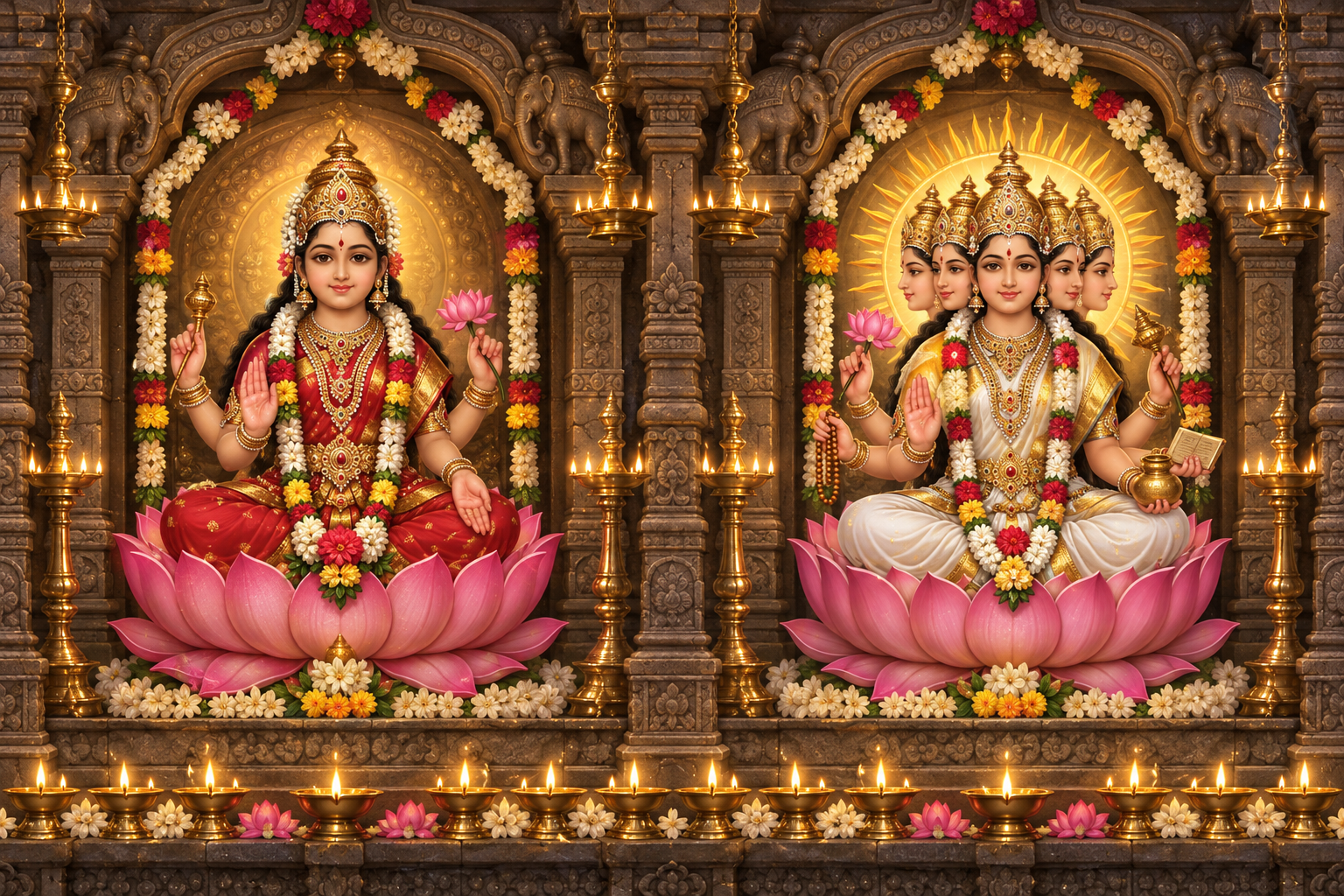
The essential Vijayawada sequence is precise: Balatripura Sundari Devi on 11 October, then Gayatri Devi on 12 October. If seeing a particular alankaram is the purpose of your visit, plan around that date rather than around the Goddess named in a general Navratri list.
Why Shailaputri and Balatripura Sundari both appear on day one
Two devotional frameworks are operating at the same time. In the general 2026 Navratri sequence, the first day is Pratipada, with Kalasha Sthapana and Shailaputri Puja. At Kanaka Durga Temple in Vijayawada, the presiding Goddess is adorned and worshipped in a particular form for each day of Dasara Navratri. The first day’s temple form is Balatripura Sundari Devi.
An alankaram is the form in which the temple deity is adorned and presented for worship on that day. It does not erase the day’s broader Navratri observance. This distinction matters when you prepare a sankalpa, share a festival notice or arrange temple travel. A household schedule can correctly say Shailaputri Puja, while a Vijayawada itinerary for the same date can correctly say Balatripura Sundari Devi Alankaram.
Use the name that answers the question being asked. For your first-day Navratri puja, follow the form and procedure received through your family, guru or sampradaya. For the Kanaka Durga Temple appearance on 11 October, record Balatripura Sundari Devi. Combining the names into a single invented title only makes the schedule harder to understand.
What changes on 12 October
The second day moves the general Navratri focus to Brahmacharini Puja. The date also carries the observances named Preethi Dwitiya, Sthana Vriddhi Gauri Vrata and Sindhara Dooj. These names may matter differently across regions and family traditions, so do not assume that every household performs every observance listed for the date.
At Vijayawada, the second-day alankaram is Gayatri Devi. That is the name to use when you are checking which form of Kanaka Durga will be worshipped at the temple on 12 October. Brahmacharini and Gayatri Devi are therefore not competing answers: one identifies the day’s Navratri puja, and the other identifies Vijayawada’s temple-specific alankaram.
The move from Balatripura Sundari Devi to Gayatri Devi also does not, by itself, instruct you to perform Kalasha Sthapana again. Kalasha Sthapana is identified with the opening day. On day two, continue your established Navratri procedure unless your own tradition directs otherwise.
How to turn the dates into a workable plan
- Before 11 October: gather the materials required by your own puja paddhati. Methods of Kalasha Sthapana differ, so use the procedure your household or sampradaya actually follows rather than reconstructing one from a festival date list.
- For 11 October: write Pratipada, Kalasha Sthapana and Shailaputri Puja in your Navratri plan. If you are following Vijayawada’s celebration or arranging darshan for the first alankaram, add Balatripura Sundari Devi as a separate temple entry.
- For 12 October: continue the vrata or daily discipline you began. Record Brahmacharini Puja for the general Navratri sequence and Gayatri Devi for the Vijayawada alankaram.
- If a regional observance applies to your family: note Preethi Dwitiya, Sthana Vriddhi Gauri Vrata or Sindhara Dooj separately. Do not add a vrata merely because its name appears on the date; confirm that it belongs to your inherited or chosen practice.
- If you need exact clock times: use the panchanga followed at your location or the instructions of the temple conducting the puja. The festival dates establish the day, but they are not a substitute for a location-specific muhurta.
- If you are travelling to Vijayawada: treat the alankaram date as your planning anchor, then independently confirm current darshan hours, entry arrangements and other operational details before departure. The devotional calendar does not establish those logistics.
This separation also improves community announcements. Put the date and Navratri day first, the household or community puja second, and the Vijayawada alankaram third. Readers can then see immediately whether your notice concerns a local ritual, a general calendar observance or a temple visit.
Key takeaways
- Sharad Navratri 2026 begins on 11 October with Pratipada, Kalasha Sthapana and Shailaputri Puja.
- Kanaka Durga Temple’s 11 October alankaram is Balatripura Sundari Devi.
- The second day falls on 12 October, when Brahmacharini Puja is observed.
- Vijayawada’s 12 October alankaram is Gayatri Devi.
- The general Navratri deity and the Vijayawada alankaram answer different devotional questions; their different names do not create a contradiction.
- Use a local panchanga or the relevant temple’s instructions when you need an exact puja time rather than only the festival date.
Put 11 and 12 October into your calendar now, label each observance clearly, and keep your household practice distinct from the Vijayawada alankaram schedule. That small step will let you begin Navratri without last-minute confusion over which form of Devi belongs where.
References
- Hindu Pad — 2nd day Navratri Puja Time | 12 October 2026
- Hindu Pad — 2nd day Alankaram in Vijayawada Temple Navaratri 2026 – 12 October | Gayatri Devi
- Hindu Pad — Balatripura Sundari Devi | 1st day Alankaram in Vijayawada Kanakadurga Temple Navaratri 2026
- Hindu Pad — 1st day Navratri Puja Timings | 11 October 2026

Leave a Reply
You must be logged in to post a comment.