
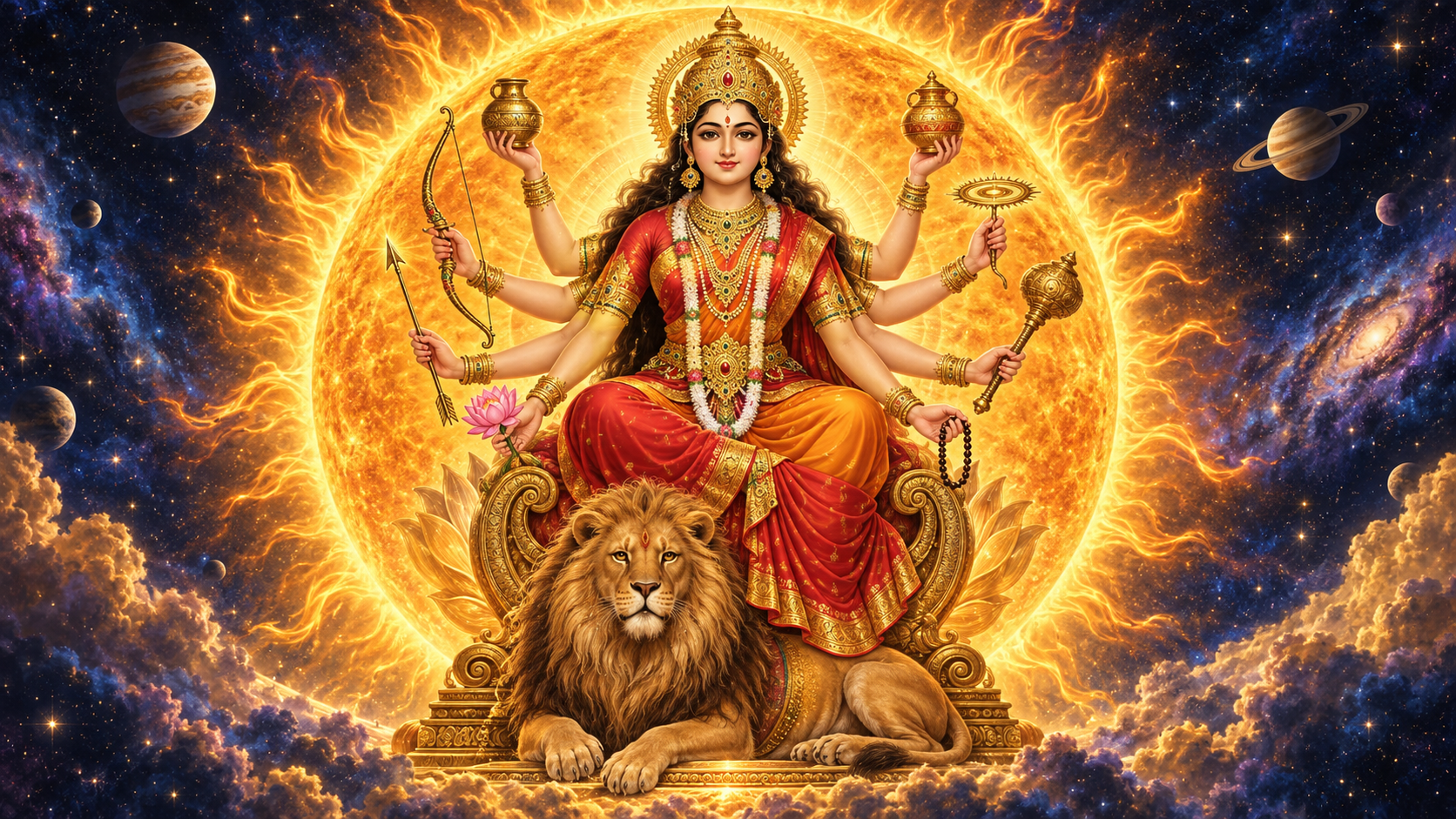
You may be preparing for the fourth day of Navratri and wondering what it really means to say that Goddess Kushmanda dwells at the core of the Sun. Is this supposed to be astronomy, poetic imagery, or a teaching about creation?
The clearest way to approach it is as a sacred map. Kushmanda’s name describes concentrated potential becoming an energized cosmos, while her solar dwelling locates divine power behind the radiance we can see. Once you keep those two ideas together, the image becomes useful for both worship and reflection.
The name contains a sequence of creation
Kushmanda is revered as the fourth manifestation of Durga and worshipped on the fourth day of Navratri. That placement gives you a practical context: this is not an isolated solar image but a form of Devi encountered within a sequence of worship.
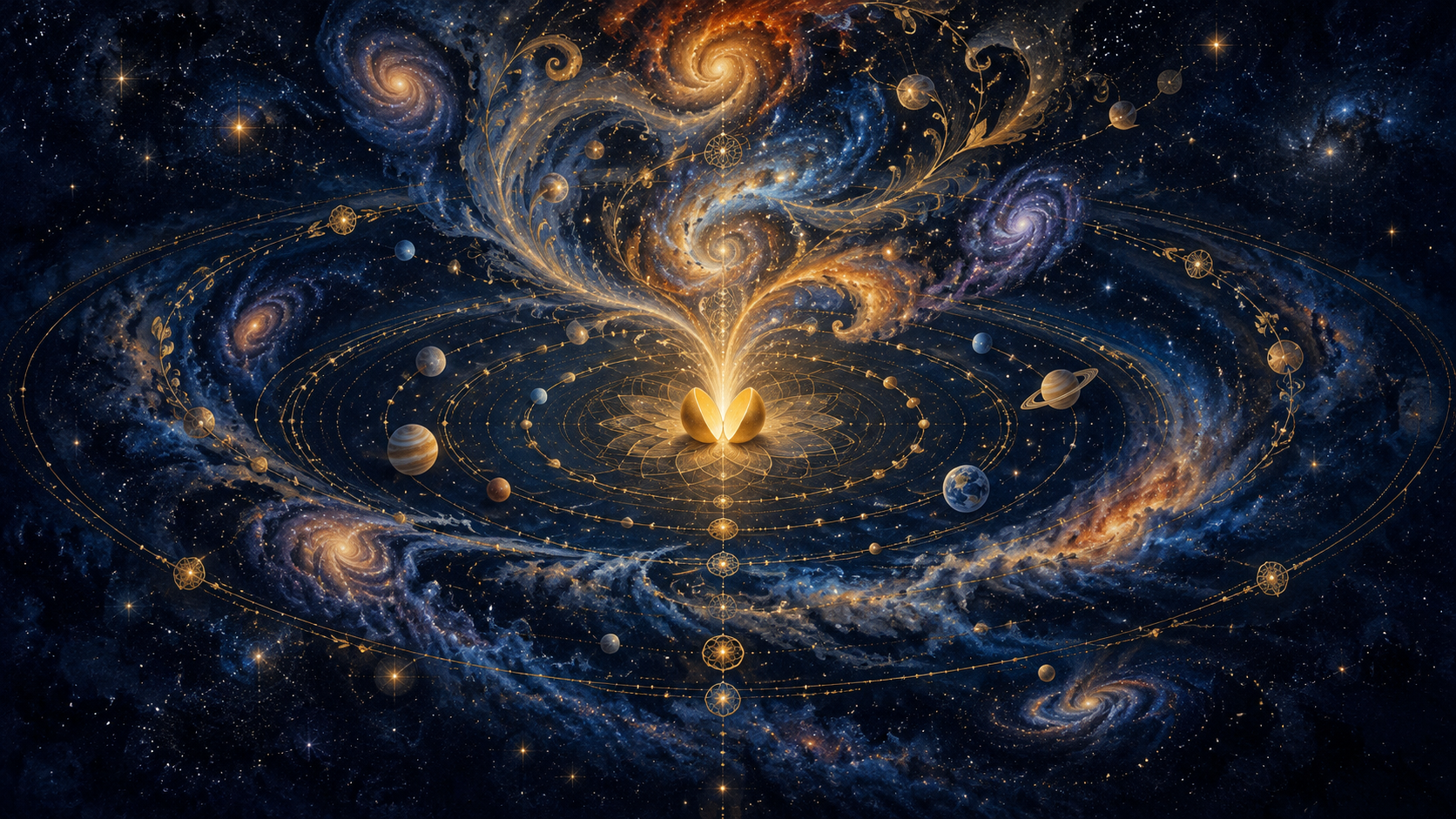
A devotional reading divides the name into three elements: Ku, meaning a little; Ushma, meaning warmth or energy; and Anda, meaning the cosmic egg. This should be received as a theological interpretation of the name, not forced into the role of a complete linguistic argument. Its purpose is to reveal how devotees understand the Goddess.
- Ku – a little: Creation begins in concentration. Smallness here does not mean insignificance. It points to potential gathered before expansion.
- Ushma – warmth or energy: Potential does not become a world while remaining inert. Warmth marks animation, movement, and the power by which manifestation proceeds.
- Anda – the cosmic egg: The egg gives the emerging cosmos a unified form. It suggests a whole held in potential before its many distinctions become visible.
The movement is therefore easy to remember: a little, then warmth, then a world. This is not necessarily a timeline of physical events. It is a contemplative sequence showing that the immense can arise from a concentrated origin charged with Shakti.
When you hear “cosmic egg,” do not picture an ordinary object floating somewhere in space. Read the egg as a form of contained wholeness. It lets the mind approach an otherwise difficult question: how can multiplicity emerge without being separate from its source?
The Sun’s core points to the source behind visible radiance
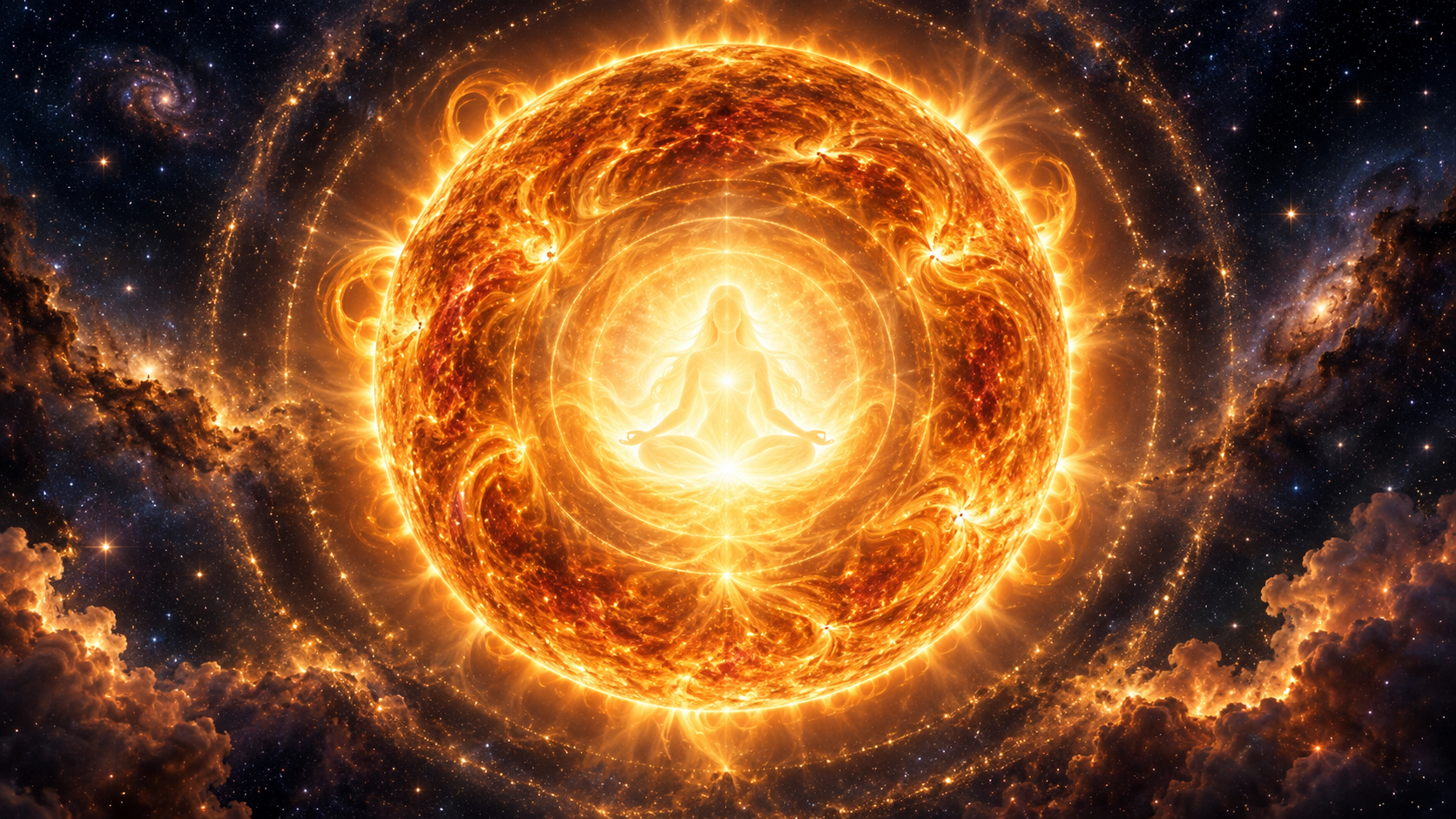
The Sun is visible through its radiance, but its core is hidden from ordinary sight. Locating Kushmanda at that core shifts your attention from the light you receive to the power from which the light proceeds. The symbol asks you not to stop at appearance.
This makes the image more precise than a general association between a deity and brightness. Kushmanda is not placed at the edge of the solar image as decoration. Her position at its center presents Shakti as the originating power within radiance. The Sun becomes a sign of sustained manifestation: energy is not scattered at random but proceeds from a center.
Modern astronomy also identifies the Sun’s core as the region where fusion generates solar energy. That scientific account and the devotional image should not be collapsed into one claim. It would be anachronistic to treat the symbolism as a disguised lesson in modern astrophysics. Astronomy explains physical processes; sacred cosmology asks what the ordered, life-supporting radiance of the Sun can disclose about divine power and our relationship to it.
Three misreadings to avoid
- Do not turn theology into a failed science textbook. A sacred symbol need not compete with a physical explanation in order to carry truth. Asking how solar energy is produced and asking what solar radiance means are different questions.
- Do not reduce Devi to an impersonal fuel. The word Ushma highlights warmth or energy, but Kushmanda remains a form of the Goddess. The language of energy belongs inside a relationship of reverence, not in place of it.
- Do not invent meanings for the number four. The supported point is that Kushmanda is the fourth manifestation of Durga and is worshipped on Navratri’s fourth day. No additional numerology is needed to make the symbolism profound.
These distinctions matter because they protect the teaching from two opposite errors. Literalism makes a spiritual image answer questions it was not designed to answer. A purely decorative reading empties it of philosophical force. The richer approach lets scientific and devotional understanding retain their proper work.
Turn the symbolism into a fourth-day contemplation
If you observe Navratri, you can use the fourth day to move through the name deliberately. The following is a simple contemplative exercise, not a claim that every sampradaya prescribes an identical ritual. Keep the customs of your family, temple, or lineage where you have them.
- Begin with concentration. Bring one unresolved intention into focus. Do not start with everything you want to change. Choose the smallest complete matter that genuinely needs your attention.
- Identify its warmth. Ask what living energy would allow that intention to take form: attention, disciplined effort, courage, patient care, or honest speech. Name one rather than admiring the idea of energy in the abstract.
- Give it an egg-like boundary. Decide what belongs inside the task and what does not. A form without a boundary easily dissolves into distraction.
- Choose one act of manifestation. Complete a concrete action that carries the intention out of thought and into the world. The act can be modest; the symbolism itself teaches you not to confuse a small beginning with a trivial one.
- Return the result to Devi. Hold the action as an offering rather than proof of personal control. The point is to participate responsibly in manifestation, not to imagine that the individual ego is the source of all power.
You do not need to look directly at the Sun to undertake this reflection, and you should not practice unsafe sun-gazing. Daylight, the warmth of a lamp used in your established worship, or the mental image of radiance is sufficient to support contemplation. The spiritual meaning lies in attentive recognition, not in exposing your eyes to harm.
This practice also gives you a way to test whether you have understood the symbol. If your reflection produces only a pleasant feeling, return to Anda and give the intention a definite form. If it produces frantic activity, return to Ku and make the beginning smaller. If it becomes mechanical, return to Ushma and ask what living energy is missing.
Key takeaways
- Kushmanda’s name can be contemplated as a movement from a little concentrated potential, through warmth or energy, into the cosmic egg.
- Her dwelling at the Sun’s core directs attention from visible radiance to its hidden source.
- The image is a sacred cosmology, not a substitute for astronomy or a claim that modern solar physics was encoded in devotional language.
- Kushmanda is a personal form of Devi, so “energy” should not be detached from reverence, agency, and responsibility.
- On Navratri’s fourth day, you can apply the teaching by giving one worthy intention energy, a boundary, and a concrete first act.
When you worship Kushmanda, hold one question close: what small reserve of worthy potential is waiting for disciplined warmth before it can take form? Give it a clear boundary, make one honest beginning, and let the solar image remind you that visible radiance proceeds from a center.

References

Leave a Reply
You must be logged in to post a comment.