
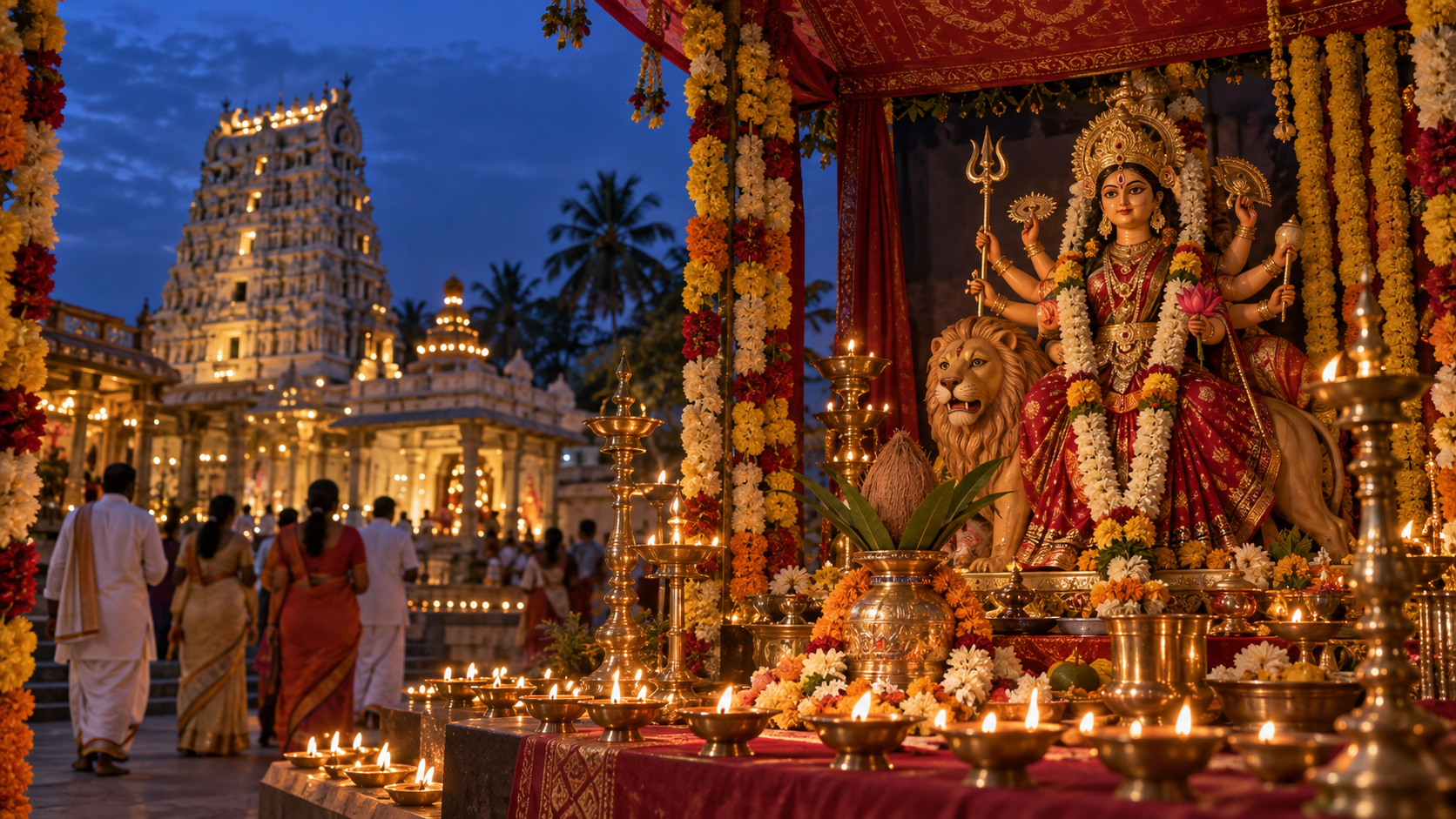
If you are arranging leave, a household vrata, daily puja and temple travel, do not treat Navaratri 2026 as one undifferentiated set of dates. The nine-night home observance begins on October 11, while some major public programmes begin on October 12 and continue through October 20.
The practical approach is to keep two calendars: one for your tithi-based worship and another for the events you plan to attend. That distinction matters especially on October 18, when Saptami continues until early morning before Ashtami begins.
The Navaratri 2026 dates to put on your calendar
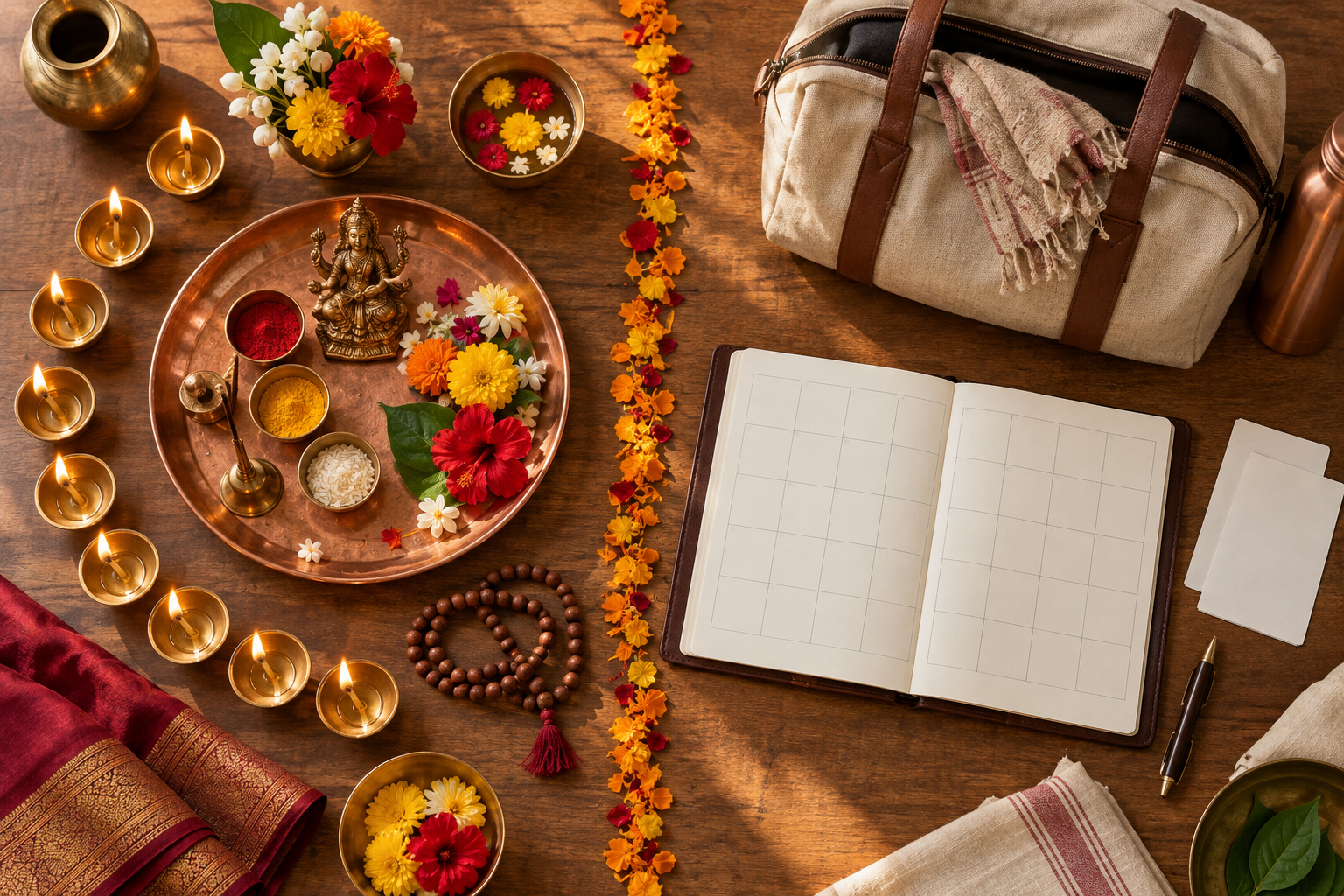
Sharad Navaratri begins on Sunday, October 11, 2026. If you are observing all nine nights at home, use that date to begin your sankalpa and chosen daily discipline. Do not assume, however, that the civil date number automatically tells you the prevailing tithi throughout the day.
| Date | What is happening | What you should do |
|---|---|---|
| October 11 | First day of Navaratri and the opening of the nine-night household cycle. | Make your sankalpa, establish the puja space and begin the daily routine you can sustain. |
| October 12-17 | The home observance continues. Tirumala’s Navaratri Brahmotsavam begins on October 12. | Keep household worship consistent and place any temple visits on a separate event schedule. |
| October 18 | Shukla Paksha Saptami lasts until 5:54 AM; Ashtami follows in the cited Indian panchang for most regions. | For an Ashtami rite tied to tithi, verify the timing for your location instead of relying only on the printed date. |
| October 19 | This is the ninth civil night when counting from the October 11 opening. | Complete the ninth night of your chosen household discipline, but check the local panchang before assigning a tithi-specific rite. |
| October 20 | Several public programmes reach their concluding day, including Tirumala and Thummur events; Kuppam has a Deepa Puja at 4 PM. | Keep enough time for closing worship at home if you are also travelling to a public celebration. |
The 5:54 AM transition on October 18 is a useful planning reference, not a universal clock time. Tithi boundaries depend on location. If you live outside India, or your family follows a regional panchang, obtain the Ashtami timing for your city. Sunrise-based observance rules can also differ by sampradaya, so follow your family tradition or temple rather than forcing every custom into one online calendar.
This is also why a temple programme running through October 20 does not turn the household vrata into a ten-night observance. A festival can include preparatory, processional or concluding events beyond the nine nights. Let the panchang govern tithi rites and the organiser’s timetable govern attendance.
Build a home observance you can keep for nine nights
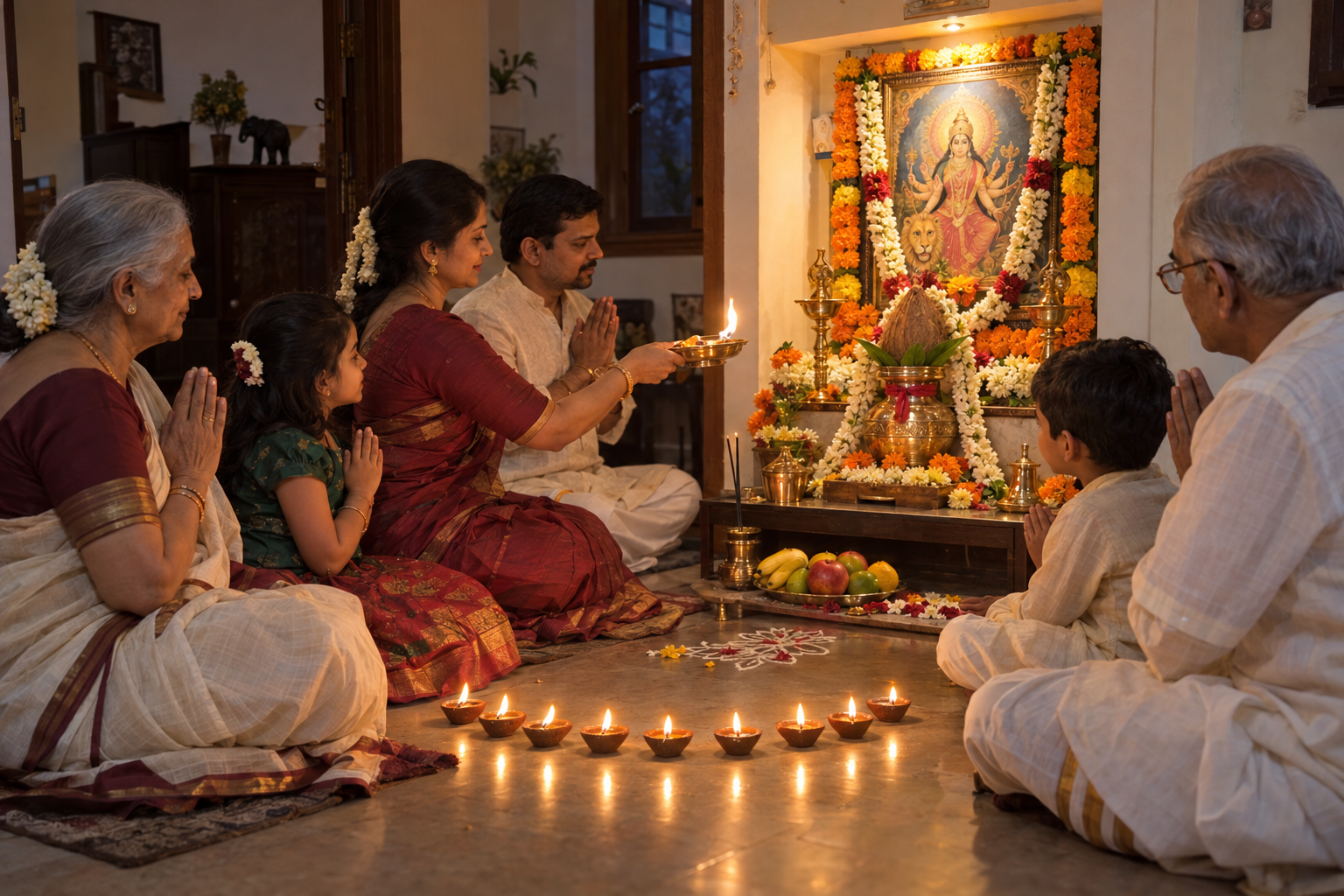
The first decision is not how elaborate your altar will look. It is what you will actually repeat each day. A modest practice maintained for all nine nights is more coherent than an ambitious opening followed by hurried or abandoned worship.
Before October 11, choose one of these workable levels:
- Simple daily puja: clean the worship space, light a lamp, invoke Devi, offer flowers or fruit, recite a familiar prayer, perform aarti and distribute prasad.
- Puja with daily recitation: keep the same sequence and add a fixed passage, stotra or period of japa that fits your responsibilities.
- Formal text-based observance: establish a clear sankalpa and follow the recitation method received from your family, guru or temple, including any rules attached to that method.
Prepare the physical space before the opening puja. Place the image or murti securely, keep the lamp away from cloth and paper, and assemble the items you intend to offer. If kalasha sthapana belongs to your tradition, use the muhurta and procedure given by your local panchang or temple. Never leave an oil lamp or flame unattended.
A reliable daily sequence is easier to remember than a different plan every night:
- Wash and prepare the puja place.
- Light the lamp and settle your attention.
- Recall the sankalpa made on the first day.
- Invoke Devi through the name, mantra or prayer used in your tradition.
- Make the planned offering and complete the selected recitation or japa.
- Perform aarti, offer pranam and share prasad respectfully.
- Prepare the space and required offerings for the following day.
Choose a regular time that works on both weekdays and weekends. If mornings are rushed, keep a short morning pranam and reserve the fuller puja for the evening. Consistency is the point; the practice should draw the household toward Devi, not turn the festival into a nightly scheduling dispute.
Fasting customs are not uniform. Decide before Navaratri whether you are observing a full fast, a restricted diet or simply avoiding particular foods. Follow your family discipline without treating austerity as a competition. Anyone whose health, medication, pregnancy, age or work makes fasting unsafe should adapt the food discipline rather than risk harm; fasting is not a substitute for medical guidance.
You may also encounter daily colour charts and different sequences of Devi’s forms. These can reflect genuine regional or sectarian traditions, but they are not interchangeable universal rules. If your household has an established sequence, keep it. If it does not, ask the temple where you will worship instead of combining several incompatible lists found online.
Make the sankalpa precise before beginning Durga Saptashati
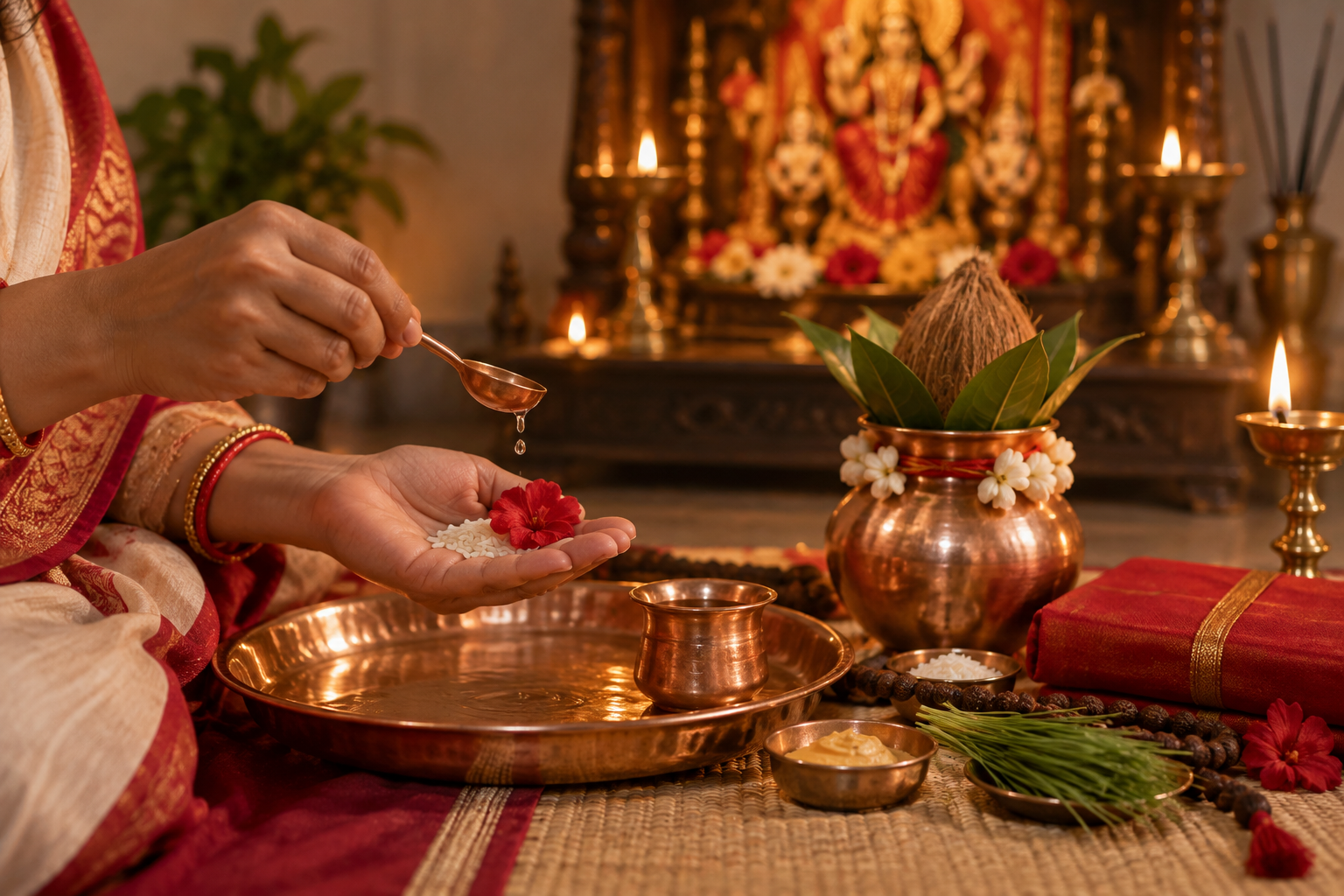
A sankalpa gives a formal practice its boundaries: who is worshipping, where and when the worship is undertaken, which deity and practice are intended, and why the vrata is being performed. This is particularly relevant if you plan a Durga Saptashati recitation during Navaratri.
Settle four questions before October 11:
- Scope: Are you undertaking the complete method prescribed in your tradition, a designated portion, or another Devi prayer?
- Schedule: When will you recite, and how will you protect that time on working days?
- Method: Which text, pronunciation and division will you follow?
- Intention: What clear devotional purpose will you name without turning the puja into a list of demands?
If your family uses a Sanskrit sankalpa, prepare the correct place and calendar details in advance. Do not improvise unfamiliar Sanskrit during the opening puja. Ask a knowledgeable purohit, guru or temple for the form used in your parampara.
If you do not have a prescribed liturgical formula, write a plain-language planning statement before the festival: “On this day, at [place], I, [name], undertake [practice] during Navaratri in devotion to Devi, for [intention], to the best of my ability.” This is a preparation aid, not a replacement for a formal formula required by your tradition. Its purpose is to stop the observance from becoming vague or changing with your mood each day.
Durga Saptashati should not be added merely because the festival calendar looks empty without it. If you have received a method, follow that method carefully. If you have not, use a familiar Devi stotra or prayer and seek instruction before undertaking a more formal recitation. The best plan is the one you can perform with attention and respect from the opening sankalpa to the closing worship.
Plan temple visits around the actual 2026 programmes
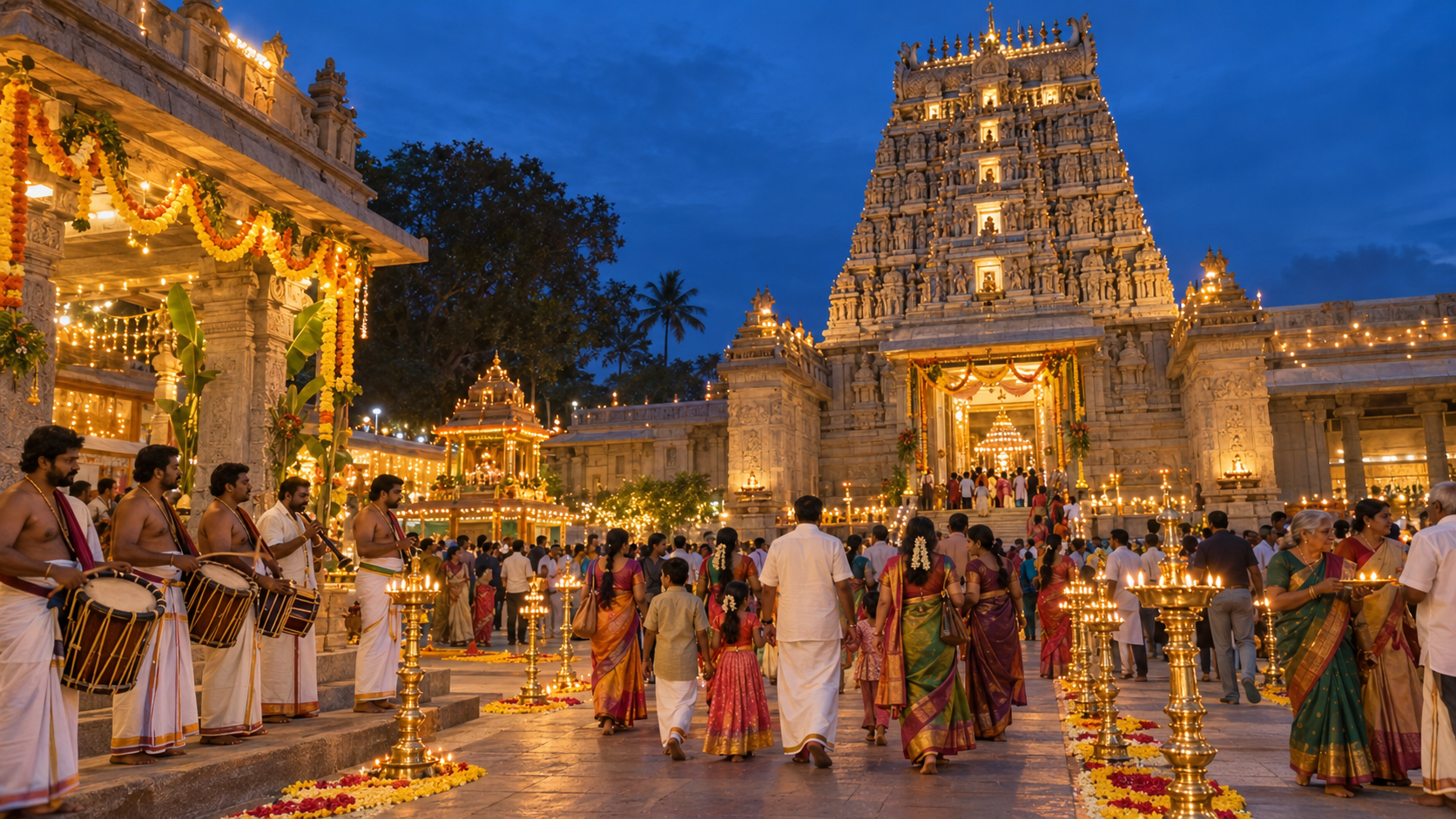
The major programmes available for 2026 do not all begin on the first household day. Record the event name, venue and service time separately so that a temple procession does not displace your home puja by accident.
Tirumala: Srivari Navaratri Brahmotsavam
The Srivari Navaratri Brahmotsavam at Tirumala is scheduled for October 12-20. Morning Vahana Sevas are listed from 8 AM to 10 AM, while evening Vahana Sevas are listed from 7 PM to 9 PM. Garuda Vahana Seva is the exception and begins from 6:30 PM.
That exception is easy to miss if you copy only the standard evening window. Mark Garuda Seva separately in your calendar. If you are travelling, confirm the current programme, access arrangements and any changes with the temple closer to the date; an announced service time is not the same as the time you should expect to reach the venue or pass through queues.
Thummur: ten days of Devi alankarams
At Sri Kariyamanikya Swamy and Sri Neelakanteswara Swamy Temple in Thummur village, Naidupeta Mandal, Devi Navaratri celebrations run from October 11 through October 20. The announced programme presents the Goddess in different alankarams across ten days.
This is useful if you want a temple observance that begins on the same civil date as your household vrata. It is still a ten-day public celebration, not a reason to relabel the nine-night home cycle. Decide whether you want to attend on the opening day, view a particular alankaram or be present for the conclusion, then seek the detailed daily programme from the temple.
Kuppam: Mahalakshmi Deepa Puja
A Mahalakshmi Deepa Puja is scheduled for 4 PM on October 20 at the Deepotsavam venue near Kuppam tank bund on Vilajapuram Road, Kuppam. Put the 4 PM start and the precise venue into your calendar rather than recording only “Kuppam Deepa Puja.”
If you plan to participate, confirm whether lamps or other puja materials will be supplied, what devotees may bring, and when entry begins. Do not infer these practical details from the event time. Keep your household closing worship in view as well, especially if the journey to and from Kuppam will occupy most of the day.
For any of these temple visits, use a short planning checklist:
- Verify the latest date, time and venue through the temple or organiser.
- Ask about entry, queue, dress and offering rules before travelling.
- Record exceptional service times separately; Garuda Seva at Tirumala does not follow the standard evening start.
- Allow for transport and crowd management without inventing an arrival estimate the organiser has not issued.
- If you made a nine-day home sankalpa, decide in advance how you will maintain it while away.
Key takeaways for your Navaratri plan
- Begin the nine-night household observance on Sunday, October 11, 2026.
- On October 18, Saptami continues until 5:54 AM in the cited Indian panchang; Ashtami follows. Verify the transition for your own location.
- Choose a daily puja and recitation routine before the festival, then keep it stable across all nine nights.
- Make a precise sankalpa before a formal Durga Saptashati practice, and follow the method of your own parampara.
- Tirumala runs from October 12-20, Thummur from October 11-20, and Kuppam’s Mahalakshmi Deepa Puja is at 4 PM on October 20.
- Confirm operational details with each temple closer to the event; festival dates alone do not settle entry, queues or offerings.
Put October 11, October 18 and your chosen temple event into the calendar now. Then write down the exact home practice you will repeat. When the first day arrives, you should be ready to worship, not still deciding which schedule to follow.
References
- Hindu Blog — October 18 2026 Tithi – Panchang – Hindu Calendar – Good Time – Nakshatra – Rashi
- Hindu Pad — Srivari Navaratri Brahmotsavam 2026: 12 October to 20 October
- Hindu Pad — 10 Things to do on 1st day of Navratri, 11 October 2026
- Hindu Pad — Durga Saptashati Sankalpam
- Hindu Pad — Devi Navaratri at Thummur Kariyamanikya Swamy & Neelakanteswara Swamy Temple
- Hindu Pad — Mahalakshmi Deepa Puja in Kuppam, 20 October 2026

Leave a Reply
You must be logged in to post a comment.