
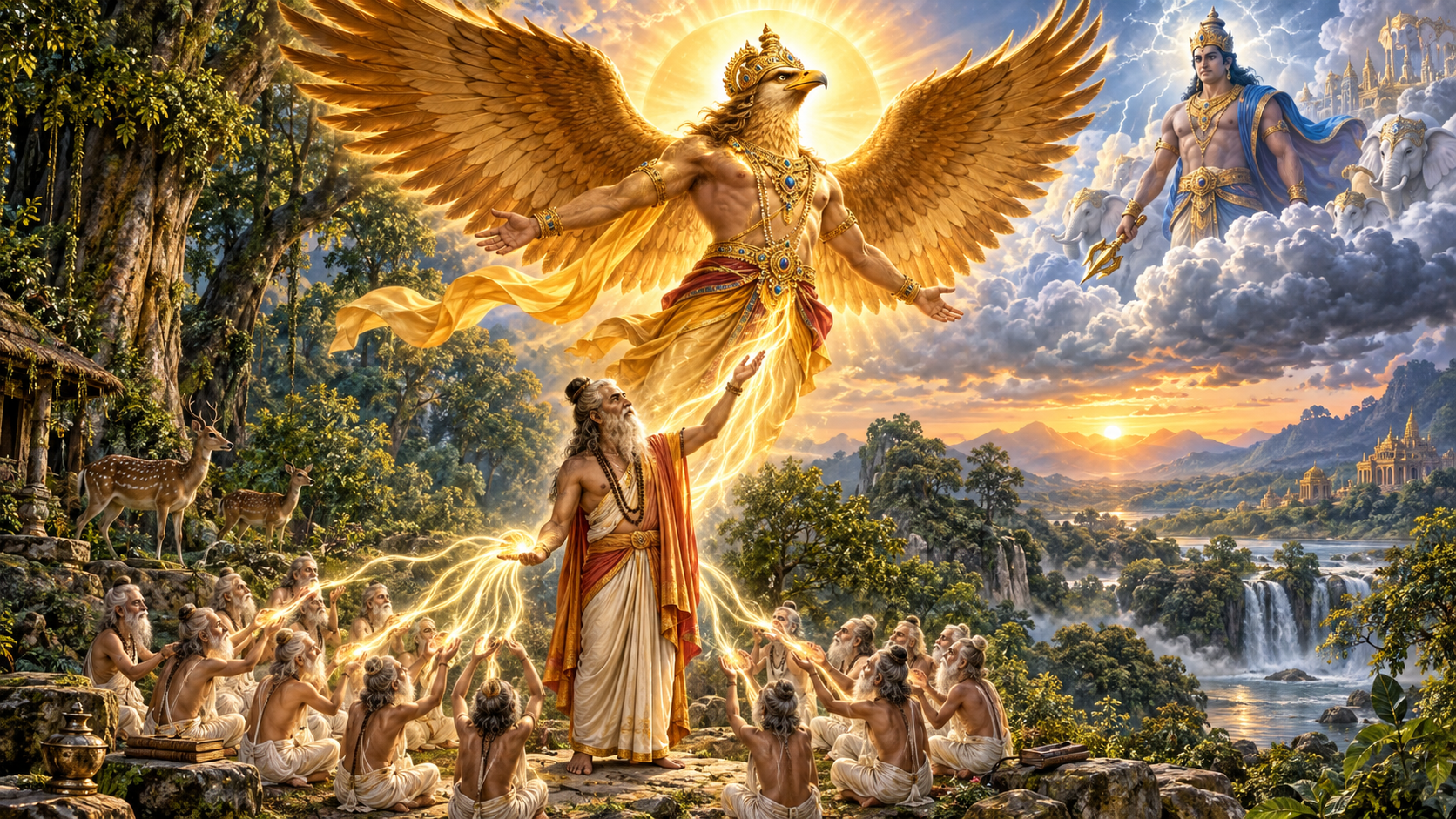
If you came to this episode wondering why Garuda’s birth is tied to Indra’s fear and the resolve of a group of rishis, the hinge is easy to miss. The Valakhilyas’ tapas is not erased, and Indra’s position is not defended merely because he already holds power. Kashyapa changes what the gathered spiritual force is meant to produce.
That distinction makes this more than a story about divine personalities. It gives you a precise way to think about wounded dignity, powerful vows and mediation: dharma may require preserving the truth of a grievance while refusing to let that grievance dictate the final outcome.
The hinge is a change of purpose
In Chapter 27 of the Astika Parva within the Adi Parva, the conflict joins Sage Kashyapa, the Valakhilya rishis and Indra, king of the Devas. Its movement can be followed in four parts:
- The Valakhilyas direct their tapas toward creating another Indra.
- Indra fears what that act could bring forth.
- Kashyapa intervenes and asks the rishis to modify their intended act.
- The potency behind their resolve is redirected, and the resolution becomes bound to the rise of Garuda.
Each part matters. If you reduce the episode to Indra being rescued, you overlook the dignity accorded to the Valakhilyas. If you reduce it to the ascetics displaying greater power, you overlook their willingness to alter its destination. If you treat Garuda’s birth as an unrelated wonder added at the end, you miss the actual resolution.
Tapas here is not vague devotion or a passing wish. It is disciplined spiritual exertion joined to intention. The crucial question is therefore not whether that force exists, but what it should be made to serve. The contemplated result is another Indra, not simply another impressive being. Because Indra is the king of the Devas, the aim would reproduce a claim to the same sovereignty. A personal conflict would thereby become a conflict over established authority.
Kashyapa works at the point where intention becomes consequence. He does not have to deny the tapas in order to question its target. That is the first practical teaching to carry away: changing the purpose of power is different from pretending that the power, effort or injury behind it was never real.
Indra’s fear reveals the limits of rank

Indra occupies the recognised office, yet he is afraid. The detail prevents you from equating position with inner security. A person may possess a title, command or inherited status and still feel threatened by disciplined power arising outside the formal hierarchy.
Fear, however, is diagnostic rather than decisive. It tells us that Indra recognises a real danger to his position. It does not by itself establish that whatever preserves his position must therefore be dharmic. The threatened ruler and the resolute ascetics do not possess the same kind of power: one holds office, while the others have accumulated spiritual potency through tapas.
This distinction is useful whenever you assess a conflict involving authority. Ask three separate questions:
- What is actually endangered? Is it a necessary responsibility, or only the office-holder’s sense of superiority?
- What power exists outside the hierarchy? Discipline, knowledge and moral resolve can shape events even when they carry no official title.
- What would retaliation create? A response that merely establishes a rival centre of power can preserve the original injury instead of resolving it.
The same scrutiny applies to the Valakhilyas. The ability to produce a formidable consequence does not settle whether that consequence is the right one. Tapas answers the question, “Can this intention acquire force?” Dharma still asks, “What should that force bring into being?” Keeping those questions separate is essential. Otherwise, spiritual capability can be mistaken for automatic moral approval.
Kashyapa mediates without declaring either side unreal
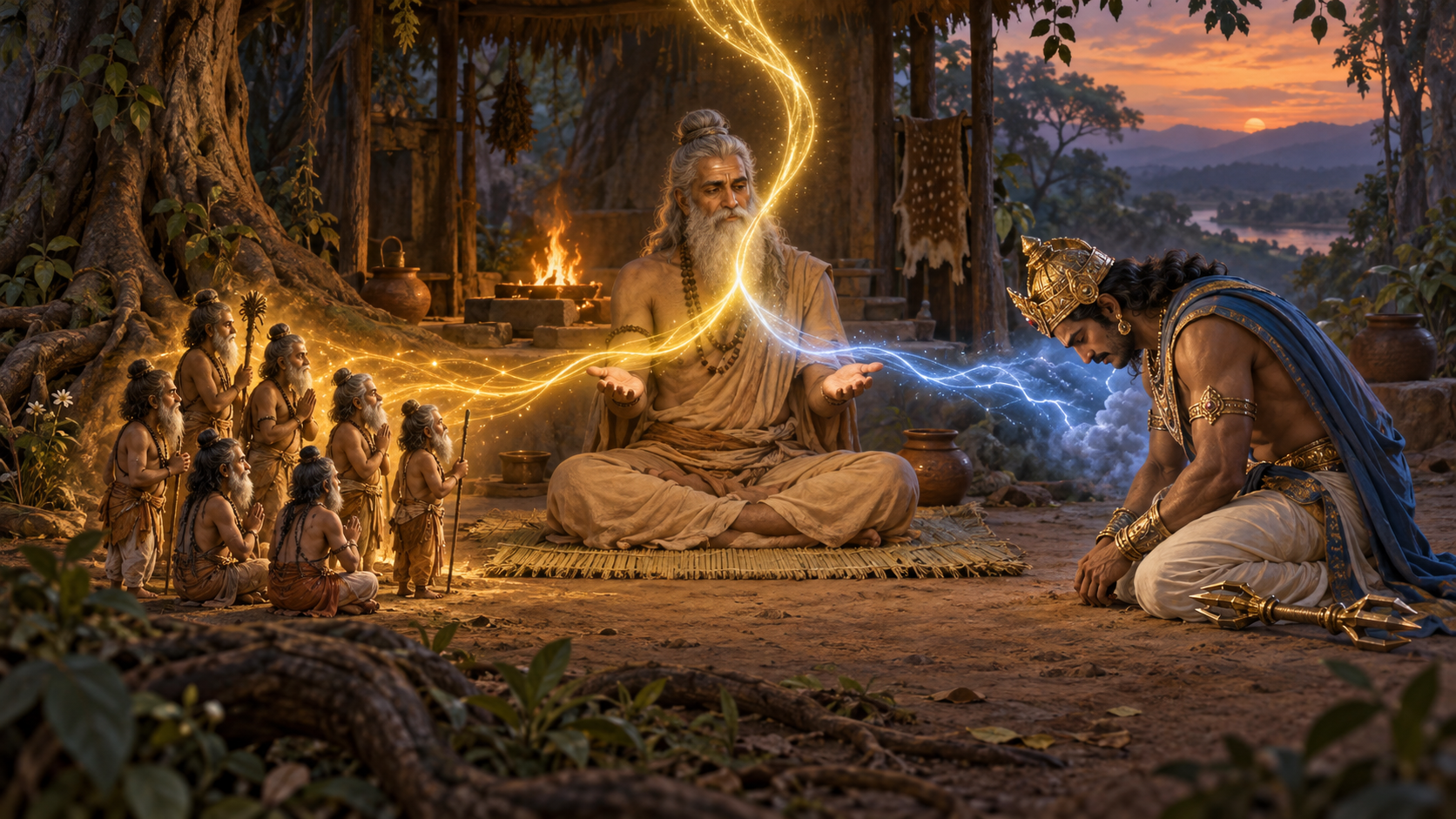
Kashyapa’s intervention is more exact than a demand for peace. He does not dismiss Indra’s fear as cowardice, declare the Valakhilyas’ tapas meaningless or allow the conflict to end in duplicated sovereignty. He asks for modification.
The request matters because the rishis remain moral agents. Their resolve cannot be treated as raw material for someone else to seize. At the same time, respecting their agency does not require accepting the original target as untouchable. Kashyapa separates the depth of their undertaking from the particular outcome toward which it had been directed.
You can use the same structure when you must mediate a serious dispute:
- Name the grievance. Do not begin by asking the injured party to forget why the conflict arose.
- Identify the intended consequence. State plainly what the aggrieved person now wants to make happen.
- Separate effort from target. Determine which part of the person’s discipline, sacrifice or commitment deserves to be preserved even if the proposed result does not.
- Test the result against the larger order. Ask whether it repairs the wrong or simply creates a second version of the original rivalry.
- Seek a worthy redirection. The alternative must be substantial enough to honour the force already gathered; an empty consolation will not resolve the dispute.
This method avoids two common failures. One is appeasement, in which the powerful person’s fear becomes the only concern. The other is vindication without foresight, in which a legitimate grievance is assumed to justify every possible consequence. Kashyapa’s path takes both the injury and the future seriously.
Garuda represents creation beyond rivalry
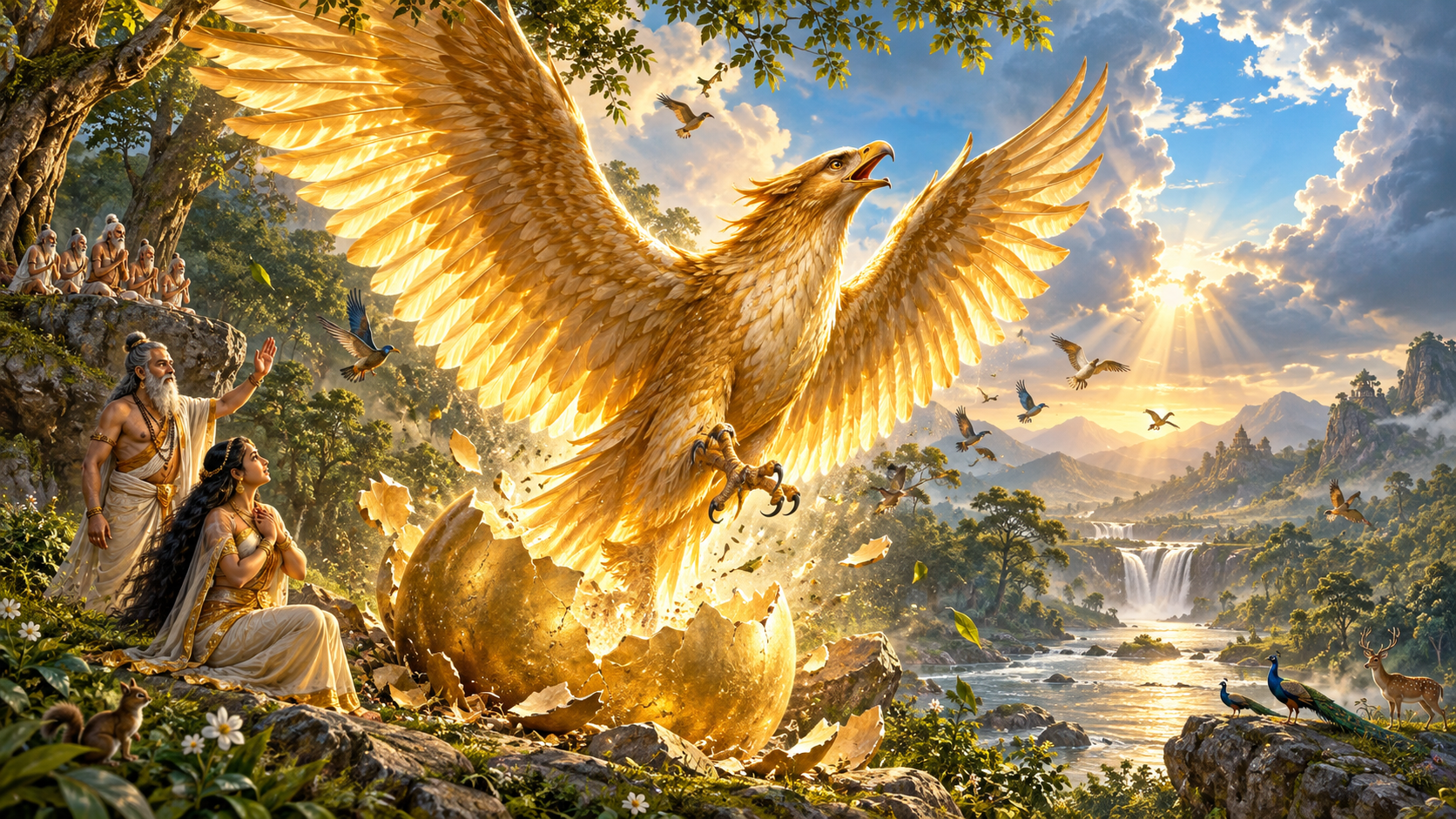
Garuda belongs at the centre of the episode because his rise embodies a third possibility. The existing Indra is not replaced by a duplicate, but the Valakhilyas’ tapas does not disappear. Greatness emerges without being confined to the contest over Indra’s throne.
This is not a lesson in making yourself smaller so that an established authority can remain comfortable. Redirection is dharmic only when it respects the agency of those whose effort supplies the power. Nor is it a claim that every hierarchy must be preserved. The narrower and more useful point is that justified hurt need not choose the form of the future.
When you face a comparable choice, write down five things before acting:
- The exact injury, stated without exaggeration.
- The outcome you presently want because of that injury.
- The valuable capacity your response has already developed in you.
- The new harm your original outcome could create.
- One constructive result large enough to receive the same commitment.
The fourth and fifth items are the turning point. You are not asking whether anger or resolve should vanish. You are asking whether their energy can produce something other than a mirror image of the power that provoked them. Garuda’s place in the narrative gives that question a vivid form: the fruit of disciplined potency can be genuinely new rather than merely competitive.
Key takeaways
- Garuda’s rise is part of the resolution, not an ornamental addition to a dispute between Indra and the Valakhilyas.
- Indra’s fear shows that recognised rank can feel threatened by power formed outside its hierarchy.
- The Valakhilyas’ tapas is honoured without making its first intended target morally final.
- Kashyapa mediates by changing the purpose of accumulated power rather than denying that power.
- The practical dharmic question is not only whether you can produce a consequence, but whether that consequence deserves to be produced.
The next time you read this episode, trace its movement as grievance, intention, intervention and transformed fruit. Then use the same sequence when hurt begins to harden into a rival claim of your own. Preserve what the struggle has disciplined in you, but examine its destination before you give it the force of a vow.
References

Leave a Reply
You must be logged in to post a comment.