
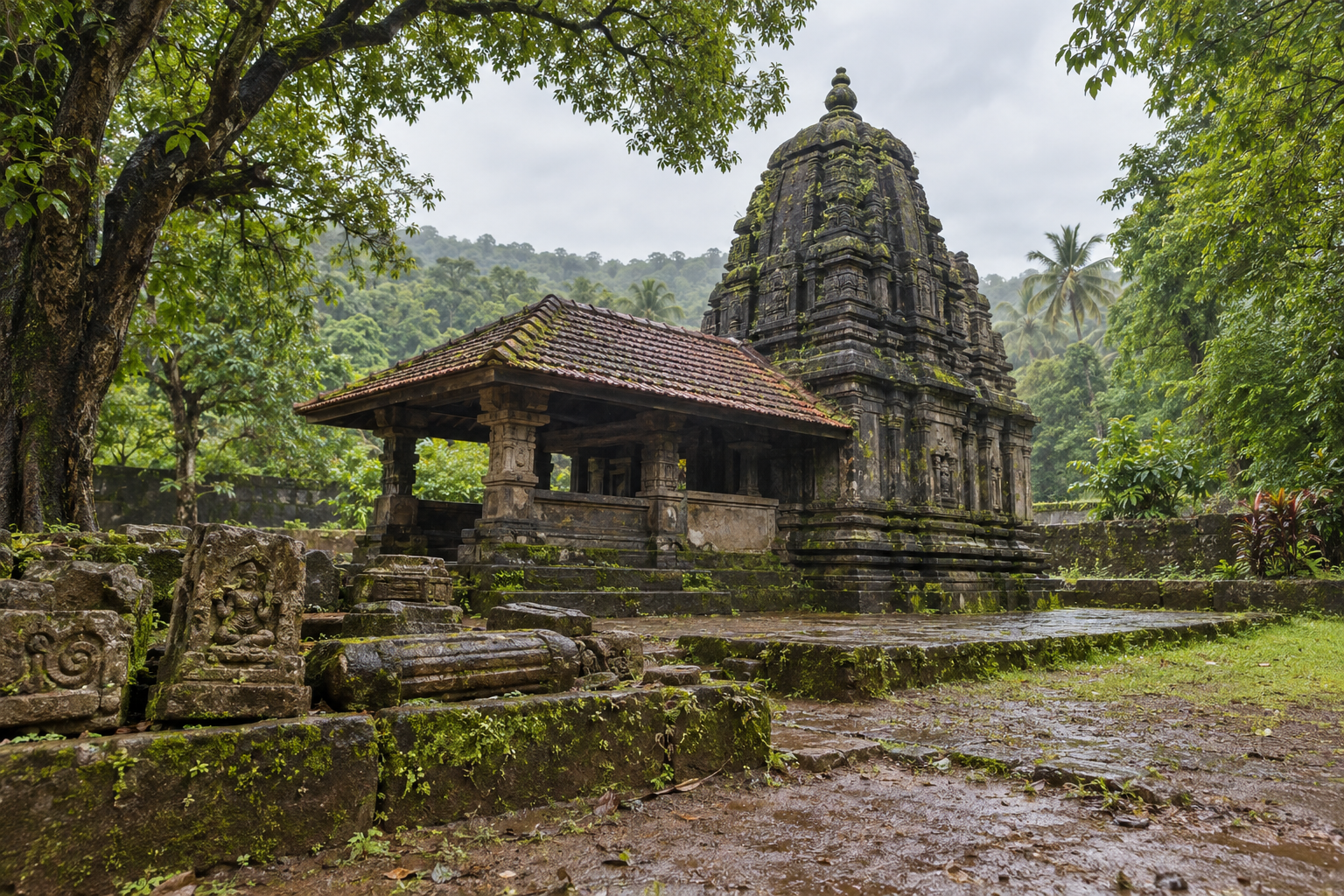
If you are worried about Kasba’s temple heritage, the most useful response is not a hurried repair or a viral photograph. It is a disciplined conservation process that records what exists, identifies what is vulnerable and assigns responsibility before anything irreversible is done.
The immediate concern includes ancient temples, rare murtis, veergal and other archaeological remains in Kasba, Ratnagiri district. The call for an archaeological survey, scientific documentation and a comprehensive conservation plan points in the right direction. What has not yet been established publicly is the age, condition, ownership or conservation priority of each object and structure. Those are questions for a proper survey, not for speculation.
The first task is to establish what is actually there
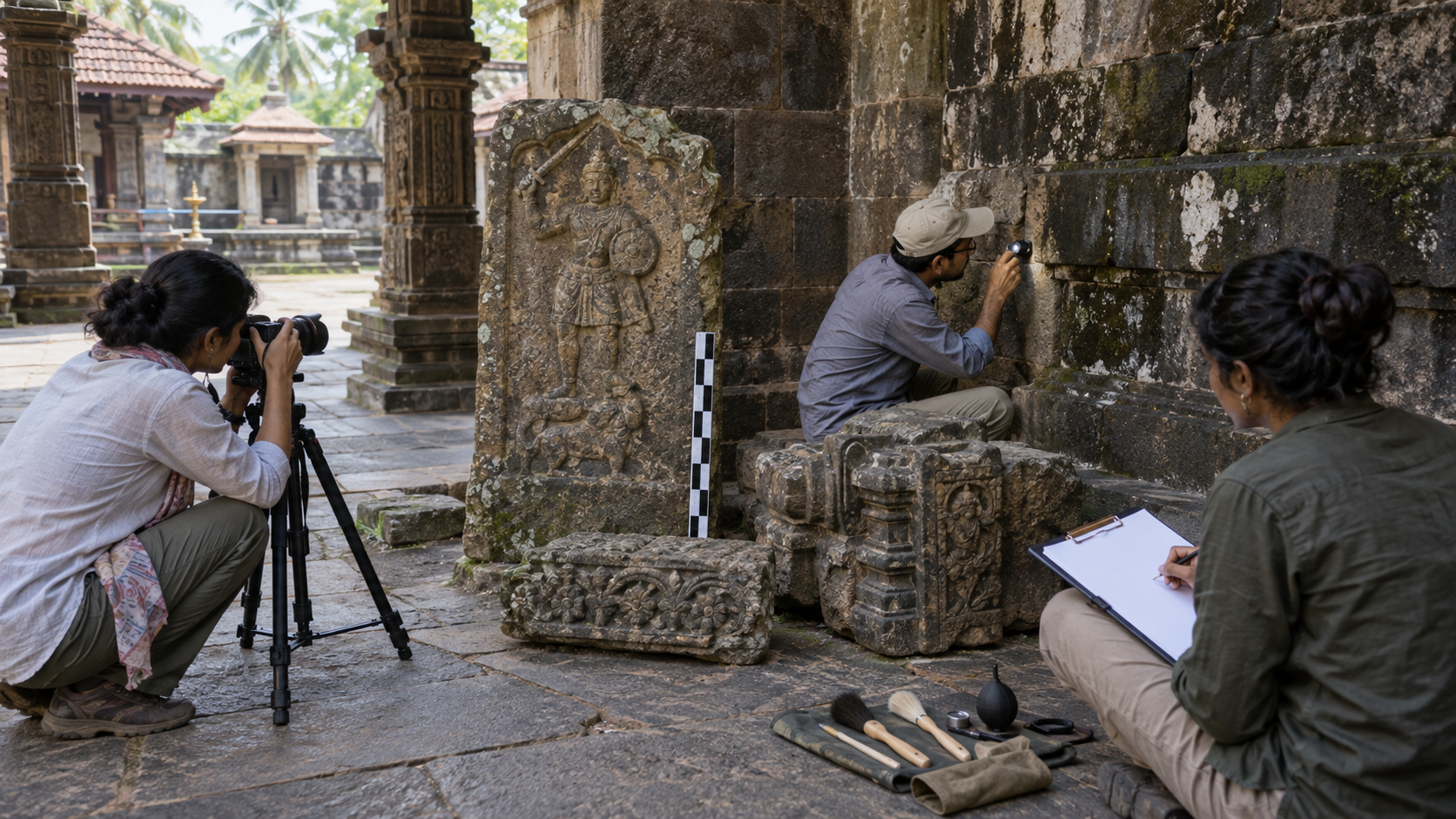
Heritage can disappear without being demolished. A stone may be moved from its original setting. An inscription may be covered by paint. A weathered surface may be scrubbed until its remaining detail is lost. A murti may remain in the village while its history, location and relationship to the temple are forgotten. Documentation protects against this quieter form of loss.
Kasba therefore needs an inventory before it needs a beautification campaign. Each temple, murti, veergal and associated remain should receive a stable record. A useful record should include:
- A unique identification number that stays with the object or structure throughout the project.
- Its recorded location and physical setting, including whether it stands in active worship, storage, open ground or a reused architectural position.
- Dated photographs showing the whole object, its surroundings and important details. A scale and orientation should be included where this can be done without touching the object.
- Basic measurements and a plain description of visible material, form, carving, inscription and damage. Uncertain features should be marked as uncertain rather than converted into confident claims.
- A condition note recording visible cracks, displacement, leaning, water exposure, biological growth, surface loss and previous repairs where any of these are present.
- The present custodian and any known restrictions on access, worship, photography or handling.
- A confidential security record for portable or vulnerable objects. Exact locations do not need to be published before custody is secure.
Documentation should never become an excuse to clean an inscription, remove a stone, apply chalk to a carving or rearrange a site for a clearer photograph. Record the object as found. If closer examination requires contact, it should wait for a qualified archaeological or conservation team.
This distinction matters because an inventory answers, “What do we have?” A condition assessment answers, “What is happening to it?” Historical study asks, “What does it mean and when might it belong?” Conservation planning then decides, “What should be done, by whom and in what order?” Mixing those stages encourages premature conclusions and damaging interventions.
Conservation must happen in the right order
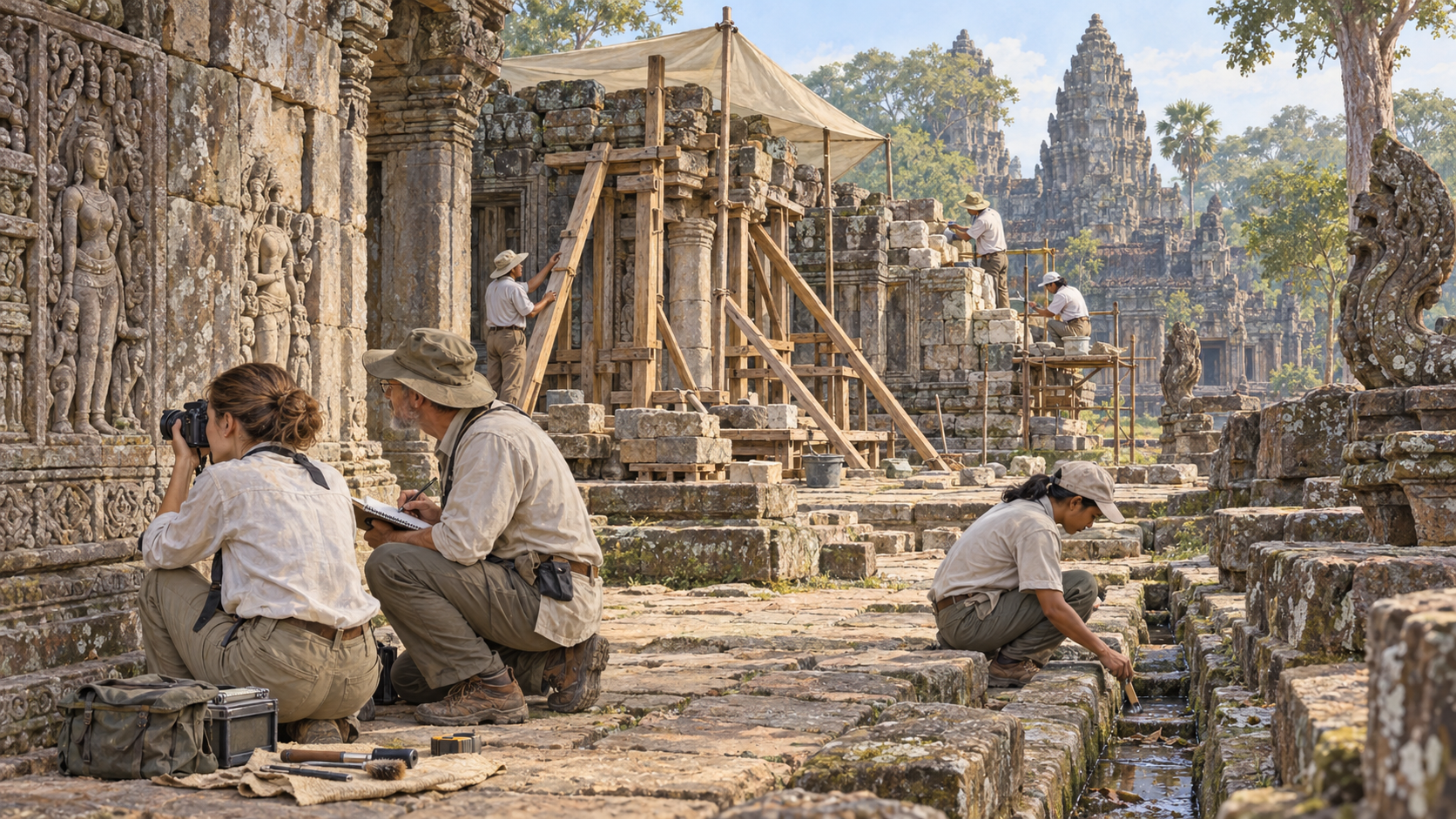
A well-meant repair can destroy the evidence it was supposed to protect. Fresh cement, modern paint, aggressive cleaning, drilling, chemical treatment and the replacement of weathered stone may make a site look orderly while erasing historic fabric. Moving a veergal into a convenient row can also sever it from the landscape that helps explain it.
The safe sequence is straightforward:
- Prevent avoidable change. Pause new painting, cement patching, drilling, relocation and unsupervised cleaning of material believed to be historic.
- Document the present condition. Create the inventory and photographic record before repairs or landscaping alter the evidence.
- Obtain professional assessment. Archaeologists and qualified conservators should distinguish urgent structural or environmental risks from ordinary weathering and old, stable damage.
- Prioritise by risk. An unstable stone, active water entry or an unsecured portable object may require attention before a more visually impressive but stable feature.
- Select the least invasive effective treatment. Every intervention should address an identified cause, preserve as much original material as possible and be documented.
- Monitor after treatment. A repair is not the end of conservation. Dated condition photographs and scheduled inspections should show whether the problem has actually stopped.
Emergency safety is different from permanent repair. If masonry appears liable to fall, people should be kept away from the smallest affected area and the competent authorities should be contacted. Local volunteers should not dismantle, prop, excavate or relocate it on their own. An improvised intervention can injure someone, disturb archaeological context and complicate later conservation.
The same caution applies below ground. Unearthing a carved fragment may feel like recovery, but excavation removes an object from the layers and relationships that give it meaning. If something is exposed accidentally, leave it in place when safe, protect the area from interference, photograph the surroundings without disturbing them and report the discovery.
A temple is a living sacred place, not merely an exhibit
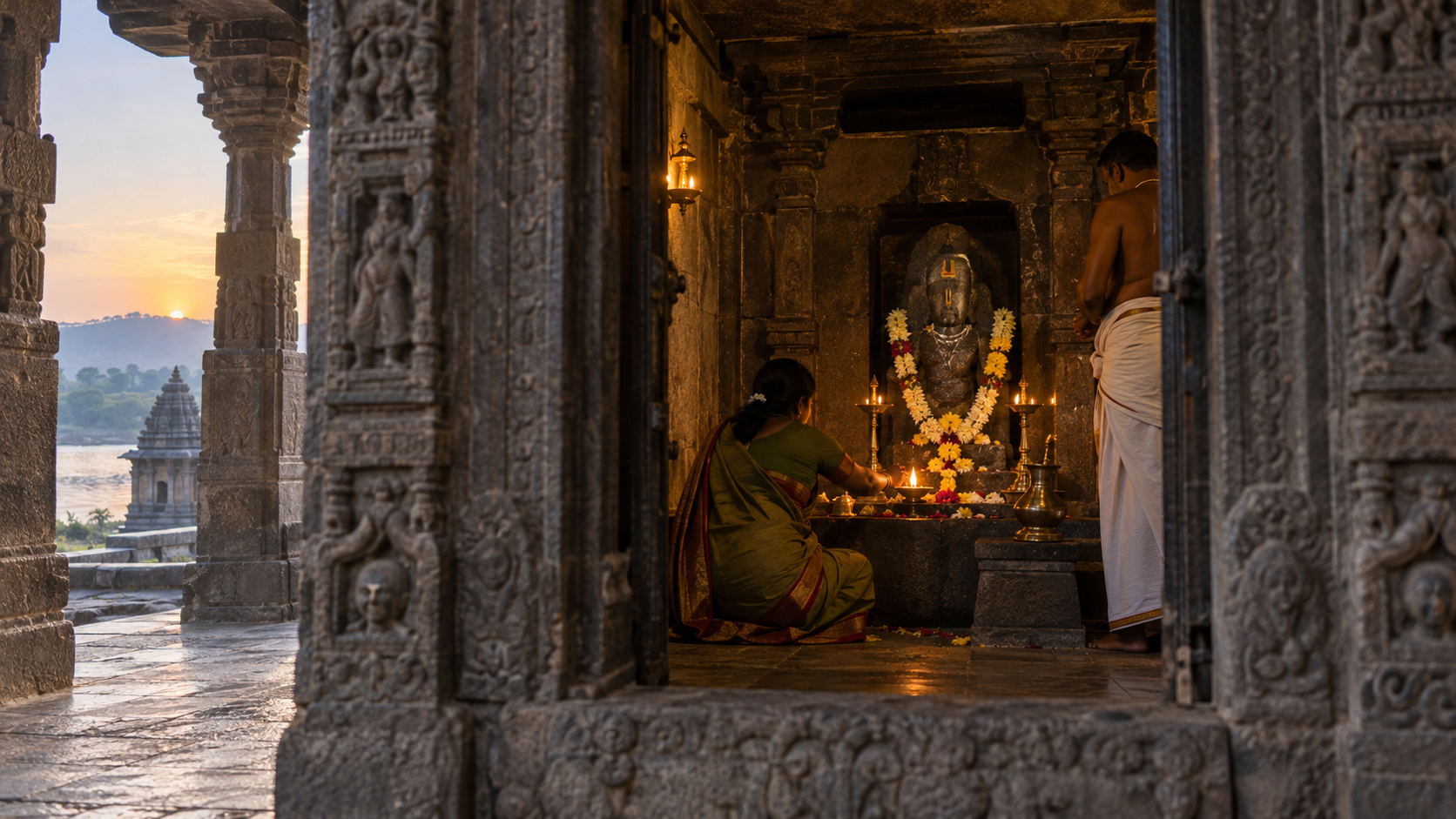
Temple conservation fails when it treats worshippers as a nuisance. It also fails when every customary-looking alteration is assumed to be harmless. Kasba needs a framework that respects both the continuity of puja and the physical survival of inherited structures, murtis and memorial stones.
The practical approach is to separate continuing religious use from new physical intervention. Daily worship, festivals, offerings, cleaning, drainage and visitor movement can all affect historic material, but the answer is not a blanket prohibition imposed without consultation. Priests, trustees, devotees, residents and conservation professionals should agree on workable protocols for the particular site.
For example, a protocol can identify where lamps may be placed, how water and offerings are drained, which surfaces may be cleaned by customary methods, which historic surfaces require specialist care and how temporary festival installations can be fixed without drilling into old fabric. The exact practice must follow the temple’s ritual requirements and the assessed condition of its material. There is no honest one-rule solution for every shrine.
Responsibilities should also be explicit. Temple custodians are best placed to notice day-to-day changes. Technical professionals should assess materials and specify treatments. Government must provide the institutional route for survey, documentation, protection and a coordinated plan. Residents can maintain a dated observation log and report new damage, but they should not become informal excavators or restorers.
Veergal require particular care in this arrangement. These hero or memorial stones may be objects of local reverence as well as historical evidence. Their carvings, inscriptions, orientation and original setting can all matter. Protecting the stone while discarding its context would preserve only part of the heritage.
Turn public concern into an accountable request
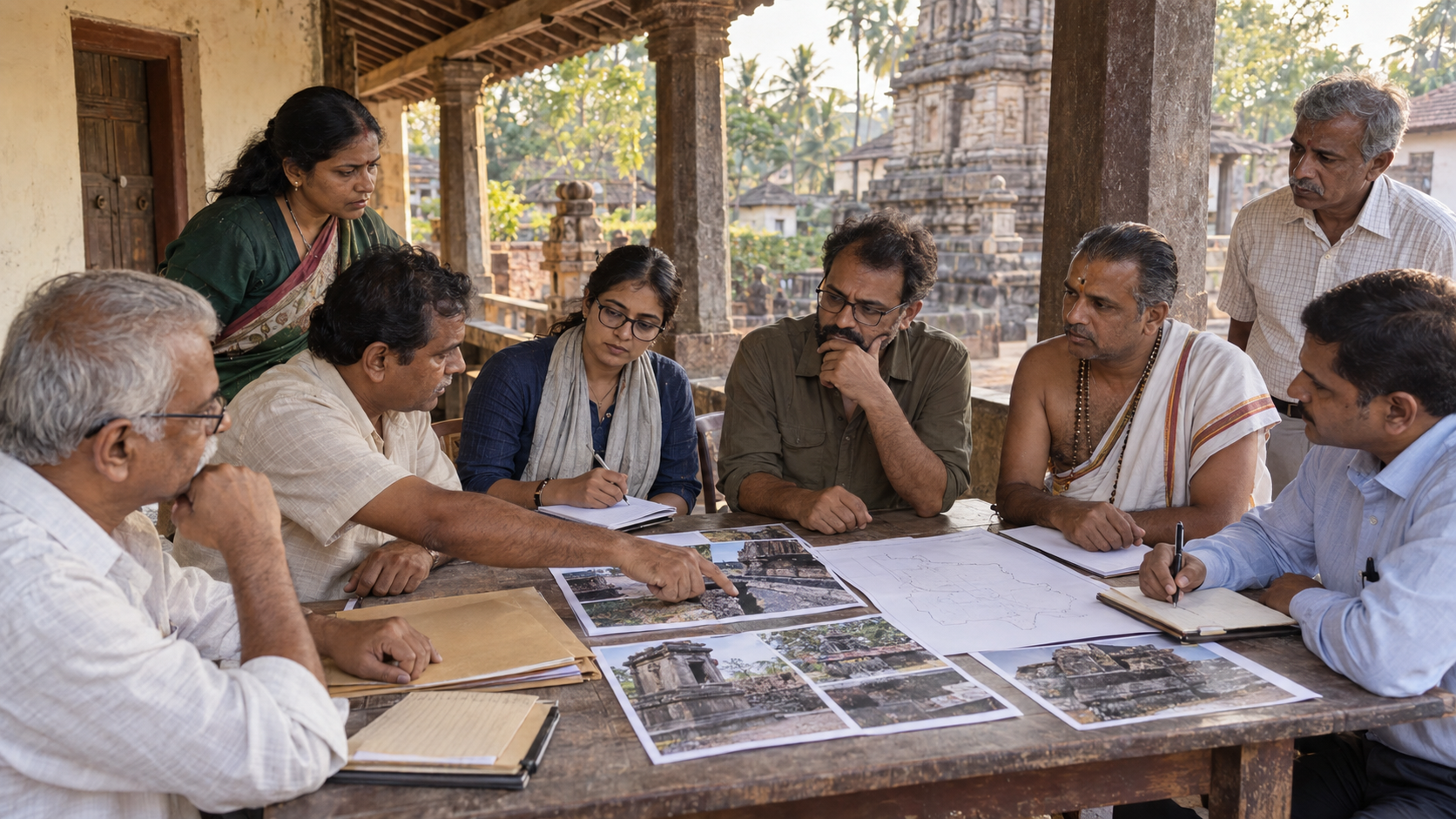
A general demand to “save the temples” is easy to acknowledge and difficult to measure. A precise written request gives officials a defined task and gives citizens something concrete to follow up.
If you are writing to the Maharashtra Government or the relevant local administration, ask for these outputs:
- A formal archaeological survey covering the temples, murtis, veergal and other remains brought to official attention.
- A site-wise inventory with photographs and condition records, with sensitive location and security information kept confidential where necessary.
- Identification of the office and qualified personnel responsible for assessment.
- A risk-based list of urgent, short-term and longer-term actions.
- Temporary protective measures for anything found to face an immediate threat, without prejudging the permanent treatment.
- A comprehensive conservation plan that addresses structures, objects, drainage, vegetation, visitor movement, ritual use, security and continuing maintenance.
- A timetable for inspection and a named channel through which custodians can report changes.
Attach a concise evidence pack rather than a flood of forwarded messages. Use one page for the request, then add clearly labelled photographs, locations, dates and contact details for the person who recorded them. Describe only what is visible. “The stone is leaning” is useful evidence; “the stone will certainly collapse” is a technical conclusion unless a competent assessment supports it.
Obtain an acknowledgement or reference number and keep every response together. Follow up on the promised action, responsible office and inspection status. Public attention can open the door, but a traceable administrative record is what allows residents to ask why a survey, protective measure or plan has not progressed.
Community monitoring should remain disciplined. Appoint a small number of local contacts rather than encouraging unrestricted handling or the online publication of every object’s precise location. Their job is to compare dated observations, report fresh changes and help officials reach the site. It is not to authenticate artefacts, announce dates or undertake repairs.
Key takeaways
- Begin with a site-wise inventory and condition record; do not begin with cleaning, painting or reconstruction.
- Keep documentation, historical interpretation, risk assessment and treatment decisions as separate stages.
- Do not move murtis, veergal or archaeological fragments merely to make them safer-looking or easier to display.
- Protect living worship and historic fabric together through site-specific protocols agreed with temple custodians and qualified professionals.
- Ask government for defined outputs: a survey, scientific documentation, risk priorities, responsible officials and a comprehensive conservation plan.
- Track the request through written acknowledgements and dated follow-up, while keeping security-sensitive information out of public circulation.
If you want to help Kasba, start with one careful record and one precise request. Preserve the evidence, respect the sacred life of the temples and insist that official concern become a documented plan with named responsibility. That is how public vigilance becomes durable stewardship.
References

Leave a Reply
You must be logged in to post a comment.