
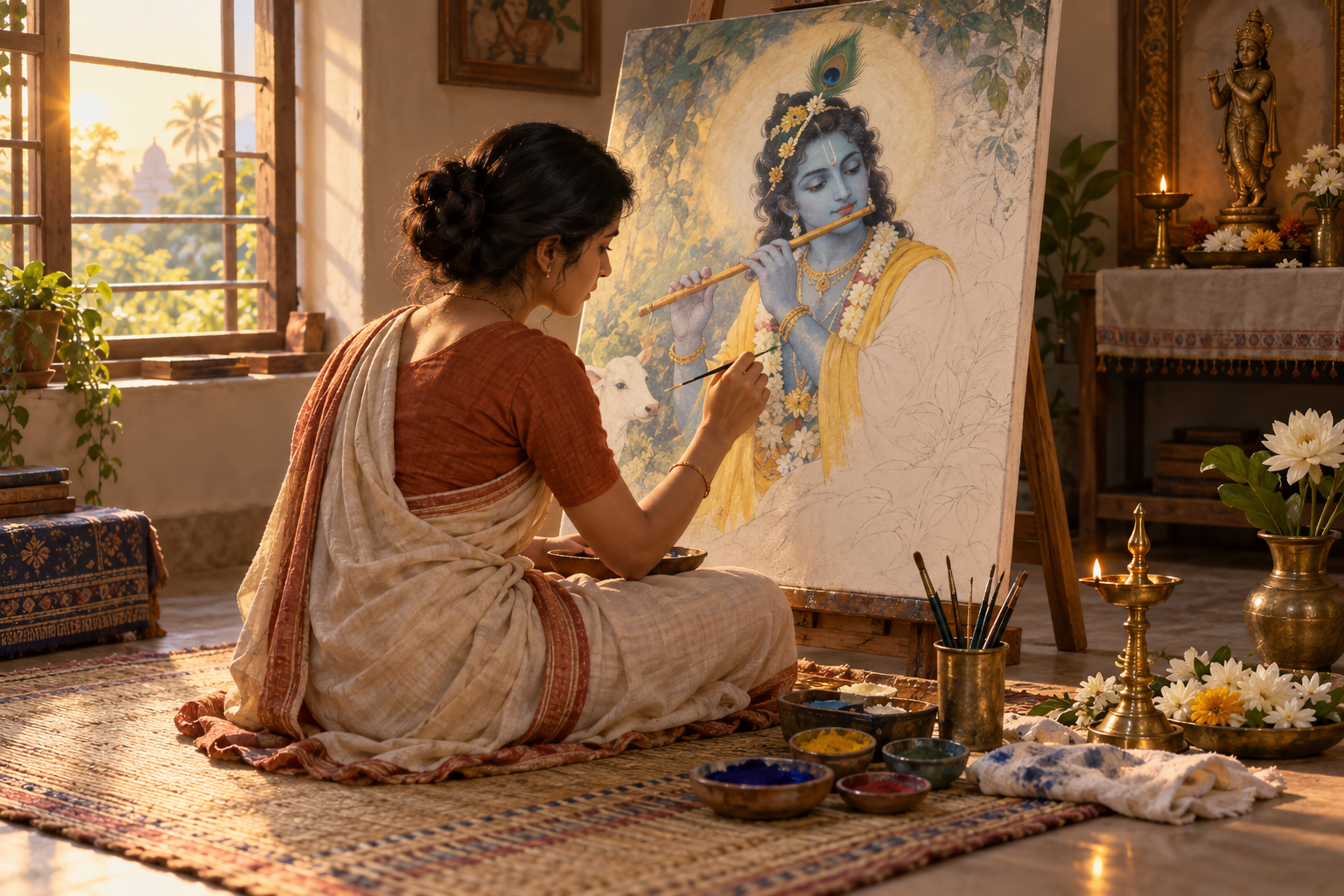
You may feel drawn to paint a sacred form and still hesitate: is this genuinely seva, or just a personal project with a devotional subject? That hesitation can be useful. A deity, saint, or lila on the canvas does not by itself make the work an offering. The purpose, preparation, working discipline, and eventual use of the image all matter.
If you are waiting until you become a highly trained artist, however, you may be putting the threshold in the wrong place. You need enough humility to learn and enough care to accept correction. You do not need fame, a professional title, or a fully developed style before you begin serving.
Key takeaways
- Begin with the devotional purpose and intended use of the work, not with the image you hope will attract attention.
- Consult authoritative descriptions before settling the figure, attributes, relationships, setting, and mood.
- Let steady practice develop your skill while qualified guidance protects the sacred subject.
- Separate matters of tradition from matters of personal style. The first require fidelity; the second permit creative judgement.
- Do not use praise, sales, or public recognition as the test of whether the work has served.
The first test is whether the work helps someone remember
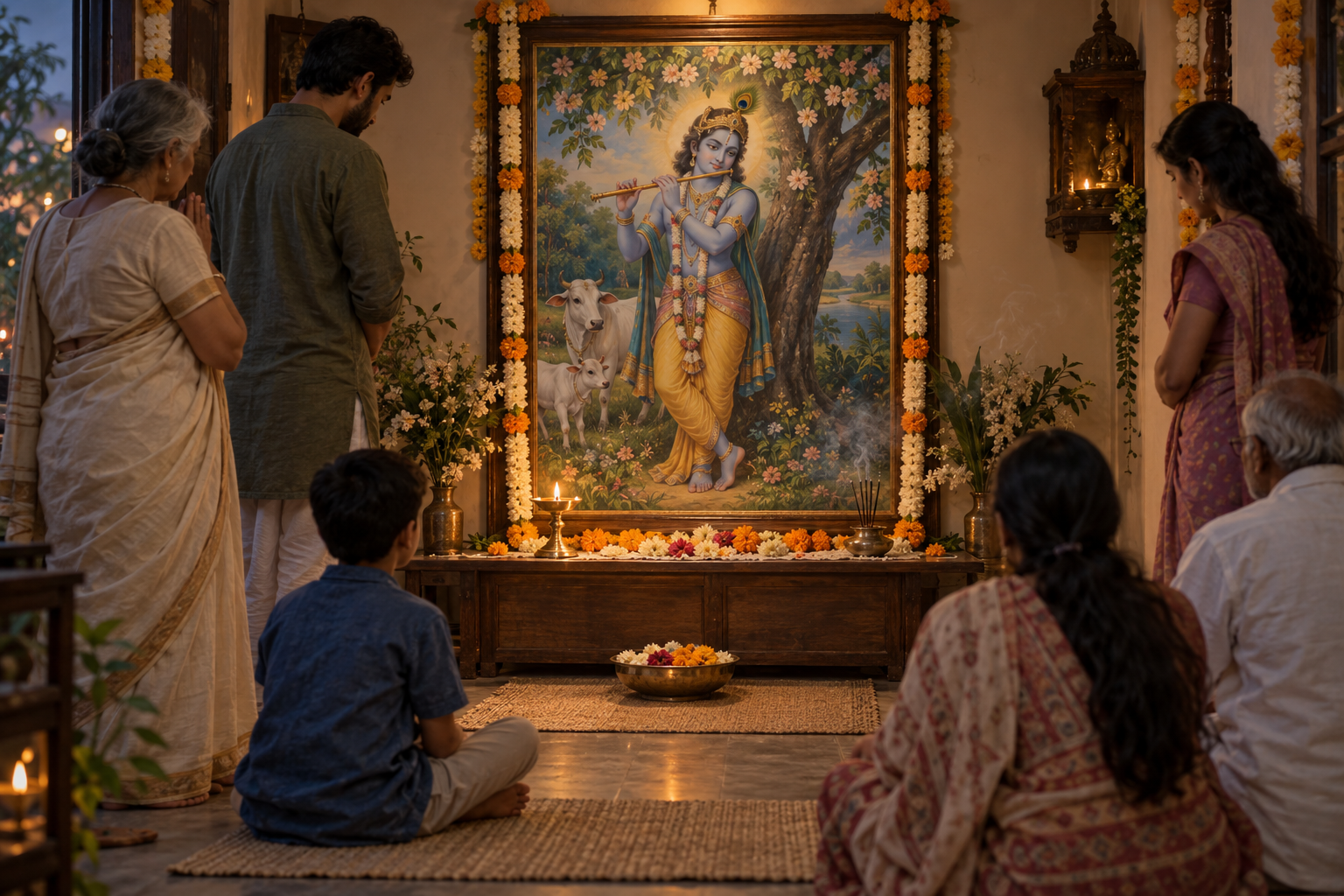
Devotional service changes the centre of the artistic process. The governing question is no longer simply, “What do I want to express?” It becomes, “What will help a particular person approach, remember, or understand the divine?” Personal expression does not have to disappear, but it must stop being the final authority.
In the Krishna-conscious model, artistic ability is treated as a talent that can be placed in service. Painters were given concrete needs to meet: sacred images for temples and illustrations for devotional books. That destination gave the work a function beyond display. A temple image had to support darshan and remembrance; a book illustration had to illuminate the teaching or lila beside it.
Give your own work an equally clear service brief before you sketch. Write down answers to these questions:
- Who is meant to receive this work: a temple congregation, readers of a publication, children learning a sacred narrative, or a household maintaining daily worship?
- What should the viewer recognise or remember after seeing it?
- Where will the work live, and what does that setting require for scale, clarity, durability, and tone?
- Which details belong to the tradition, and which choices have genuinely been left to the artist?
If you cannot answer the first two questions, pause before polishing the composition. You may have an attractive concept, but you do not yet have a devotional assignment. Speak with the person or community that will use the work and turn a vague sacred theme into a definite act of service.
Practice can be part of the offering, not a gate before it
The fear of being unqualified often disguises itself as respect for the subject. Respect is necessary, but indefinite delay serves no one. In his 1968 guidance to Jadurani Devi, A.C. Bhaktivedanta Swami Prabhupada did not make artistic reputation a prerequisite for service. He urged her to continue painting and allowed the work itself to become part of her education.
The same practical reasoning appeared when students with only rudimentary instruction learned to play the mrdanga through continued participation in sankirtana. The point was not that training is worthless. It was that a living need should not always be suspended until an ideal expert appears. When the service is needed and suitable guidance is available, disciplined participation can be the training.
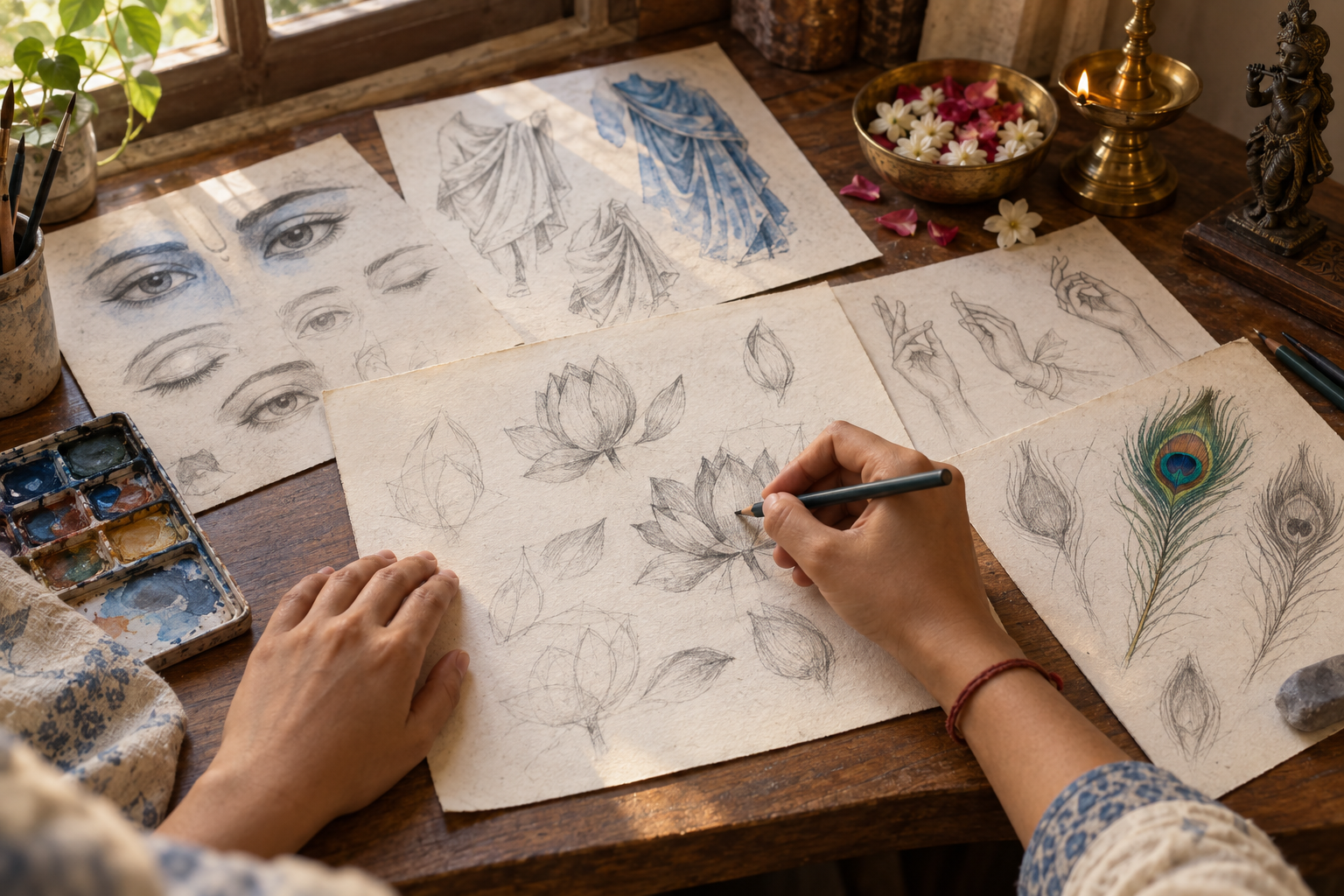
This gives you a middle path between perfectionism and carelessness. Begin with an assignment small enough to review. Make studies before attempting a permanent temple painting. Let an illustration be corrected before it is printed. Keep two separate lists while you work: one for fidelity to the devotional brief and one for technical craft. A problem with anatomy, colour, perspective, or composition belongs on the craft list. A wrong attribute, unsuitable mood, or misleading portrayal belongs on the fidelity list. Both matter, but they are not the same kind of error.
After each working session, identify the next correction rather than judging your entire worth as an artist. That habit converts embarrassment into abhyasa, sustained practice. Skill then grows inside the service instead of becoming an endlessly postponed condition for it.
Sacred accuracy is a responsibility, not a restriction on style
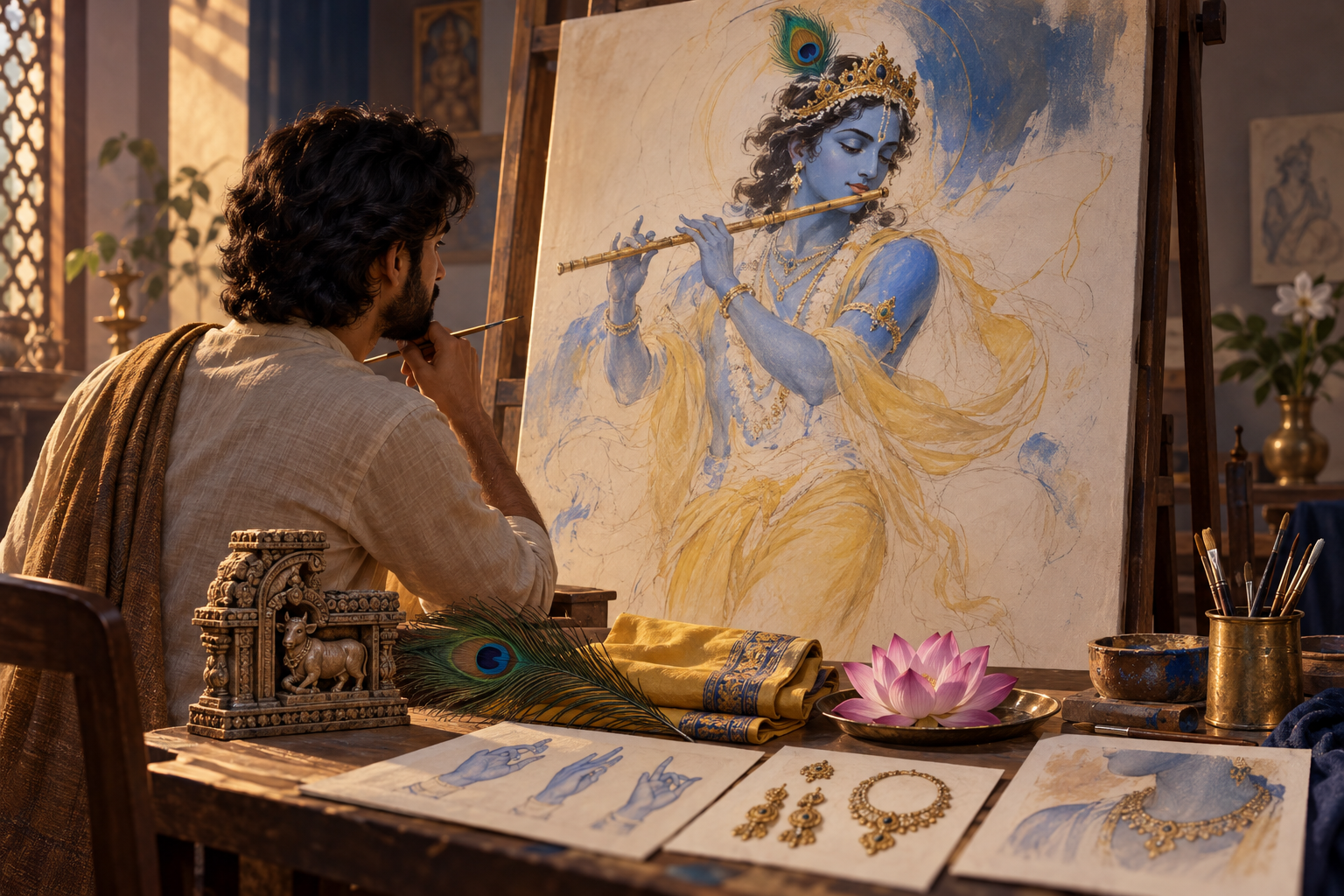
For sacred figural art in this Vaishnava setting, accuracy carries theological weight. Krishna and his expansions are understood as possessing personal, transcendental forms described in texts such as the Bhagavad-gita and Srimad-Bhagavatam. Within this understanding, an image made from authoritative descriptions and under proper devotional direction may be treated as far more than decorative symbolism. That belief demands more care, not less.
This is a specifically Vaishnava account of sacred representation, not a claim that every Hindu or Dharmic tradition governs images in exactly the same way. If you work within another sampradaya, learn its own iconographic discipline and receive direction from people formed by that tradition.
Fidelity does not mean mechanically copying any image that already circulates. A famous artist may still have misunderstood the person being portrayed. One depiction of Narada Muni was criticised because its sensuous treatment conflicted with his identity as a brahmacari. The practical lesson is sharp: technical polish cannot rescue a portrayal whose visual character contradicts the sacred character of its subject.
Before finalising a sacred figure, prepare a simple accuracy sheet:
- Name the exact form, person, or episode. Do not work from a generic idea of “something spiritual.”
- Read the relevant descriptions in the recognised texts and instructions of the tradition you are serving.
- Record the identifying features: bodily form, posture, dress, ornaments, objects, companions, relationships, setting, and devotional mood.
- Mark each decision as established, inferred, or stylistic. Anything merely inferred should be easy to revisit.
- Ask a qualified reviewer to identify contradictions before you invest in the final surface or format.
A useful reviewer should be able to explain a correction by reference to the sacred identity, text, or received practice involved. “I prefer it this way” is taste. “This attribute belongs to another form” is a substantive correction. Learning to distinguish the two protects both artistic freedom and devotional integrity.
Use a repeatable devotional-art workflow
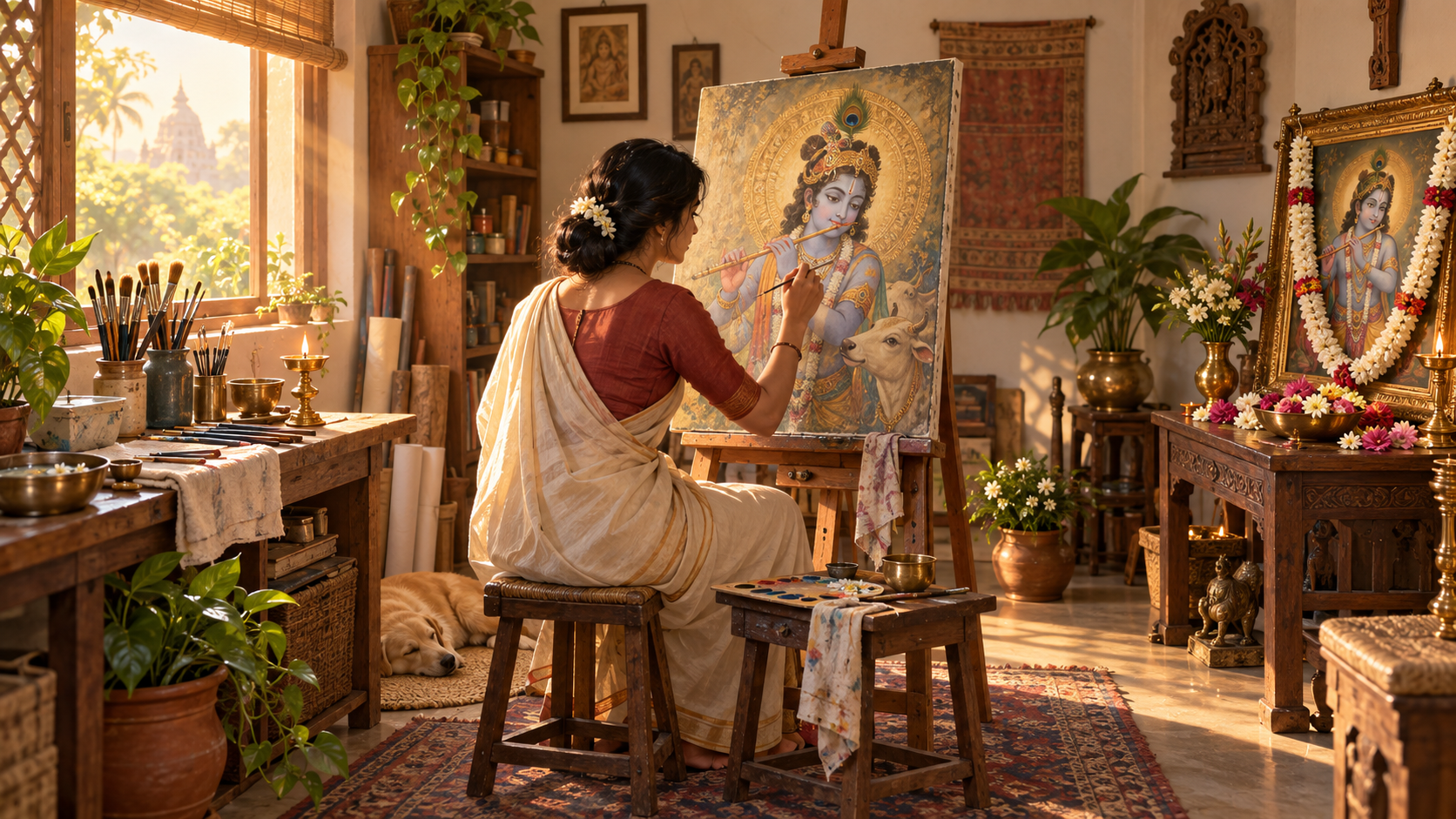
A clear process keeps good intention from dissolving into improvisation. Adapt this sequence to painting, illustration, sculpture, design, or another visual medium:
- Receive or define the service. Identify the audience, setting, practical need, and person responsible for approving the work.
- Choose the sacred subject precisely. Name the particular form, personality, teaching, or lila the work will communicate.
- Gather authoritative descriptions. Build the accuracy sheet before searching widely for visual references, so another artist’s invention does not quietly become your authority.
- Make exploratory studies. Resolve composition, gesture, readability, and mood in a form that can still be changed without waste.
- Request review early. Ask separately about sacred accuracy and artistic clarity. Early correction is easier to receive and easier to implement.
- Complete and revise the work. Technical care is part of the offering. Correct avoidable weaknesses instead of using devotional intention as an excuse for poor execution.
- Place the work in service. Install it, publish it, or give it to the intended community. Preserve the corrections and source notes so later work begins from a stronger foundation.
Public response may tell you whether the image communicates clearly, but it cannot determine its spiritual worth by itself. Sales can support further work, yet marketability is not the same as devotional usefulness. The early Krishna-conscious artists were explicitly told not to make public purchase the decisive standard; work that did not sell could still be distributed among devotees. This protects you from changing a sacred subject merely to satisfy fashion, while leaving room to improve any genuine failure of clarity or craft.
Choose one real need now: an illustration awaiting completion, an empty teaching space, or a community request that has remained unanswered. Write its service brief, gather the relevant descriptions, and make the first correctable study. Let that modest work teach you how your talent can become seva.
References

Leave a Reply
You must be logged in to post a comment.