
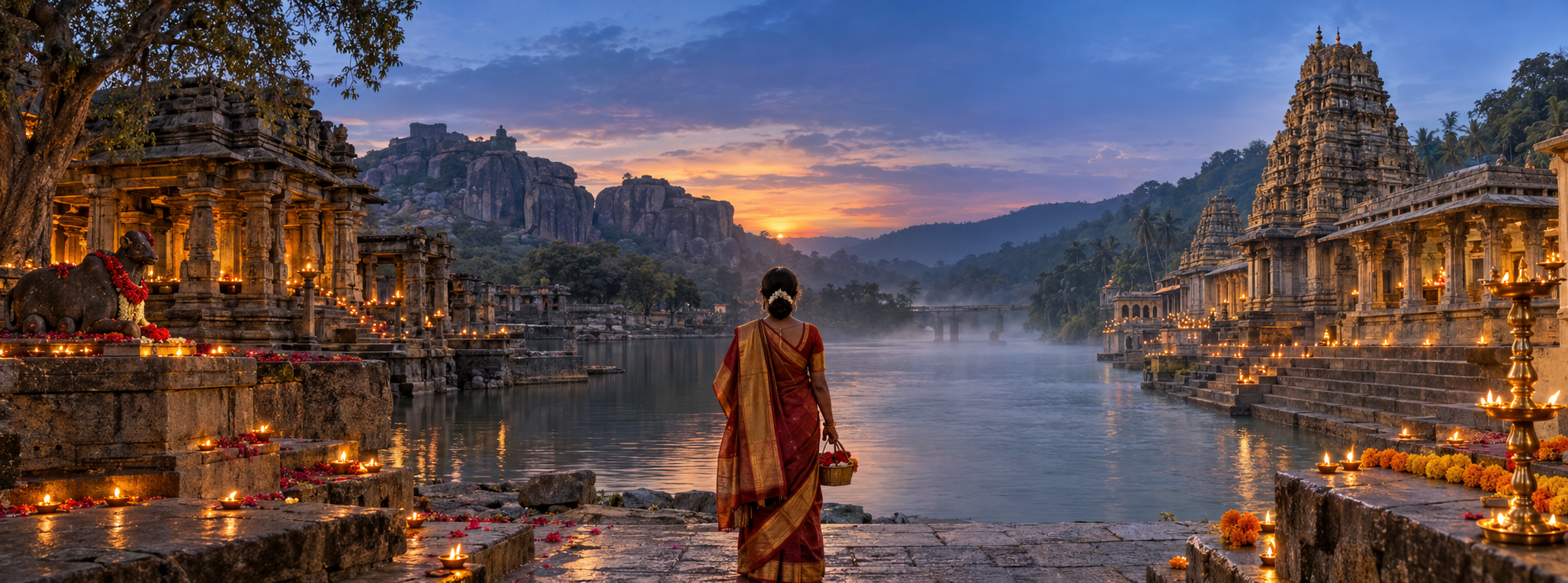
If you are deciding between Bhadrakali Temple and Sringeri for Navratri 2026, begin with the purpose of your pilgrimage. The dates overlap completely, but the temples offer distinct ways of approaching Devi. Your choice should follow your sankalpa, not a checklist of famous destinations.
The confirmed festival window is October 11 to October 20, 2026. That gives you a firm calendar for leave and travel planning. It does not give you a day-by-day temple timetable, so keep ritual schedules, darshan arrangements and local access separate from the date range when making reservations.
One Navratri calendar, two distinct forms of Devi
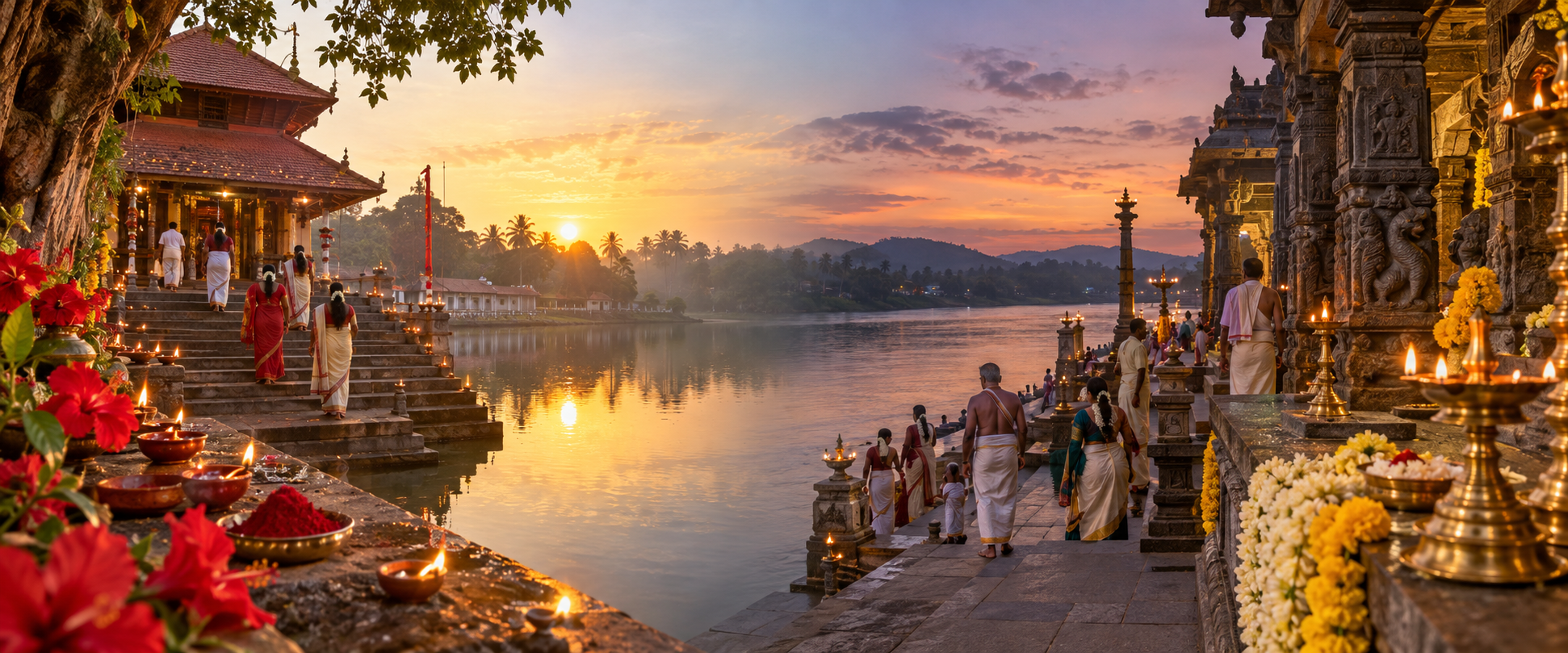
At Bhadrakali Temple in Hanamkonda, Warangal, the 2026 Navratri observance begins on October 11 and concludes with Dasara on October 20. Bhadrakali is worshipped there as a fierce form of Durga Devi and is also associated with prosperity.
At the Sharadamba Temple in Sringeri, Karnataka, Sharada Navratri also runs from October 11 through Vijaya Dashami on October 20. The festival falls in Ashwina masa and centers on the worship of Sri Sharada Mata.
| Planning question | Bhadrakali Temple | Sringeri Sharadamba Temple |
|---|---|---|
| Where is it? | Hanamkonda, Warangal, Telangana | Sringeri, Karnataka |
| Which form guides the pilgrimage? | Bhadrakali, the fierce Durga form associated with prosperity | Sri Sharada Mata |
| What is the 2026 festival window? | October 11-20 | October 11-20 |
| How does it conclude? | Dasara on October 20 | Vijaya Dashami, or Dasara, on October 20 |
The matching dates do not make the experiences interchangeable. Hindu worship permits us to recognize the unity of Shakti without erasing the character of a particular murti, temple or tradition. Approach the deity actually present before you rather than treating either temple as a generic Navratri venue.
Choose the temple by sankalpa, not by prestige
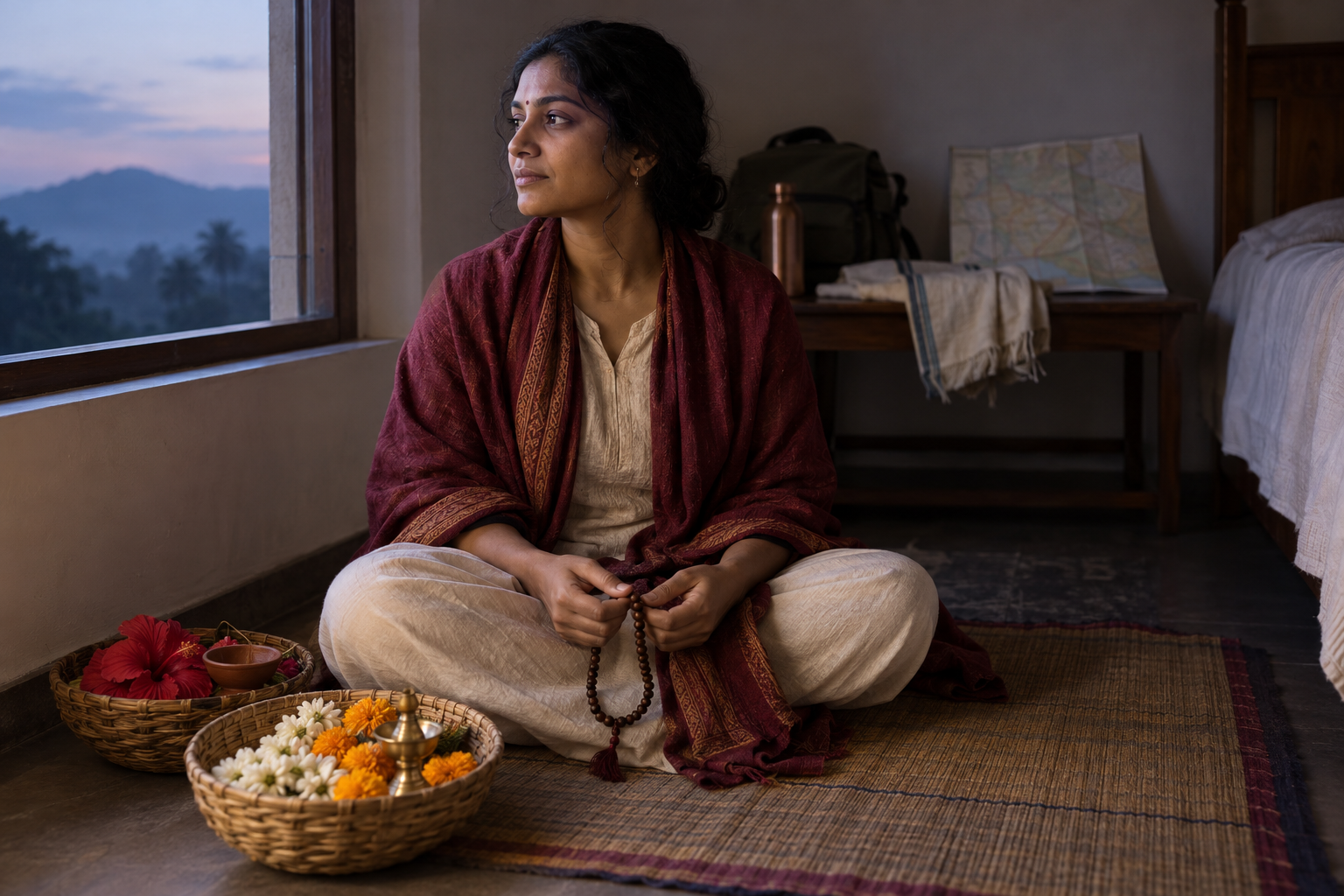
Choose Bhadrakali when your devotion, family tradition or personal sankalpa draws you toward Durga in her formidable protective form. Her association with prosperity need not reduce the pilgrimage to a request for material gain. You can frame prosperity more fully: the strength, order and resources needed to fulfil dharma.
Choose Sringeri when your bhava is specifically directed toward Sri Sharada Mata or when Sringeri already holds a place in your family’s spiritual life. A pilgrimage becomes more coherent when the temple, deity and prayer point in the same direction.
If neither temple has an established place in your practice, ask three questions before booking:
- Which form of Devi do you genuinely intend to worship during these nine nights?
- Are you travelling for a specific family observance, a personal vow or darshan on Vijaya Dashami?
- Can you give one temple enough unhurried time, or would a two-temple itinerary turn worship into hurried transit?
The honest answer may be to visit only one. Spiritual seriousness is not measured by the number of sacred places covered in a single journey. One attentive darshan is better than two visits dominated by luggage, departure deadlines and anxiety about the next connection.
Build the journey around worship before booking transport
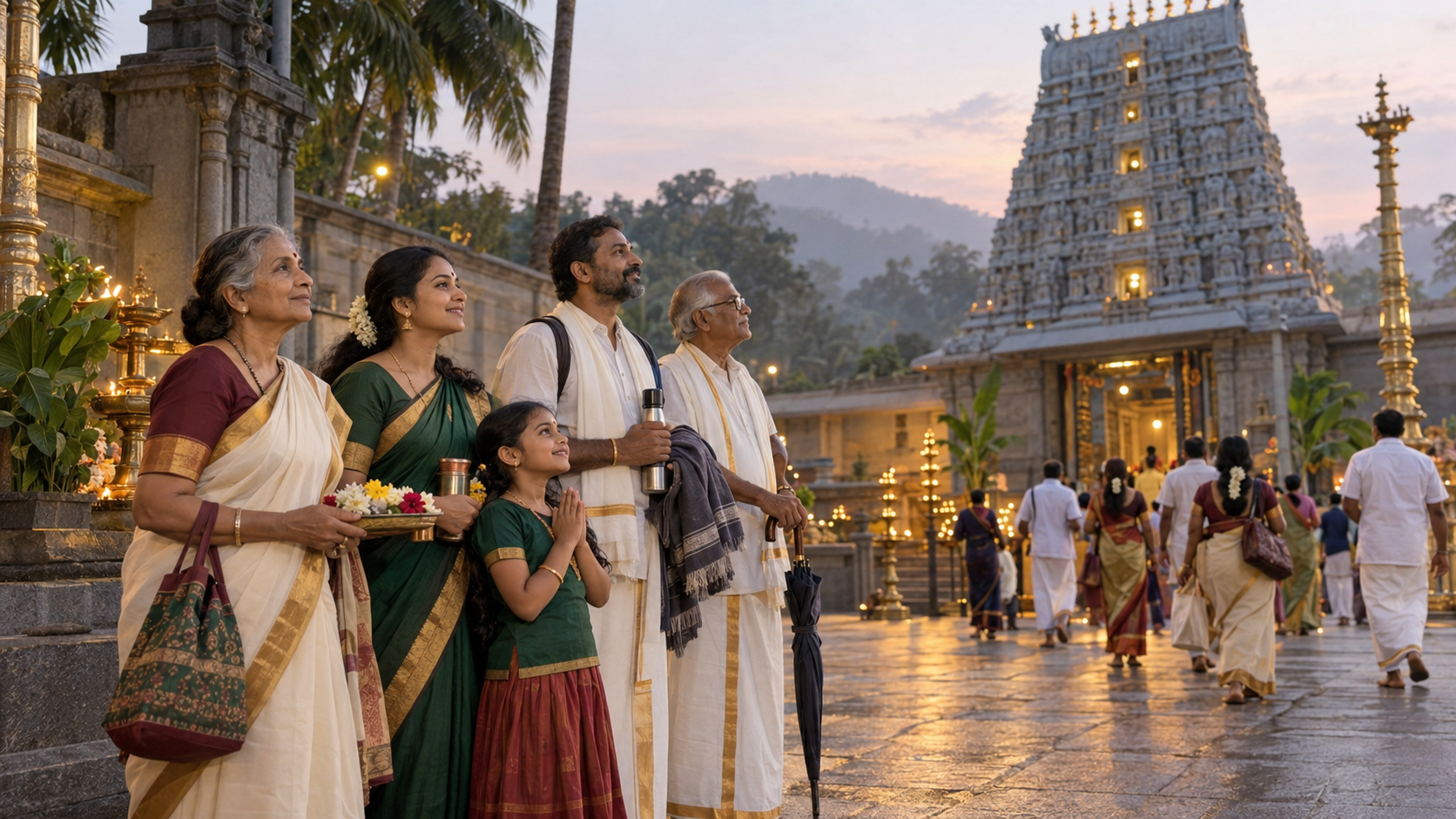
October 11 and October 20 are the two firm anchors available for both celebrations. If being present for Vijaya Dashami is essential, protect October 20 first and build the rest of the journey around it. If you can travel only during the middle of the festival, choose your available date without assuming that every day’s programme will be identical.
- Write down the purpose of the visit. A single sentence is enough: darshan of Bhadrakali, worship of Sri Sharada Mata, fulfilment of a vow or participation in Vijaya Dashami. This prevents the itinerary from overtaking the pilgrimage.
- Select one anchor temple. Even if you hope to visit both, decide where the principal observance will happen. Give that temple priority if transport plans change.
- Confirm the temple’s daily programme directly. Ask about the relevant puja or darshan time, entry arrangements, offerings, dress expectations, photography rules and any festival-specific queue system. Do this before purchasing inflexible onward travel.
- Leave usable time around darshan. Do not schedule arrival, worship and departure as one tight sequence. A festival visit can involve procedures and waiting that an ordinary travel itinerary does not capture.
- Carry only confirmed offerings. Temple custom should determine what you bring. When you have not verified what is accepted, arrive prepared to follow the local arrangement instead of assembling your own ritual kit.
- Keep October 20 protected if Dasara is your goal. Avoid making the concluding observance compete with an early departure or a long same-day transfer.
A two-temple pilgrimage needs more restraint because Hanamkonda in Telangana and Sringeri in Karnataka are separate destinations, not neighbouring temple stops. Place one visit earlier in the October 11-20 window and the other later, with a real travel interval between them. Confirm the second temple’s access before leaving the first. If your available window is too short to absorb disruption, choose one temple rather than compressing both.
Prepare a practice that continues beyond the temple visit
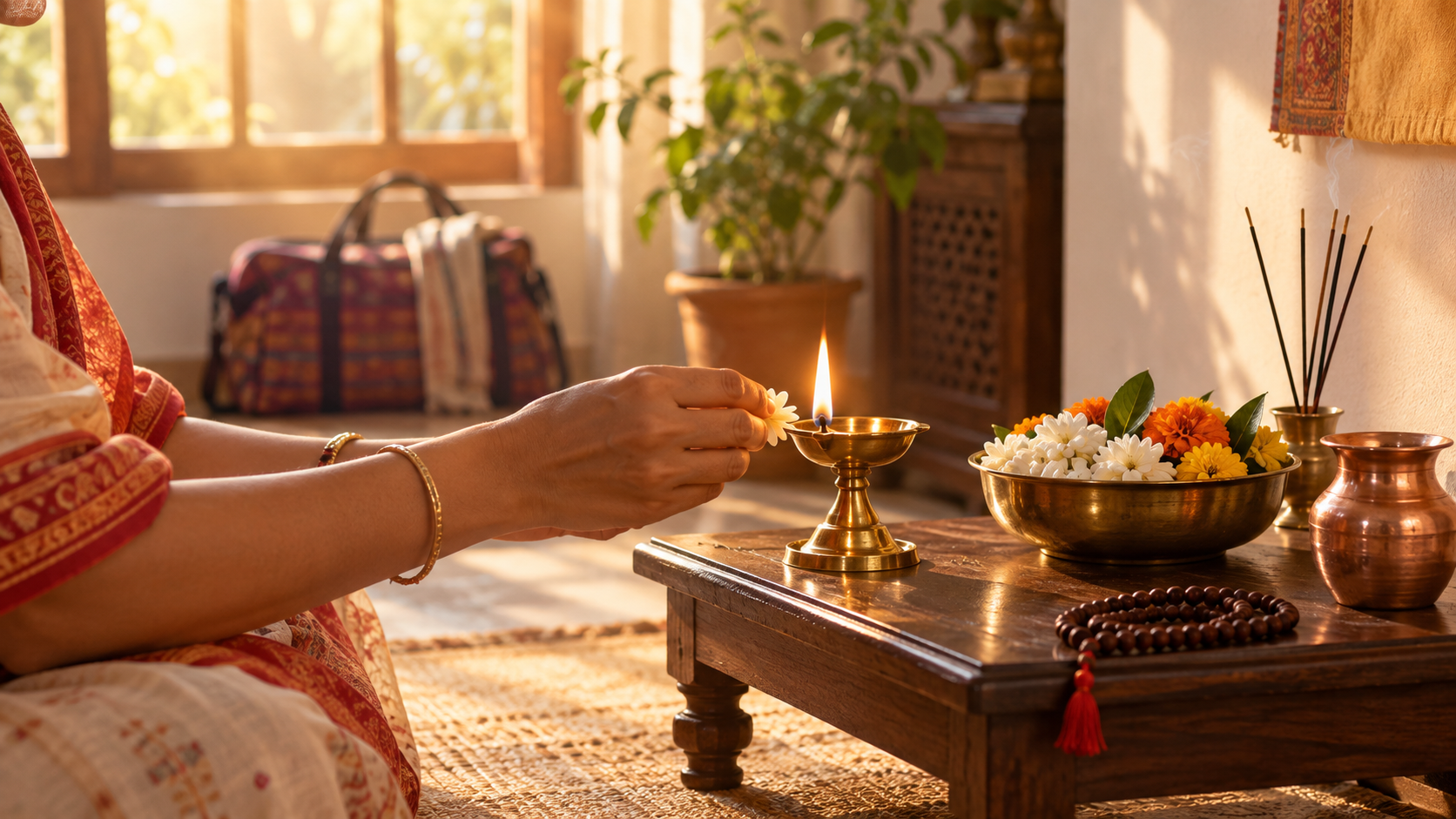
The journey will carry more meaning if your practice begins before you enter the temple. Use the form of worship already given by your family, guru or sampradaya. There is no need to invent an elaborate observance for travel.
- Before departure: state your sankalpa clearly and decide what conduct you will maintain during the pilgrimage.
- At the temple: watch how worshippers are being guided, follow the temple’s procedure and keep your attention on darshan rather than documentation.
- After darshan: allow a quiet interval before returning to travel logistics. Record the resolution you intend to carry home, not merely the places you visited.
- After Navratri: complete any commitment contained in your sankalpa. A pilgrimage should change what you do after returning, even if the change is modest.
If you visit Bhadrakali, let the encounter with fierce Shakti call forth steadiness rather than aggression. If you visit Sri Sharada Mata, let reverence shape the quality of your attention. These are devotional orientations, not substitutes for the temple’s own ritual instructions.
Key takeaways for Navratri 2026
- Both temple celebrations begin on October 11 and conclude with Dasara or Vijaya Dashami on October 20, 2026.
- Bhadrakali Temple is in Hanamkonda, Warangal, Telangana; Sringeri Sharadamba Temple is in Karnataka.
- Choose Bhadrakali for a sankalpa directed toward the fierce Durga form; choose Sringeri when your devotion is specifically toward Sri Sharada Mata.
- Treat the festival window as the basis for planning, not as a substitute for a confirmed daily temple schedule.
- If visiting both, designate one as the principal pilgrimage and leave a genuine travel interval between the two destinations.
- If Vijaya Dashami is the heart of your visit, reserve October 20 before arranging the rest of the journey.
Make the central decision now: Bhadrakali, Sringeri or a carefully paced journey to both. Then confirm the programme with the chosen temple before committing to inflexible travel. Once those details are settled, let the itinerary serve the sankalpa rather than compete with it.
References
- Hindu Pad – Dasara Navaratri Puja 2026 in Bhadrakali Temple at Hanamkonda, Warangal
- Hindu Pad – Sharan Navaratri 2026 in Sringeri Sharada Mata Temple, Karnataka

Leave a Reply
You must be logged in to post a comment.