
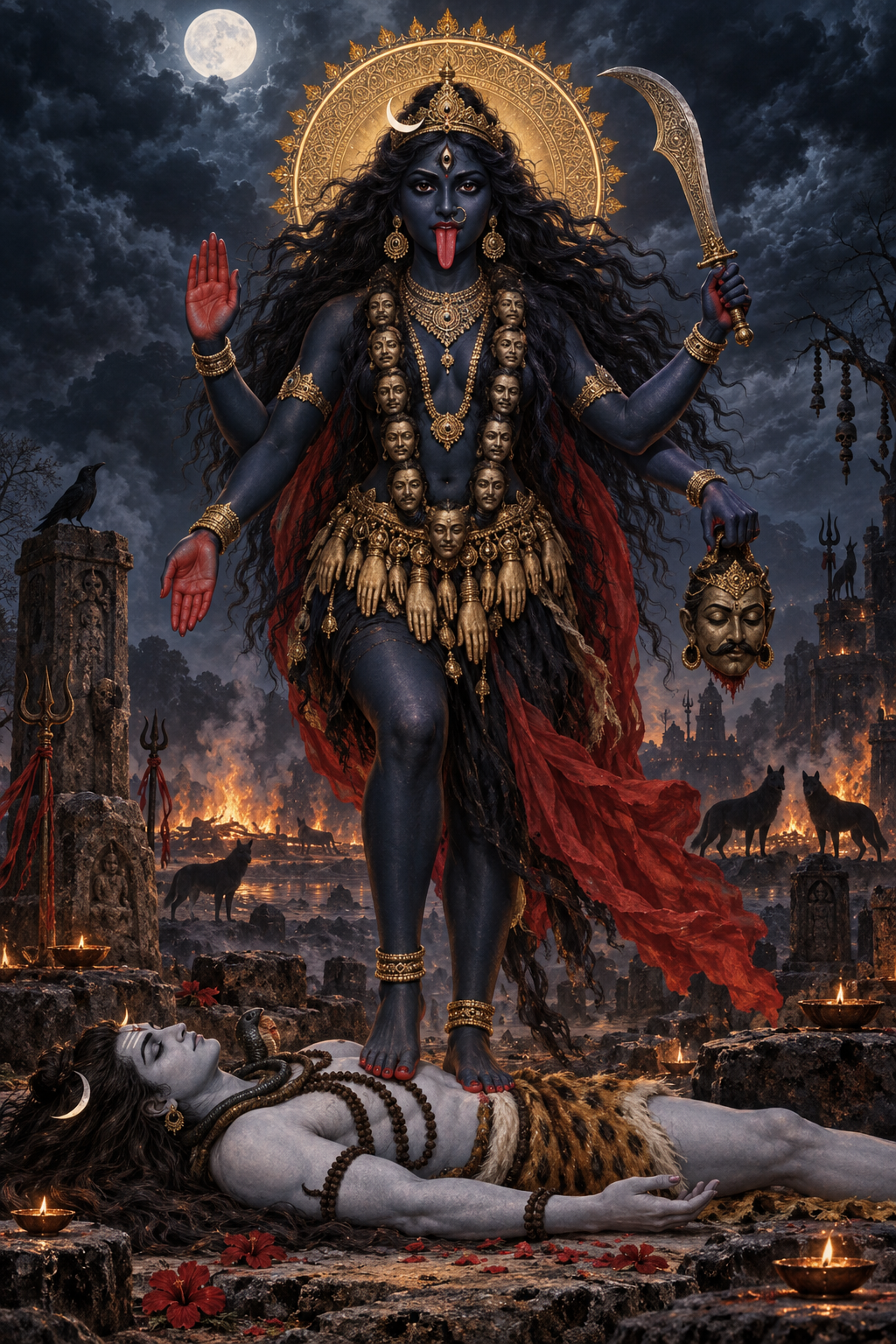
You may have seen it happen in a temple poster, a children’s book, a festival graphic, or a social-media illustration. Kali’s severed heads disappear. Her weapon becomes decorative. Her extended tongue is shortened. Her darkness is softened, and the cremation ground gives way to a harmless floral background. The revised image may look easier to display, but something essential has been removed.
The question is not whether every representation of Kali must be graphic or identical. Hindu traditions have always portrayed and worshipped Devi in many forms. The real question is whether a change arises from a living devotional tradition or from embarrassment before an audience that expects divinity to look gentle, tidy, and socially respectable.
Kali’s discomfort is part of what she reveals
Kali does not permit you to keep death, fear, violence, time, and bodily decay outside the sacred frame. Her dark form, loose hair, weapons, extended tongue, garlands of severed heads, and association with the cremation ground confront realities that polite culture tries to hide. Interpretations of individual features differ among lineages, but their cumulative force is unmistakable: existence cannot be understood by looking only at what is orderly and pleasing.
This is why treating frightening iconography as an unfortunate packaging problem misses the point. In a Hindu setting, a terrifying form is not automatically an evil form. Divine protection can be fierce. Compassion can destroy what enslaves. A mother who nourishes life and a power that ends destructive forces need not belong to opposing theological categories.
If you feel unsettled before Kali, do not rush to declare the image offensive, primitive, or unsuitable. Pause and identify the precise source of the discomfort. Is it death? Blood? Female power? Uncontrolled hair? A body that is not arranged for the viewer’s approval? The answer often reveals the assumption Kali is challenging.
When we alter Devi merely to satisfy conventional respectability, we risk mistaking appearance for spiritual substance. The resulting figure may retain Kali’s name while teaching the opposite of what her form asks us to face.
Adornment and sanitisation are not the same act
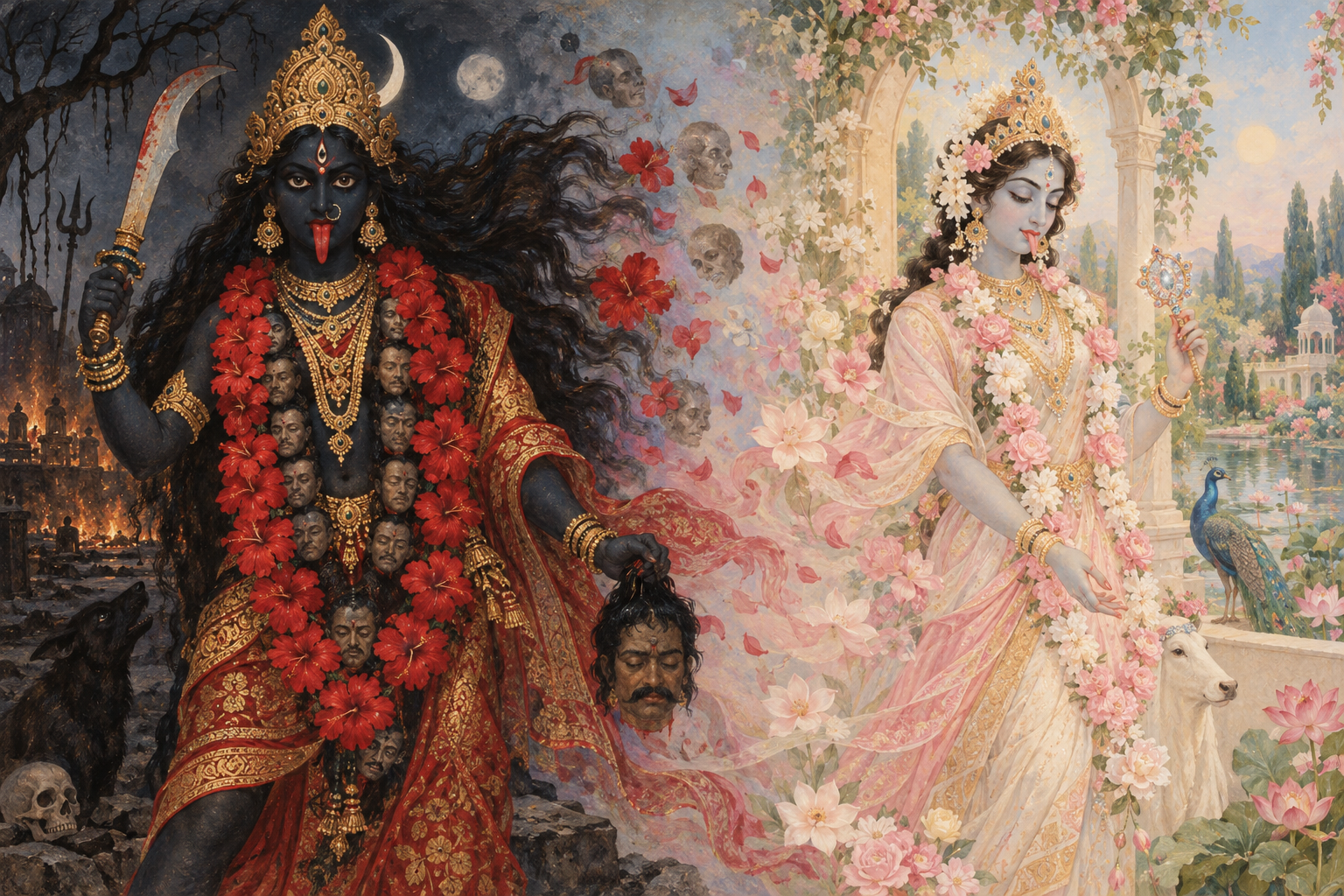
It would be a mistake to call every clothed, ornamented, smiling, or visually gentle Kali a sanitised Kali. Alankara can be seva. Devotees bathe, dress, garland, ornament, and feed a murti as acts of intimacy and reverence. A specific temple or lineage may also have a form whose appearance differs from the Kali image most familiar to you.
The distinction lies in the relationship between the change and the tradition. Devotional adornment serves the deity as worshipped. Sanitisation makes the deity answer to an external standard of acceptability.
Use these questions before accusing someone of distortion or defending a redesign:
- Which form of Kali is being represented? Do not assume that one regional image, temple murti, calendar print, or artistic convention defines every form.
- Who authorised the change? An inherited practice maintained by worshippers carries a different weight from an edit imposed by a publisher, advertiser, school, or social-media manager.
- What reason was given? Constraints of scale, medium, and age-appropriate presentation can require simplification. Shame about Kali’s body or fear of non-Hindu approval points toward sanitisation.
- What theological meaning survives? A simplified image can remain truthful if its context explains what could not be shown. An attractive image becomes misleading when it reverses the form’s meaning.
- Would knowledgeable devotees recognise the representation? If Kali has become a generic benevolent woman who happens to carry her name, the adaptation has crossed into erasure.
Intent matters, but it is not enough. Someone may sincerely want to make Kali “accessible” and still remove the very features through which the form communicates. Ask what the viewer will learn, not only what the designer meant.
Four common ways Kali is made safe for modern consumption
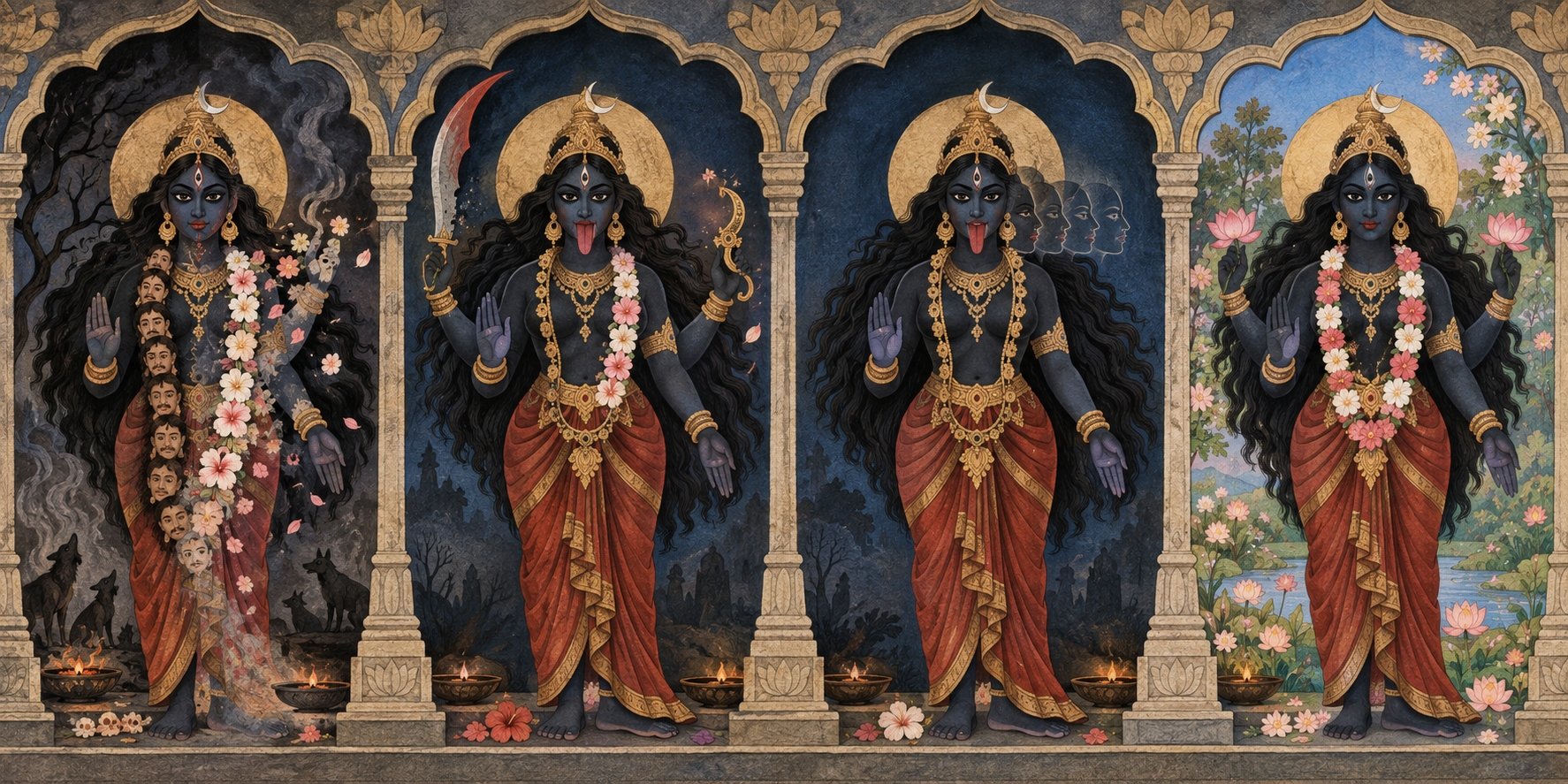
Removing the difficult attributes
The most visible method is subtraction: no severed heads, no blood, no sword, no cremation ground, and sometimes no extended tongue. Not every image needs every attribute, but repeated removal creates a pattern. Kali’s name remains while her confrontation with death and destruction disappears.
If a medium cannot carry graphic imagery, replace silence with context. A museum label, book caption, classroom note, or event description can name the omitted attributes and explain that they belong to the traditional iconography. Simplification is more honest when the audience is told that it is looking at a simplified interpretation.
Turning her into generic empowerment
Kali is often reduced to a slogan about confidence, rebellion, or being an “unapologetic” woman. Those themes may give a modern viewer an entry point, but they cannot carry the whole form. Devi is not merely a projection of personal ambition. Her imagery also turns the devotee toward mortality, attachment, ego, protection, dissolution, and liberation.
When you use contemporary language, test it against the religious frame. Does your explanation lead the reader back to worship, metaphysics, discipline, and the conquest of inner bondage? Or does it turn Kali into a mascot for whatever the speaker already wanted? Use the modern analogy as a doorway, then move beyond it.
Explaining away every unsettling response
Another kind of sanitisation happens in speech. A child or newcomer says that Kali looks frightening, and an adult immediately replies, “There is nothing frightening here.” That response closes the very conversation the iconography opened.
A better answer is: “Yes, this form can look frightening. Let us ask what she is frightening to, and what she protects.” You can then distinguish fear of Devi from fear of what her power destroys. You do not need to assign one rigid meaning to every symbol; name the interpretation followed in your family, temple, or lineage, and acknowledge when other traditions read it differently.
Replacing reverence with horror or erotic spectacle
Sanitisation is not the only distortion. Kali can also be detached from worship and presented as a monster, costume, exotic body, or sensational image. Keeping the blood and skulls does not make a representation authentic if everything sacred has been stripped away.
Before sharing an image, look at its framing as carefully as its details. Is Kali named correctly? Is the form treated as an object of worship rather than as a demon? Does the caption provide religious context? Has an image of a worshipped murti been digitally altered or commercialised without the custodians’ permission? Fierceness without reverence is exploitation, not a cure for sanitisation.
How to present Kali faithfully in different settings
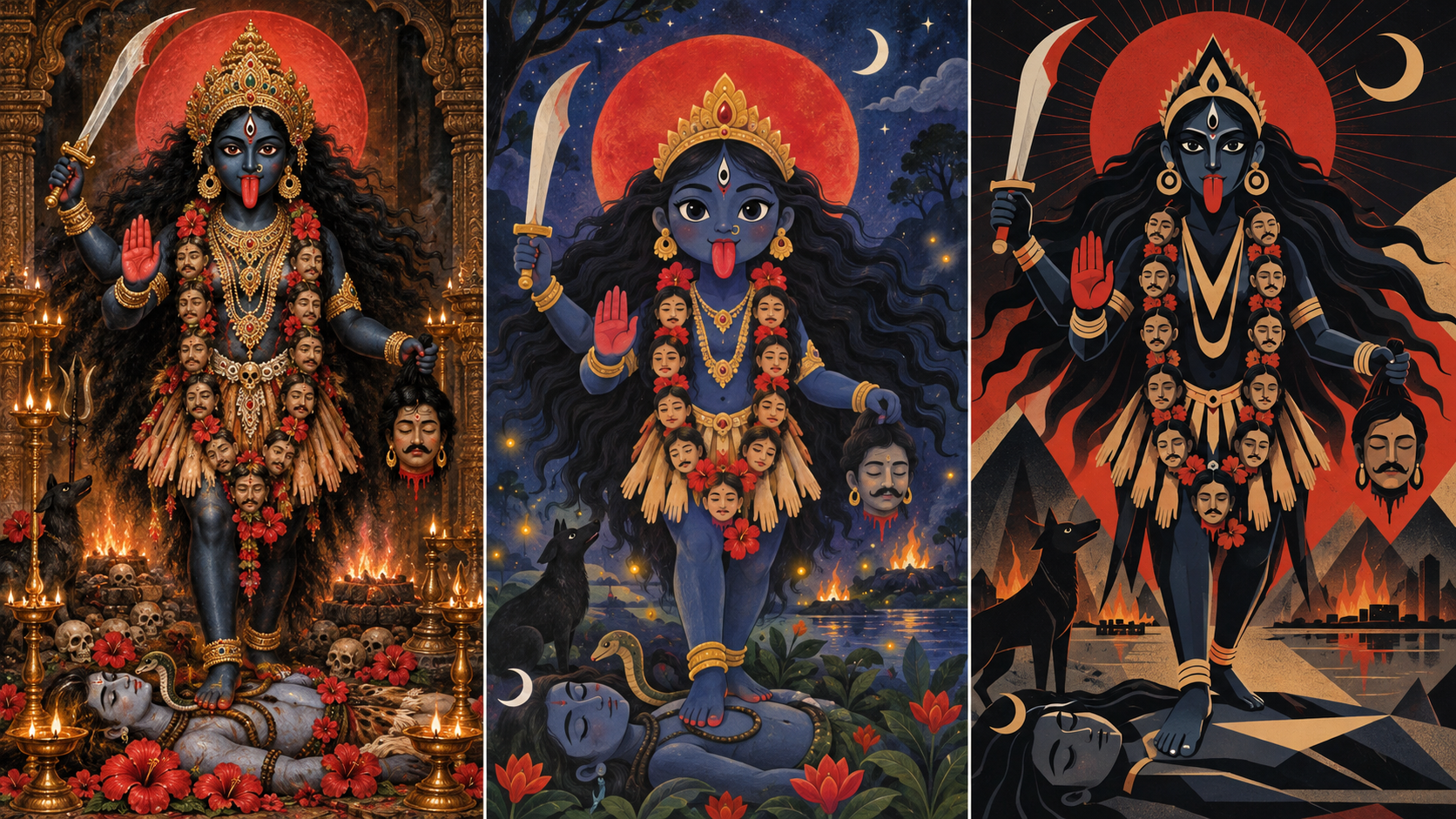
Faithfulness does not require using the same image and explanation everywhere. It requires making each adaptation transparent and preserving the form’s religious integrity.
- In a home: Follow the form and mode of worship received from your family, guru, temple, or sampradaya. Do not add or remove practices solely because an online image looks more fashionable.
- With children: Introduce one attribute at a time. Ask what they notice before supplying an explanation. Tell them that Hindu sacred art can show both nurturing and fierce protection, and do not shame them for finding the form frightening.
- In a classroom: Separate description from interpretation. First identify what is visibly present. Then explain that meanings can vary by tradition. Finally discuss why modern viewers may react differently to the same image.
- In publishing or design: Identify the particular form, consult practitioners familiar with it, and disclose significant simplifications. If graphic detail is inappropriate for the audience, commission a respectful non-graphic interpretation instead of silently editing a temple image.
- On social media: Do not circulate an isolated image with a generic empowerment slogan and assume that the name “Kali” supplies enough context. Add a concise explanation of the devotional setting and the limits of your interpretation.
- In interfaith conversation: Do not accept the premise that a fierce deity must be defended by pretending she is visually gentle. Explain that Hindu sacred forms can hold creation, preservation, destruction, terror, protection, and grace without dividing them into simplistic good-versus-evil characters.
If you are responsible for a public representation and do not know the relevant tradition, consultation is not a ceremonial last step. Do it before the image is commissioned or edited. Ask a temple custodian, practitioner, or teacher who actually knows that form which features are essential, which vary, and which changes would mislead devotees.
Key takeaways for recognising erasure
- A beautiful or richly dressed Kali is not automatically sanitised; ritual adornment can be an expression of intimate devotion.
- Sanitisation begins when discomfort, commercial convenience, or social approval overrides the meaning of the worshipped form.
- A frightening appearance is not evidence of evil. Ask what the fierceness protects and what it destroys within the religious framework.
- Simplification can be legitimate when the medium or audience requires it, but significant omissions should be explained rather than concealed.
- Modern psychological or political language can introduce Kali, but it should not replace her theological and devotional dimensions.
- Traditional-looking imagery can still be exploitative when it is stripped of reverence and sold as horror, exoticism, or spectacle.
The next time an image of Kali troubles you, resist both easy reactions: do not demand that she be made pleasant, and do not assume that every shocking portrayal is faithful. Identify the form, learn who worships it, ask what the difficult attributes communicate, and let informed devotion set the terms. Kali does not need to be made respectable. She needs to be approached truthfully.
References

Leave a Reply
You must be logged in to post a comment.