
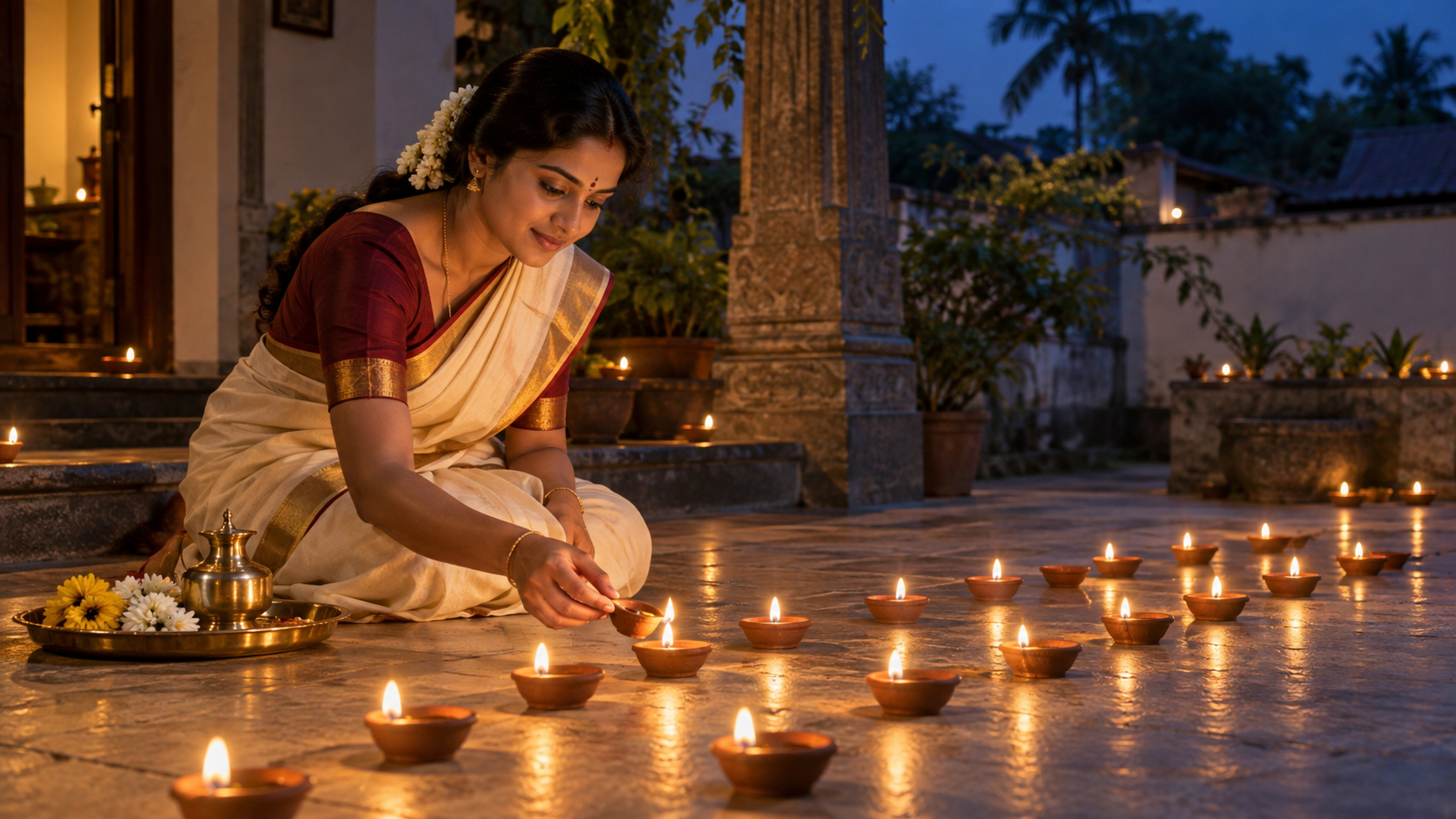
You want to observe Karthika Deepam Nomu with sincerity, but three questions can stop you before you begin: Which day should you choose, what does the vow require, and does the prescribed count refer to lamps or wicks? The answer is to separate the observance’s fixed framework from the details that your temple or family tradition must settle.
This guide concerns Karthika Deepam Nomu, also called Karthika Deepa Vratham or Deepadaana Vratham, in the Telugu-calendar Karthika Masam. It gives you a practical way to choose the day, define the vow, confirm the temple procedure and make the offering without treating one regional custom as a universal rule.
Choose one eligible day in Karthika Masam
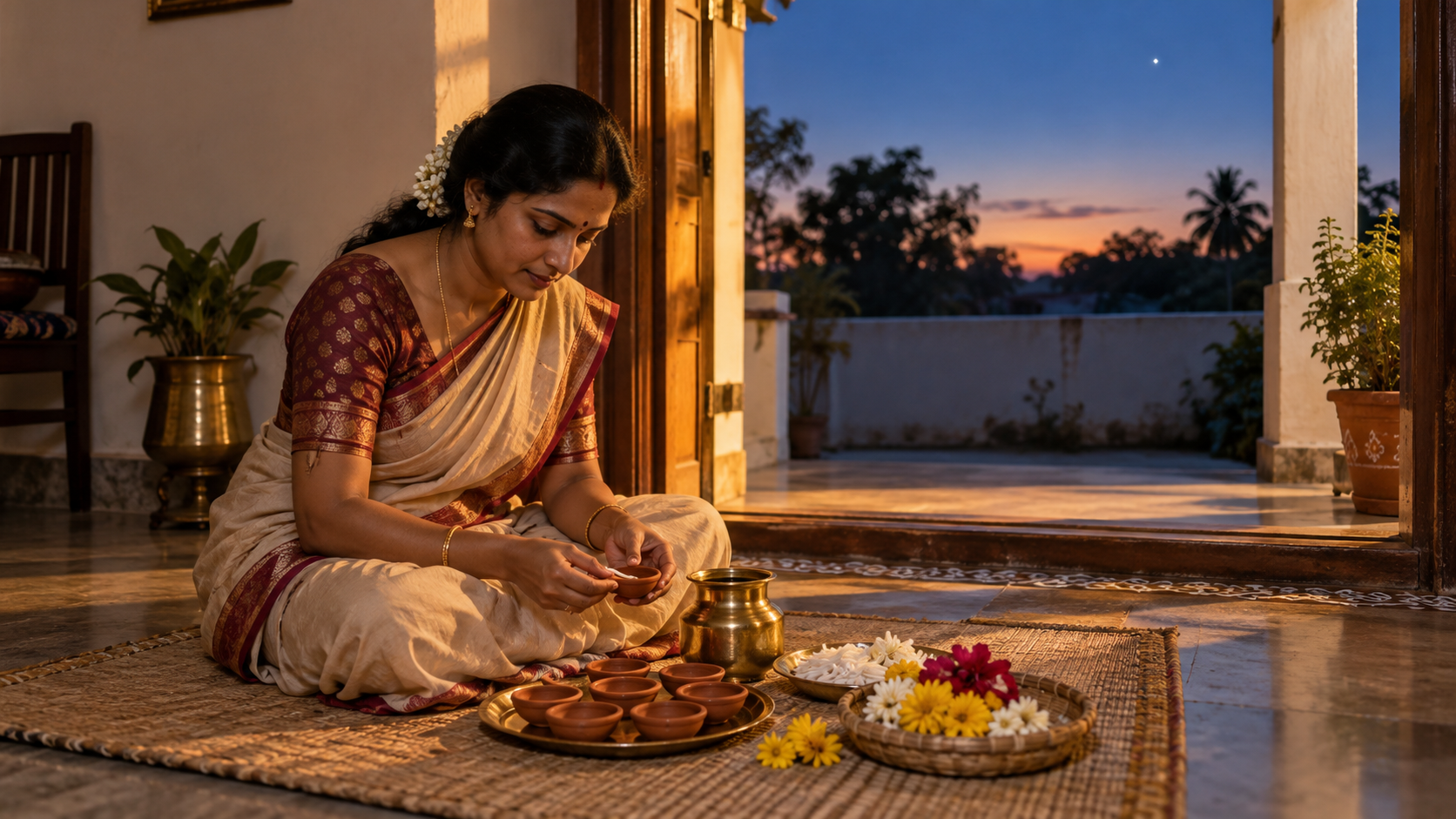
For 2026, Telugu Karthika Masam runs from November 10 through December 8. The vow may be observed on a Krittika Nakshatra day or on Pournami.
The word “or” matters. Krittika Nakshatra and Pournami are alternative qualifying markers; you do not need to wait for both to coincide. Choose the option followed by your family, guru or temple. If you have no inherited instruction, ask the Shiva temple where you intend to make the offering which eligible day it observes.
Do not select the date from the civil calendar alone. A nakshatra or tithi can begin and end partway through a civil day, and the applicable timing is determined for your location. Confirm the date and worship window through the local panchanga or the temple. This is especially important if a calendar shows an observance across two adjacent dates.
- Identify the city and temple where you will observe the vow.
- Ask whether that temple uses Krittika Nakshatra, Pournami or either option for this vrata.
- Confirm the local date and the permitted time for the lamp offering.
- Choose one eligible day you can keep without rushing.
- Record the date, time and temple instructions together so that you do not accidentally combine details from different calendars or traditions.
If you are reading this for a year other than 2026, retain the same selection rule but obtain that year’s Karthika Masam dates locally. The November 10-December 8 range belongs specifically to 2026.
Define the vow before arranging the lamps
A lamp can be lit in a moment; a vrata is a commitment. Before buying materials, state clearly what you are undertaking. At minimum, decide the eligible day, the Shiva temple, the lamp offering you intend to make and the devotional purpose with which you are making it.
Keep the purpose devotional rather than transactional. You may approach the vow with gratitude, prayer, remembrance or a wish to deepen discipline, but do not turn the flame into a guarantee that a particular worldly result must follow. The offering expresses your commitment; it does not place the Divine under an obligation.
- Preserve received instructions: If your family, guru or sampradaya has given you a particular procedure, do not replace it casually with a different regional version.
- Do not add unsupported austerities: Fasting, food restrictions, preliminary worship and concluding rites may depend on the tradition you follow. Ask rather than assuming that every Karthika practice belongs to this vow.
- Make a commitment you can actually keep: Avoid promising an unsafe, unaffordable or impractical act. Clarify the procedure before forming the vow.
- Write down the essentials: A one-sentence note naming the day, place and offering prevents confusion when several relatives are helping.
If illness, travel or another serious obstacle prevents you from keeping the selected day, do not invent a compensatory ritual. Ask the temple priest, your guru or the family elder who transmitted the vrata whether another eligible day or another form of completion applies.
Confirm what the 120-count instruction means
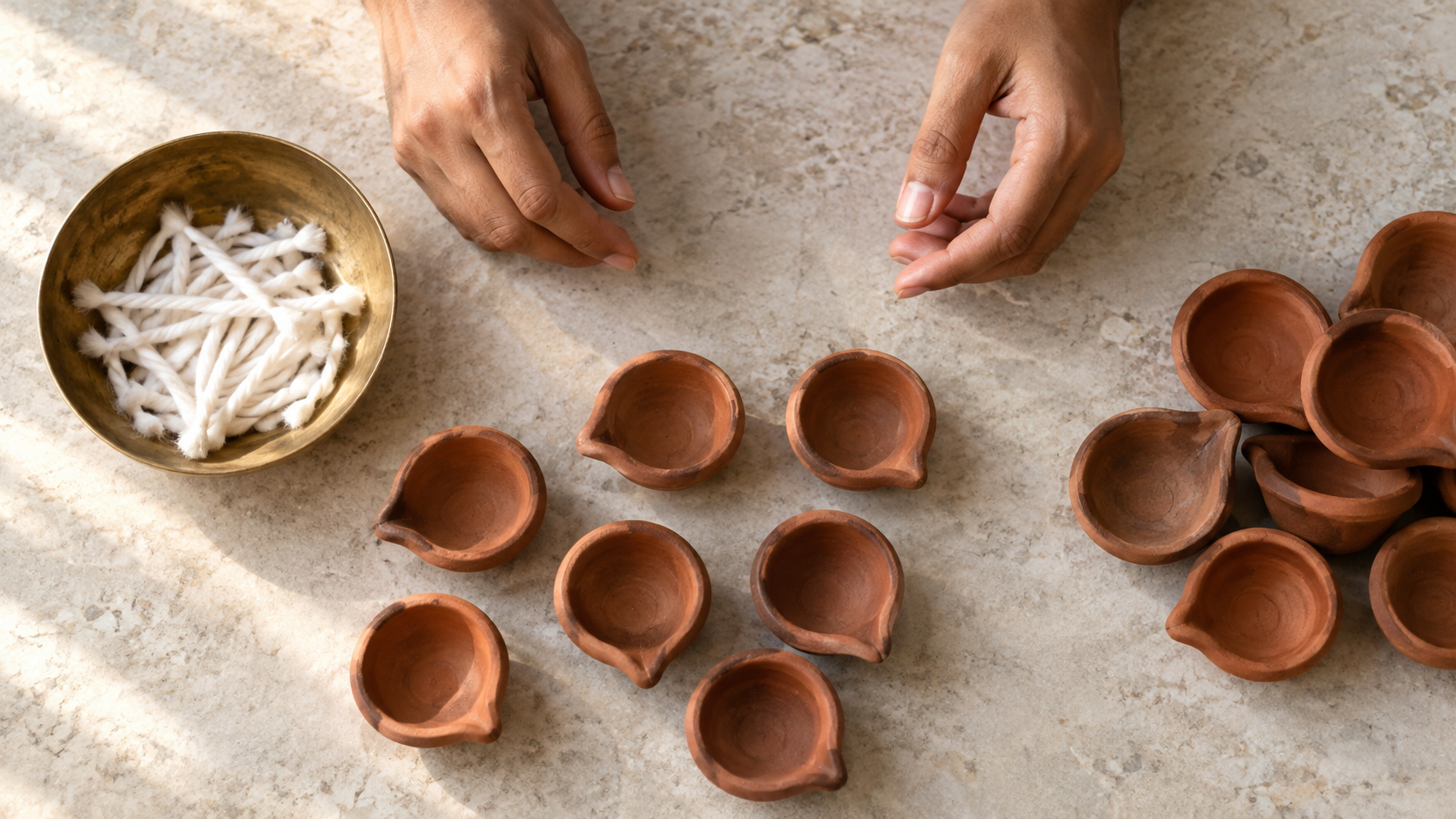
The Shiva-temple form of this observance includes a 120-count lighting instruction. The number alone, however, does not identify the unit. It does not tell you whether the local procedure counts separate lamps, wicks, flames or a particular arrangement. Do not purchase 120 lamp vessels merely by inference.
Call the temple and ask one precise question: “For your Karthika Deepam Nomu, does 120 mean lamps or wicks, and how should they be arranged?” That question is more useful than asking only whether the temple conducts Karthika puja, because it forces the practical detail to be settled before you arrive.
- Does the temple conduct this specific nomu or only a general Karthika lamp offering?
- Does the count of 120 refer to lamps, wicks, flames or another locally defined unit?
- Must the items come from the temple, or may you bring them?
- Which fuel, wick type and lamp material does the temple permit?
- Will you light the offering yourself, or will a priest or temple attendant do it?
- Is advance registration, a puja ticket or a designated donation required?
- Where should you report, and how early should you arrive?
- Who is responsible for the lamps after the worship is complete?
Once the temple confirms the unit, pre-count the materials at home. For a count of 120, arrange them as 12 groups of 10 and have another adult verify the total. Keep any spare materials in a separate, clearly marked packet so that they do not enter the ritual count accidentally.
If the temple supplies everything, do not bring a competing arrangement unless asked. If no Shiva temple is accessible, do not silently convert a temple vow into a home ritual. Contact a priest, guru or the temple you would otherwise attend and ask whether a home form is accepted in your tradition and what must change.
Make the offering with attention and fire safety
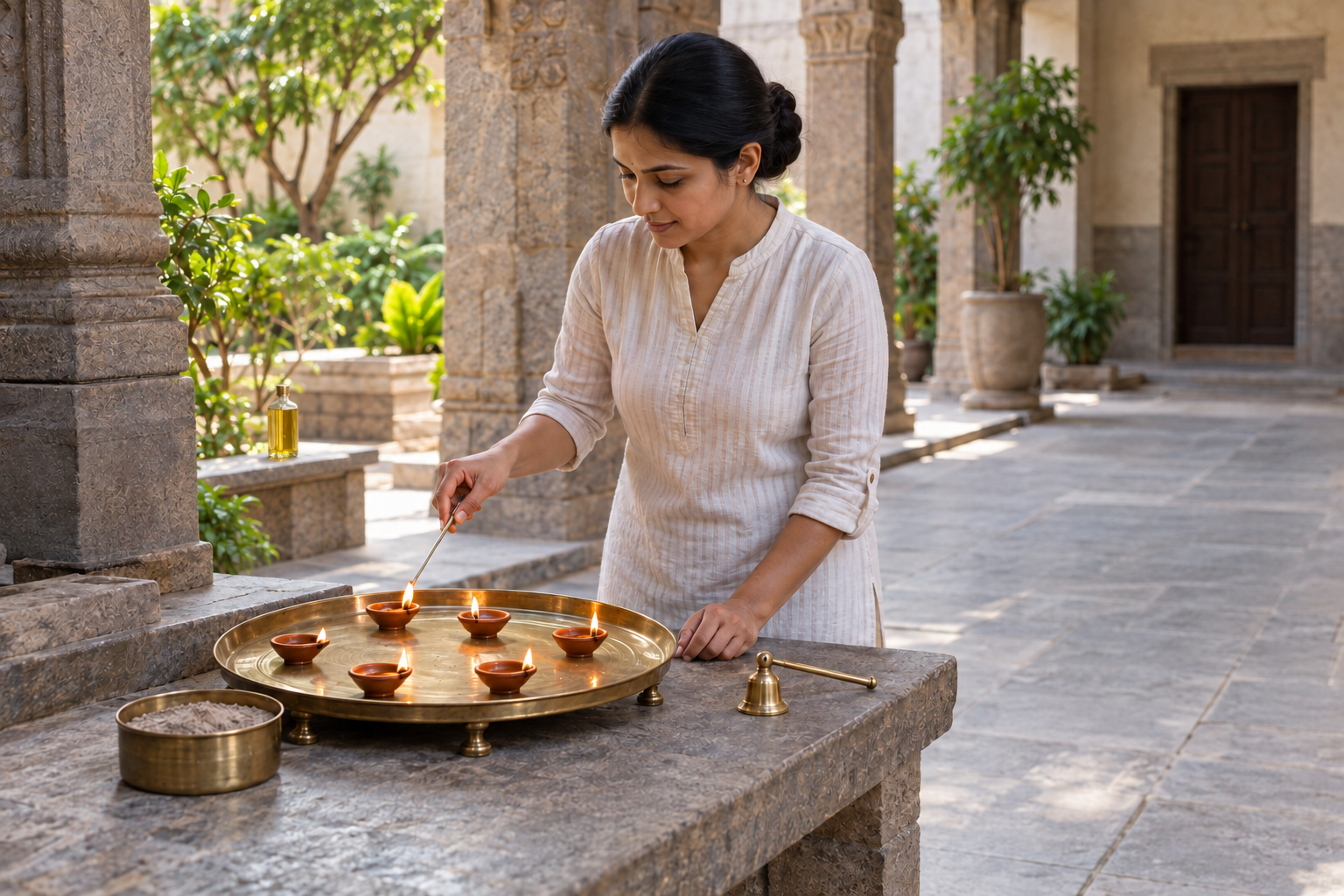
On the chosen day, leave enough time to work at the temple’s pace. A large counted offering is difficult to correct once lighting has begun. Arriving early gives you time to confirm the materials, count and placement without turning the vow into a hurried exercise.
- Arrive at the time specified by the temple and report to the priest or attendant before unpacking anything.
- Reconfirm the count and arrangement. If the instructions given on site differ from what you expected, pause and resolve the difference before lighting.
- Make your sankalpa, or statement of intention, according to the form taught by your family or temple. If no formal wording has been given, state the commitment simply and honestly in a language you understand.
- Place the lamps or wicks only in the designated area. Do not block a passage, crowd another shrine or create a new arrangement because it looks more impressive.
- Light the offering in the sequence directed by the temple. If several people are helping, designate one person to keep the count and one to supervise the flame.
- Remain present in prayer. Use the Shiva prayer, nama-japa or silent contemplation customary in your tradition rather than collecting unfamiliar practices at the last moment.
- Follow the temple’s concluding instructions. Let the staff decide whether the lamps remain in place, are moved or are extinguished after the prescribed period.
An oil or ghee flame is an open fire, even when it is part of worship. Place it only on a stable, heat-resistant surface approved by the temple. Keep loose sleeves, shawls, long hair, paper and bags away from the flame. Children should participate only under direct adult supervision.
Never pour fuel into a burning lamp, leave the offering unattended or move a hot lamp with bare hands. Do not assume that allowing every flame to burn out is appropriate when temple staff have given a different safety instruction. Following the rules of the sacred space is part of performing the offering responsibly.
Key takeaways
- In 2026, Telugu Karthika Masam extends from November 10 through December 8.
- Karthika Deepam Nomu may be observed on a Krittika Nakshatra day or on Pournami; both conditions do not have to coincide.
- Use a local panchanga or temple confirmation to settle the exact date and worship window.
- Confirm what the 120-count instruction means before buying or arranging materials.
- Keep inherited family or sampradaya instructions distinct from procedures gathered from another regional tradition.
- Treat flame supervision and the temple’s safety rules as part of the vrata, not as details outside it.
Your next step is simple: choose whether you intend to observe on Krittika Nakshatra or Pournami, then call the Shiva temple and confirm the local date, the meaning of 120 and what you must bring. Once those three points are settled, you can approach the lamp without uncertainty. A precisely understood observance carries more integrity than an elaborate procedure assembled from guesses.
References

Leave a Reply
You must be logged in to post a comment.