

You are ready to worship Maa Brahmacharini, but you may be unsure which items are essential, what order to follow, or whether imperfect Sanskrit will invalidate your puja. It will not. A clean place, a steady mind, respectfully offered materials, and sincere prayer are enough for a meaningful home observance.
Maa Brahmacharini is worshipped on the second day of Navratri in the Navadurga method. The procedure below gives you a clear household sequence without pretending that every family, region, or sampradaya follows identical details. If your guru, temple, or family tradition prescribes a particular paddhati, keep that tradition as your first guide.
Prepare the altar and puja materials
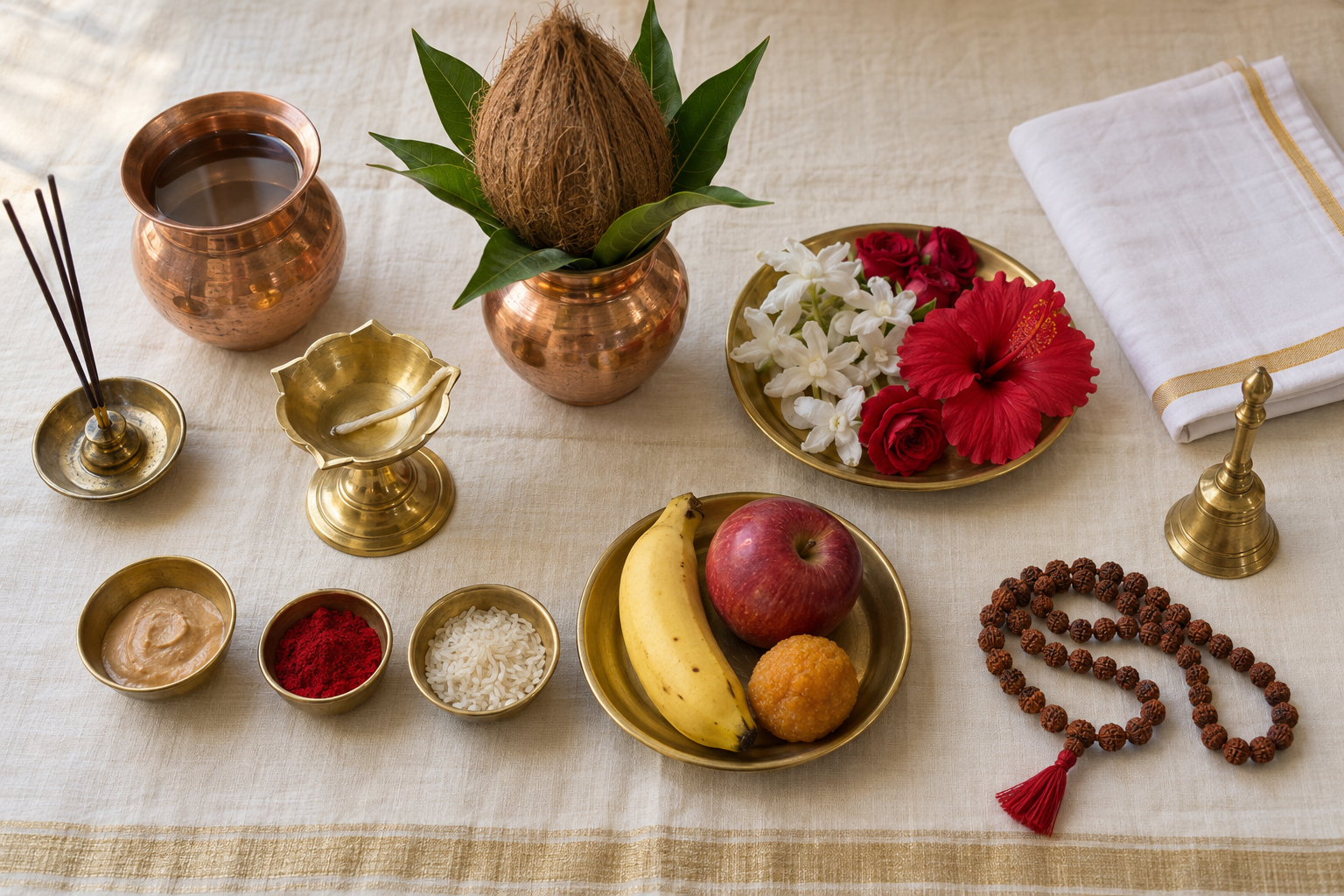
Choose a place where you can sit without rushing or repeatedly moving the offerings. Clean the surface, place an image or murti of the Devi respectfully, and arrange the materials before beginning. Preparation matters because searching for rice or matches halfway through the puja breaks the attention you are trying to cultivate.
- An image or murti of Maa Brahmacharini or Durga
- A kalash containing clean water; Gangajal may be added if it is part of your practice
- Haridra, or turmeric powder
- Kumkum
- Clean, unbroken rice for akshata
- Fresh flowers or petals
- A diya or another lamp customarily used in your home
- Incense, if you use it
- Fruit, sweets, or another simple vegetarian naivedya
- Clean drinking water to offer
- Camphor and a suitable holder for aarti
- A small bell, spoon, and plate, if available
You do not need to postpone the puja because one optional item is missing. Substitute a simple flower or a small quantity of clean water where appropriate, and make the offering mentally when no physical substitute is available. Devotion should make the worship attentive, not turn it into a shopping test.
Keep the lamp and camphor on a stable, heat-resistant surface. Tie back loose clothing, keep children away from the flame, and extinguish everything fully before leaving the altar. If lighting a flame is unsafe where you live, offer a mental aarti instead.
Follow this Maa Brahmacharini puja sequence
- Prepare yourself. Bathe or wash your hands, feet, and face, then wear clean clothes. Sit quietly for a few moments. Let your breathing settle before touching the offerings.
- Light the diya. Place it securely before the Devi. Light incense as well if that is customary in your home.
- Attend to the kalash. If a kalash was established on the first day of Navratri, worship that same kalash rather than installing another one. If you are beginning only on the second day, place the prepared kalash respectfully near the Devi and treat it as part of the sacred setting.
- State your sankalpa. In your own language, identify the purpose of the worship. You can say: “On the second day of Navratri, I offer this puja to Maa Brahmacharini. May my mind become steady, my intention pure, and my conduct disciplined.” A sincere, intelligible sankalpa is better than hurried words you do not understand.
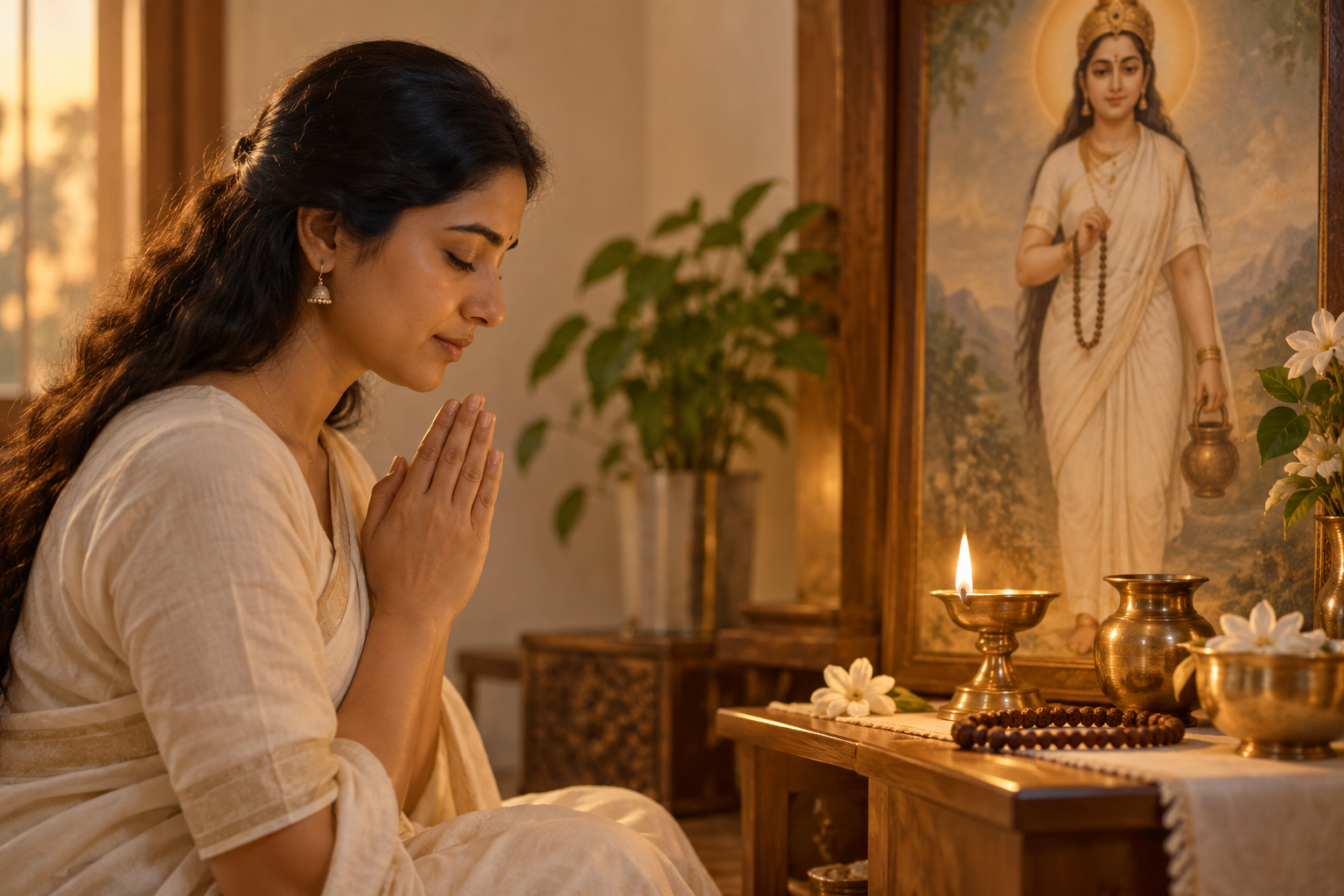
- Invoke the presence of the Devi. Bring your palms together, look gently toward the image, and invite Maa Brahmacharini to accept the worship. Visualize the puja as an act of hospitality offered to the Divine Mother.
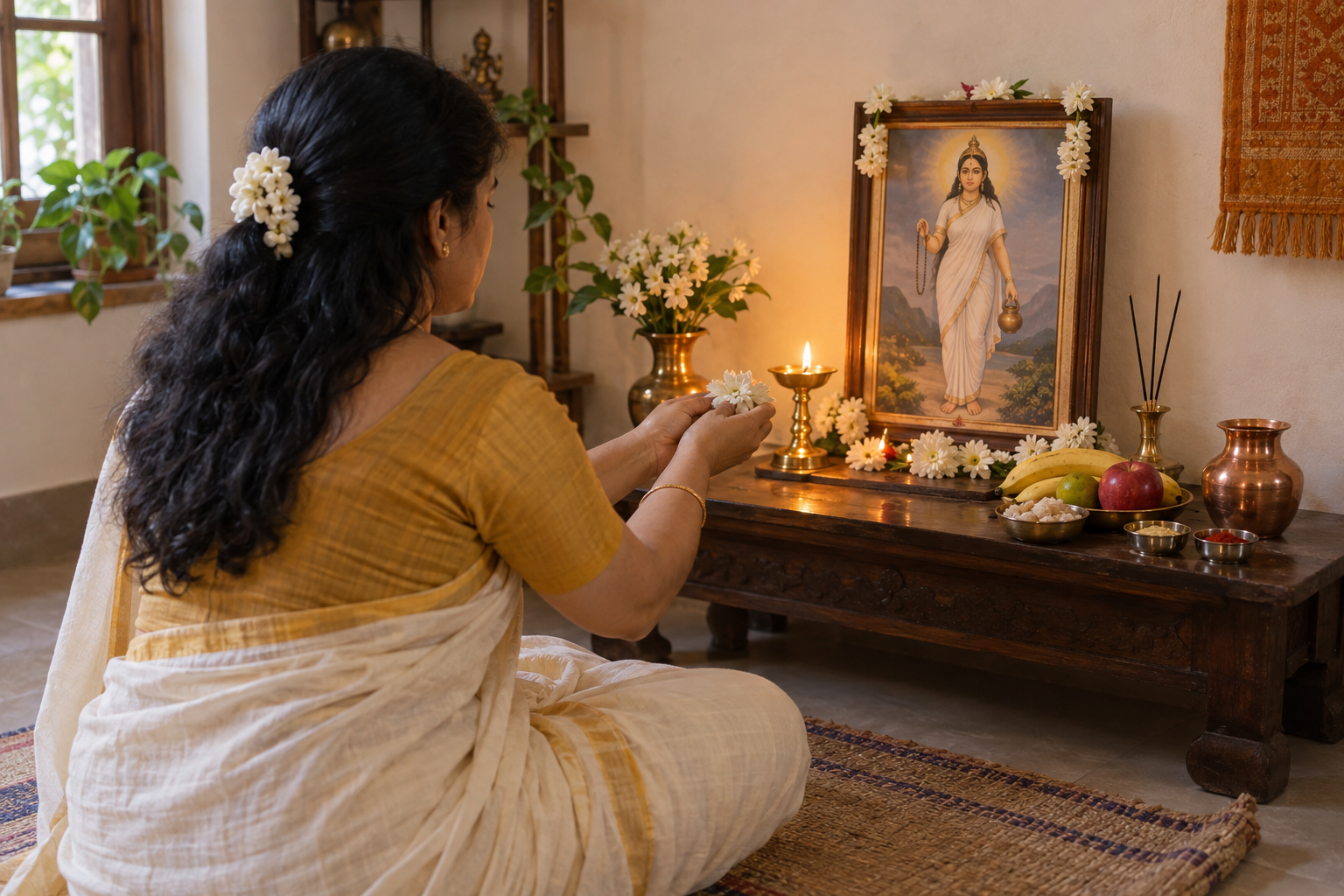
- Make the basic offerings. Offer clean water, followed by turmeric, kumkum, akshata, and flowers. Present each item separately and without haste. If applying a substance directly could damage a printed image or delicate murti, place it on a small plate in front instead.
- Offer fragrance, light, and food. Present incense and the lamp, then place the naivedya and drinking water before the Devi. The food becomes prasad only after it has been offered, so avoid tasting it beforehand.
- Pray or repeat the Divine Mother’s name. Use the mantra taught in your family or sampradaya if you have one. Otherwise, repeat “Maa Brahmacharini” slowly and attentively, or offer a prayer in the language in which your devotion is most natural. Continue only as long as you can remain present; mechanical speed is not an achievement.
- Perform aarti. Light the camphor safely and offer it before the Devi using the movement customary in your household. Sing a familiar Devi aarti if you know one. If you do not, remain silent and contemplate the light as an offering.
- Ask forgiveness and bow. Conclude by asking the Devi to forgive errors in pronunciation, sequence, or materials. Offer pranam, sit silently for a moment, and then distribute the prasad respectfully.
If you are maintaining an established Navratri altar, do not dismantle it immediately after this daily puja. Keep the space clean, replace spoiled flowers or food, and continue according to your household’s Navratri observance.
Let the form of the Devi shape your practice
The name Brahmacharini directs attention toward disciplined spiritual pursuit. In this context, discipline is not severity for its own sake. It is the ability to keep moving toward dharma when distraction, impatience, or convenience pulls you elsewhere.
Your puja becomes more useful when its inner intention produces one concrete action. After the offerings, choose a modest discipline you can actually honour: keeping a regular prayer time, speaking more carefully, completing neglected seva, reducing a habitual distraction, or studying a small portion of sacred teaching with full attention. Do not make an impressive vow that you are unlikely to keep. Maa Brahmacharini’s lesson is steadiness, and a small discipline sustained honestly expresses that lesson better than a dramatic promise abandoned tomorrow.
You can also bring one unresolved decision before the Devi. Instead of asking only for the outcome you prefer, ask for the restraint to reject an adharmic shortcut and the clarity to accept the right course even when it is inconvenient. That shift turns the puja from a request for favourable circumstances into training for right conduct.
Avoid the mistakes that disturb a simple home puja
- Do not treat pronunciation anxiety as a reason to avoid prayer. Use a mantra you have learned correctly, repeat the Devi’s name, or pray clearly in your own language. Do not invent syllables merely to sound formal.
- Do not combine every ritual variation found elsewhere. A short, coherent household sequence is preferable to mixing unfamiliar procedures from different traditions without understanding them.
- Do not reinstall an already established Navratri kalash each day. Honour the existing kalash and continue the daily worship around it.
- Do not place turmeric, kumkum, oil, water, or flame where they can damage the murti or image. Offer them on a separate plate when direct application is unsuitable.
- Do not turn optional austerity into a measure of another person’s devotion. Fasting customs and personal capacities differ. Follow the discipline appropriate to your tradition and circumstances without imposing it on other worshippers.
- Do not leave naivedya sitting until it spoils. After the offering is complete, receive it as prasad and share or store it appropriately.
- Do not rush away immediately after aarti. Sit briefly in silence. This is where the outward procedure settles into attention and resolve.
The most common confusion is believing that more materials automatically produce a better puja. Materials give form to devotion, but they cannot replace it. Keep the altar orderly, perform each offering consciously, and let the worship change at least one choice you make that day.
Key takeaways
- Worship Maa Brahmacharini on the second day of Navratri within the Navadurga sequence.
- Prepare the altar and all materials before sitting so the puja can proceed without distraction.
- Use the kalash already established for Navratri; do not create a new one for every daily worship.
- Follow a clear order: preparation, sankalpa, invocation, offerings, prayer, naivedya, aarti, forgiveness, and pranam.
- Use your inherited mantra when you have one. Otherwise, repeat the Devi’s name or offer a sincere prayer in your own language.
- Carry the puja into the day by keeping one realistic discipline connected with steadiness and dharmic conduct.
Before you begin, place every item within reach and decide on the one discipline you will carry beyond the altar. Then perform the puja slowly enough to mean each offering. The procedure ends with pranam; its practical fruit begins with your next choice.
References

Leave a Reply
You must be logged in to post a comment.