
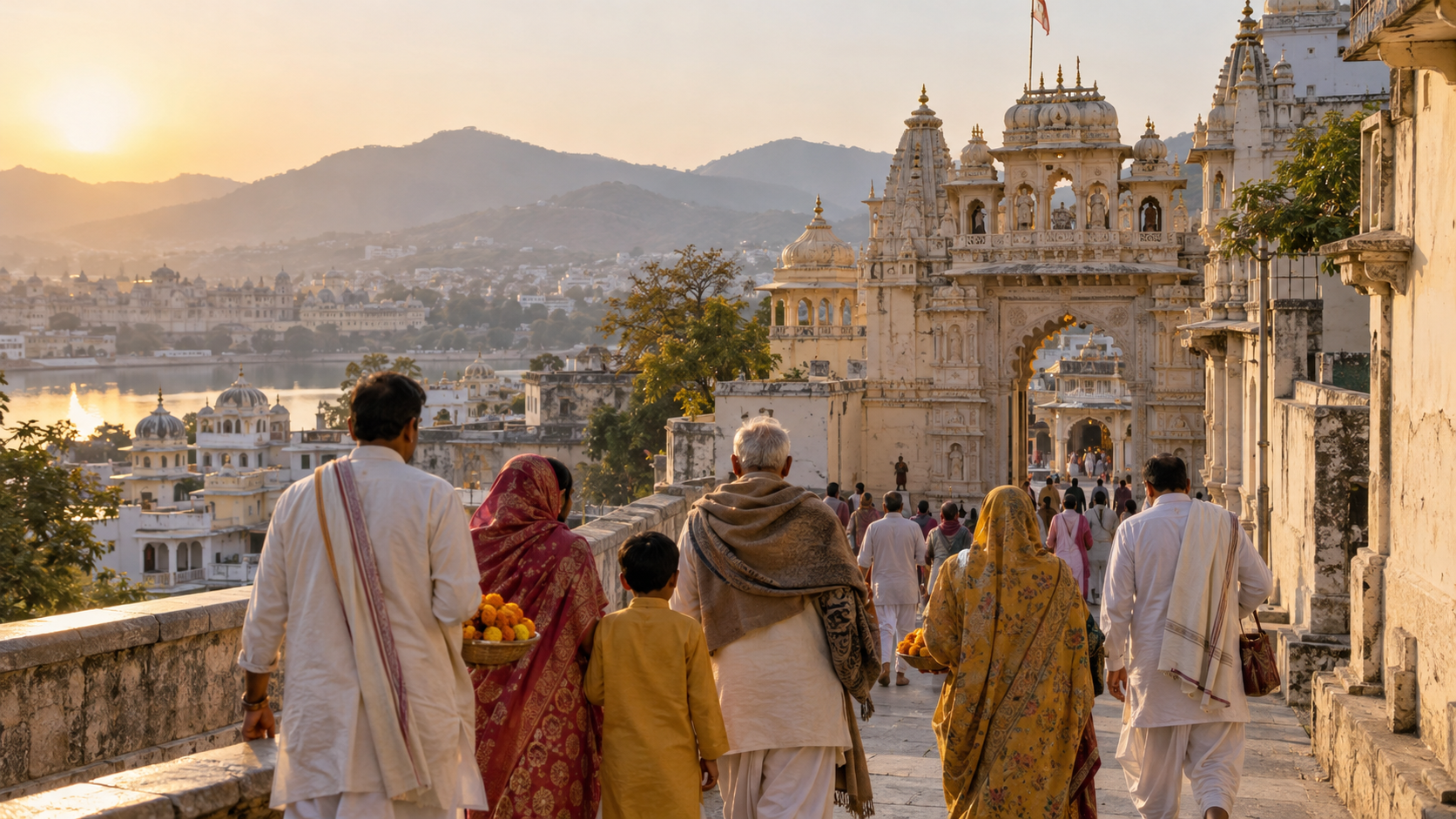
You want to visit the Vaishnava temples of Udaipur and Nathdwara, but a list of addresses will not tell you how to make the journey meaningful. The real decisions are which darshan should anchor your route, what to verify before you leave, and how to enter a living place of worship without reducing it to a sightseeing stop.
A Udaipur-Nathdwara temple journey through Rajasthan makes the most sense when you treat the two places as parts of one Vaishnava pilgrimage. Plan less around how many doors you can cross and more around the quality of attention you can bring to each darshan.
Make one decision before you choose temples
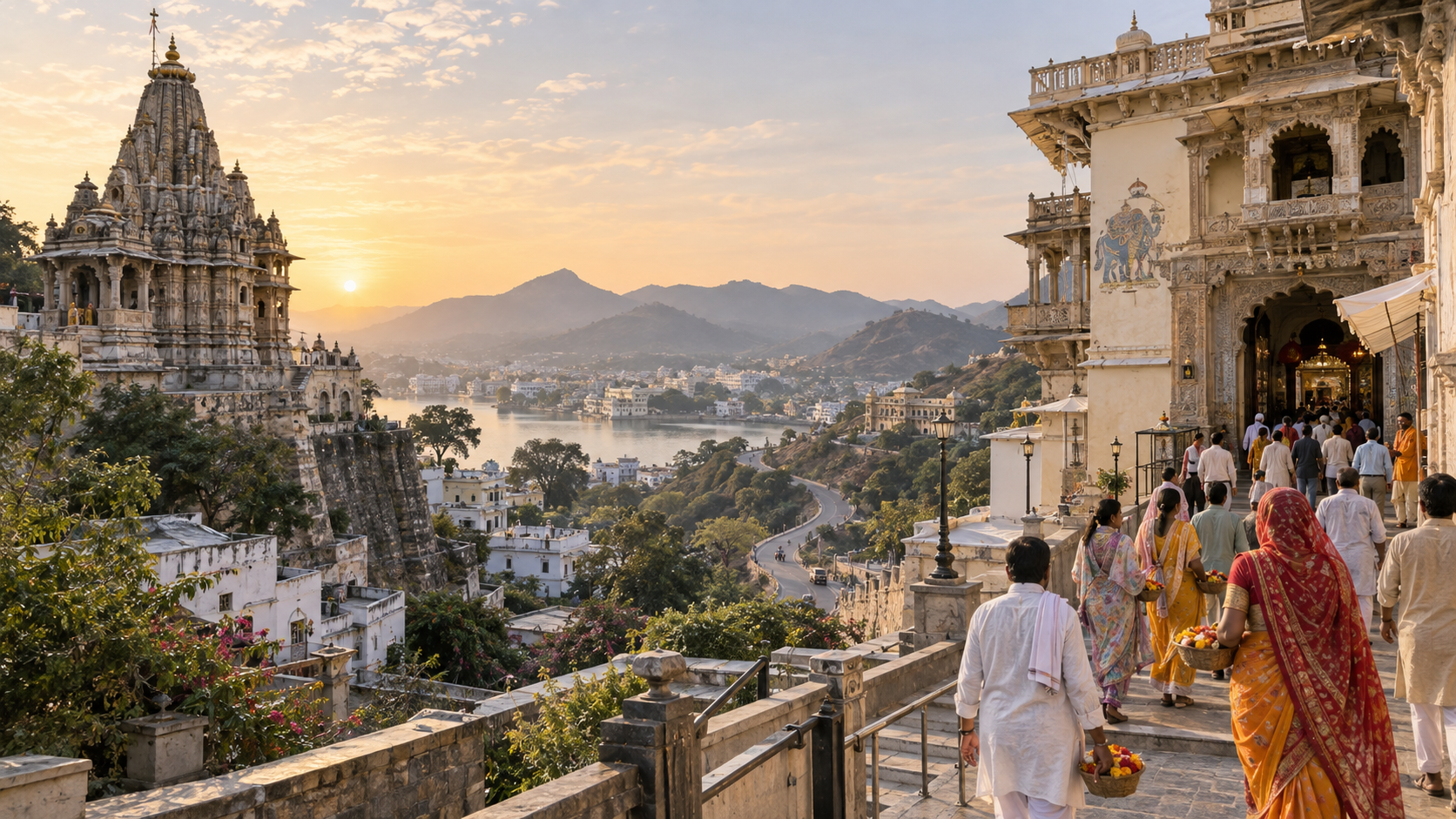
Write down the purpose of your visit in one sentence before building an itinerary. This sounds simple, but it prevents the most common planning error: trying to give worship, architectural study, family needs, shopping, photography, and intercity travel equal priority.
Choose the mode that best matches why you are going:
- Darshan-first pilgrimage: Select one principal darshan for each visit block. Treat every additional shrine as optional.
- Tradition-first study: Leave time to notice the deity’s form, visible seva, devotional sound, movement of worshippers, and local vocabulary. Do not rush directly from one sanctum to another.
- Family pilgrimage: Let the least flexible need shape the route. Confirm walking, steps, waiting arrangements, storage rules, and access before committing the whole group.
- First Vaishnava temple visit: Keep the route small. One unhurried encounter will teach you more about darshan and seva than several hurried entries.
If your group has different aims, agree on one non-negotiable anchor and one optional activity. A useful sentence is: “Our primary purpose is the anchor darshan; everything else depends on the time and energy remaining.” That decision becomes especially valuable when a queue, changed opening window, or transport delay forces you to choose.
Do not turn the anchor into a checklist item. Leave enough space before it to arrive composed and enough space afterward to sit, receive prasad if offered, or write down what you noticed. When every minute is assigned, the first delay consumes the part of the day you meant to devote to worship.
Build the route around worship, not map pins
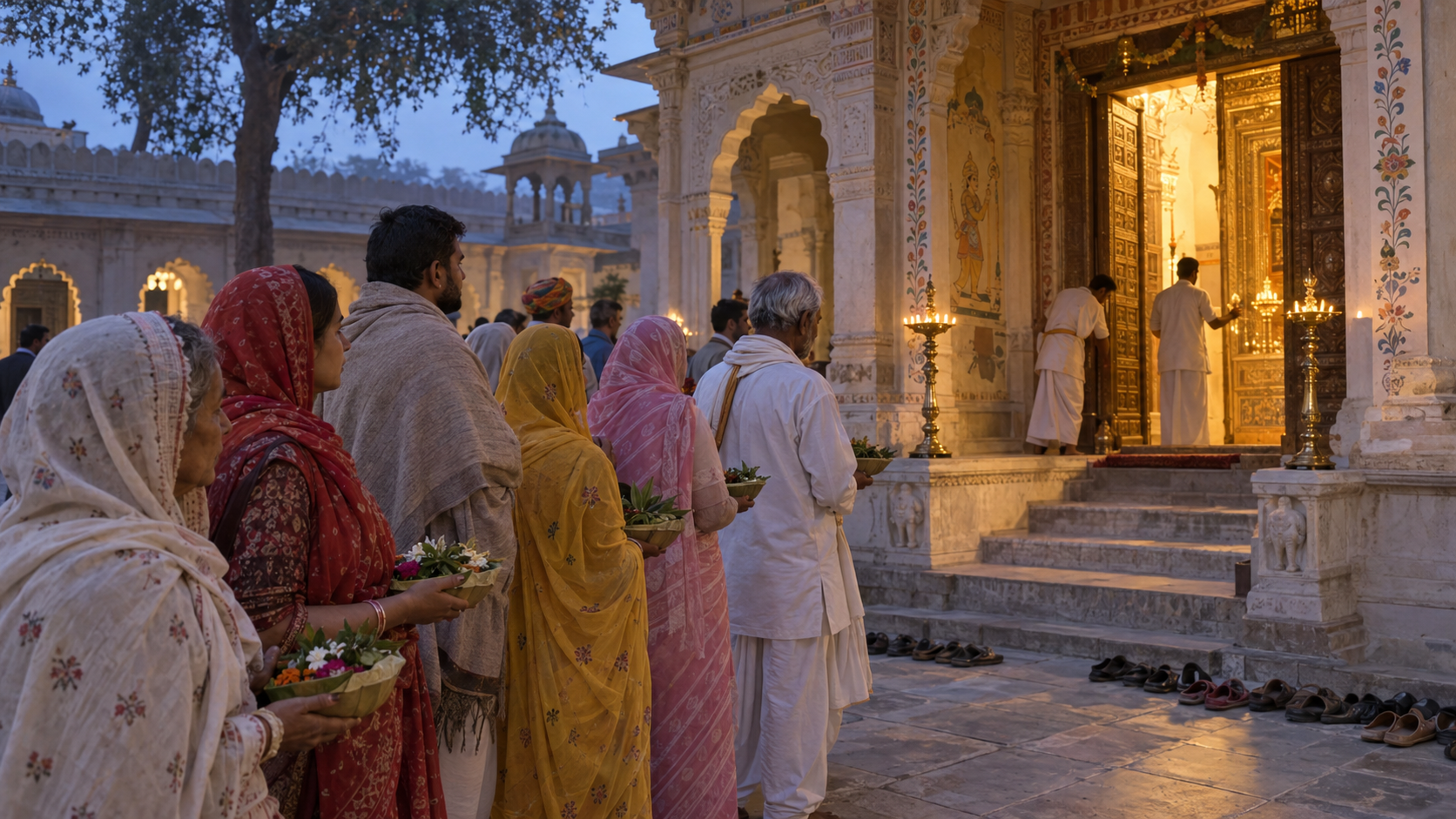
A temple is governed by its worship, not by the convenience of a tourist itinerary. Public access can follow periods of darshan and seva, and arrangements may change with observances, local conditions, or crowd levels. A route that looks efficient on a map can therefore fail at the temple door.
Verify changing details as close to the visit as practical. Prefer a direct temple announcement, a notice at the premises, or current confirmation from a trusted local contact over an undated travel page. Ask about the specific matters that can alter your day:
- the current public darshan or opening window;
- whether a special observance changes ordinary access;
- where the entry queue begins and whether separate arrangements apply to anyone in your group;
- rules for phones, cameras, bags, footwear, and outside offerings;
- any entry restrictions that companions should know before travelling;
- whether prasad or authorised offerings are available, and where to obtain them;
- steps, prolonged standing, storage, or other practical conditions relevant to children, older relatives, or visitors with limited mobility.
Ask narrow questions. “Is the temple open tomorrow?” can produce an answer that is technically correct but useless for your intended darshan. Ask instead: “What is the current public darshan window, when should we join the queue, and what may we carry inside?”
A workable two-centre template
- First visit block: Choose one anchor temple in the place where you begin. Add a second shrine only if its current access window fits without compressing the anchor darshan.
- Transition block: Keep the journey between Udaipur and Nathdwara separate from a tightly timed darshan commitment when you can. An arrival estimate is not the same as being ready at the temple entrance.
- Second visit block: Begin with the confirmed anchor darshan in the other place. Decide about additional stops only after you know the actual queue, access, and energy of your group.
- Final margin: Preserve one unassigned period. Use it for a return darshan, a temple you learned about locally, quiet reflection, or rest.
This structure protects the pilgrimage from its own ambition. Every temple stop carries transition time: finding the correct entrance, leaving footwear or restricted belongings, joining the proper queue, understanding local instructions, and moving at the pace of worship. When the day tightens, remove a secondary stop rather than sacrificing the anchor.
Learn the three words that change what you notice
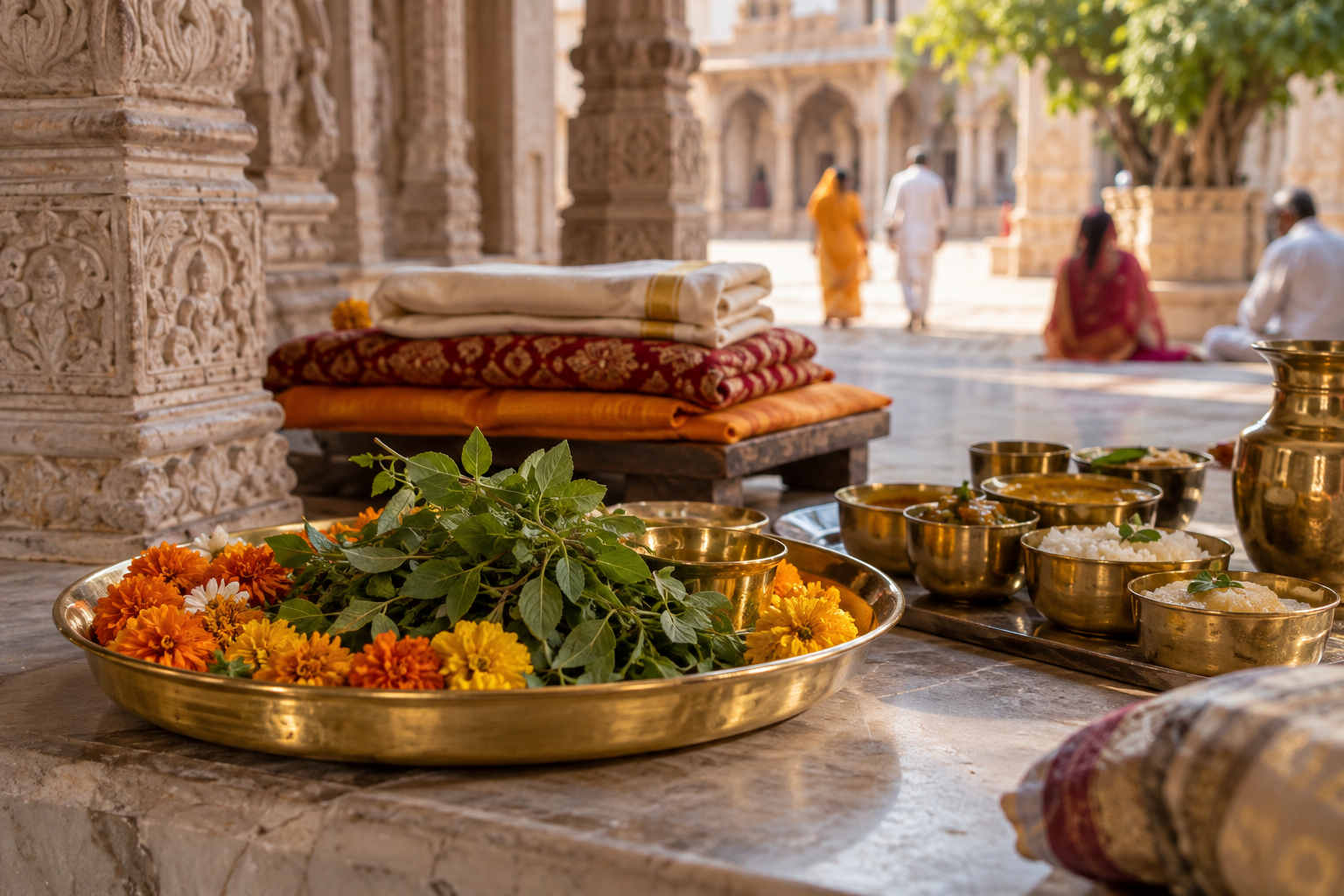
You do not need specialist knowledge to enter respectfully, but three Vaishnava terms will help you understand what is happening.
- Darshan: More than looking at a sacred image, darshan is the devotional encounter of seeing and being seen by the deity. Your task is not to obtain an uninterrupted view at the expense of others. Be attentive, offer your prayer, and move when temple instructions or the flow of devotees requires it.
- Seva: Seva means service. In temple life it can include the ritual care and worship offered to the deity. This is why access may follow the needs of worship rather than remain continuously available. A closed door need not mean that nothing is happening.
- Prasad: Prasad is what has been offered and is received as grace. If it is given, accept it with care rather than treating it as a souvenir. If dietary or other constraints mean you cannot consume something, ask locally how to receive or handle it respectfully.
These terms also give you a simple practice for the threshold. Before entering, put away the phone and settle your attention. During darshan, look before trying to document. Afterward, step aside before speaking or consulting the next destination. That small sequence changes the visit from visual consumption to devotional presence.
You also do not need to imitate every gesture you see. Customs can belong to a particular lineage, family, or local practice. When you are uncertain, observe quietly, follow explicit instructions, and ask a concise question. A sincere pranam is better than performing a ritual whose meaning you do not understand.
Enter as a guest, then observe like a student
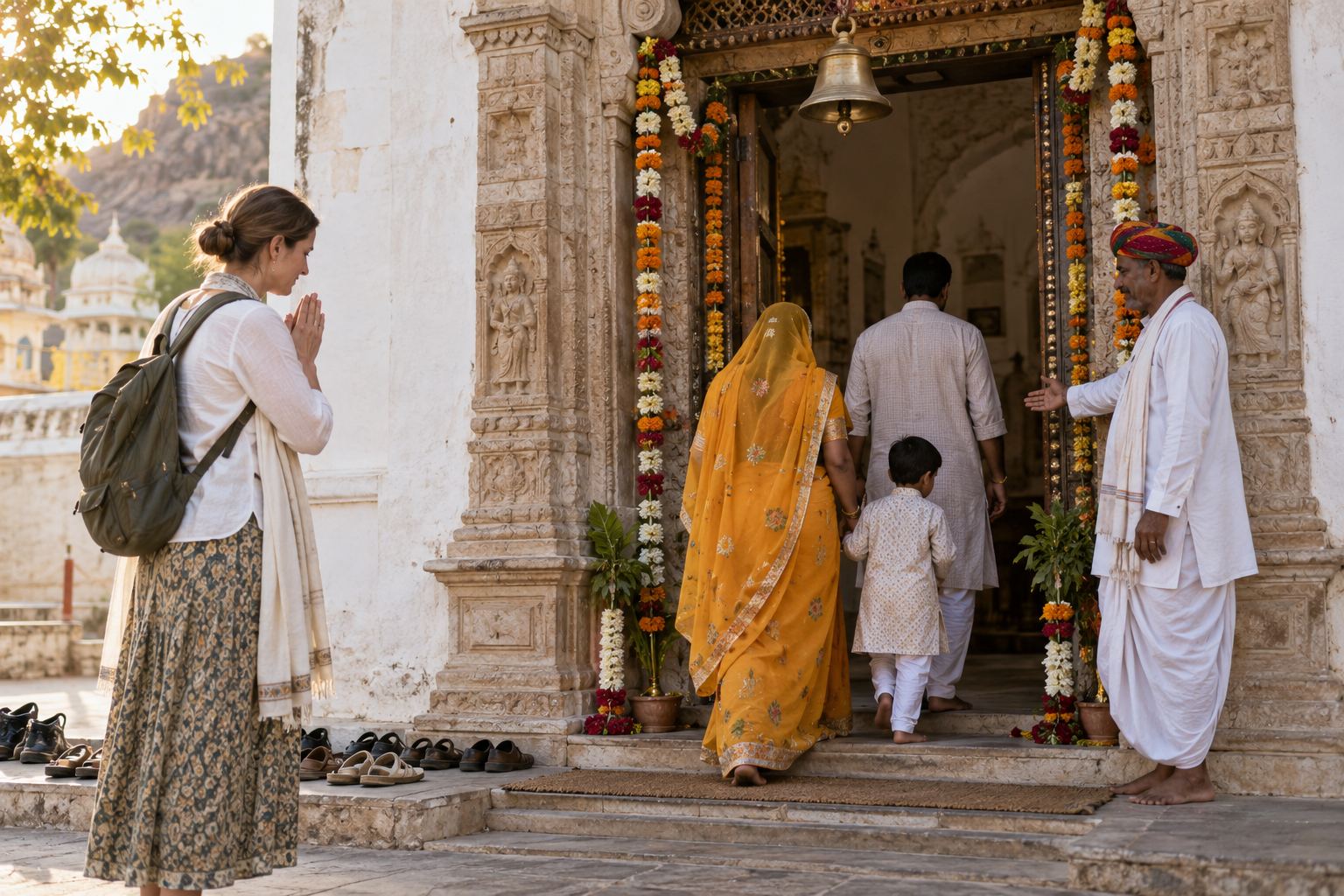
Let local practice govern your conduct
The rule you remember from another temple may not apply here. Local instructions take precedence over habit, and permission at one shrine does not imply permission at the next.
- Wear clean, modest clothing suitable for a place of worship.
- Leave footwear only in the designated place rather than beside an arbitrary wall or doorway.
- Keep your phone stowed unless you have confirmed that its use is permitted.
- Never assume photography is allowed, especially near the sanctum or during worship.
- Join the indicated queue and do not hold up the flow to obtain a longer view.
- Ask before presenting an outside offering, touching a threshold or sacred object, or entering a side area.
- Keep conversations low and move away from the darshan line before explaining the experience to companions.
- Follow directions from authorised temple personnel even when other visitors appear to be doing something different.
If you are travelling with children, explain three rules before reaching the entrance: stay with the group, do not touch without permission, and keep quiet when worship is underway. If a companion may face an access restriction, check before the journey rather than asking them to discover it in public at the gate.
Use four questions to read each temple
Vaishnava traditions share a devotional orientation toward Vishnu and his forms, but that does not make every temple interchangeable. Regional tradition, lineage, ritual rhythm, and local community can shape the experience. Notice difference without turning it into a ranking.
- How is the deity named and addressed here? Read the displayed name or ask respectfully. Do not infer identity from appearance alone.
- What rhythm governs access? Notice whether the public encounter is brief and concentrated, extended and quiet, accompanied by song, or organised around a visible act of worship.
- What forms of seva are visible? Attend to whatever the temple itself presents: sound, flowers, food offerings, textiles, lamps, or other forms of care. Do not assume that what is absent from view is absent from the tradition.
- How do devotees participate? Watch where they pause, how they make space for others, whether they sing or remain silent, and how they receive prasad. Observation will answer many questions before you need to ask them.
Make short notes after leaving rather than composing them in front of the sanctum. Record the deity’s displayed name, the seva or worship you actually witnessed, one local practice you did not already know, and one question to investigate later. Separate observation from interpretation: “devotees sang while waiting” is an observation; a claim about the temple’s history or lineage requires evidence.
This discipline protects you from flattening living traditions into architecture. It also gives you a better memory of the pilgrimage. Decorative details may blur together, but the relationship between deity, seva, and devotee usually reveals what made each encounter distinct.
Key takeaways
- Choose one purpose for the journey and one anchor darshan for each visit block.
- Confirm current darshan windows, access conditions, and rules close to the visit; do not build the day around an undated timetable.
- Keep the Udaipur-Nathdwara transfer away from a tightly timed temple commitment when practical.
- Understand darshan, seva, and prasad before entering; they explain the devotional logic behind the visit.
- Follow local instructions on queues, footwear, photography, offerings, and restricted areas.
- Notice how each temple names the deity, orders worship, expresses seva, and involves devotees. Compare carefully without ranking.
Before you leave, write down your anchor darshan and the practical questions you still need answered. Once you reach Udaipur or Nathdwara, let current temple instructions set the pace. A smaller route followed with attention will serve you better than a crowded itinerary that leaves no room to worship.
References

Leave a Reply
You must be logged in to post a comment.