
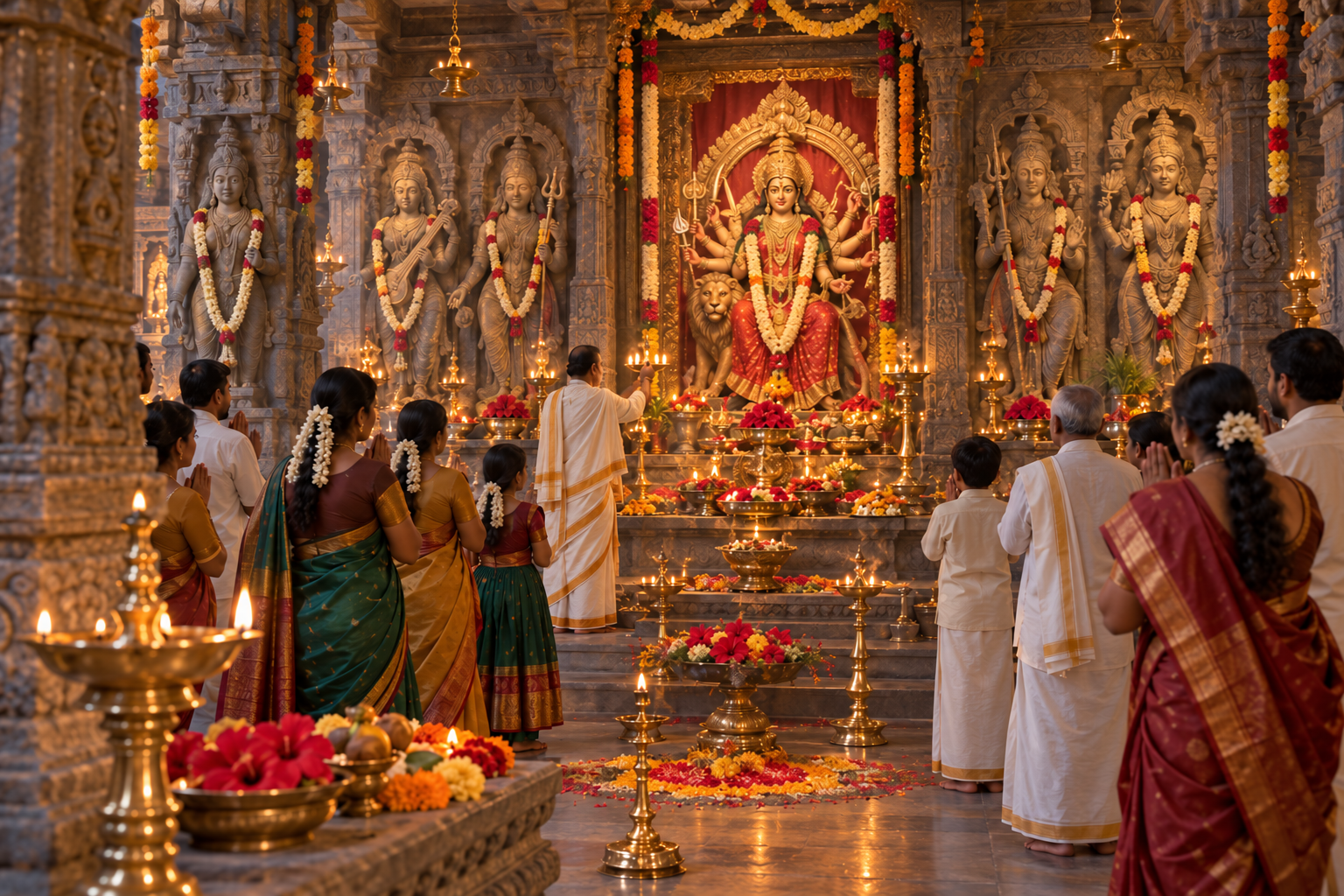
You may know how your family observes Navadurga and still be unsure what to do when a temple calendar mentions Saptamatrika or Ashtamatrika puja. Should you add another ritual at home, choose between seven and eight Mothers, or simply attend the temple observance?
The safest answer is also the most Dharmic: preserve the distinction between devotion and a formal ritual tradition. You can honour the Divine Mothers without pretending that a name alone gives you the full method. If you want to perform the puja itself, first identify the names, sequence, guardians and procedure followed by your family, guru or local temple.
What seven and eight do – and do not – tell you
Sapta means seven, ashta means eight, and Matrika refers to a Mother. Saptamatrika therefore denotes a group of seven Divine Mothers, while Ashtamatrika denotes a group of eight. That numerical distinction is useful, but it is not a complete ritual instruction.
Do not treat Ashtamatrika as an upgraded or more complete Saptamatrika. The number does not tell you which names your tradition invokes, the order in which they are worshipped, the mantra used for each, or whether associated guardian deities are included. Those details belong to the particular paddhati, or ritual method, being followed.
During Durga Navratri, the Matrikas may be honoured alongside Navadurga and Dasa Mahavidya. The word alongside matters. It points to related forms of Shakti worship within the same festival, not to interchangeable labels for one ritual. A Navadurga sequence does not automatically become a Matrika puja merely by adding more names.
This is a familiar strength of Dharma: unity does not require sameness. The Divine may be one, while forms, names and ritual relationships remain meaningful. Respecting those distinctions is not needless rigidity. It is how a living tradition retains its memory.
Use a simple readiness test. If you cannot yet state whether the intended observance is Saptamatrika or Ashtamatrika, name the particular tradition behind it, and identify its prescribed sequence, you are not ready to conduct that formal puja. You are still entirely free to offer sincere pranam to the Divine Mother within your established Navratri practice.
Let a living tradition settle the ritual form
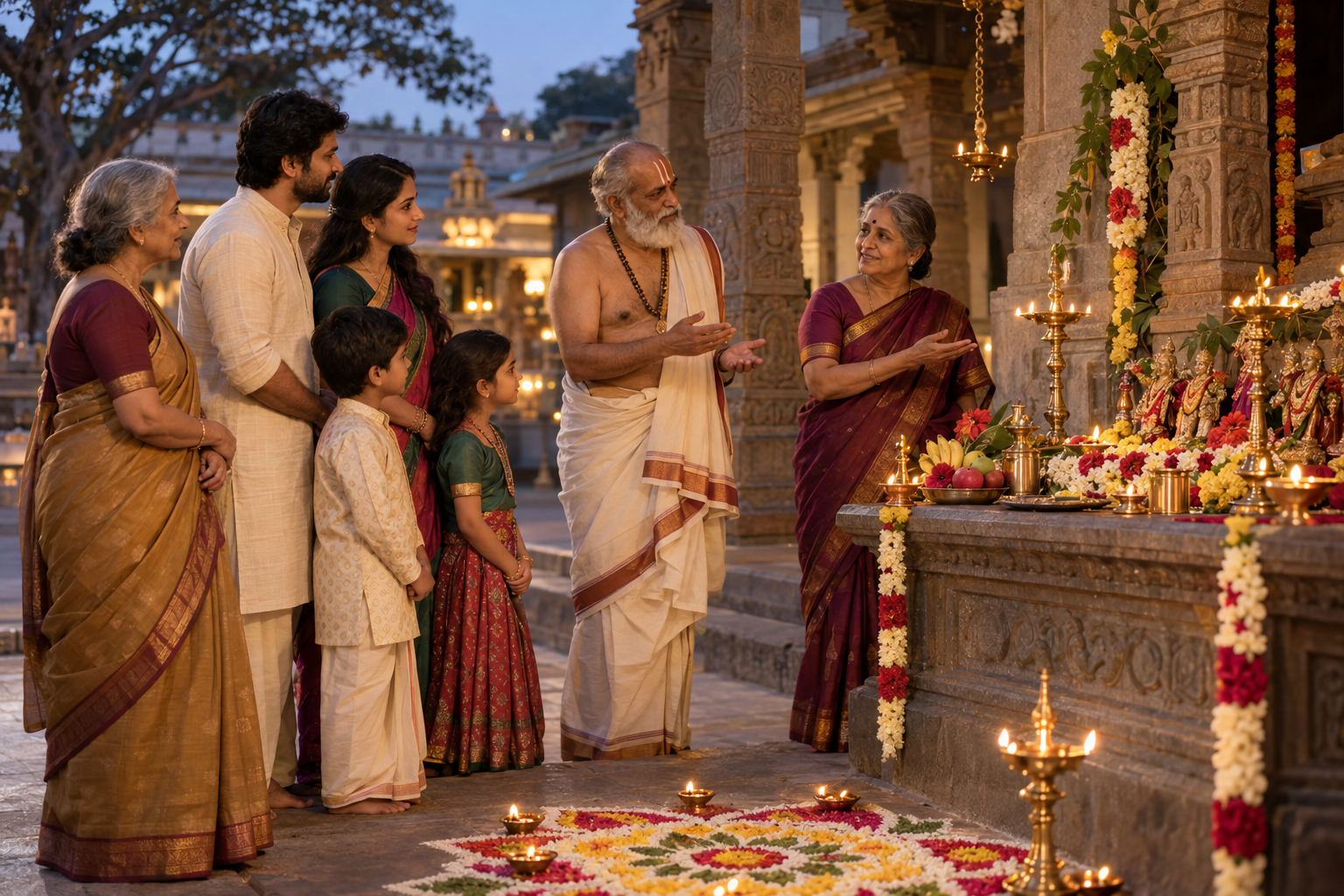
Matrika worship during Navratri is not presented everywhere in one uniform way. It is practised in some places of Tamil Nadu and Kerala and in some parts of North India. Some of these observances also worship Dwarapalaka devatas, the guardian deities associated with the sacred threshold, together with the Matrikas.
That regional spread should not be converted into a claim that every temple in those areas follows the practice. Nor should the presence of Dwarapalakas be treated as decorative. If they occur in the paddhati you have received, ask where they belong in the sequence and follow that instruction.
Ashtamatrika worship is associated with comparatively rare occasions. Rarity does not make it inaccessible to devotion, but it does make casual reconstruction especially unwise. A detailed-looking checklist assembled from unrelated traditions can be less faithful than a simple observance performed within the custom you actually know.
Before Navratri, ask your family elder, guru, priest or temple office these exact questions:
- Does this tradition observe Saptamatrika, Ashtamatrika, or neither during Durga Navratri?
- Which Divine Mothers are invoked, and in what order?
- Are Dwarapalaka devatas included? If so, at what point are they worshipped?
- On which Navratri day and at what local time is the observance performed?
- Is this a congregational puja, a priest-led temple rite, or a household practice?
- May visitors participate directly, or should they attend as devotees and receive darshan?
- Which offerings should be brought, and which should be left to the temple?
Be precise when you contact a temple. Ask whether its Durga Navratri programme specifically includes Saptamatrika or Ashtamatrika worship. A broad question about Devi puja may receive a broad answer that does not resolve your actual uncertainty.
Choose the right level of participation
There are three honest ways to approach Matrika worship. Choose the one that matches the tradition and guidance genuinely available to you.
- Attend an established temple or community observance. This is the clearest choice when your household has no Matrika paddhati. Confirm the form being worshipped, arrive according to the temple’s instructions, and follow its rules for participation. Observing a temple ritual can deepen understanding, but it does not automatically supply a home ritual manual.
- Follow the method transmitted in your household or sampradaya. Use the names, order, mantras, offerings and closing actions that belong to that method. Do not splice together elements from Navadurga, Dasa Mahavidya, Saptamatrika and Ashtamatrika worship merely because all honour Shakti.
- Offer devotional acknowledgement without claiming a formal Matrika puja. If no reliable method is available, continue the Durga Navratri practice you already know and bow to the Divine Mother with the prayers ordinarily used in your home. You may pray for guidance, attend darshan or support an established observance. Simplicity is preferable to inventing ritual authority.
The third choice is not a lesser expression of bhakti. It simply preserves an important boundary. Every devotee can revere the Divine Mother; performing a named ritual means following the form that gives that name practical meaning.
If two instructions conflict, do not settle the matter by choosing the longer or more elaborate version. Ask which instruction belongs to the temple, family or lineage you are actually following. Ritual detail has value when it carries continuity, not merely when it creates complexity.
A preparation checklist that prevents avoidable confusion
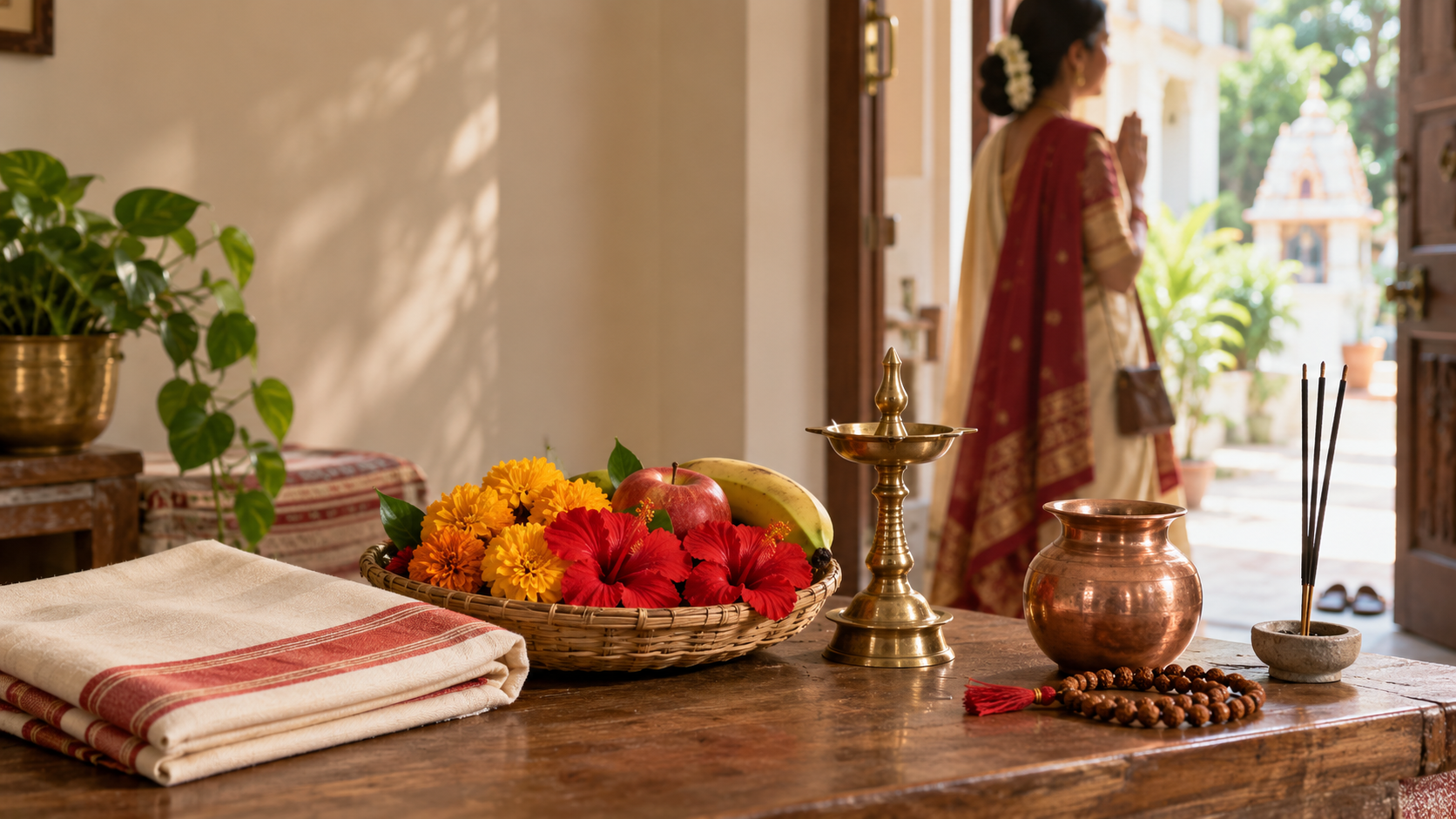
Once you have confirmed the tradition, place the whole plan on one sheet. This prevents a common mistake: beginning with one sequence, noticing a difference in another list midway through the puja, and improvising under pressure.
- Name the observance. Write Saptamatrika or Ashtamatrika at the top. Do not use the terms interchangeably.
- Record the ritual authority. Note whether you are following a family paddhati, a guru’s instruction or a particular temple’s procedure. This tells you whose guidance resolves a doubt.
- Copy the exact sequence. Verify the names and their order from that tradition. Do not supply a missing name from memory or from an unrelated list.
- Mark the Dwarapalaka instruction. State explicitly whether guardian deities are included and where they enter the sequence. If you have not received an answer, ask before beginning.
- Confirm the occasion. Record the locally prescribed Navratri day and time rather than assuming that another temple’s calendar applies to you.
- Clarify who performs what. Distinguish the role of the priest or designated practitioner from the actions expected of attending devotees and household members.
- Prepare only the specified materials. Use the offering list supplied for that observance. More items do not make a puja more authentic, and unfamiliar additions can disrupt an otherwise coherent method.
- Include the prescribed conclusion. Do not plan only the invocations. Confirm how the worship is completed and how any offerings are handled afterward.
Set one firm stop rule: if you still have conflicting instructions about the identity, order or accompanying deities, do not improvise a formal Matrika puja. Return to your established Durga worship and seek clarification. Nothing is gained by turning uncertainty into a performance.
Key takeaways for your Navratri decision
- Saptamatrika means a group of seven Divine Mothers; Ashtamatrika means a group of eight.
- The numerical label does not supply the names, mantras, order or full procedure used by your tradition.
- Matrika worship can accompany Navadurga and Dasa Mahavidya worship during Durga Navratri, but these are distinct devotional and ritual frameworks.
- Some Navratri observances include Dwarapalaka devatas, so their place should be confirmed rather than guessed.
- If you have no transmitted paddhati, attend an established observance or honour the Divine Mother through the Navratri practice you already know.
Your next step is concrete: contact the temple or person whose tradition you intend to follow and ask whether the coming observance is Sapta or Ashta, which sequence it uses, and whether Dwarapalakas are included. One precise conversation before Navratri will serve you better than collecting several incompatible ritual lists.
References

Leave a Reply
You must be logged in to post a comment.