
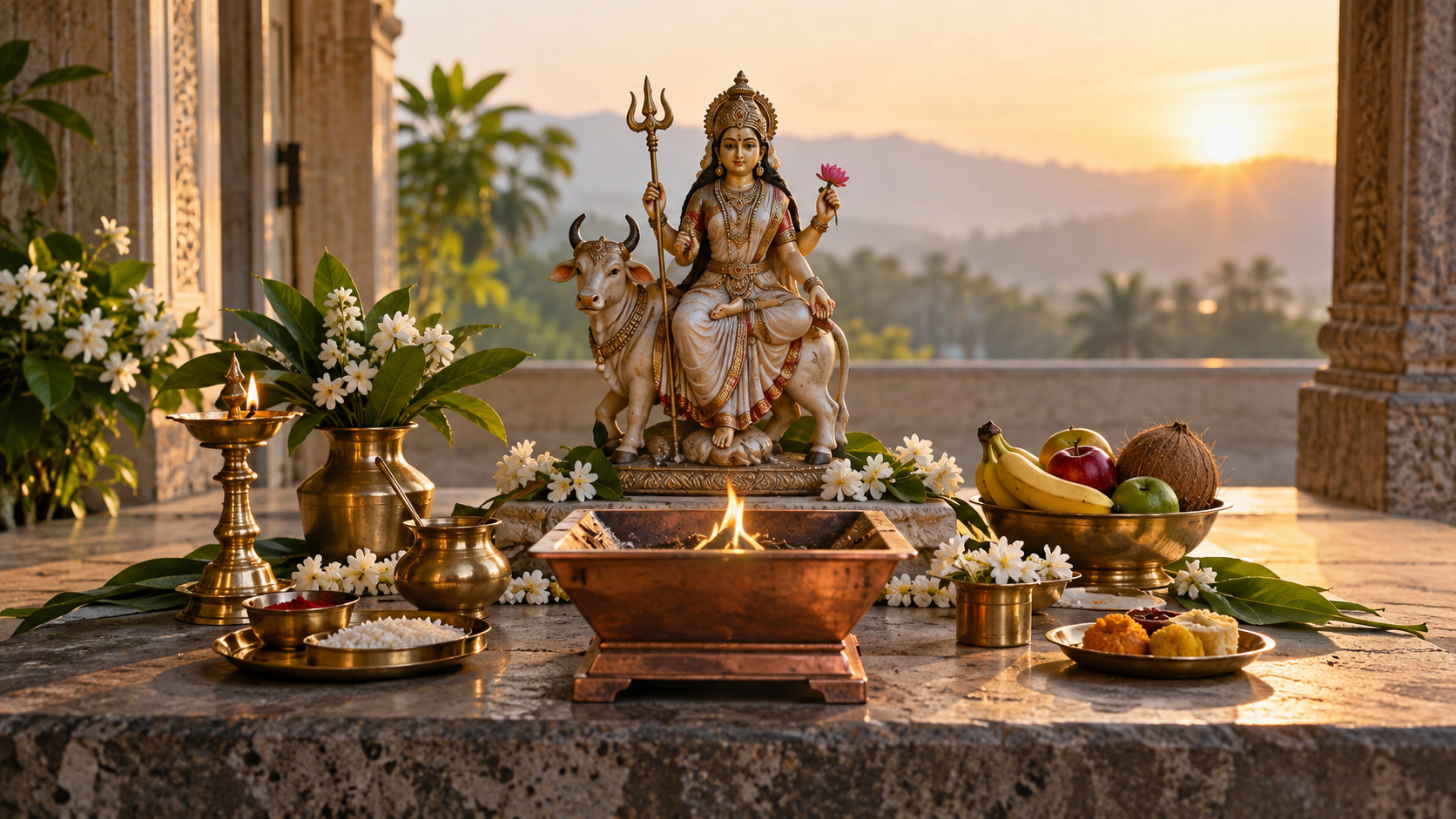
If you intend to begin Navratri 2026 with Maa Shailaputri Havan, mark Sunday, 11 October 2026. That is the Pratipada observance date given for this first-day havan.
The harder question is not the date but how to prepare without turning a sacred observance into a hurried collection of mantras, purchases, and promises. You need a clear sankalpa, a ritual form grounded in your tradition, and a fire setup that is genuinely safe. This guide helps you make those decisions before Navratri begins.
Fix the date, then confirm the local time
Maa Shailaputri Havan is traditionally performed on Pratipada, the opening day of Navratri. Its devotional intentions include stability, strength, devotion, and spiritual groundedness. These are especially relevant when you are seeking greater peace in the mind or praying for the stability associated with having a home of your own.
Use 11 October 2026 as the date, but do not invent an exact clock time from a generic calendar. Hindu observances follow tithi, and the applicable worship window may be presented differently by local panchangs. Check a panchang calculated for your location or ask the temple or purohit whose paddhati you will follow. Do this before inviting participants.
Settle four points in writing:
- Date: Sunday, 11 October 2026.
- Time: the local Pratipada window confirmed through your panchang, temple, or purohit.
- Setting: your home, a temple, or another place where an open sacred fire is permitted.
- Intention: one concise sankalpa rather than a long list of unrelated wishes.
If you cannot arrange a safe havan, do not rush through an unfamiliar fire ritual merely to preserve appearances. A focused puja and prayer on Pratipada is more respectful than an improvised havan conducted without guidance or adequate fire precautions.
Prepare the worship space without overcomplicating it
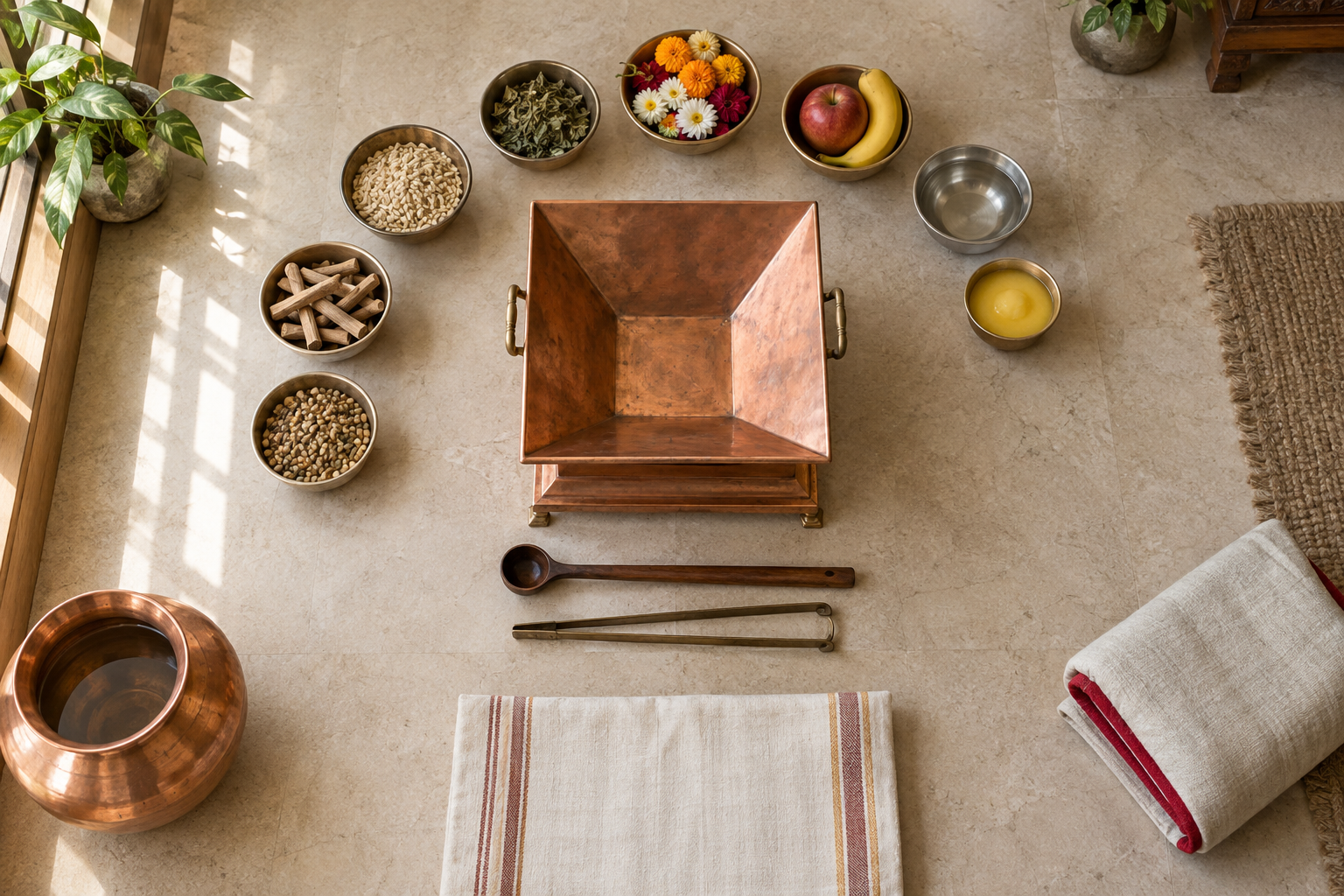
The exact material list varies among sampradayas, temples, and family traditions. Confirm it with the person leading the ritual. The core offerings identified for this havan are ghee and havan samagri, offered as ahuti. Beyond that core, use only the items required by the vidhi you have chosen.
A practical preparation list usually needs to account for:
- A clean altar or designated place for Maa Shailaputri worship.
- A proper havan kund on a stable, non-combustible, heat-resistant base.
- Ghee, havan samagri, and suitable utensils for controlled offerings.
- The puja materials specified by your family tradition or purohit.
- A printed or clearly written ritual sequence so nobody searches for instructions beside a live fire.
- Good ventilation and enough open space to keep curtains, decorations, clothing, and other combustible material away from the flame.
- An appropriate fire extinguisher or fire blanket, along with an adult assigned to watch the fire continuously.
Keep children and animals outside the working area. Avoid loose synthetic clothing. Never leave the kund unattended, and never pour water onto burning ghee. If the flame escapes the kund or cannot be controlled immediately, move people to safety and contact emergency services.
If your building prohibits open flames, or if smoke could endanger someone with respiratory sensitivity, hold the worship at a properly equipped temple or choose a non-fire puja. Devotion does not require you to ignore a real safety constraint.
Use a clear ritual flow, not a borrowed patchwork
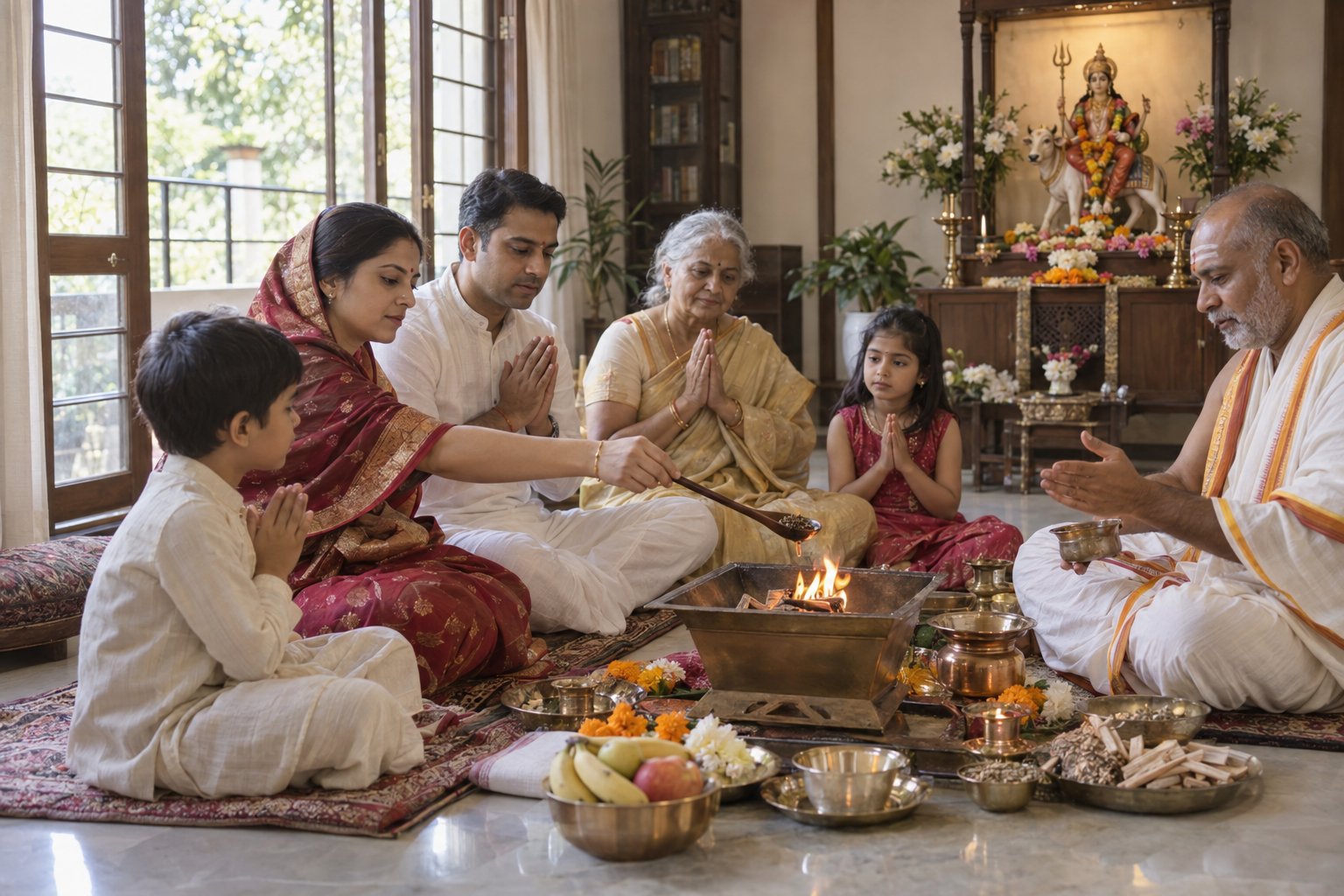
The exact mantras, preliminary invocations, altar arrangement, ahuti count, and concluding rites can differ by lineage. The sequence below is therefore a planning framework, not a universal substitute for a traditional vidhi.
- Prepare yourself and the place. Complete personal purification according to your practice, clean the worship area, arrange every required item, and remove distractions.
- State the sankalpa. Name the occasion and express the purpose of the worship truthfully. Ask for qualities that support dharmic action rather than treating the rite as a bargain for a guaranteed result.
- Complete the preliminary worship. Follow the opening invocations required by your family, temple, or sampradaya. Do not omit or add deities merely because a different sequence appeared online.
- Worship Maa Shailaputri. Offer devotion in the form taught to you, keeping the mind on steadiness, strength, and spiritual grounding.
- Make the ahutis. Offer ghee and havan samagri in small, controlled quantities with the mantra and count prescribed for your observance. Arrange the mantra in advance with a knowledgeable purohit or trusted lineage resource.
- Complete the closing prayers. Conclude according to the same ritual system with which you began. Pray for the welfare of the household and offer gratitude rather than ending abruptly after the final ahuti.
- Close the fire safely. Remain present until the fire and embers are fully extinguished and cool. Handle the remains according to your tradition and local safety rules.
Do not combine isolated Sanskrit lines from unrelated websites simply because each one mentions Maa Shailaputri. Pronunciation, mantra form, offering point, and repetition count belong to a coherent practice. If you have never conducted a havan, invite a qualified purohit or participate in a temple homam rather than guessing beside a live fire.
Frame prayers for a home or mental peace responsibly
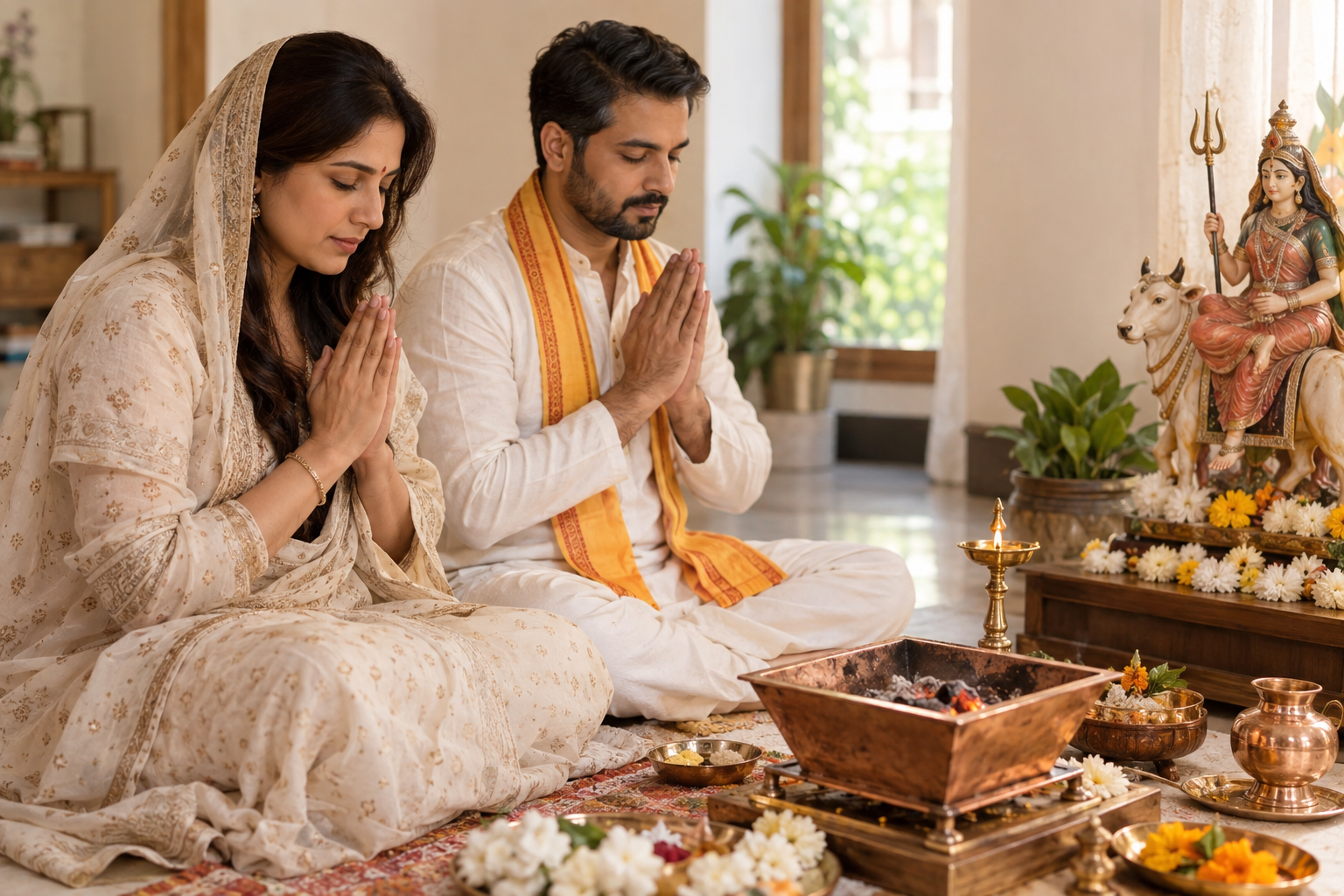
The traditional intentions associated with this havan can guide your sankalpa, but they should not be turned into guarantees. A sacred rite can orient your effort, discipline, and devotion. It does not cancel the practical work demanded by a difficult goal.
If your prayer concerns a home
Pray for stability, right judgement, honest means, household harmony, and the strength to sustain the responsibilities that come with a home. Then pair the sankalpa with practical action: understand your budget, examine financing carefully, verify ownership documents, and obtain qualified legal or financial advice before signing anything.
The havan cannot establish whether a property is affordable, whether its title is valid, or whether a contract protects you. Keeping those decisions separate from devotional expectation prevents hope from becoming financial pressure.
If your prayer concerns mental peace
Ask for steadiness, patience, clarity, and the ability to act without being ruled by agitation. Make the day quieter around the ritual: reduce avoidable interruptions, settle household disagreements beforehand, and leave time after the havan for prayer or silent reflection.
Havan can be part of spiritual care, but it is not a substitute for mental-health treatment. If distress is persistent, disrupts sleep or daily functioning, or creates a risk of harm, seek qualified professional help. Urgent danger requires immediate emergency assistance, not a delayed ritual response.
If both intentions matter to you, a plain-language sankalpa can remain focused: “On this Pratipada, I offer this worship to Maa Shailaputri for steadiness of mind, strength in right effort, harmony in the household, and a home obtained and sustained through dharmic means. May this worship deepen devotion and responsible action.” This is a statement of intention, not a Sanskrit mantra or a replacement for the sankalpa prescribed by your tradition.
Key takeaways for Navratri 2026
- Observe Maa Shailaputri Havan on Sunday, 11 October 2026, the first day of Navratri.
- Confirm the exact local Pratipada worship window through a location-specific panchang, temple, or purohit.
- Keep the sankalpa centered on stability, strength, devotion, spiritual grounding, and the right effort connected with your prayer.
- Use ghee and havan samagri as directed, but obtain the exact mantra, ahuti count, and complete vidhi from the tradition you actually follow.
- Treat prayers for a home or mental peace as spiritual orientation, not as guaranteed property, financial, legal, or clinical outcomes.
- Choose a guided temple observance or non-fire puja if you cannot conduct an open-flame ritual safely.
Put 11 October in your calendar now, confirm the local timing, and write your one-sentence sankalpa before buying materials. Those three decisions will remove most of the last-minute confusion and leave Navratri morning where it belongs: with Maa Shailaputri, your family, and the discipline of beginning well.
References

Leave a Reply
You must be logged in to post a comment.