
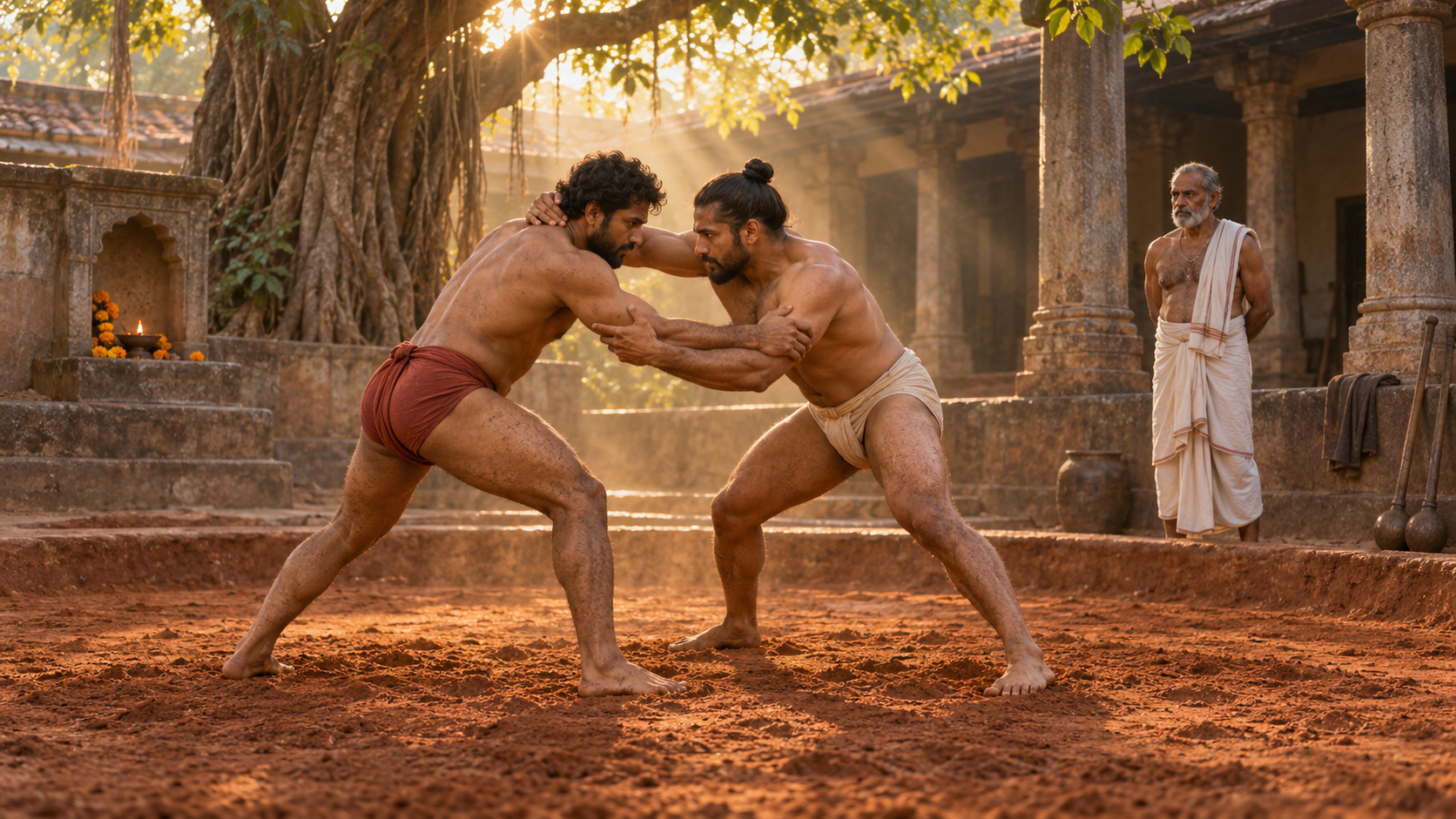
If you have encountered Malla-Yuddha simply as “ancient Indian wrestling,” you may be wondering whether it belongs in a history book, a martial-arts school, or a discussion of Hindu spirituality. The most useful answer is that the tradition joins all three, but it places them in a clear order: ability is cultivated, character governs it, and dharma gives it purpose.
That order helps you avoid two common mistakes. One is treating Malla-Yuddha as a museum curiosity. The other is assuming that any strenuous workout becomes sacred when it receives a Sanskrit name. To understand or revive the tradition responsibly, you have to attend to both its physical practice and its moral architecture.
Strength is placed under dharma
Malla-Yuddha is a traditional Hindu discipline of wrestling, but wrestling is only its visible activity. Its governing idea is that strength, endurance, skill, and spiritual discipline belong together because the body serves dharma. Physical capacity is not rejected as worldly, nor is it treated as an end in itself.
This distinction matters. A weak body is not automatically spiritual, but a powerful body is not automatically righteous. The ethical question is what your strength enables you to protect, endure, and serve. Training becomes Dharmic when power is placed under responsibility rather than appetite, anger, or vanity.
You can use three tests to recognize that ordering of values:
- Purpose: Is strength being developed for disciplined action, or merely for display and domination?
- Restraint: Does greater ability produce greater self-command, especially when pride or anger is provoked?
- Responsibility: Does training make the practitioner more dependable toward teachers, partners, family, and community?
These are not substitutes for wrestling technique. They explain what technique is for. Remove the physical work and Malla-Yuddha becomes an abstract philosophy. Remove the ethical frame and it may remain wrestling, but it no longer expresses the complete Dharmic ideal.
The phrase “born into the warrior temperament” associates this discipline with a martial disposition. It should not be made to answer questions that the phrase alone cannot settle, including modern questions about caste, institutional admission, or who may train. Its clearest practical lesson is narrower: anyone cultivating combat ability accepts a corresponding duty to govern that ability.
Key takeaways
- Malla-Yuddha is best understood as wrestling governed by moral and spiritual discipline, not as exercise decorated with religious language.
- The body is cultivated as an instrument of dharma; strength therefore carries obligations of restraint, service, and responsibility.
- A claim that a practice is “scriptural” is incomplete until it identifies the text, passage, translation, and the kind of claim that passage can support.
- A textual ideal does not provide a safe technical curriculum. Throws, holds, falls, and live resistance require qualified, supervised instruction.
- A credible revival should distinguish inherited practice, historical reconstruction, modern adaptation, and devotional interpretation.
Read traditional claims without romanticizing them
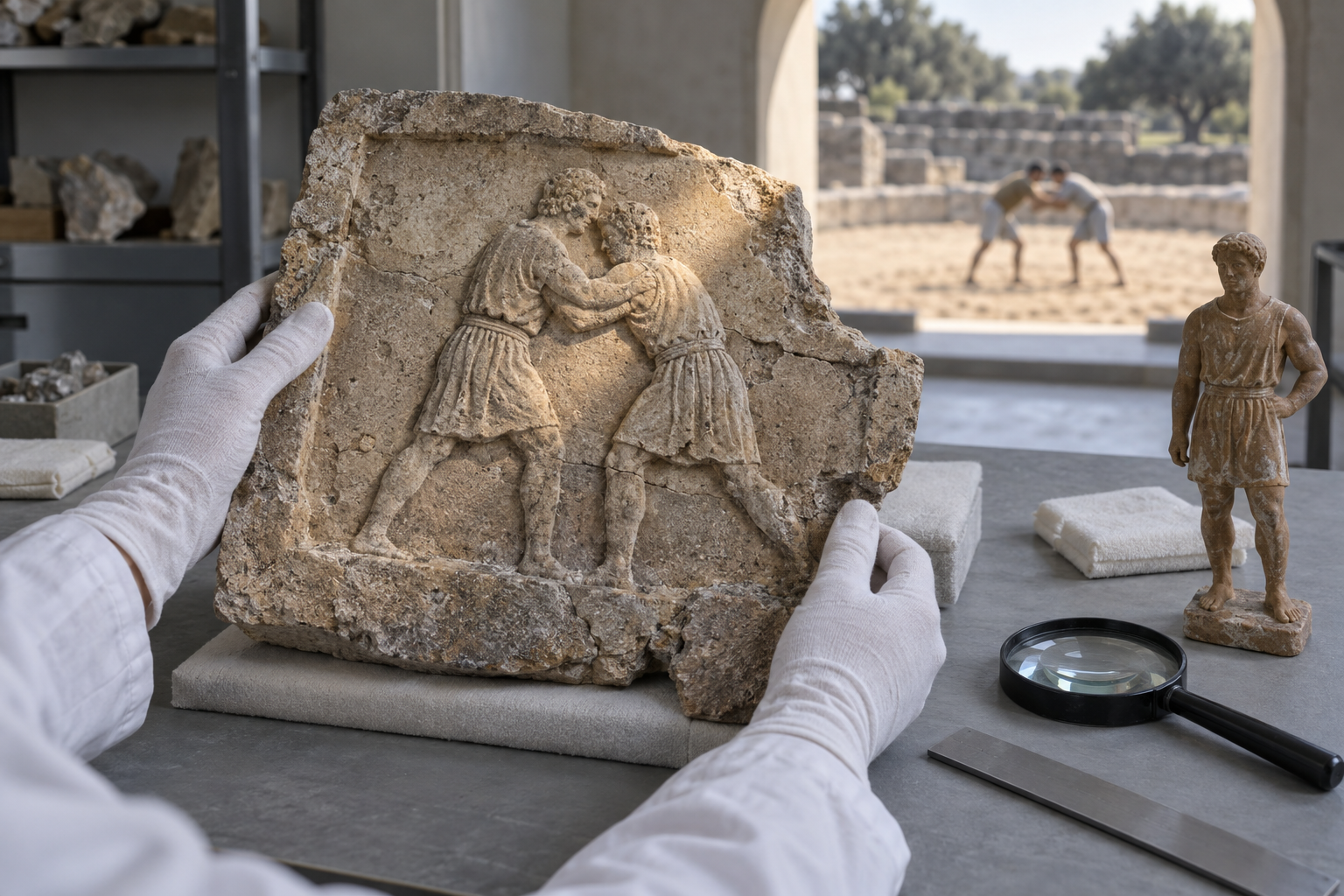
Interest in a neglected tradition often produces certainty faster than evidence. Attractive claims get repeated, modern methods acquire ancient labels, and the word “scriptural” is used as though it settled every question. You do not have to become cynical, but you should ask more precise questions.
- Ask what kind of claim is being made. A passage may praise strength, describe a contest, present an ethical ideal, or preserve technical instruction. Those are different forms of evidence. One should not silently be converted into another.
- Ask for the exact reference. “Mentioned in Hindu scriptures” is too broad to verify. Request the name of the text, the relevant passage, the translation being used, and enough context to understand what the passage is doing.
- Separate values from mechanics. A text can establish why disciplined strength matters without explaining how to execute a movement safely. Moral authority does not replace technical competence.
- Ask what has been inherited and what has been reconstructed. A school can honor Hindu principles while using modern teaching methods. That may be legitimate, but it should be described honestly rather than presented as an unchanged ancient curriculum.
- Look for acknowledged limits. A trustworthy teacher or writer can say, “This is documented,” “This is our interpretation,” or “This is a modern adaptation.” Refusal to make those distinctions is a warning sign.
This approach protects more than academic accuracy. It protects the tradition from becoming a costume assembled out of impressive words. Reverence does not require exaggeration. In fact, careful attribution is itself a form of respect.
Approach training as a practitioner, not a reenactor
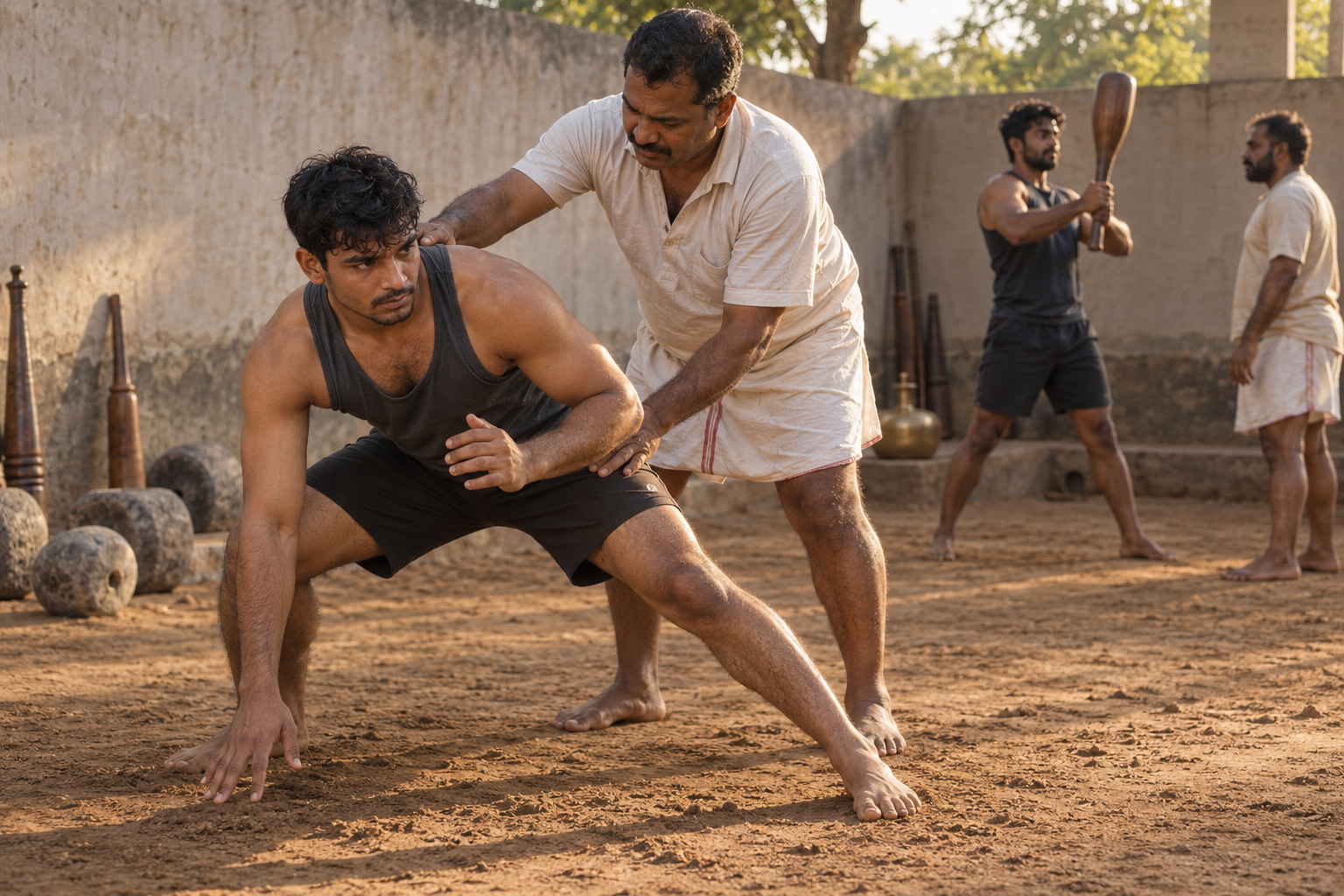
If you want to train rather than only read, begin by identifying your actual goal. Historical study, general fitness, competitive wrestling, self-defence, and participation in a Dharmic physical culture are related interests, but they are not interchangeable. A teacher may serve one of them well without serving all of them.
- Define the result you want. Write one sentence before choosing a class: “I want supervised grappling practice,” “I want to study the Hindu understanding of disciplined strength,” or “I want both.” This prevents labels from making the decision for you.
- Question the teacher clearly. Ask which parts of the curriculum are inherited, reconstructed, or adapted; how beginners progress; when resistance is introduced; and what conduct is expected between partners.
- Inspect the safety culture. There should be an unmistakable way to stop an exchange, progressive instruction before forceful practice, active supervision, and sensible matching by experience and physical capacity. If the answers are vague, do not participate until they are clarified.
- Learn foundations before intensity. Balance, controlled movement, safe falling, positioning, and cooperative drilling should precede attempts to overpower another person. Do not imitate forceful throws or holds from a written description or short video.
- Measure character as well as performance. Notice how you respond to correction, fatigue, defeat, and a less-skilled partner. Those moments reveal whether the training is developing self-command or simply feeding the desire to win.
Any live grappling can cause injury when force, falling, or mismatched partners are poorly controlled. If you have an existing injury or a health condition that affects exertion, obtain individual guidance from an appropriate healthcare professional before participating. Religious meaning does not remove physical risk.
You should also be cautious of anyone who equates needless injury with courage. Endurance has a place in demanding training, but ignoring a dangerous situation is not the same as mastering fear. Dharma disciplines force; it does not excuse negligence.
What an honest revival should preserve
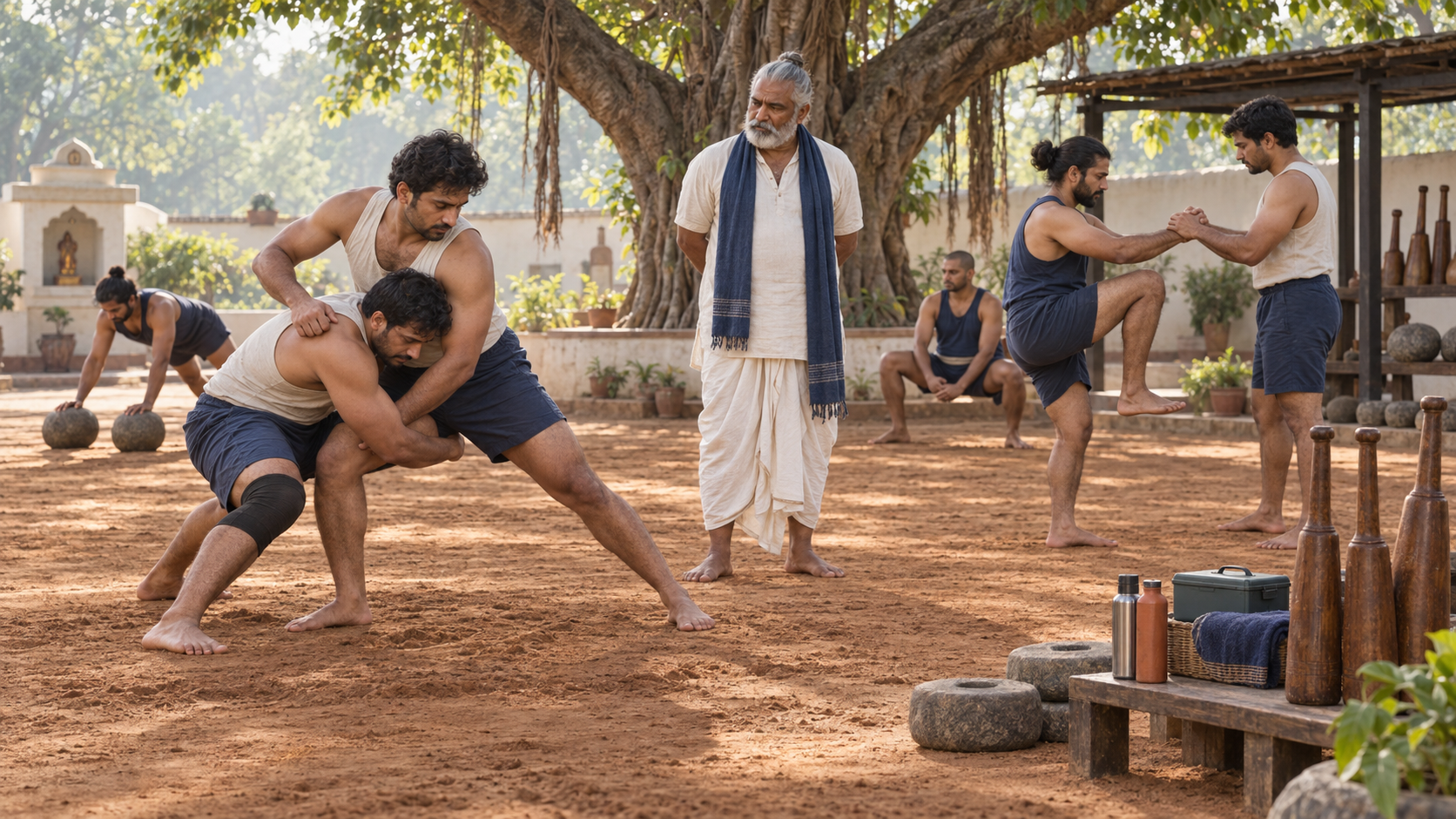
A public demonstration can awaken interest in Malla-Yuddha, but clothing, terminology, and spectacle cannot carry the tradition by themselves. A serious revival needs several forms of integrity at once:
- Integrity of attribution: Cite exact textual or historical support, and label interpretation as interpretation.
- Integrity of practice: Keep wrestling skill central rather than using the name for unrelated exercise.
- Integrity of teaching: Build competence progressively, protect training partners, and make safety procedures visible.
- Integrity of character: Treat humility, restraint, responsibility, and service as outcomes to be trained, not ceremonial words added afterward.
- Integrity of adaptation: Explain which elements have changed for modern students and why those changes were made.
This standard leaves room for living practice. Preservation does not have to mean freezing Malla-Yuddha into a performance, and adaptation does not have to mean erasing its Hindu framework. The decisive question is whether change is acknowledged and whether the ordering principle remains intact: strength under self-command, and self-command under dharma.
Your next step can be modest and exact. If you are studying, find one specific passage and examine its context instead of collecting sweeping claims. If you are seeking instruction, visit one class and ask how safety, provenance, and conduct are handled. If you are teaching, label inherited material, reconstruction, and modern adaptation separately. That single habit of clarity will do more for Malla-Yuddha than another grand claim about a forgotten past.
References

Leave a Reply
You must be logged in to post a comment.