
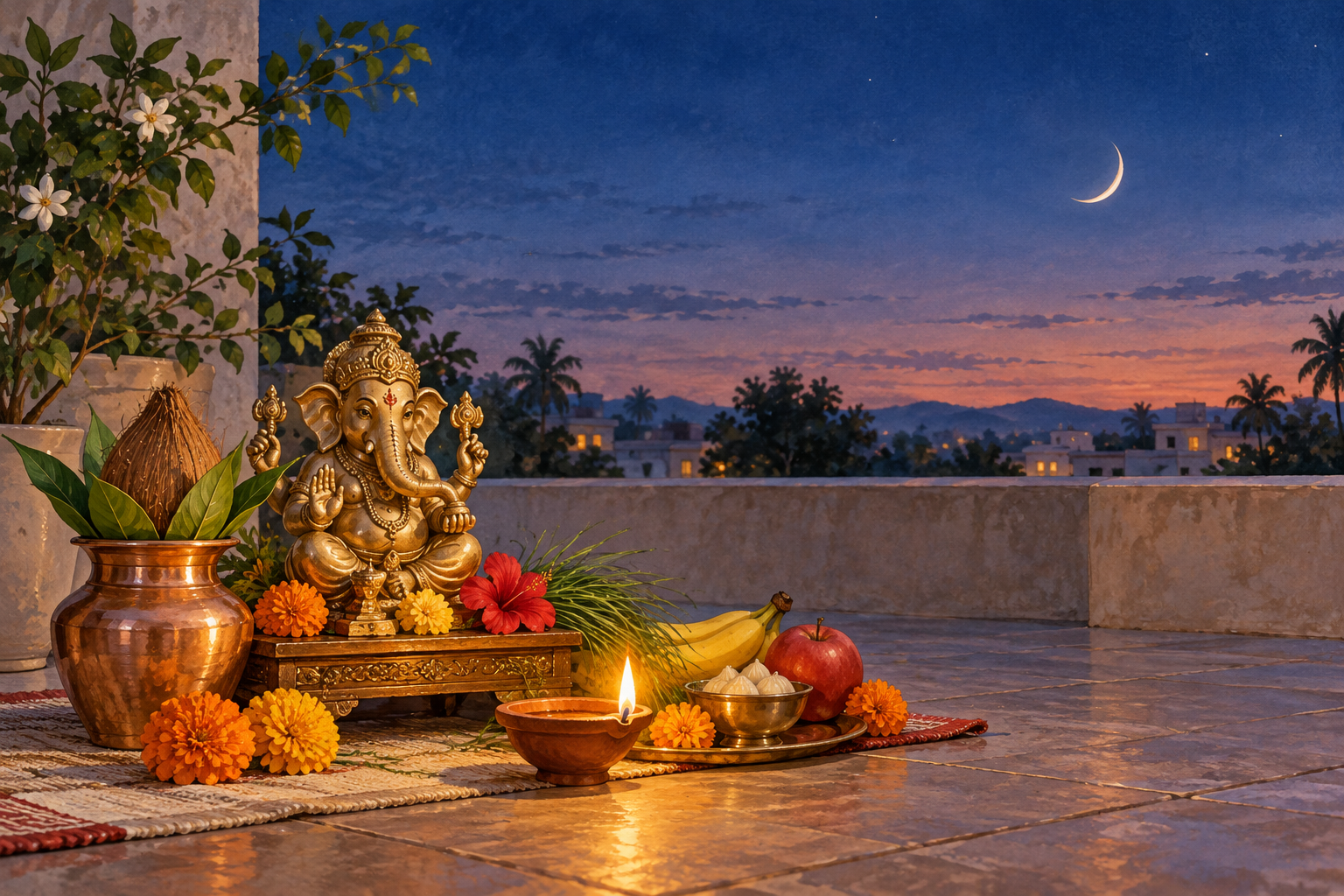
If you are arranging October puja, vrata, or family reminders, two lunar observances need separate entries in your calendar: Chandra Darshan on October 12 and Sankashti Chaturthi on October 29. The first turns your attention to the returning crescent; the second is the monthly Krishna Paksha Chaturthi vrata dedicated to Bhagavan Ganesha.
The civil dates are straightforward. The details that often cause confusion – the month name, tithi window, moonrise, and visibility – depend on the calendar tradition and location you follow. Here is how to plan both observances without mixing those layers.
The two October dates to put on your calendar
| Observance | October 2026 date | Lunar context | Your next step |
|---|---|---|---|
| Chandra Darshan | October 12 | Darshan of the returning crescent after Amavasya | Keep the evening free and check local sunset and visibility conditions |
| Sankashti Chaturthi | Thursday, October 29 | Krishna Paksha Chaturthi, observed for Bhagavan Ganesha | Confirm the local tithi and moonrise details before setting the vrata schedule |
Treat those dates as anchors, not as complete timing instructions. A Gregorian date begins at midnight, but a tithi does not. Its beginning and ending are determined by the relative positions of the Sun and Moon, so it can start or finish partway through a civil day. Moonrise also changes by location. A schedule copied from another city can therefore give you the right observance and the wrong ritual time.
Chandra Darshan on October 12: plan for an evening observance
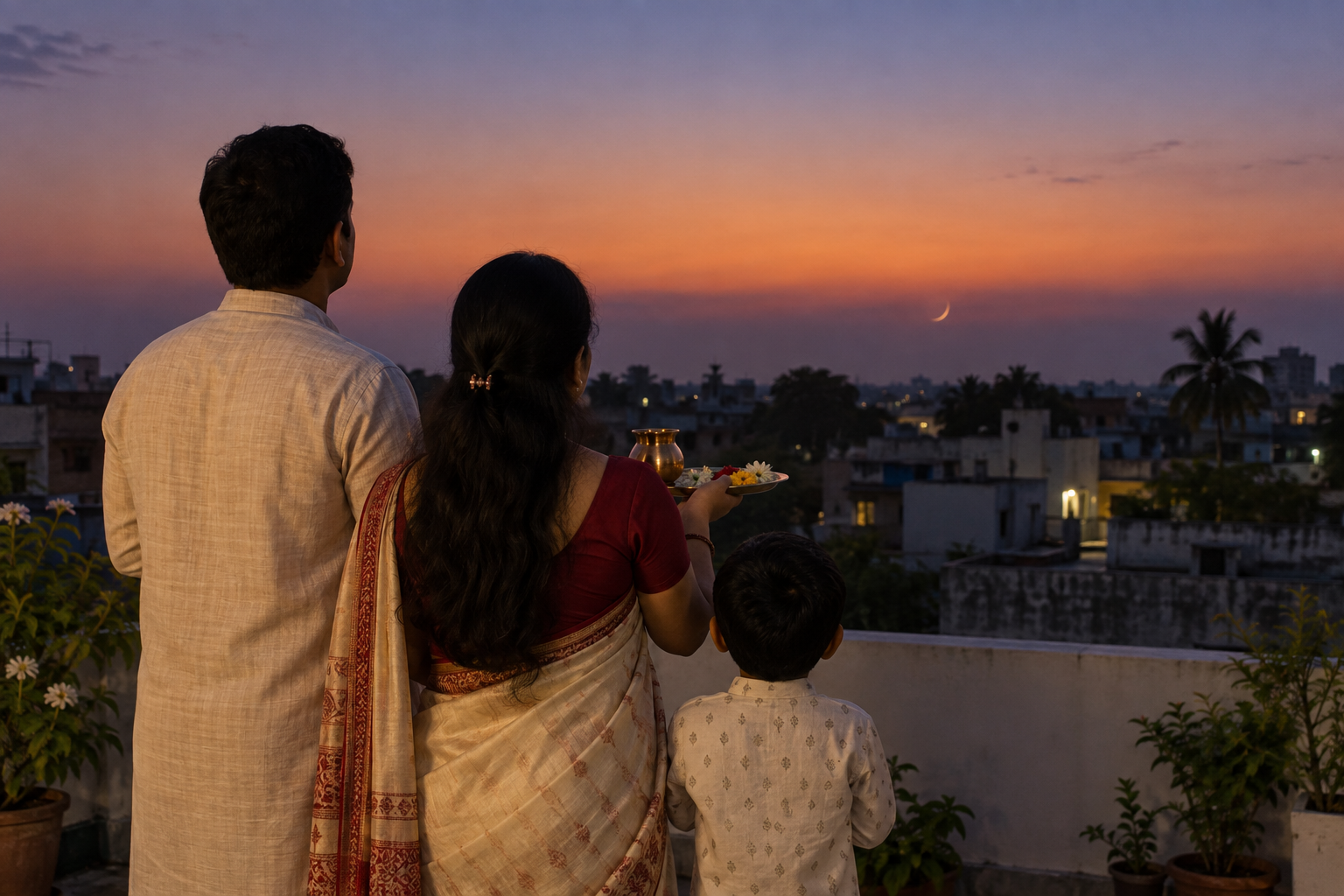
Chandra Darshan marks the sighting of the young waxing Moon after the dark-moon phase. For you, the practical point is simple: this is an evening observance, and actual sighting depends on the western horizon, local weather, and the Moon’s visibility from your location. A tall building, tree line, or cloud bank can matter as much as the date printed on a calendar.
Add a reminder for October 12 before sunset rather than at the end of the night. Choose an open view toward the western sky in advance. If Chandra Darshan carries a specific puja, food practice, or family sankalpa in your household, prepare those elements before going outside instead of trying to reconstruct the custom at the time of darshan.
The month name attached to October 12 varies across regional calendars. It is identified with Ashwin, or Ashwayuja, in calendars followed in North India, Andhra Pradesh, and Karnataka; with Aippasi in the Tamil calendar; with Thulam in the Malayalam calendar; and with Kartik in Bengali and Nepali reckonings. These labels describe different calendrical systems, not several different Chandra Darshan dates.
This distinction is especially useful in a family group spanning several regions. Write the shared calendar entry as “Chandra Darshan – October 12,” then add the regional month label only where it helps someone follow a particular panchanga. That prevents an argument over Ashwin versus Kartik from obscuring the observance itself.
Sankashti Chaturthi on October 29: separate the date from the vrata timing
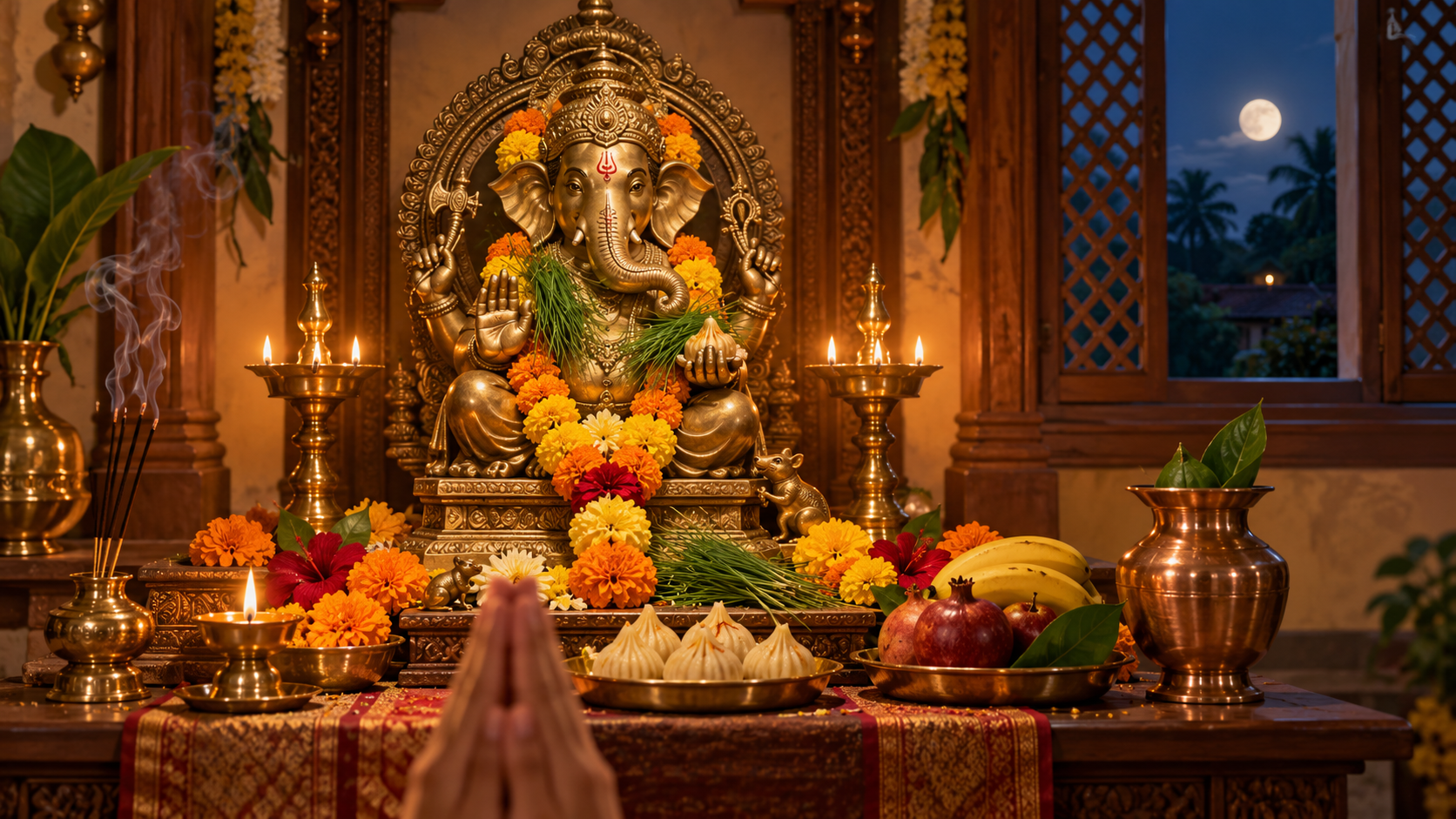
October’s Sankashti falls on Thursday, October 29. Sankashti Chaturthi is the recurring vrata for Bhagavan Ganesha observed on Chaturthi during Krishna Paksha, the waning half of the lunar cycle.
Do not turn the civil date into an assumed all-day ritual window. Before you decide when to begin a puja, conclude a fast, or assemble a family gathering, consult a panchanga calculated for your city. Look specifically for the local Chaturthi tithi span and the moonrise relevant to your tradition. A generic entry saying only “October 29” cannot supply either of those local details.
The month label can differ here as well. North Indian Hindi calendars place this Sankashti in Kartik, while another regional reckoning may retain the Ashwin label. If two calendars agree on October 29 but display different lunar months, first check which regional system each one uses. A difference in nomenclature is not automatically a disagreement about the vrata date.
Household practice also deserves its own check. Families and sampradayas may differ in fasting rules, permitted foods, puja sequence, and the way the vrata is concluded. Follow the practice you have actually received from your family, guru, or temple. If you are organising a public observance, publish the chosen panchanga, city, time zone, and ritual sequence so participants know exactly what the announced times mean.
Three calendar mistakes that are easy to prevent
The most common planning failures come from combining details that belong to different systems. Check these points before forwarding a date card or fixing a puja time:
- Do not treat a regional month name as a universal label. Ashwin, Ashwayuja, Aippasi, Thulam, and Kartik can appear around the same civil date because regional calendars organise months differently.
- Do not treat a tithi as a midnight-to-midnight weekday. The tithi may begin or end during October 29, which is why the local panchanga matters for Sankashti practice.
- Do not import another city’s moon information. Visibility and moonrise are location-sensitive. Use the civil date to plan ahead, then use local calculations for the actual observance.
A useful calendar entry records three separate things: the observance date, the regional calendar being followed, and the location used for timing. Keeping those fields distinct makes the entry understandable to relatives in Bharat and to members of the diaspora living in other time zones.
Key takeaways
- Chandra Darshan falls on October 12, 2026; plan for an evening sighting and check the local western horizon.
- Sankashti Chaturthi falls on Thursday, October 29, 2026; it is the Krishna Paksha Chaturthi vrata dedicated to Bhagavan Ganesha.
- Regional month names can differ even when the civil date is the same, so identify the calendar system before assuming that two listings conflict.
- Use a location-specific panchanga for tithi and moonrise timings. The date alone is not an exact ritual timetable.
- For fasting and puja details, follow your established family, guru, sampradaya, or temple practice rather than a generic calendar note.
Set both civil-date reminders now, then add a second reminder a few days beforehand to consult your local panchanga. That small separation – date first, local timing second – will let you approach October 12 and October 29 with attention on the observance rather than last-minute calendar confusion.
References
- Hindu Pad – Chandra Darshan October 2026 (Ashwin Month Chandra Darshanam)
- Hindu Pad – Sankashti October 2026 date | Time of Sankatahara Chavithi

Leave a Reply
You must be logged in to post a comment.