
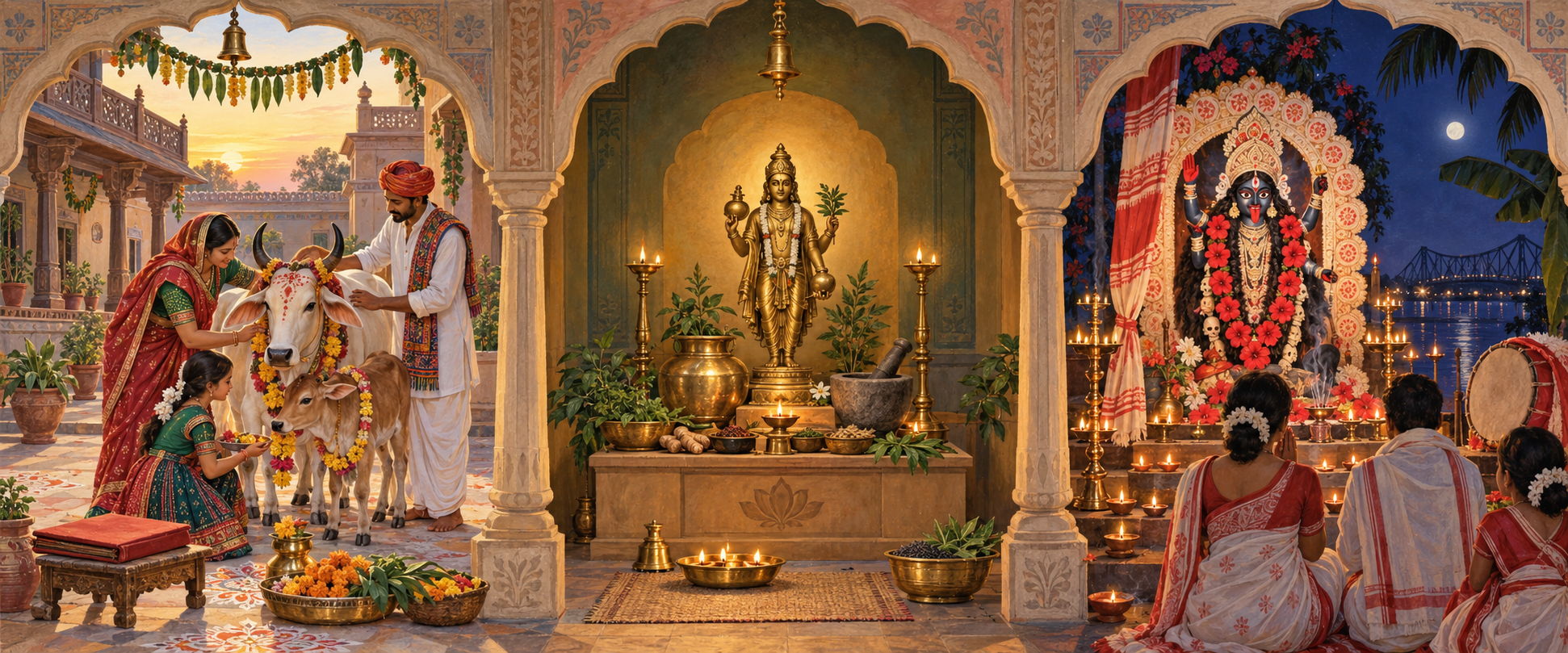
If you are planning Diwali with relatives, a temple, a community group, or colleagues from different parts of Bharat, one date and one label will not be enough. The 2026 season includes distinct observances whose names, devotional focus, and practical meaning change by region.
Use this guide to mark the right civil dates, ask better questions of your hosts, and avoid treating every regional practice as a variation of the same Lakshmi Puja. It is a focused calendar, not an exhaustive list of every Diwali tradition.
The three dates to put on your 2026 calendar
| Date | Regional setting | Observance | Main point to remember |
|---|---|---|---|
| November 5, 2026 | Gujarat | Vagh Baras | Debt, ledgers, and the responsible closing of old accounts are part of its practical meaning. |
| November 7, 2026 | Communities observing Dhanteras | Dhanvantari Jayanti, Dhantrayodashi, or Dhanteras | The day honours Lord Dhanvantari and can also include worship of Goddess Mahalaxmi. |
| November 8, 2026 | Bengal, Odisha, and Assam | Shyama Puja, Kali Puja, or Mahanisha | Goddess Shyama is central, while Lakshmi Puja is observed in many other parts of India on the same date. |
These are day-level planning anchors. Do not turn them into an exact puja timetable. A civil date tells you when to reserve the evening or arrange travel; it does not by itself settle the applicable tithi or muhurta. For ritual timing, follow the panchang used by your family, temple, or officiant.
When inviting people, put the local observance and the date in the same line: for example, “Shyama Puja – November 8.” That small addition prevents confusion when two families both say “Diwali Puja” but expect different forms of worship.
November 5 in Gujarat: Vagh Baras begins with accountability
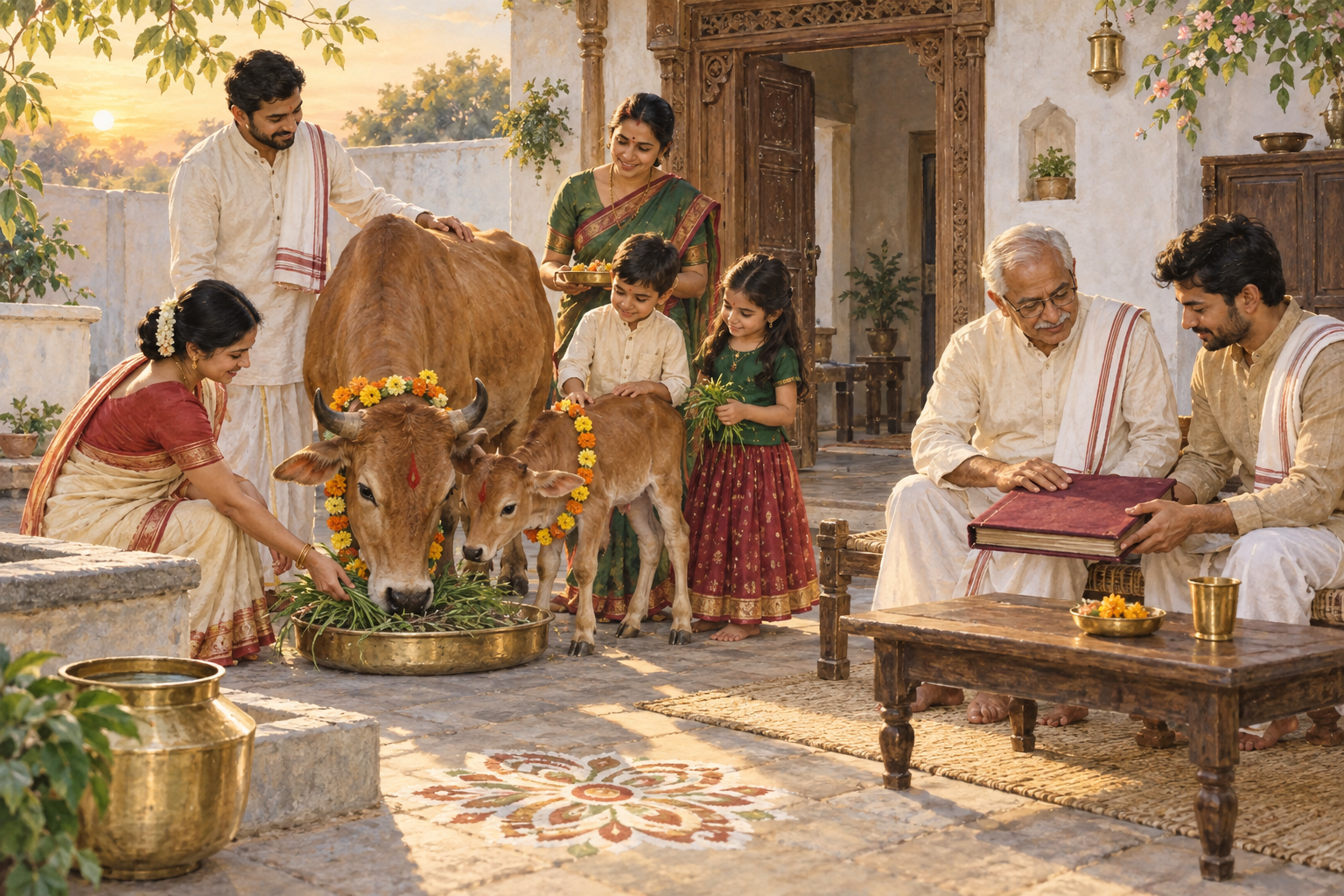
Vagh Baras falls on November 5 in 2026. It is observed on Dwadasi during the latter half of the Gujarati month of Aso and is also called Govatsa Dwadashi or Guru Dwadasi.
Its financial language deserves attention. Vagh is associated with repaying debt, and clearing khata, or account ledgers, is part of the observance. The important idea is not festive consumption. It is the restoration of order before a new cycle: know what is owed, close what can honestly be closed, and carry forward only what remains real.
If Vagh Baras matters in your household or business, prepare before November 5. Reconcile the ledger, identify uncontested balances, and speak to the people involved early. Do not let a symbolic deadline pressure you into paying an unverified demand or concealing an unresolved balance. A disputed account is better recorded accurately than declared closed for appearances.
For a community programme, resist presenting Vagh Baras merely as “the first Diwali shopping day.” A more faithful activity would connect the observance with responsible obligations: checking records, acknowledging debts, returning something borrowed, or making a clear plan for a commitment that cannot yet be completed.
November 7: keep Dhanvantari in Dhanteras
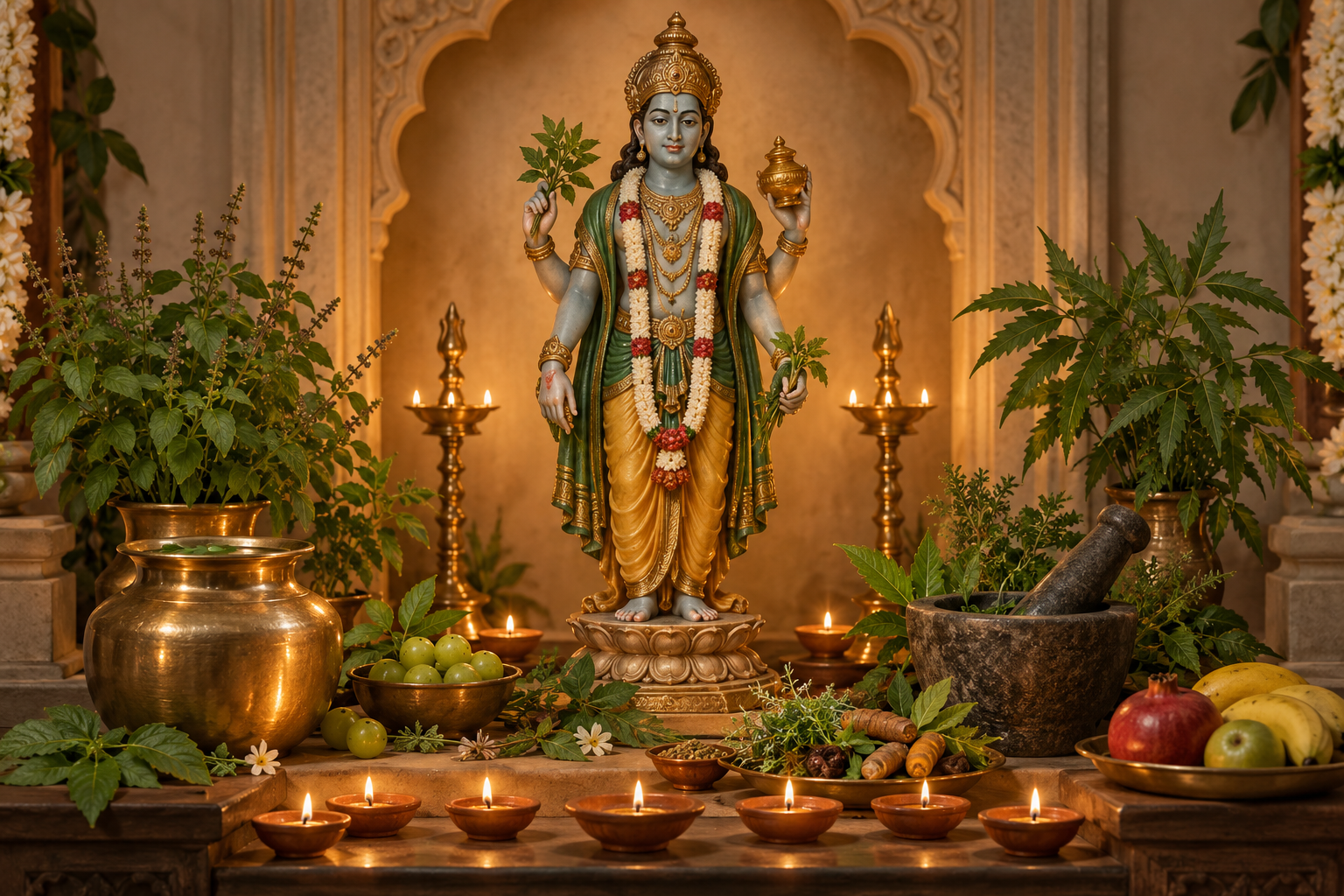
Dhanvantari Jayanti falls on November 7 in 2026 and is described as the third day of the Diwali festival. You may hear the day called Dhanvantari Jayanti, Dhantrayodashi, Dhanwantari Triodasi, or Dhanteras. These names are related, but the name a family chooses can reveal what it wants to place at the centre of the day.
Dhanvantari Jayanti marks the birth observance of Lord Dhanvantari. Dhanteras also includes the worship of Goddess Mahalaxmi, associated with wealth and prosperity. There is no need to erase one emphasis to acknowledge the other. The day can hold a concern for health and healing alongside gratitude for material sustenance.
If you are joining another household, ask one concrete question: “Are you observing Dhanvantari Jayanti, Mahalaxmi Puja, or both?” That answer will help you understand the devotional centre without guessing from the word Dhanteras. If you are organising the gathering, use the name your tradition actually uses and state the deity or deities being worshipped.
This distinction also keeps the day from being reduced to buying something new. Purchases may be part of a family’s custom, but they should not displace the form of worship the family has inherited. Plan the puja first; fit shopping and social calls around it.
November 8 in the east: Diwali night centres on Shyama
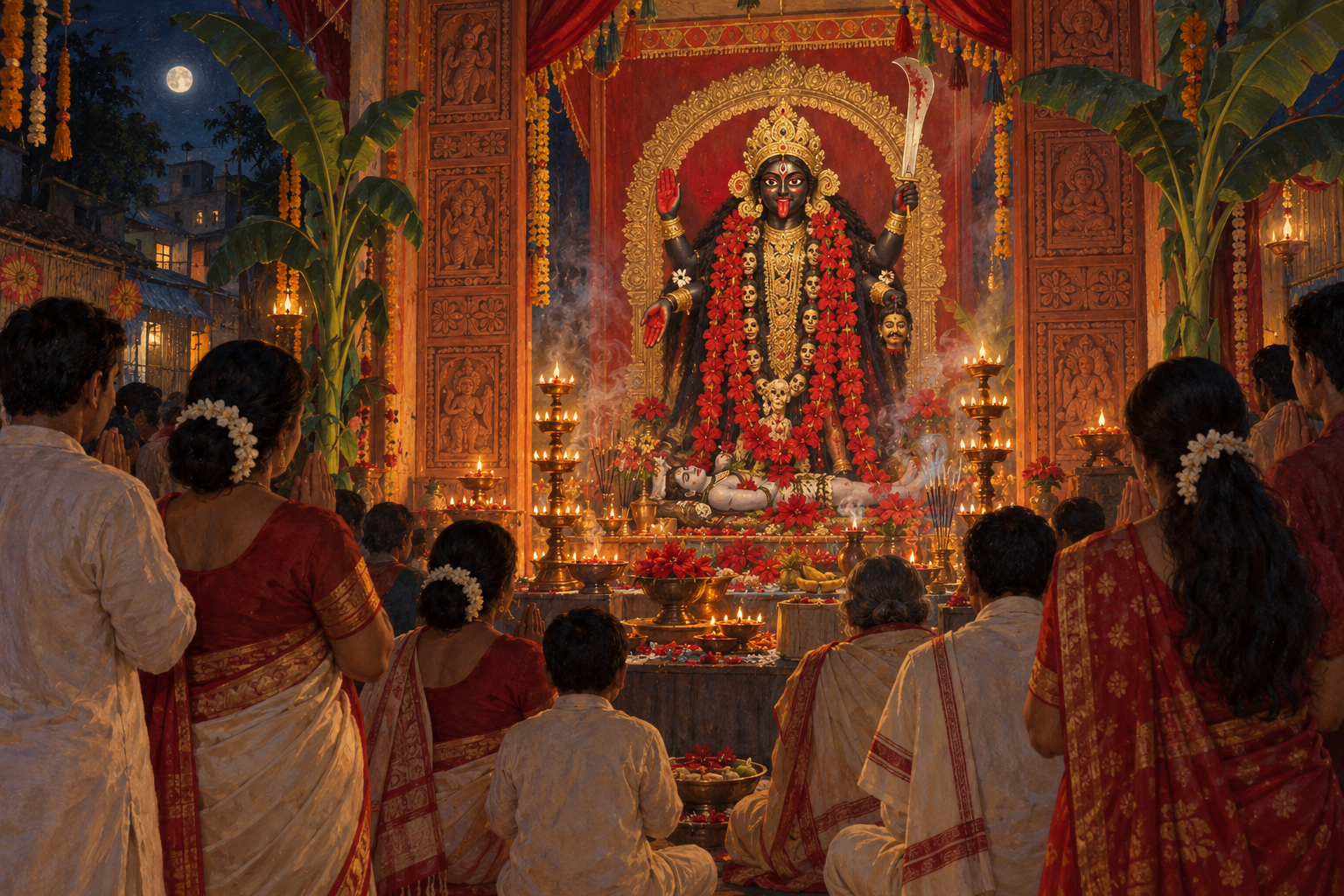
On November 8, the most visible regional difference comes into focus. Shyama Puja is a prominent Diwali observance in Bengal, Odisha, and Assam. It is also known as Kali Puja or Mahanisha, and devotees worship Goddess Shyama, or Kali Mata, in a ritual manner.
On that same date, Lakshmi Puja is celebrated in other parts of India. The shared calendar does not create an identical ritual centre. For one family, the evening may be explicitly devoted to Kali; for another, Mahalaxmi may be central. Calling both gatherings simply “Lakshmi Puja” would misdescribe the eastern observance, while calling every November 8 celebration “Kali Puja” would make the opposite mistake.
If your guest list crosses regional traditions, name the observance rather than trying to produce one blended ritual. A Bengali Shyama Puja should be allowed to remain Shyama Puja. A household Lakshmi Puja should remain recognisable on its own terms. Shared lamps, food, greetings, and fellowship can unite the gathering without flattening its theology.
For schools, workplaces, and public organisations, the safest calendar wording is “Diwali season observances” followed by the relevant local name. If the event specifically includes Shyama or Kali worship, say so. Precision is not pedantry here; it tells devotees that their tradition has been seen rather than absorbed into a generic festival label.
Key takeaways for planning respectfully
- Reserve November 5 for Vagh Baras if Gujarati family or business customs are part of your plans.
- Mark November 7 for Dhanvantari Jayanti or Dhanteras, and ask whether the worship centres on Lord Dhanvantari, Goddess Mahalaxmi, or both.
- Mark November 8 for Shyama or Kali Puja in Bengal, Odisha, and Assam; do not automatically relabel it as Lakshmi Puja.
- Put the local observance name beside the date on invitations, calendars, and community notices.
- Use these dates for travel and event planning, but obtain exact ritual timing from the panchang followed by the participating family or temple.
- Do not manufacture a hybrid ceremony merely because participants use the common word “Diwali.” Let each established practice identify itself clearly.
Your next step is simple: mark November 5, 7, and 8, then call the family elder, temple, or officiant whose tradition you will actually follow. Confirm the local name and ritual timing before you print an invitation or book the journey.
References
- Hindu Pad – Dhanvantari Jayanti 2026
- Hindu Pad – Shyama Puja 2026 | Goddess Shyama Puja on Diwali in Bengal
- Hindu Pad – Vagh Baras 2026 | Wagh Baaras Festival in Gujarat

Leave a Reply
You must be logged in to post a comment.