
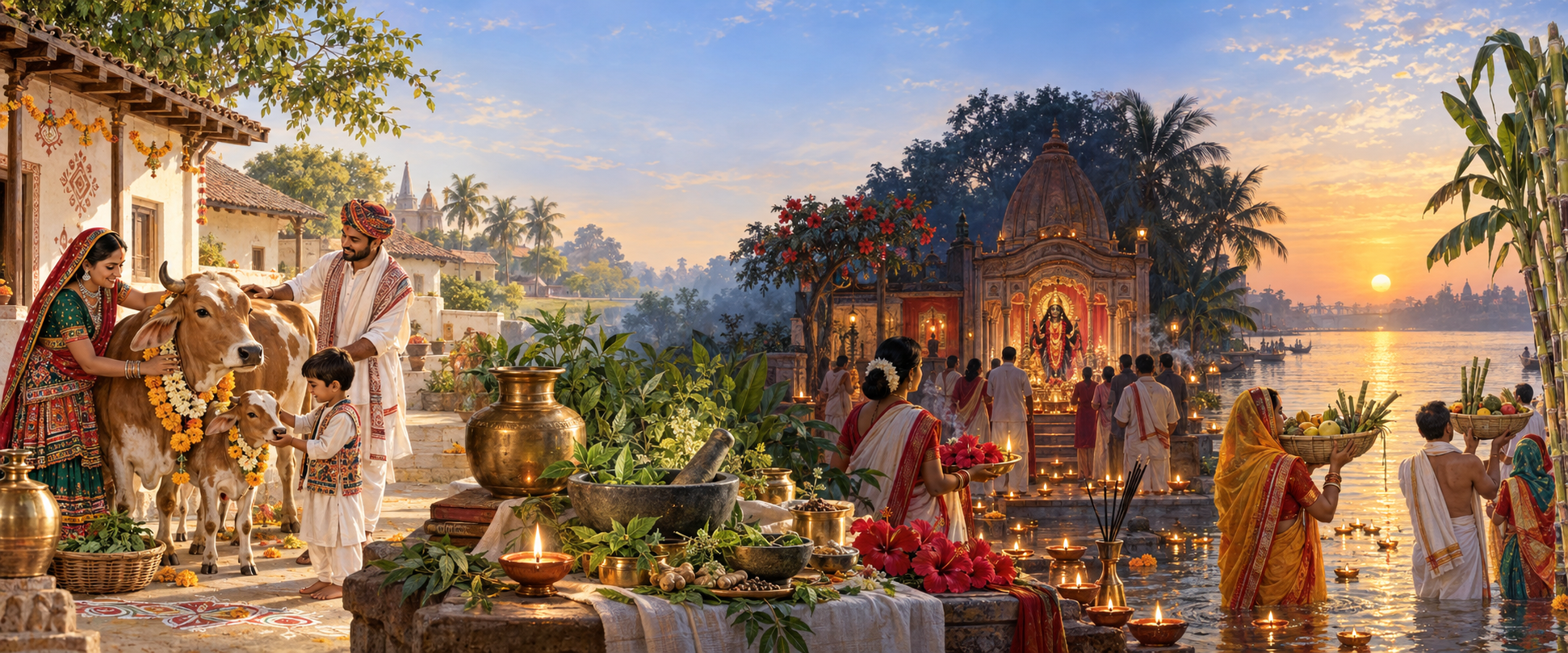
If you are coordinating a family calendar, temple programme or community gathering for the 2026 Kartik festival season, writing “Diwali” across one weekend is not enough. The observances begin under different regional names, centre different forms of the divine and continue beyond the principal Diwali date.
Put four anchors in your calendar now: Vagh Baras on November 5, Dhanvantari Jayanti on November 7, Shyama Puja on November 8 and Surya Shashti on November 15. Then confirm the ritual timing and customary sequence with the household or temple whose tradition you will follow.
The four dates to place on your 2026 calendar
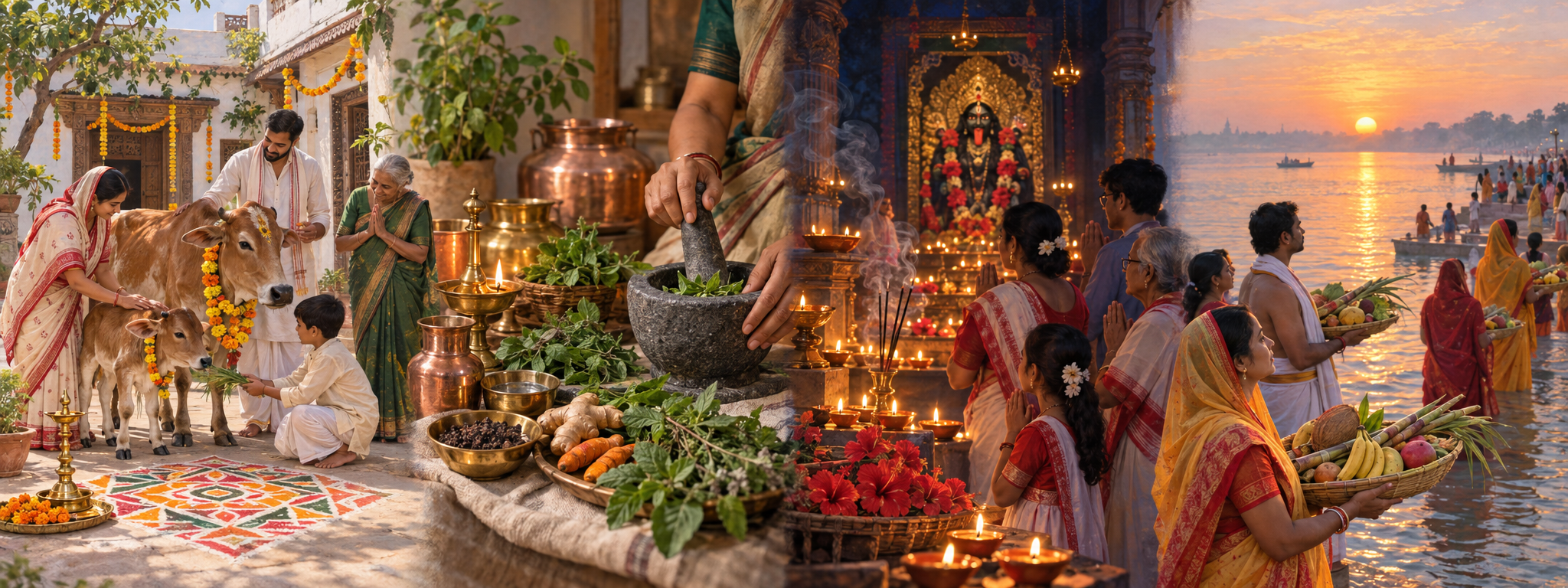
These dates form a practical outline of the season. They do not represent four interchangeable versions of one celebration. Each entry needs its own name and devotional focus.
| Date | Observance | Regional or devotional emphasis | What to record |
|---|---|---|---|
| November 5 | Vagh Baras | Gujarat; also called Govatsa Dwadashi and Guru Dwadasi | Note its connection with clearing debts and khata ledgers, then confirm the family’s customary observance. |
| November 7 | Dhanvantari Jayanti | The birth observance of Lord Dhanvantari; also known as Dhantrayodashi, Dhanwantari Triodasi and Dhanteras | Ask whether the gathering will centre Dhanvantari, Mahalaxmi or both. |
| November 8 | Shyama Puja | Shyama or Kali worship in Bengal, Odisha and Assam; Lakshmi Puja in other state traditions | Name the regional puja explicitly rather than listing only “Diwali.” |
| November 15 | Surya Shashti | Worship of Surya Bhagawan on Kartik Shukla Shashti | Create a separate entry so this later observance is not lost after the principal Diwali date. |
Notice that Vagh Baras belongs to the second half of the Gujarati month of Aso, while Surya Shashti falls on the sixth day of Kartik’s Shukla Paksha. “Kartik festival season” is therefore useful as a broad planning label, but it should not replace the calendar language used by a particular tradition.
The calendar changes meaning as it moves across Bharat
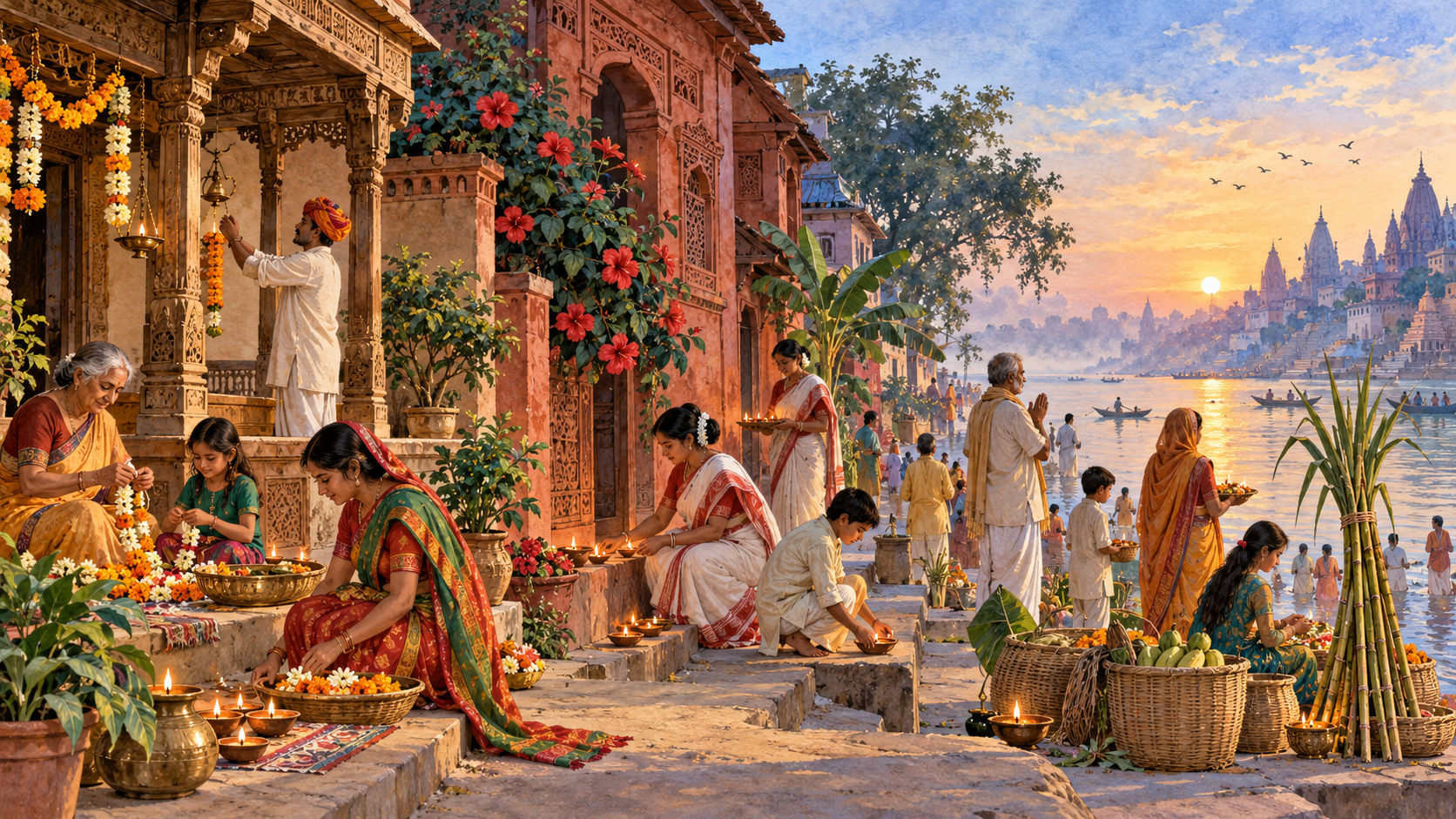
The clearest example comes on November 8. In Bengal, Odisha and Assam, devotees observe Shyama Puja, also called Kali Puja or Mahanisha, and worship Goddess Shyama. On that same date, other parts of Bharat centre Lakshmi Puja. The civil date is shared; the ritual identity is not.
This distinction matters whenever relatives, neighbours or members of a community come from different regions. Asking, “Are you celebrating Diwali on November 8?” may produce an easy yes while concealing the information you actually need. Ask instead, “Which puja does your family observe on November 8?” That question makes room for Shyama, Kali and Lakshmi traditions without treating one regional practice as the national default.
Names also carry calendar information. Vagh Baras is associated with Dwadashi, Dhantrayodashi with Trayodashi and Surya Shashti with the sixth lunar day. A Gregorian date helps you reserve the day, but it does not supply a muhurta or a complete ritual sequence. Do not derive either from the English date alone. Use the panchanga accepted by your temple, priest or household for the local timing.
- Record the name your household actually uses, including a regional alternative when guests may know another name.
- Record the principal deity or devotional focus instead of assuming that every Diwali-season puja has the same centre.
- Keep the all-day calendar date separate from the locally confirmed ritual time.
- Ask the host tradition about the sequence, mantras and offerings; a festival name by itself does not establish those details.
Plan each observance on its own terms
November 5: make Vagh Baras more than a label
In Gujarat, Vagh Baras falls on Dwadashi in the second half of Aso. It is also known as Govatsa Dwadashi and Guru Dwadasi. Its association with repaying financial debts and clearing khata ledgers gives you a concrete preparation task: review unsettled obligations before the day arrives.
Keep that review honest and proportionate. A sacred date can prompt you to acknowledge a debt, correct a forgotten entry or agree on a responsible repayment plan. It should not pressure you to borrow again, miss essential expenses or make a financial promise you cannot keep. Where an obligation cannot safely be settled at once, distinguish the spiritual act of accountability from the practical terms of repayment.
November 7: state the focus of Dhanvantari Jayanti
Dhanvantari Jayanti marks the birth of Lord Dhanvantari and is observed during the Diwali festival. The same day is known as Dhantrayodashi, Dhanwantari Triodasi or Dhanteras, and Mahalaxmi is also worshipped as the goddess of wealth and prosperity.
If you are hosting, decide before sending the invitation whether the programme will centre Dhanvantari, Mahalaxmi or a household sequence that honours both. Do not let the familiar name “Dhanteras” silently determine the programme for everyone. A precise invitation prevents guests from arriving with a different understanding of the worship being offered.
November 8: preserve the identity of Shyama Puja
For a Bengali, Odia or Assamese gathering, write “Shyama Puja” or “Kali Puja” prominently. Do not reduce it to a parenthetical regional variation beneath a generic Lakshmi Puja heading. The distinction is devotional: Goddess Shyama, or Kali Mata, is the centre of the worship.
A mixed-region community can acknowledge both traditions without blending them into an invented common ritual. The programme might identify the Shyama or Kali observance clearly and note that other households mark Lakshmi Puja on the same date. Participants can then follow their own family or temple discipline without being told that the regional names are merely decorative.
November 15: keep Surya Shashti visible
Surya Shashti is dedicated to Surya Bhagawan and falls on Kartik Shukla Shashti, the sixth day of the bright fortnight. Shukla Paksha Shashti and Saptami are both associated with Surya worship, but Kartik Shukla Shashti carries particular auspiciousness for this purpose.
Place November 15 in the calendar as a separate observance rather than leaving it inside a broad “Diwali week” entry. That simple decision keeps the Surya-centred day legible and reminds everyone that the season’s devotional rhythm continues after November 8.
Use a two-layer plan for family and community events
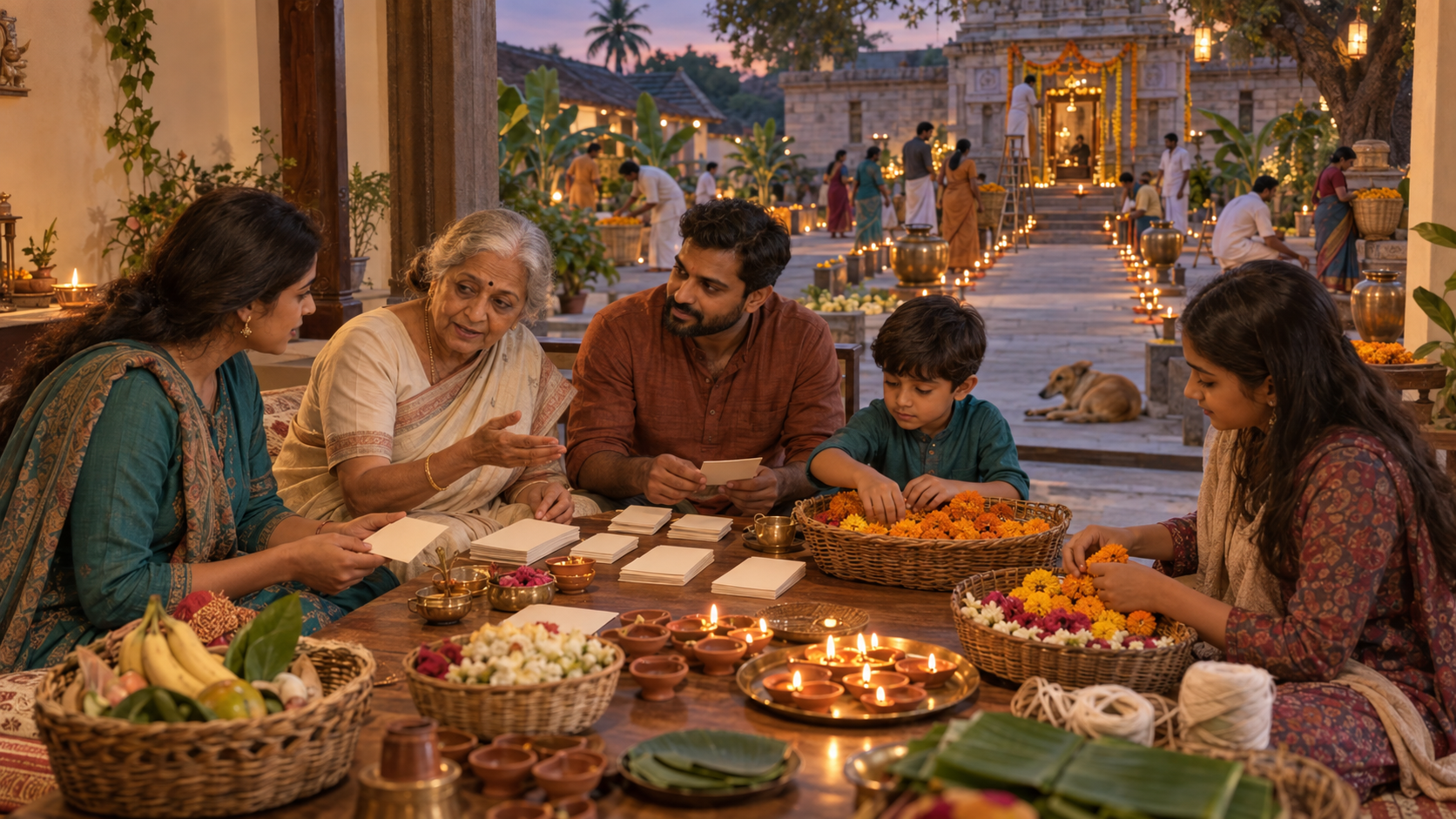
The safest calendar has two layers. The first records the public facts: date, observance name, regional context and principal deity. The second records the practice-specific facts supplied by your household or temple: venue, time, ritual order, items to bring and any discipline expected of participants.
- Create four separate entries for November 5, 7, 8 and 15.
- Add alternative names to each relevant entry: Vagh Baras, Govatsa Dwadashi or Guru Dwadasi; Dhanvantari Jayanti, Dhantrayodashi or Dhanteras; Shyama Puja, Kali Puja or Mahanisha.
- For November 8, identify whether your gathering follows Shyama or Kali Puja, Lakshmi Puja, or accommodates separate household practices.
- Contact the participating temple or family authority for local timing. The dates in this calendar are not substitutes for a muhurta.
- Only then publish invitations, volunteer schedules or meal plans. This prevents a generic event title from hardening into the wrong ritual assumption.
If you administer a temple or association calendar, retain the regional names even when space is limited. “Nov. 8: Shyama/Kali Puja; Lakshmi Puja in other traditions” conveys more useful information than “Diwali celebration.” Accuracy here is not pedantry. It tells devotees whom the gathering is worshipping and whether the programme belongs to their inherited practice.
Key takeaways
- The 2026 sequence covered here begins with Vagh Baras on November 5 and continues through Surya Shashti on November 15.
- November 8 does not have one uniform ritual identity: Shyama or Kali Puja is prominent in Bengal, Odisha and Assam, while other states observe Lakshmi Puja.
- Dhanvantari Jayanti on November 7 is also known as Dhantrayodashi or Dhanteras and includes Mahalaxmi worship.
- A Gregorian date reserves the day; your household or temple panchanga supplies the applicable ritual timing.
- The most useful invitation names the observance, deity and regional tradition instead of saying only “Diwali.”
Open your 2026 calendar and create the four entries now. Before you add timings or ritual instructions, speak to the household or temple whose tradition will govern each gathering. You will end up with a calendar that is easier to follow and more faithful to the living diversity of Dharma across Bharat.
References
- Hindu Pad – Dhanvantari Jayanti 2026
- Hindu Pad – Shyama Puja 2026 | Goddess Shyama Puja on Diwali in Bengal
- Hindu Pad – Vagh Baras 2026 | Wagh Baaras Festival in Gujarat
- Hindu Pad – Surya Shashti 2026

Leave a Reply
You must be logged in to post a comment.