
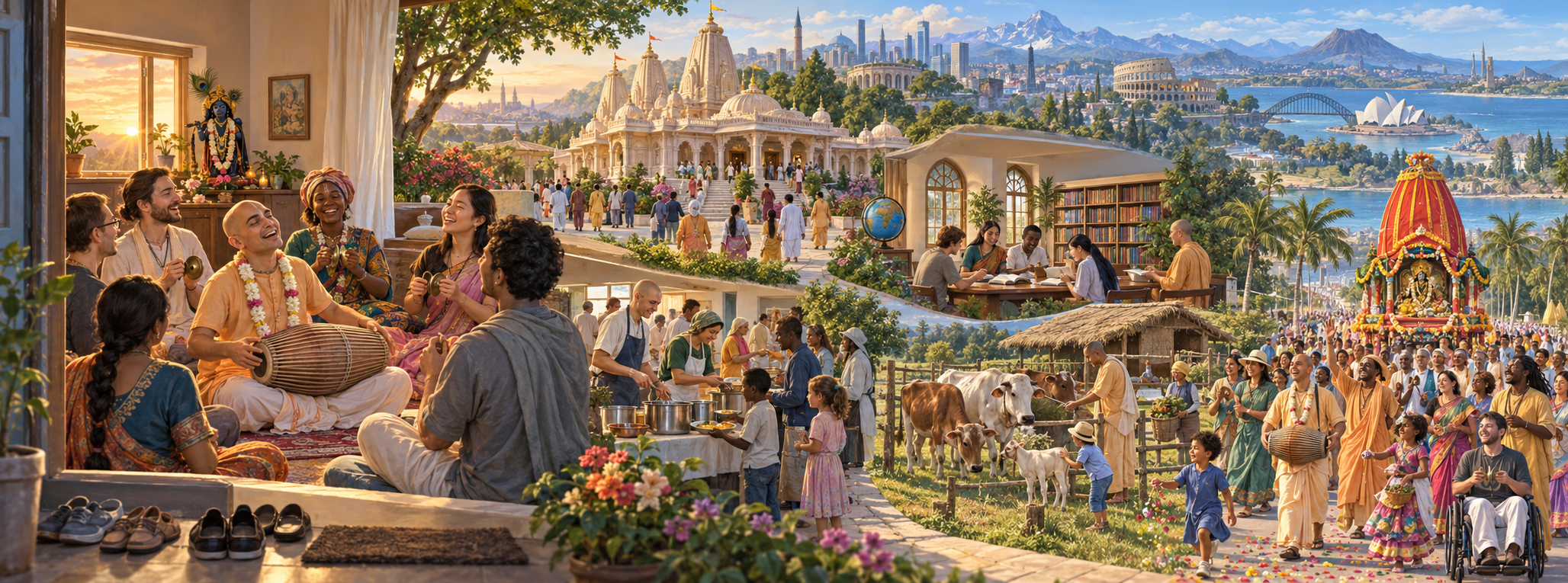
You may know ISKCON through a temple, a meal, a festival, a book, or a devotee you met far from Bharat. If you are trying to understand how one spiritual movement acquired a worldwide institutional presence, counting buildings will not give you the answer.
The more useful question is this: what does each institution allow a community to repeat, preserve, and pass on? That question reveals both the strength of ISKCON’s model and the standard by which its growth should be judged.
The decisive shift was from gathering to institution
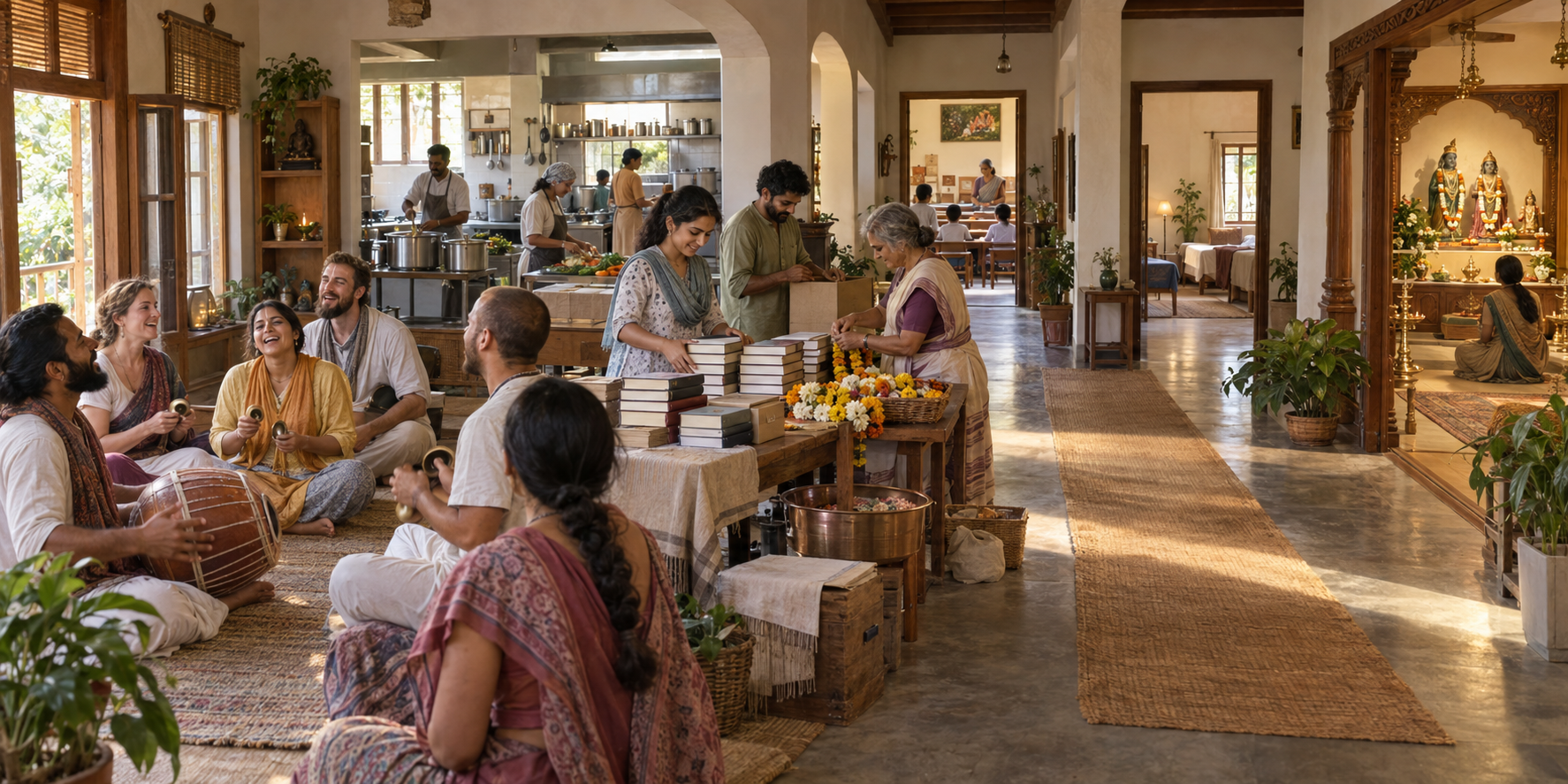
A spiritual gathering depends heavily on the people present. An institution begins to emerge when the gathering turns its convictions into regular practices, defined responsibilities, places of service, methods of teaching, and paths for newcomers. Those structures allow a community to continue when its original participants are absent.
This is the significance of ISKCON’s movement from faith to facility. Its visible institutional world came to include temples, ashrams, schools, restaurants, farms, and cultural centres across the world. These are not six versions of the same building. Each supports a different part of religious continuity.
A temple establishes a recurring centre of worship. An ashram makes disciplined communal life possible. A school supports deliberate transmission. A restaurant gives the wider public a low-threshold point of contact. A farm places ideals within daily work and stewardship. A cultural centre creates room for explanation, performance, education, and public encounter.
The important change, then, was not simply that ISKCON acquired property. It developed an environment in which Krishna consciousness could be encountered in more than one setting and practised through more than one kind of participation.
You can examine that environment through three layers:
- Spiritual purpose: the teachings, worship, disciplines, and devotional orientation the community exists to preserve.
- Institutional practice: the schedules, responsibilities, training, maintenance, and leadership that make continuity possible.
- Public form: the temple, school, restaurant, farm, cultural programme, or other facility through which people encounter the community.
This distinction matters because public form is the easiest layer to see and the easiest to mistake for the whole movement. A beautiful facility may serve a living spiritual purpose, or it may become an expensive shell. Institutional growth is healthy only when the outer form strengthens the inner purpose.
Why a network of facilities can carry Dharma further
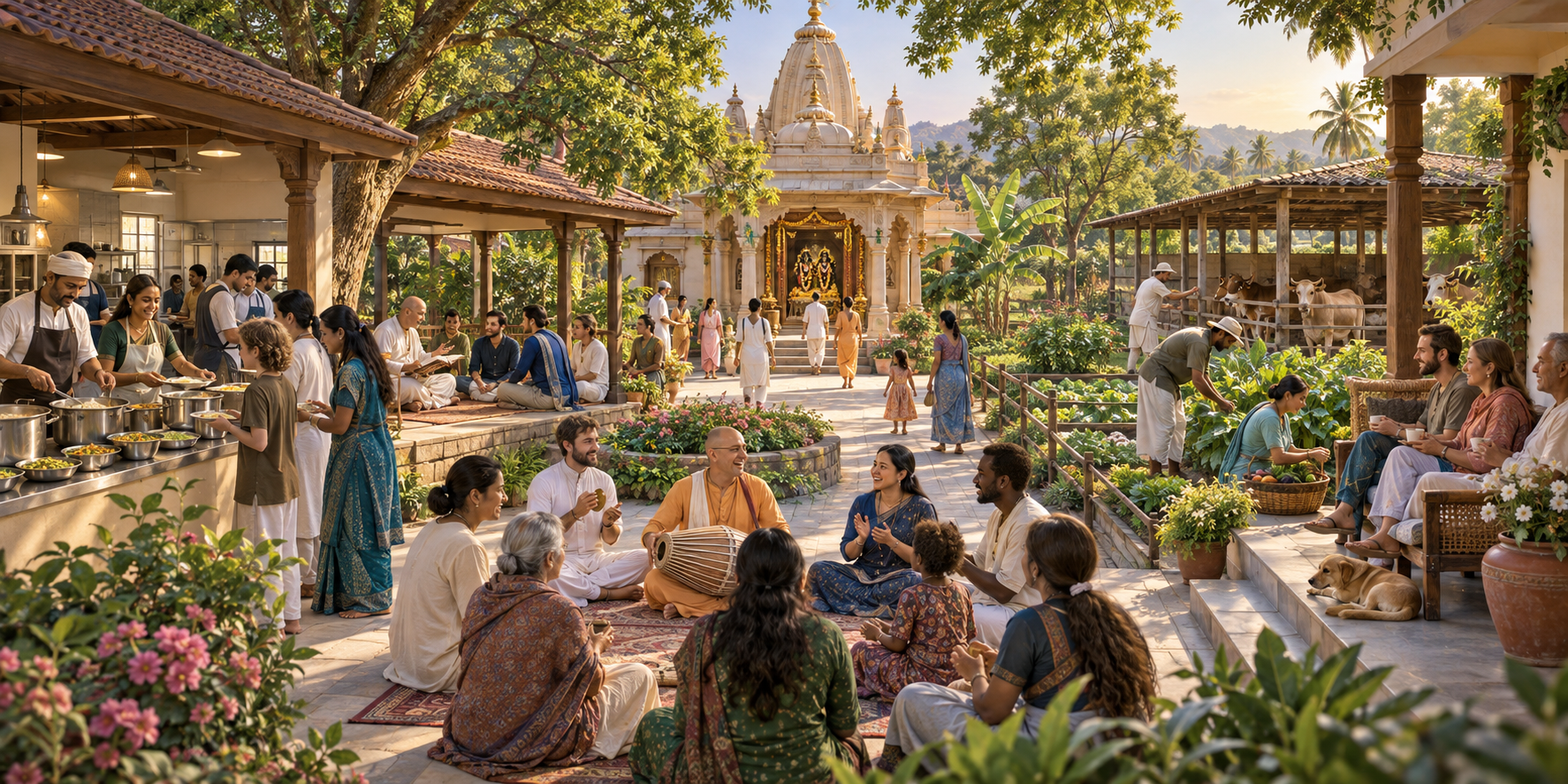
A temple-centred movement faces a practical limit if every relationship must begin and end inside the temple. People approach spiritual life with different degrees of readiness. Some are prepared for disciplined study or residential practice. Others will first enter through food, music, philosophy, education, agriculture, or a cultural event.
An institutional ecosystem accommodates those different points of entry without requiring each one to become an end in itself. Ideally, its facilities form a path:
<!– wp:list {
Leave a Reply
You must be logged in to post a comment.