
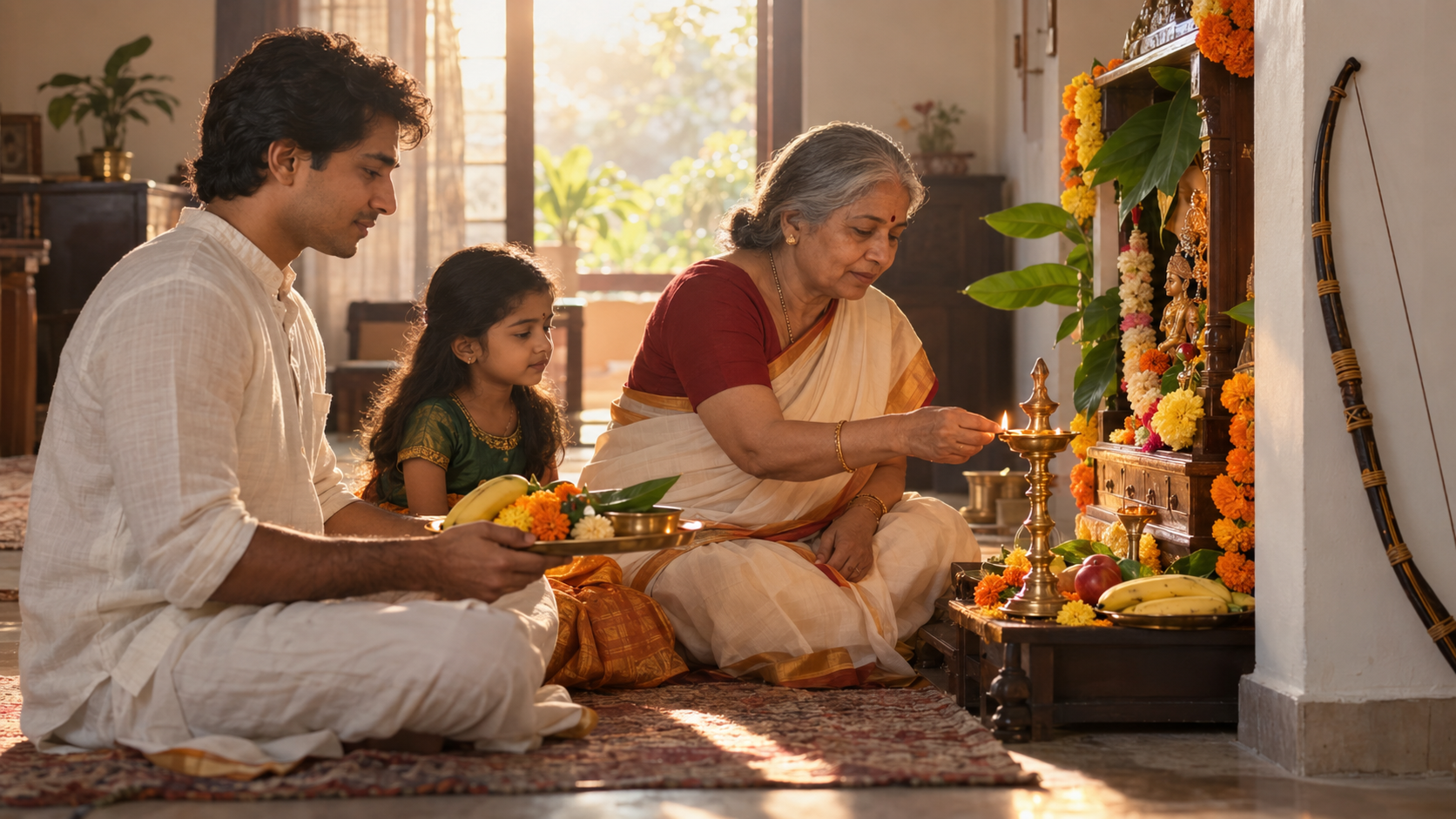
You want Vijayadashami to mean more than attending a celebration, forwarding greetings, or completing a familiar ritual on autopilot. The practical question is what to observe at home when Durga’s victory, Rama’s victory, Shami Puja, Aparajita worship, and the conclusion of Navratri can all be associated with the day.
You don’t need to perform every custom. Choose the tradition your family or sampradaya actually carries, understand the victory it represents, and connect it to one action that moves your life from adharma toward dharma.
First decide what victory means in your observance
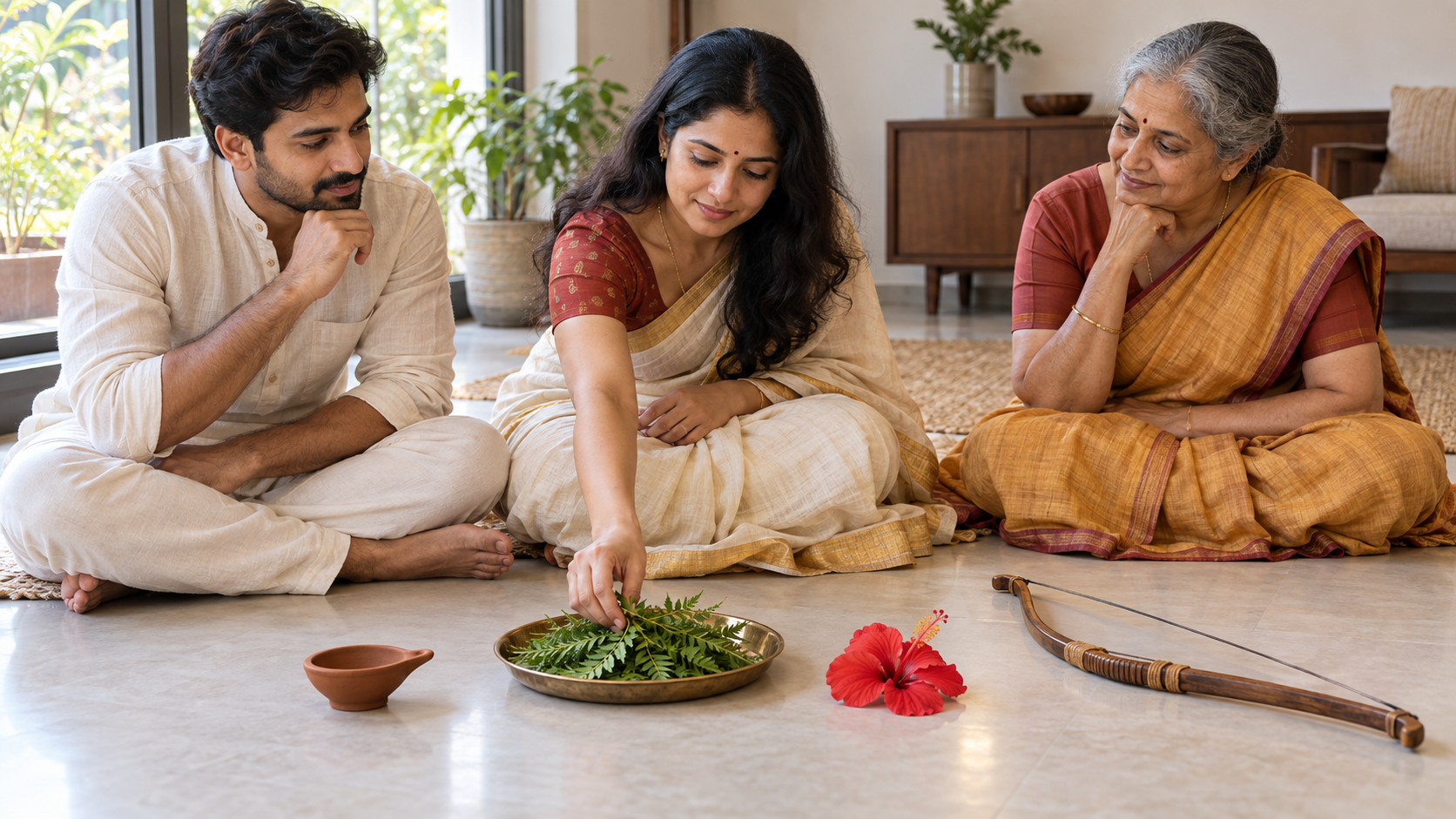
Vijayadashami holds several victory narratives without reducing them to one interchangeable story. Durga’s slaying of Mahishasura is a major episode in the Devi Mahatmyam’s account of her battles against demonic forces. The remembrance of Rama and Ravana provides another frame for the day. Aparajita worship presents victory devotionally through a name meaning “the one who is unbeatable”.
The shared lesson is not that every disagreement gives you a demon to defeat. Vijayadashami first asks where disorder has acquired power within your own conduct. Anger repeatedly indulged, duties indefinitely postponed, dishonest convenience, careless speech, and knowledge left unused are more honest starting points than another person’s faults.
Before arranging the puja, finish this sentence: “On this Vijayadashami, victory would mean that I stop __________ and begin __________.” Make both blanks specific enough to test in ordinary life. “Become better” is too vague. “Resume my neglected daily prayer before checking messages” gives you something you can actually do.
Choose one inherited tradition as the centre
Regional variety is part of Vijayadashami, not a problem to solve. A household that completes Durga Puja will not necessarily observe the day in the same way as one centred on Shami Puja or a Rama tradition. Use the following decision rule:
- If your household has conducted Navratri Durga Puja, centre the day on its proper conclusion. Vijayadashami is the final day of Durga Navratri, and established observances may include Durga Visarjan or Udvasan. Follow the procedure transmitted by your family, priest, or temple rather than improvising the dismissal of an invoked deity.
- If your family keeps a Shami, Banni, or Jammi tradition, let Shami worship and the associated family prayer be central. Exchanging leaves belongs to some regional customs; it is not a compulsory test for every Hindu household.
- If Aparajita Puja belongs to your practice, learn its formal procedure from the person or institution that transmits it. In this observance, Aparajita should not be treated casually as just an interchangeable label for every Durga rite.
- If your tradition remembers Rama’s victory over Ravana, let that narrative guide your reflection on righteous conduct, self-command, duty, and the responsible use of strength.
A longer ritual list does not make the observance more authentic. One rite performed with the correct relationship to lineage, place, and purpose is better than several unrelated customs assembled because they appeared together in an online search.
Use a six-part household plan
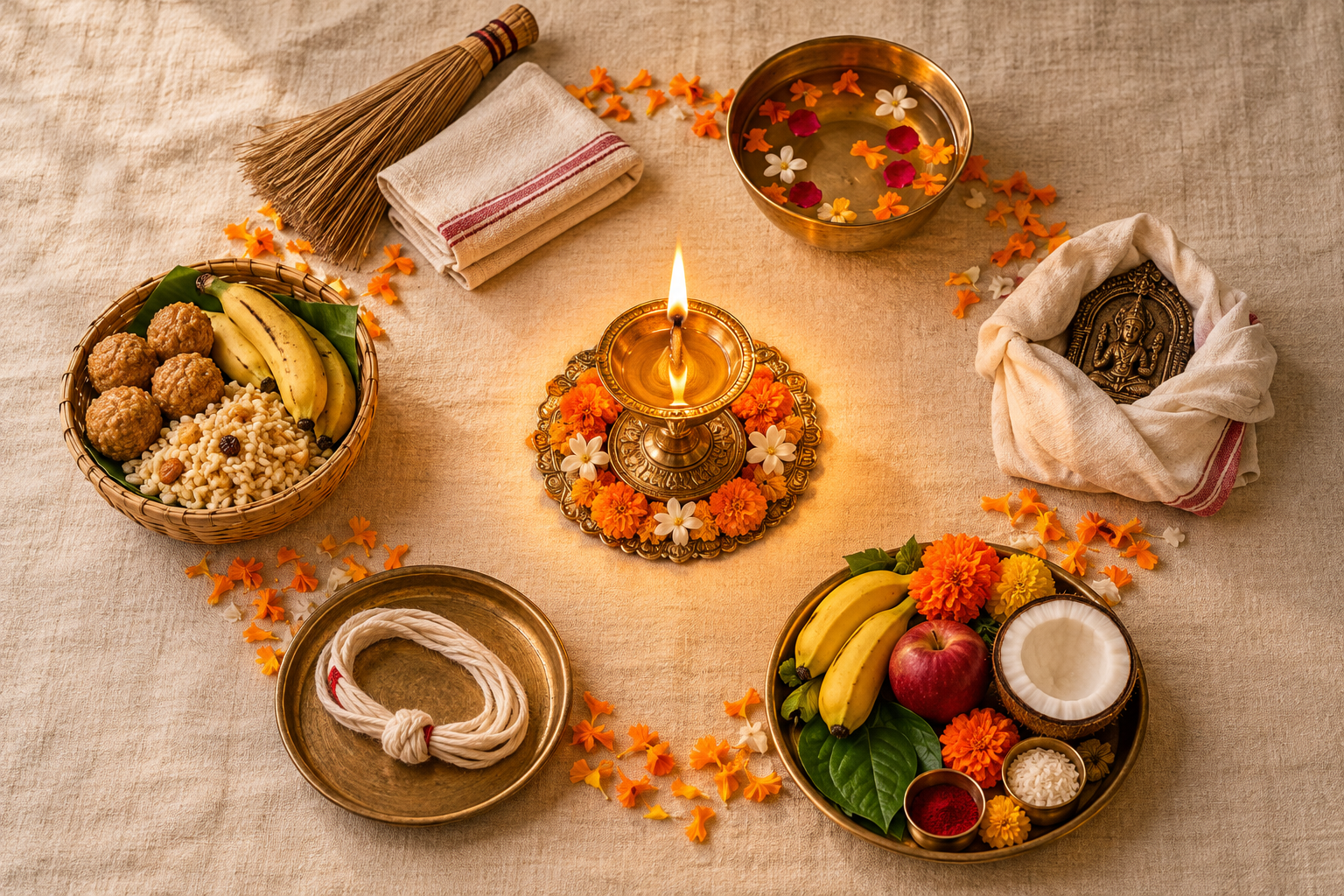
This sequence gives the day a clear shape without pretending that one generic ritual can replace your family procedure.
- Confirm the local date and timing. Vijayadashami falls on Dashami in the Shukla Paksha of Ashwin, but the applicable timing should come from a panchang prepared for your location. Do not copy a muhurta from a city in another time zone.
- Identify your household’s central custom before buying puja materials. Ask a knowledgeable family elder about inherited practice and ask the local temple about its own programme. A temple schedule tells you what happens there; it does not automatically replace your household tradition.
- Prepare only what your chosen rite requires. If the procedure comes from your family priest or temple, use that list. Avoid adding objects simply because another region uses them.
- State one dharmic resolve before the worship. Name the tendency you intend to overcome, the conduct that will replace it, and the first situation in which you will practise the change. Keep the resolve private if public declaration would turn it into performance.
- Perform the central rite and its conclusion attentively. If your home has undertaken a formal Navratri worship, do not skip its prescribed closing act. If you are joining a temple observance, follow the temple’s instructions rather than conducting a parallel ceremony in the gathering.
- Begin the resolved action before the day ends. Open the text you intend to study, place the daily prayer in your calendar, repair the neglected object, make the overdue apology, or complete the first honest portion of the duty you have delayed. Vijayadashami then becomes the first day of changed conduct, not merely the last day of a festival.
This plan deliberately separates ritual authority from personal resolve. Your lineage determines how a formal puja is performed. You remain responsible for deciding what its teaching changes in your behaviour.
Keep Shami and Aparajita worship rooted in place
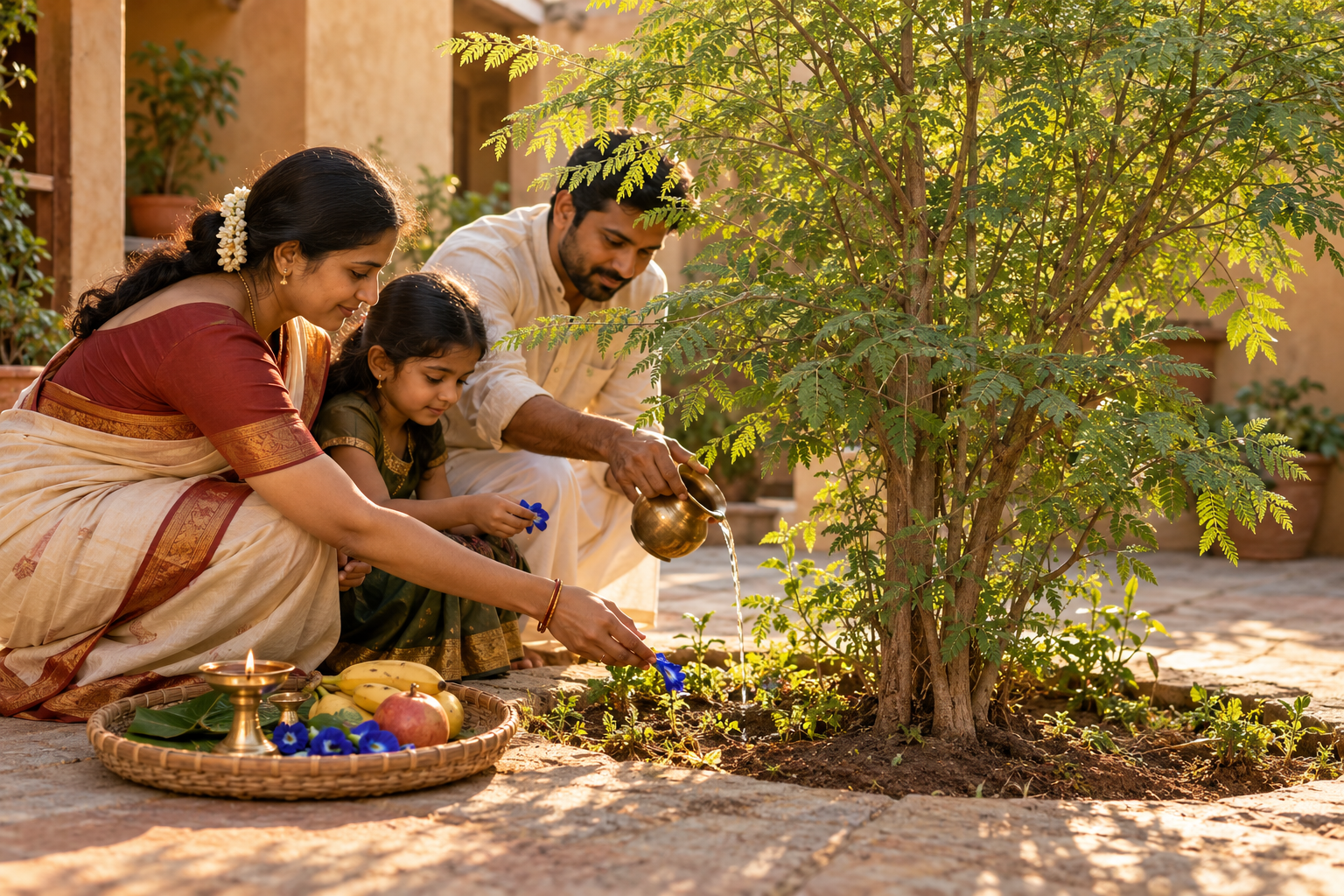
Shami Puja is also called Banni Puja or Jammi Puja in some South Indian traditions, and some communities exchange Shami leaves on Vijayadashami. Those regional names help you recognise related traditions, but they do not make every local procedure identical.
- Confirm the local identity of the tree with someone who knows the tradition and the plant. A photograph found online is a poor basis for identifying an unfamiliar tree.
- Do not strip branches, enter private property, or take leaves without permission. Reverence for a sacred tree is incompatible with damaging it for the sake of completing a ritual.
- Exchange leaves only where that custom is actually observed. If your family does not do so, there is no need to manufacture a new obligation.
- Use the Shami prayer or stotram transmitted in your tradition when one is available. If you have not learned a formal text, seek instruction instead of combining fragments from unrelated procedures.
- If no Shami tree is accessible, you can attend an established community observance or offer a simple prayer without plucking an unidentified substitute. Restraint is more respectful than pretending certainty.
The same discipline applies to Aparajita Puja. Its place on Vijayadashami does not mean you should merge it automatically with every Durga practice. Honour the distinction preserved by the tradition, and obtain the procedure from a qualified local guide if you intend to conduct the formal worship.
Vijayadashami questions that affect your plan
Do I need to perform Durga, Rama, Shami, and Aparajita observances together?
No. Treat them as distinct doors into the meaning of victory, not as items on a compulsory checklist. Begin with your inherited household tradition. You can respectfully learn about the other forms of observance without claiming or combining rituals you have not been taught.
What if I do not know my family’s Vijayadashami custom?
Ask the oldest knowledgeable relatives a narrow question: “What did our household actually do on Vijayadashami?” Request the prayer, sequence, regional name, and any rules they remember. If that line of knowledge is unavailable, join a reputable local temple observance and begin with simple prayer and a dharmic resolve. You do not have to invent an elaborate ancestry to participate sincerely.
When is Aparajita Puja in 2026?
Aparajita Puja in 2026 falls on Vijayadashami, October 20. Confirm the locally applicable Dashami and puja timing through a panchang for your city or your temple before finalising invitations or ritual arrangements.
Is Vijayadashami a conclusion or a new beginning?
It can be both. It concludes the Navratri sequence, while its victory theme asks you to carry disciplined action beyond the festival. Close any worship you began correctly, then take the first concrete step in your resolve. Ending and beginning belong together here.
Before Vijayadashami arrives, make one call to recover your family custom, write one sentence naming the victory you seek, and choose the first action that will embody it. When Dashami comes, you will know what belongs on the altar and what must change after you leave it.
References
- Hindu Pad — Aparajita Devi Puja 2026
- Hindu Pad — Mahishasura Vadha | Mahishasura Samharam | How Goddess Durga Slayed demon Mahishasura
- Hindu Pad — Vijayadashami & Shami Puja, Legend & Significance
- Hindu Pad — Shami Puja Stotram | Dasara Shami Puja Prayer

Leave a Reply
You must be logged in to post a comment.