
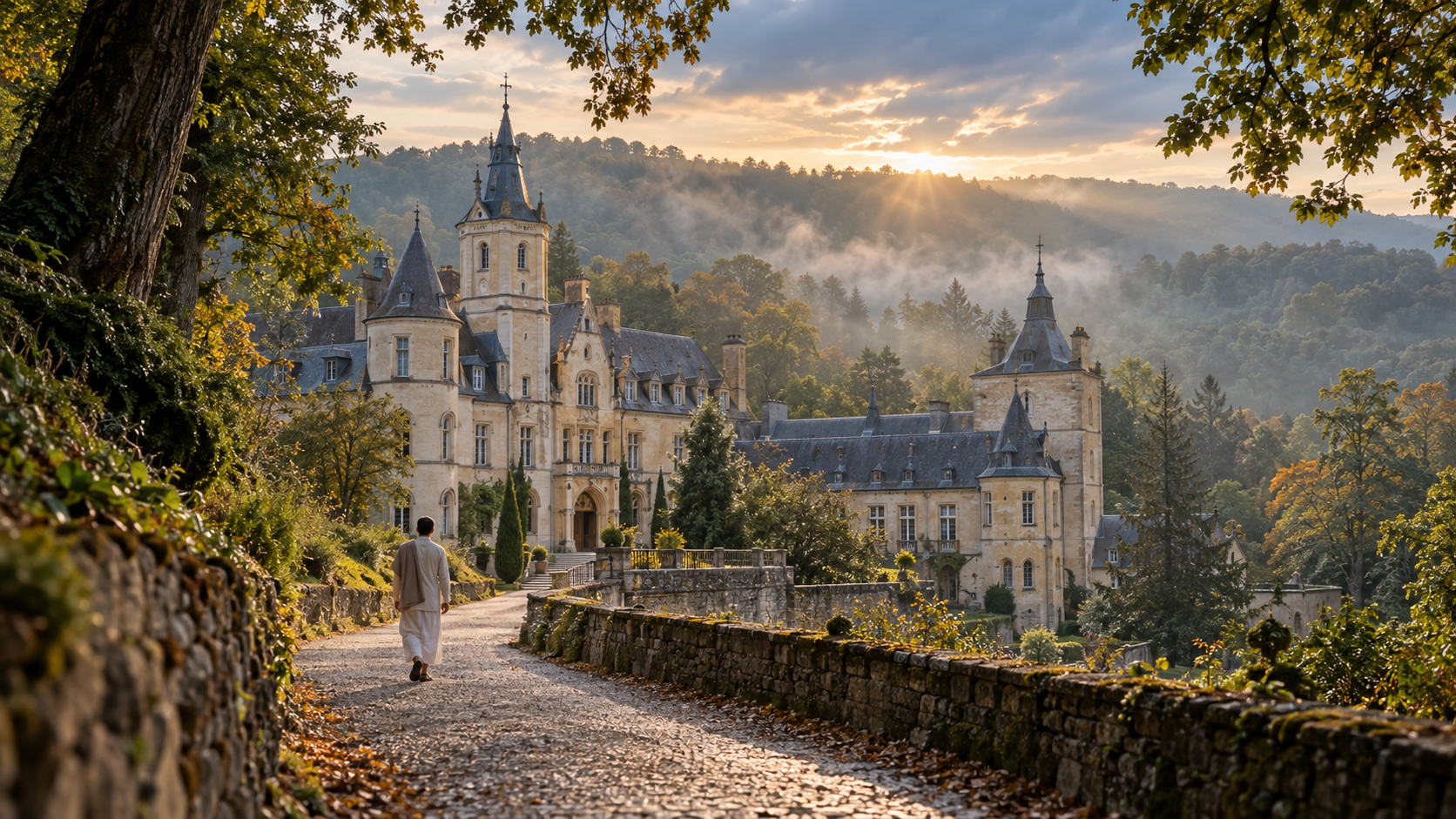
You can know how to reach Radhadesh and still be unsure how to arrive. If you do not want the visit to become a hurried sequence of photographs, ceremonies, and boxes checked, prepare the inner journey before the outer one.
A pilgrimage becomes yatra when intention shapes your conduct before, during, and after darshan. The phrase the art of pilgrimage at Radhadesh gives us the right frame: an art requires attention, discipline, and room for grace. It cannot be consumed like an attraction.
Key takeaways
- Write one honest sankalpa before you plan the details of your visit.
- Confirm current schedules, access arrangements, photography rules, and other practical guidance directly with Radhadesh.
- Build the visit around one devotional anchor rather than trying to collect every available activity.
- At the sacred threshold, pause, recall your intention, observe local conduct, and receive darshan before reaching for your phone.
- Do not measure the pilgrimage by the intensity of your emotions. Measure it by the practice or change in conduct that follows you home.
Begin with a sankalpa, not a crowded itinerary
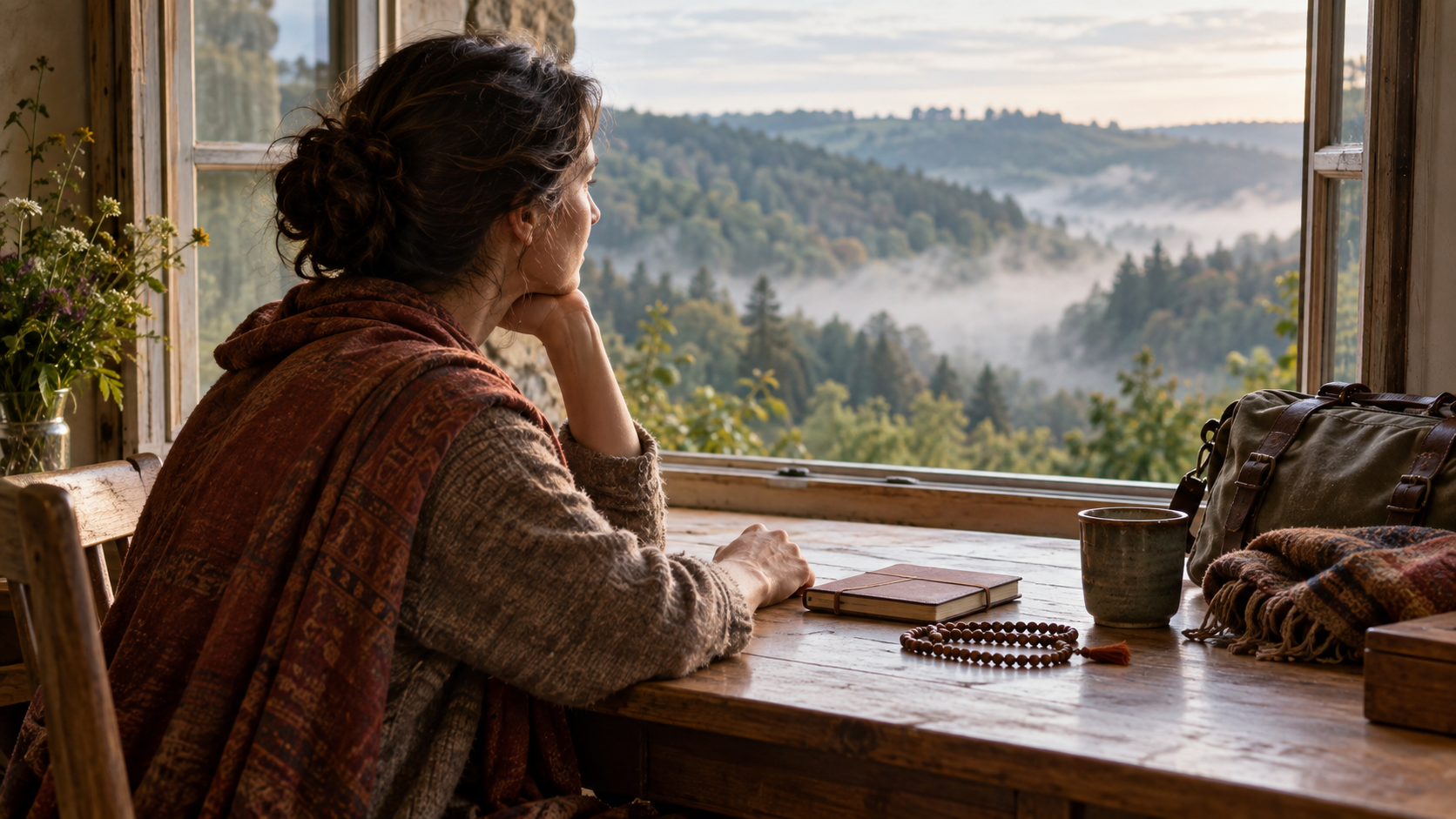
A sankalpa is a deliberate resolve. For a pilgrimage, it should name why you are going without telling the Divine what must happen in return. Grand language is unnecessary. One truthful sentence is enough.
Complete this sentence before you leave: I am going to Radhadesh so that I may learn, offer, release, or renew what? Your answer might concern gratitude, grief, a neglected discipline, a difficult relationship, or the simple desire to give Bhagavan your undivided attention. Keep it personal enough to guide you and modest enough to practise.
- Name what you are carrying. Choose one question, burden, thanksgiving, or aspiration. A long list scatters attention.
- Give the intention a visible form. You might keep your phone away during darshan, restrain critical speech for the day, listen without interrupting, or accept one suitable opportunity for seva.
- Release one demand. Do not require a dramatic feeling, an immediate answer, a perfect photograph, or a journey free of inconvenience.
Your practical plan should protect that sankalpa. Verify the current opening times and the timing of any observance you hope to attend. Ask whether advance registration is needed and what guidance applies to clothing, photography, food, accessibility, children, or participation in worship. Do not rely on an old screenshot or assume that the customs of another temple apply here.
Choose one confirmed devotional anchor for the visit. It could be a period of darshan or another public practice that Radhadesh has told you is available. Leave uncommitted space around it. A pilgrimage loses its centre when every quiet interval is treated as an empty slot that must be filled.
At Radhadesh, let attention become your offering
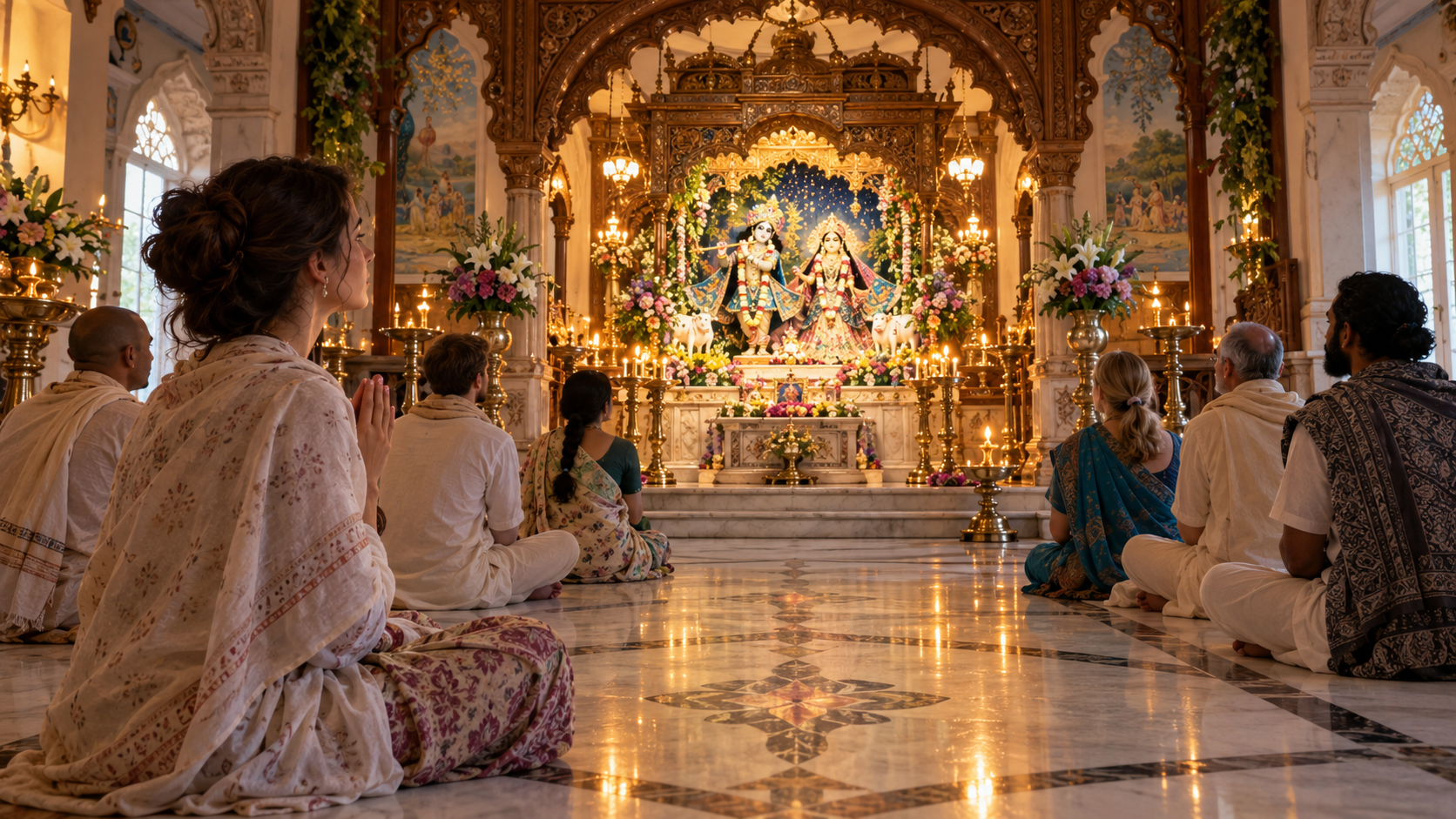
When you reach the sacred threshold, the itinerary has done its job. From that point, your task is not to extract the maximum amount of experience. It is to become receptive.
- Stop before entering. Take three unforced breaths, put away whatever you do not need, and recall your sankalpa in one sentence.
- Read the space. Notice signs, queues, areas of silence, and the conduct of the community. If you are uncertain, ask an appropriate host rather than copying the nearest person.
- Receive darshan before documenting it. Give your first attention to the sacred encounter, not to framing an image or composing a caption.
- Stay with one practice. If a public devotional activity is available and visitors may attend, remain for a complete segment instead of moving constantly in search of the next thing.
- Let seva be guided. Offer help through the people responsible for the space. Self-appointed service can create work or cross boundaries even when the intention is good.
Darshan is more than looking. It asks you to become available to the encounter. That does not mean you must manufacture reverence or force the mind into instant stillness. If your attention wanders, notice it and return to the divine name, form, prayer, or sankalpa that brought you there. The return is itself part of the practice.
If a mantra, gesture, or ritual is unfamiliar, you do not have to imitate it to prove sincerity. Respectful stillness is better than confident pretence. Observe without staring, follow clear instructions, and save detailed questions for a suitable moment after the practice.
If you are bringing children or someone new to temple life, give them a few concrete expectations before entering: stay near the group, speak softly where silence is being observed, do not touch sacred objects without permission, and ask before taking photographs. Clear guidance is kinder than correcting them repeatedly once they are inside.
Avoid the habits that turn pilgrimage into consumption
The difference between pilgrimage and sightseeing is not contempt for beauty, history, hospitality, or photography. You may appreciate all of them. The difference lies in what leads the visit. On pilgrimage, attention is ordered toward transformation rather than possession.
- Over-scheduling: If you are watching the clock throughout darshan, the plan is working against its purpose. Keep one main commitment and enough margin to move without agitation.
- Letting the camera lead: Decide in advance when you may take permitted photographs. Outside that period, put the device away instead of renegotiating with yourself every few minutes.
- Chasing a spiritual high: Tears, stillness, joy, or certainty may arise, but they are not admission requirements. Do not dismiss a quiet pilgrimage because it did not produce a dramatic story.
- Performing unfamiliar devotion: You do not need to borrow another person’s gestures. Participate to the extent that you understand the practice and have been invited to join it.
- Treating people as part of the scenery: A sacred place is also sustained by human beings carrying responsibilities. Respect queues, work areas, private conversations, and requests from those serving there.
- Confusing exhaustion with austerity: Attend to necessary food, rest, mobility arrangements, and prescribed care. Concealing a genuine need does not make the journey more devotional.
When you notice one of these habits, do not turn the mistake into another distraction. Correct the next choice. Put the phone away. Drop the unnecessary activity. Ask permission. Sit quietly. Pilgrimage is renewed through small returns to intention.
Carry one living practice home
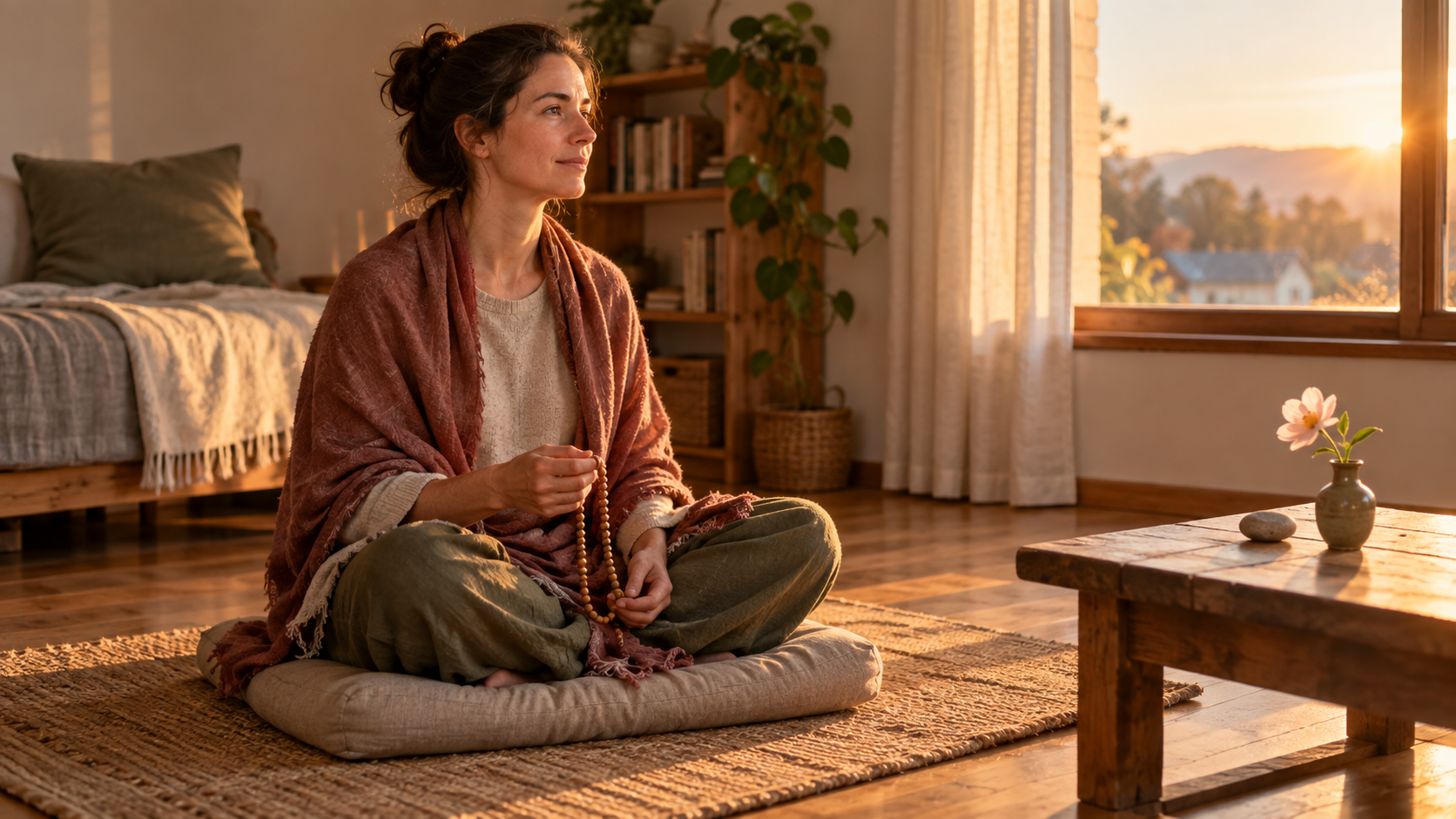
The decisive part of a pilgrimage often begins after departure. A sacred visit that remains only a memory gradually becomes spiritual tourism. A modest change carried into ordinary life allows the yatra to continue.
Within a day of returning, write one sentence in response to each of these questions:
- What held my attention without effort?
- What did I resist, avoid, or hurry through?
- What one change now belongs in my daily conduct?
Then choose one practice for the next seven days. It might be a fixed short period of japa, one daily act of seva, a restraint on harsh or unnecessary speech, or a short reading from a sacred text you already follow. Choose only one. Define when and where you will do it, and place the reminder in your calendar before ordinary routines reclaim the space.
Be equally deliberate about what you share. A photograph may be public while the prayer connected with it remains private. If other visitors or members of the community are recognisable, obtain permission before posting their images. You do not owe an audience an instant account of everything sacred that occurred.
If your central question remains unanswered, do not manufacture an answer to justify the journey. Keep the question beside the practice you brought home. Some pilgrimages clarify what you should do; others clarify what deserves longer attention.
Go to Radhadesh with fewer demands and a clearer offering. Confirm the outer details, write your sankalpa, and choose the single practice that will continue after you return. Then give the visit enough silence to work on you in its own way.
References

Leave a Reply
You must be logged in to post a comment.