
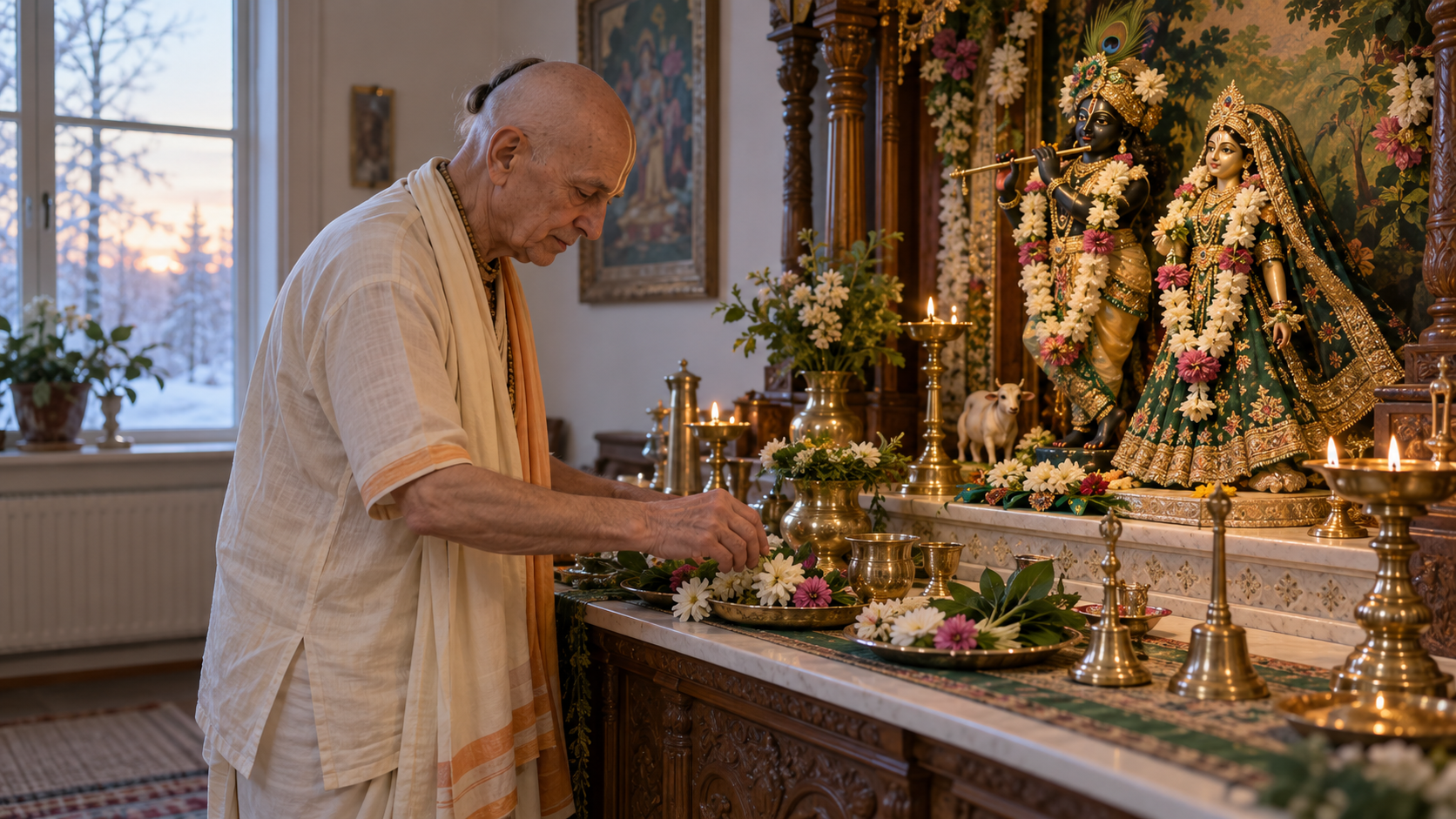
If you are deciding whether a long-serving pujari should be honoured, do not begin with ceremonial praise. Begin with the service itself: how long it continued, what responsibility it carried, which unseen duties supported it, and whom it helped.
Kalpapadapa Prabhu’s life in the ISKCON Finland temple offers a clear way to do this. His record brings together duration, responsibility, devotional character, practical temple work and engagement beyond the temple. It also answers a delicate question: how can a Vaishnava community express gratitude without turning seva into a competition for recognition?
Forty years makes quiet service visible
Kalpapadapa Prabhu entered the ashrama on 2 March 1986. In March 2026, he completed forty years as a brahmachari and resident of the ISKCON Finland temple. Nearly forty of those years included pujari seva, with more than twenty years as the temple’s head pujari.
On 27 September, his service was honoured at the European Leaders Meeting in New Mayapur, France, with the ISKCON Europe Excellence Awards 2026 GBC Special Recognition Award for Outstanding Pujari Seva.
The numbers matter, but they should not be treated as a devotional points system. Forty years reveals the scale of the commitment. More than twenty years as head pujari reveals sustained responsibility. Neither figure, by itself, explains why the seva inspired generations of devotees.
That distinction matters when you prepare a nomination, anniversary tribute or community acknowledgement. Longevity is the milestone; the substance lies in how the years were lived. A useful service record should therefore answer three questions:
- When did the seva begin, and how continuously was it offered?
- Which responsibilities and leadership roles were actually carried, and for how long?
- How did the devotee’s presence affect worship, the temple and the surrounding community?
If you have only dates, you have a chronology but not a tribute. If you have only adjectives, you have praise but not a reliable record. A worthy recognition needs both.
What a temple should notice before presenting an award
Consistency is a spiritual achievement
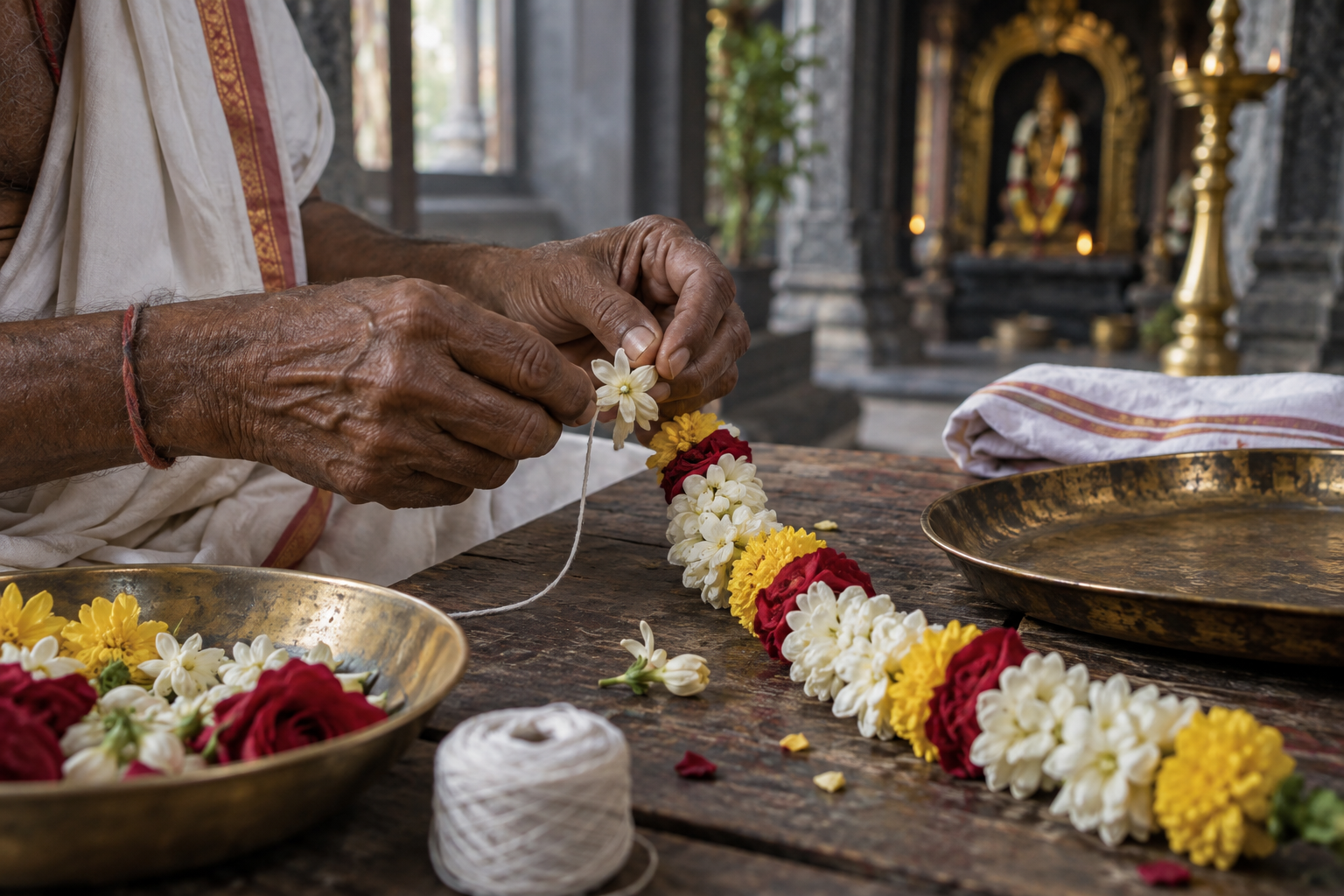
Pujari seva is repetitive by nature. That is precisely why it can become invisible. A special festival attracts attention; dependable worship on an ordinary day usually does not. When the service is performed properly and reliably, the result can look as though nothing unusual happened.
Kalpapadapa Prabhu’s worship of Their Lordships Sri Sri Gaura-Nitai has been marked by humility, responsibility, consistency and genuine affection. Those qualities explain more than the duration alone. They direct your attention from an occasional achievement to a settled way of serving.
When assessing long-term seva, ask who can be depended upon when there is no audience and no special occasion. Notice reliability while it is present, rather than waiting until absence reveals how much one person had quietly carried.
Responsibility is more than visibility
More than two decades as head pujari indicate entrusted stewardship, but the title should not swallow the service. In a devotional setting, leadership is not proved by prominence. It is seen in the willingness to carry responsibility while keeping the Deities, the seva and the devotees at the centre.
This gives you a practical test for recognition. Do not ask only, “Which office did this person hold?” Ask, “What became dependable because this person accepted that office?” The first question records status. The second reveals service.
Likewise, do not place words such as humble, affectionate or responsible into a citation merely because they sound appropriate. Connect every quality to conduct that fellow devotees can verify. Specific memories of duties carried, problems solved and people supported honour a servant more truthfully than a string of superlatives.
Altar-centred service is not altar-confined service
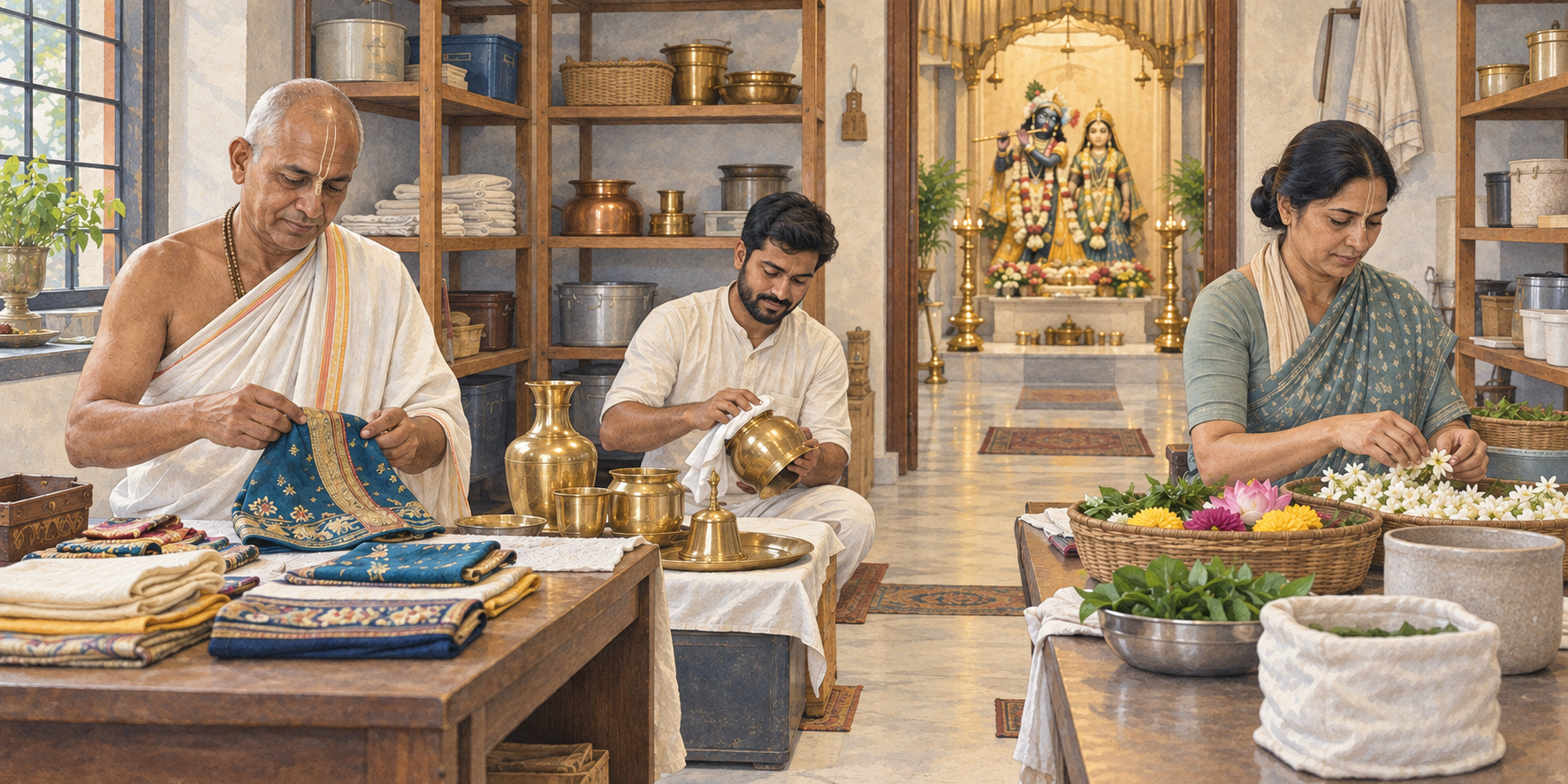
Kalpapadapa Prabhu’s contribution did not end at the altar. It included temple maintenance and renovation, festivals, prasadam distribution, preaching and support for the temple’s spiritual life. His approachable and practical manner also helped share Krishna consciousness and prasadam with the wider Finnish public.
This wider record corrects a common weakness in institutional recognition. A pujari’s visible role may be Deity worship, while much of the labour that keeps that worship possible appears elsewhere: preparing for festivals, caring for the building, supporting devotees or stepping into practical work that has no prestigious title.
Make a one-page service map before writing a tribute. Use four headings: worship, temple care, festivals and prasadam, and community or public engagement. Place only verified contributions under each heading. Mark whether each contribution was continuing, periodic or occasional. This prevents both understatement and exaggeration.
There is also a pastoral lesson here. Broad competence should not become an excuse to give every neglected task to the person least likely to refuse. Recognition should make hidden labour visible, not legitimise an unlimited workload.
A fair process for recognising long-serving pujaris
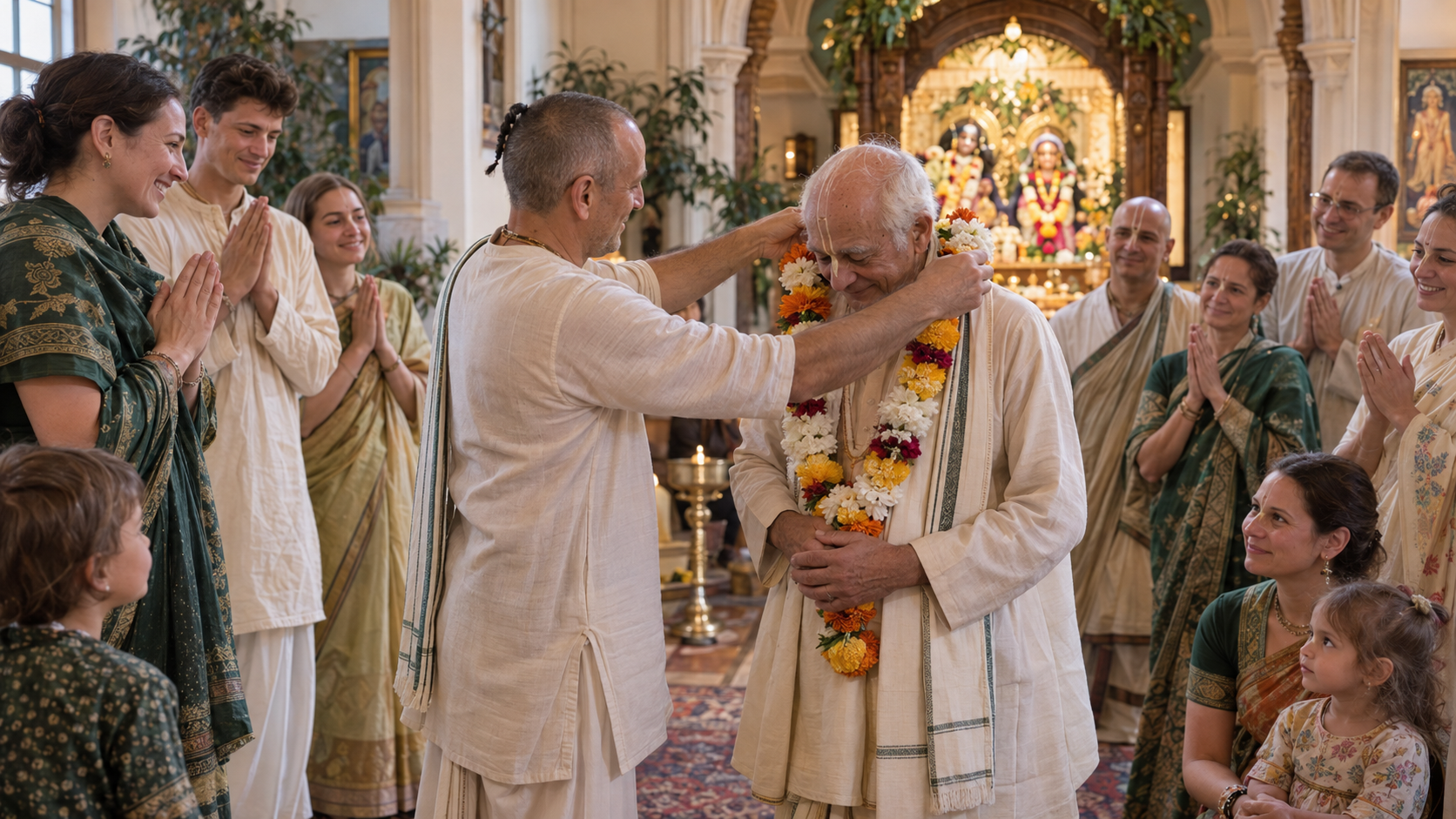
For a Vaishnava community, recognition requires balance. Seva is offered to Krishna rather than performed for acclaim. At the same time, gratitude is part of healthy community life, and a carefully framed honour can teach younger devotees what the community values.
If you are preparing a formal award or a local temple acknowledgement, use this process:
- Confirm the devotee’s wishes. Ask whether public recognition is welcome and whether the person is comfortable with the proposed wording, photographs and setting.
- Verify the chronology. Record the start date, periods of residence, years of pujari service and duration of any leadership role. Do not collapse distinct forms of service into one inflated number.
- Separate the milestone from the reason for honouring it. State the years clearly, then explain what was sustained during those years.
- Translate qualities into evidence. Support terms such as consistency, humility, responsibility and affection with concrete duties or recollections that can be confirmed.
- Include the work beyond the formal role. Temple care, festivals, prasadam distribution, preaching and community support may reveal the full pattern of service more accurately than a position title.
- Name the beneficiaries without manufacturing fame. Explain how the seva supported the Deities, devotees, temple community or wider public. Attendance figures and publicity are unnecessary unless they are verified and genuinely relevant.
- Present the honour as gratitude, not rank. Make clear that the award acknowledges service; it does not establish a leaderboard of devotion or diminish unrecognised seva.
A nomination paragraph you can adapt
Use this structure: “Since [start date], [name] has served [Deities and temple] in [verified roles]. Over [verified duration], this seva has shown [qualities], visible in [concrete examples]. Beyond regular worship, the service has included [other verified contributions]. We propose [form of recognition] in gratitude for sustained seva and its effect on [community].”
That paragraph forces a nomination to remain factual, specific and devotional. It also exposes gaps. If you cannot fill a bracket without guessing, pause and speak with people who directly know the service.
Two mistakes can undo an otherwise sincere tribute. The first is waiting until retirement, incapacity or death makes gratitude easier to express than direct appreciation. The second is treating an award as sufficient care. After the ceremony, ask what practical support the devotee needs, whether responsibilities are sustainable, and how essential knowledge will be carried forward. Gratitude becomes credible when the community also attends to continuity.
Key takeaways
- Kalpapadapa Prabhu’s recognition rests on a substantial record: forty years as a brahmachari and Finland temple resident, nearly forty years of pujari seva, and more than twenty years as head pujari.
- Duration identifies the milestone, while humility, responsibility, consistency and affection explain the character of the seva.
- A complete assessment includes work beyond the altar, such as temple care, festivals, prasadam distribution, preaching and engagement with the wider community.
- Good recognition verifies dates, names specific contributions, respects the devotee’s wishes and presents the honour as gratitude rather than spiritual competition.
If you know a pujari whose dependability has become so familiar that few people mention it, write the service record now. Confirm the facts, ask what support is needed, and make your gratitude specific while the devotee can receive it. That is how recognition strengthens seva instead of merely commemorating it.
References

Leave a Reply
You must be logged in to post a comment.