
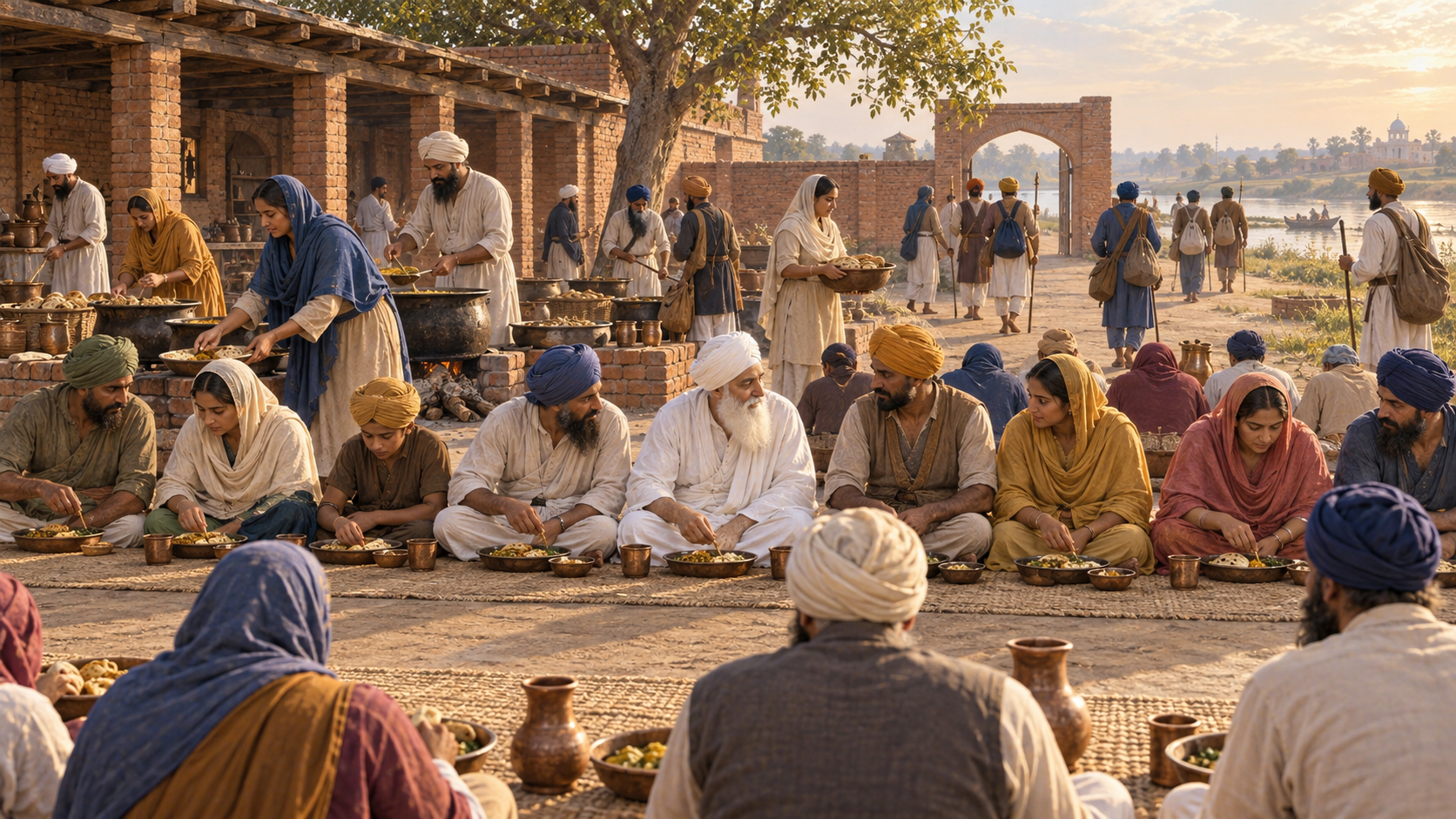
If you arrived asking what Guru Amar Das Ji actually changed, a bare catalogue of reforms will not give you the full answer. His importance lies in the connections between them: spiritual equality had to change who could participate, how people treated one another, whose dignity counted, and how the community carried its principles forward.
His lifetime, 1479–1574, is remembered through the frame of revolutionary change. Read that description carefully. The revolution was not simply a set of enlightened opinions. It was the effort to turn an ethical claim into a repeated social practice.
Read the reforms as one system, not separate achievements
Guru Amar Das Ji’s reforms are often separated into familiar subjects: langar, resistance to caste distinctions, the dignity of women, community organization, and spiritual teaching. That makes them easier to remember but harder to understand. They worked together.
A declaration of equality is fragile if people continue to sit, eat, speak, marry, lead, and serve according to inherited rank. A compassionate custom is equally fragile if it disappears when a respected leader dies. Durable reform therefore has to operate at three levels:
- Conviction: the person before you possesses spiritual dignity that birth and social standing cannot cancel.
- Practice: ordinary routines must make that dignity visible rather than quietly contradicting it.
- Organization: responsibility must be distributed so the practice can continue beyond one teacher’s physical presence.
This three-level reading protects you from two common mistakes. The first is reducing Guru Amar Das Ji to a gentle advocate of kindness. The second is treating each reform as an isolated historical curiosity. His legacy becomes clearer when you ask how belief, routine, and organization reinforced one another.
Langar made equality an embodied discipline
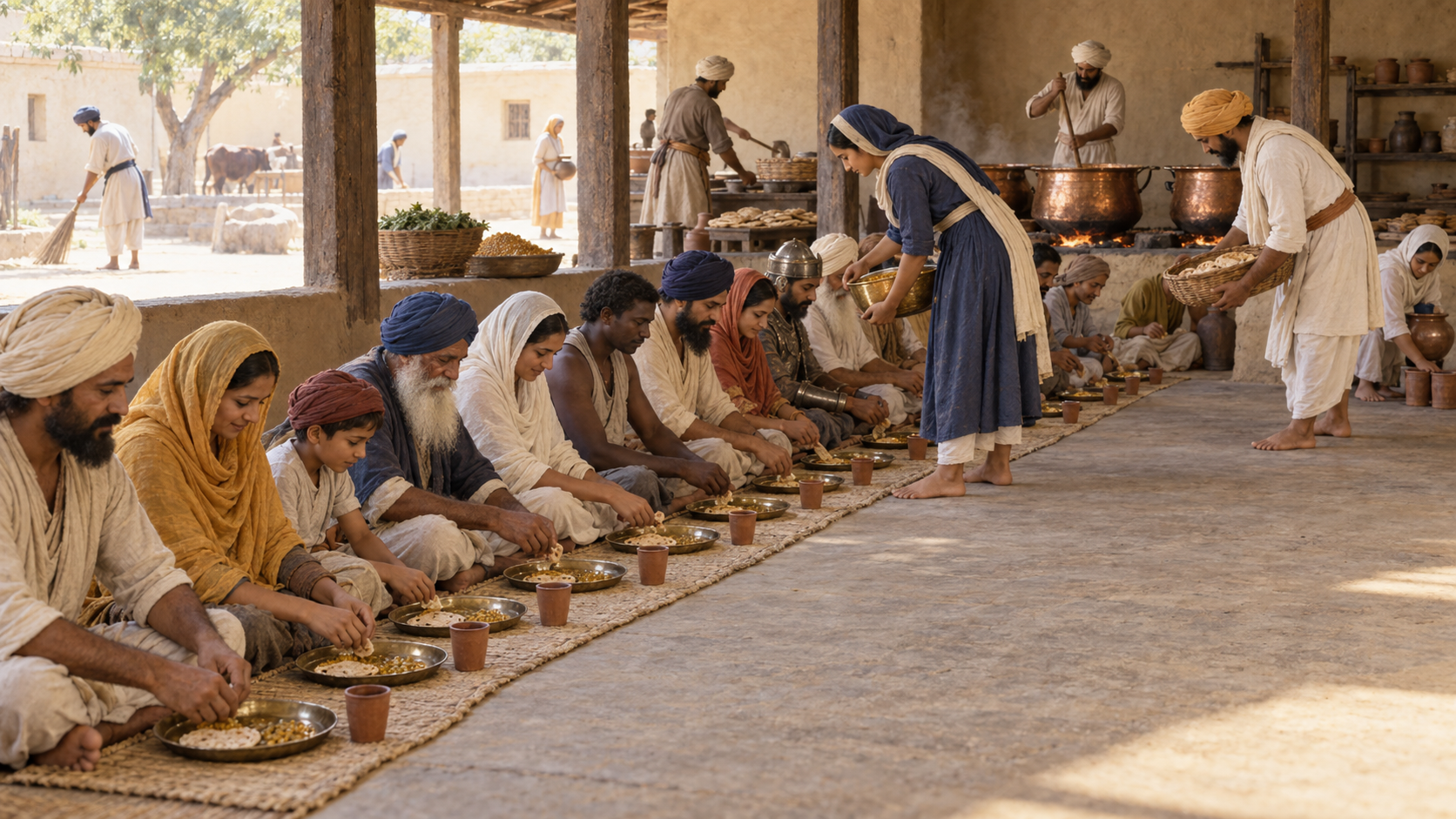
Langar, the shared community meal, is easy to praise and easy to underestimate. If you describe it only as free food, you miss its reforming force. Charity can preserve distance between the giver and the recipient. A shared meal asks people to inhabit the same social space.
The meal turns equality from an inward sentiment into something the body must practise. People receive food within a common arrangement. Status cannot remain entirely abstract when those separated by inherited rank encounter one another through the same ordinary need.
This does not mean that eating together automatically removes prejudice. It does something more practical: it exposes the contradiction between declared equality and unequal conduct. If a community praises oneness but reserves better seating for influential donors, leaves the least respected people with all the cleaning, or treats service as beneath leadership, the meal becomes a mirror.
You can use that mirror in any temple, gurdwara, association, or family gathering. Notice who prepares the space, who eats first, who is served deferentially, who performs invisible labour, and who is expected to wait. These details reveal more about lived equality than a polished statement of values.
Caste and gender reform moved dignity into social life
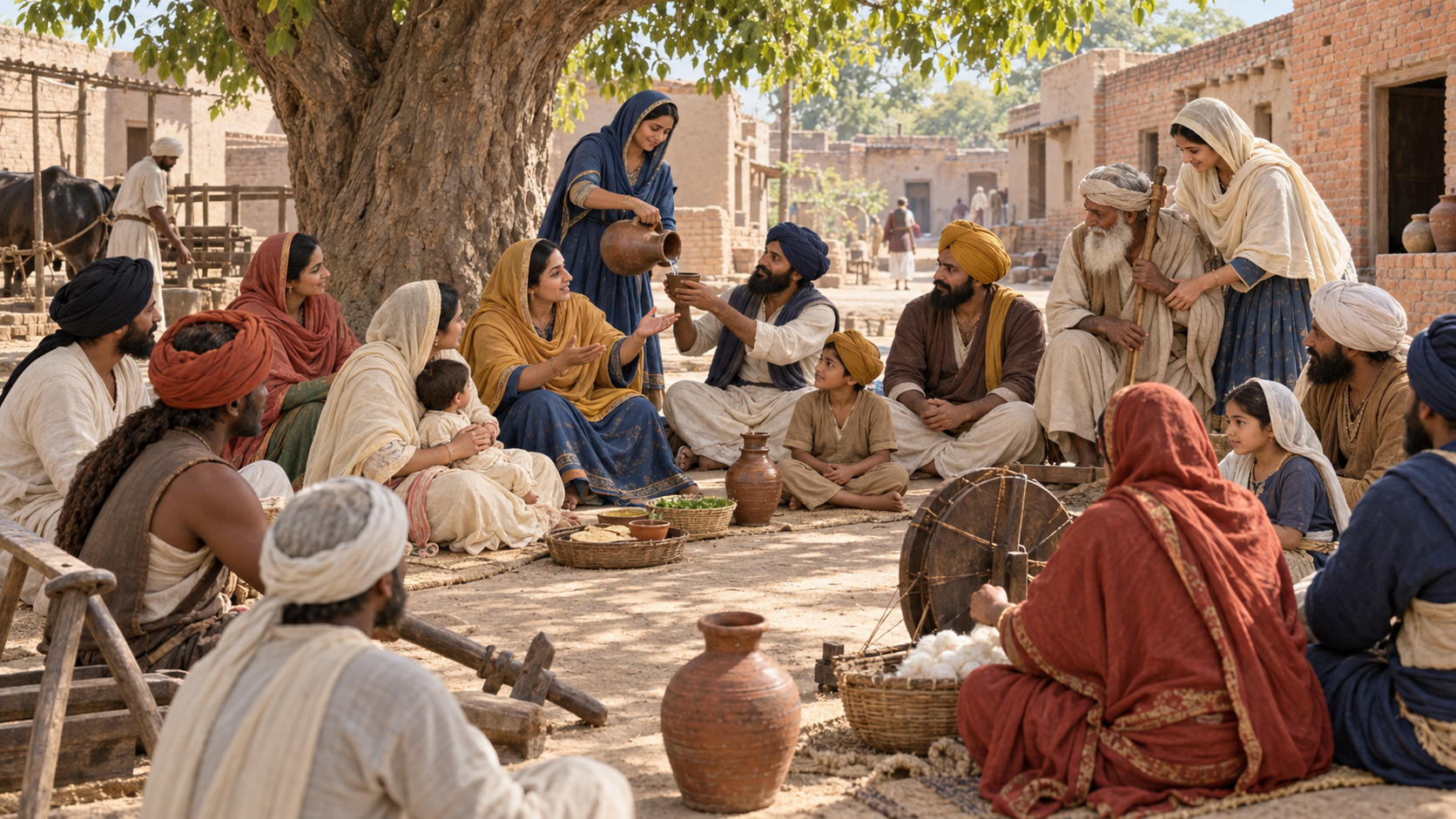
Guru Amar Das Ji’s challenge to caste distinctions belongs to the same logic as langar. If access to spiritual fellowship is not supposed to depend on birth, communal life cannot be organized as though birth determines human worth. The reform was not merely an argument against personal arrogance. It confronted a social grammar that assigned honour, proximity, and authority unequally.
His opposition to restrictions placed on women, including purdah and sati, carried that principle into another field of inherited power. These customs were not private inconveniences. They governed a woman’s presence, body, widowhood, and recognized place in society. Resisting them affirmed that spiritual dignity could not stop at the boundary of gender or marital status.
Historical care matters here. You do not need to repackage Guru Amar Das Ji as though he were presenting a modern political platform. That would replace history with a contemporary label. The more accurate claim is also the more demanding one: his reforms pushed spiritual equality into concrete relationships within the world in which he lived.
That distinction gives you a useful test for claims about social reform. Ask which inherited barrier was being challenged, what practice changed because of the challenge, and who gained a form of participation previously constrained by status. If you cannot identify any change beyond admirable language, you are looking at moral instruction, not yet at social reform.
Organization allowed principle to outlive personality
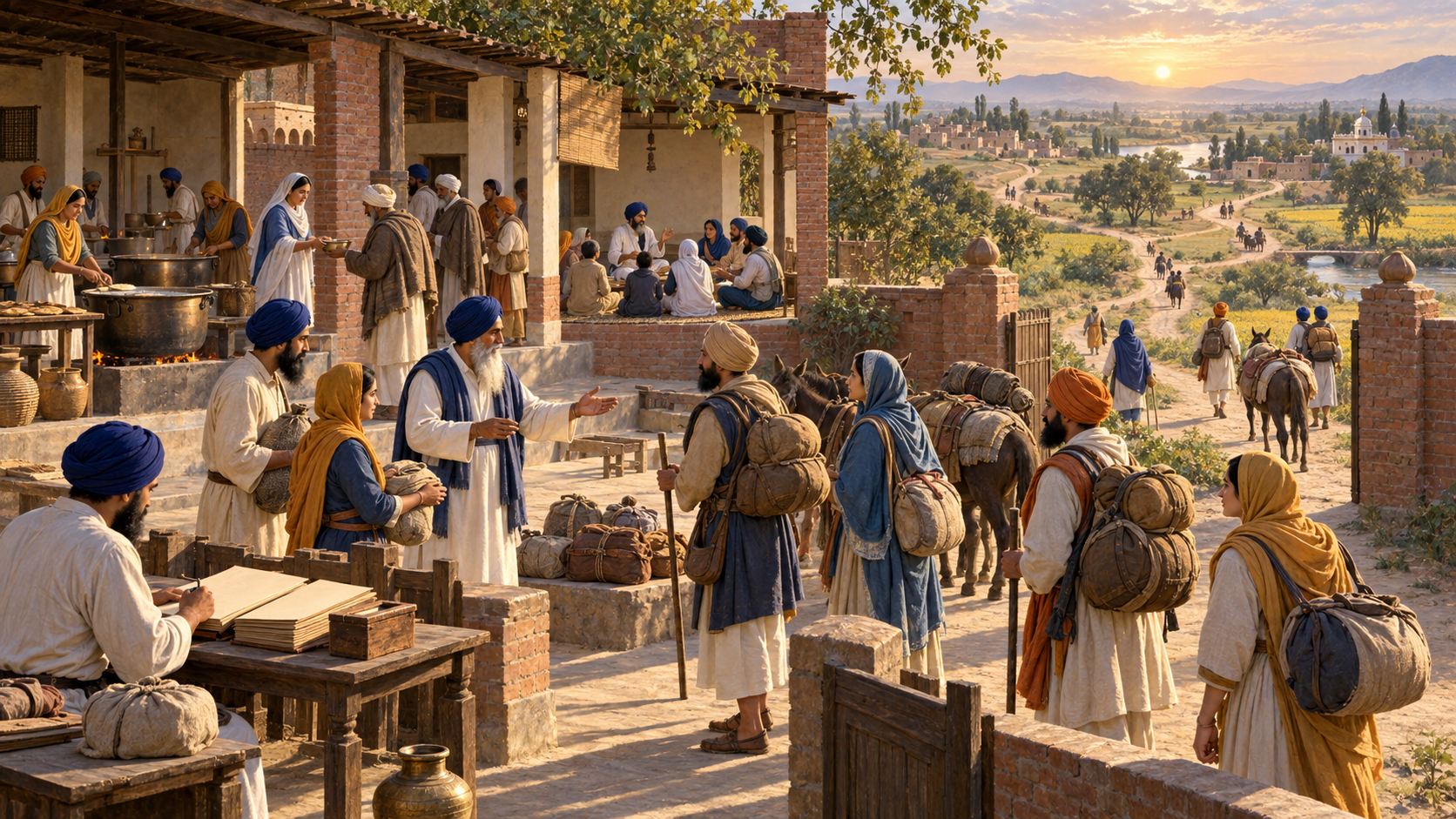
A reform that depends entirely on one exceptional personality is vulnerable. People may admire the teacher while he is present and return to older habits after his departure. Guru Amar Das Ji’s organizational legacy addresses that weakness by joining spiritual teaching to distributed community responsibility.
The network commonly associated with the manji system gave local communities recognized channels for teaching, service, and connection. Its larger significance lies in the principle behind it: a growing community cannot remain a crowd gathered around one person. It needs trusted responsibility, continuity, and a way to carry discipline across distance.
Institution should not be confused with bureaucracy. Bureaucracy can preserve rank for its own sake. A reforming institution preserves a principle by making the desired conduct repeatable. Its roles, customs, and lines of responsibility should help people practise the teaching even when no celebrated figure is present to supervise them.
You can test the strength of a present-day community with a simple question: if its most respected leader became unavailable, would teaching, meals, assistance, and decision-making continue fairly? If everything would stop, the community has followers but little institutional depth. If service continues through accountable local responsibility, principle has begun to take durable form.
Key takeaways for reading and applying the legacy
- Guru Amar Das Ji’s reforms are best understood as a connected system of spiritual conviction, shared practice, and durable organization.
- Langar matters not only because food is provided, but because a common human need becomes a practical rehearsal of equality.
- Resistance to caste hierarchy tests whether spiritual fellowship can cross boundaries imposed by birth and social status.
- Opposition to customs restricting women shows that spiritual dignity must affect social presence, bodily autonomy, and recognized participation.
- Distributed responsibility makes reform less dependent on personal charisma and more capable of surviving succession.
- Commemoration becomes inheritance only when a community examines whether its own routines reproduce the distinctions it rejects in principle.
At your community’s next gathering, conduct a small reform audit. Record who sets the agenda, who speaks without interruption, who prepares and cleans, who receives visible honour, who controls resources, and who is absent. Choose one mismatch between professed equality and ordinary conduct. Then change a repeatable rule, give someone responsibility for maintaining it, and review the result at the next gathering.
That is a more faithful way to approach Guru Amar Das Ji’s legacy than admiration alone. Begin with one boundary visible in your own community and one practice capable of crossing it. When dignity enters the routine, reform stops being a memory and becomes a living discipline.
References

Leave a Reply
You must be logged in to post a comment.