
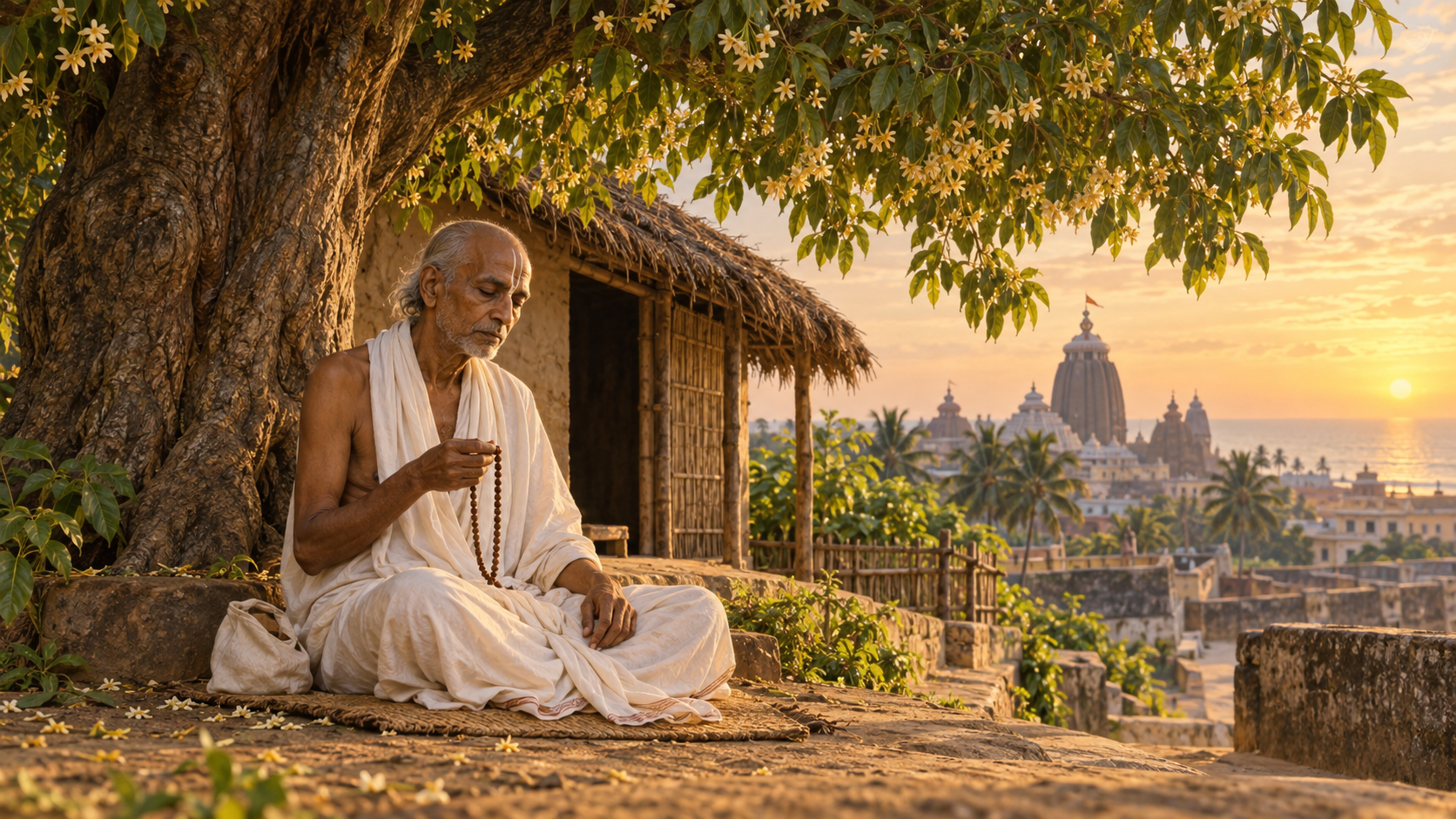
You may have seen Srila Haridasa Thakura’s disappearance day on a temple calendar and wondered what sincere observance requires. Must you fast? Which prayers should you recite? What can you do if you cannot reach a temple?
The observance does not need to become elaborate. Give it a clear devotional shape: hear about Haridasa Thakura, chant the holy name with greater attention, offer practical service, and carry one correction into your daily sadhana. If your temple or spiritual teacher gives specific instructions, those instructions take precedence over a general home programme.
Understand what a disappearance day asks of you
A Vaishnava disappearance day is neither a festive birthday nor an ordinary death anniversary. It acknowledges separation from a revered devotee while turning your attention toward the devotee’s service, teaching, and devotional disposition. Its natural mood combines gratitude, humility, remembrance, and renewed commitment.
That distinction should guide your plans. The aim is not to manufacture sadness or imitate someone else’s emotion. It is also not to consume a biography and then resume the day unchanged. Remembrance becomes meaningful when it affects how you hear, chant, speak, and serve.
Haridasa Thakura is remembered above all for unwavering dedication to the holy name. You therefore do not need to search for an impressive ritual that overshadows that central lesson. Build the observance around nama, katha, prayer, and seva. Decorations, special food, a longer programme, or congregational singing may support those practices, but they should not replace them.
For readers following the featured 2026 observance, 25 September 2026 is the civil date attached to the disappearance-day address by HH Prabodhananda Saraswati Swami Maharaj. At home, you can also begin with the linked Mangal Arati darshan from Sri Sri Krishna Balaram Mandir, ISKCON Vrindavan. If your local temple calendar gives different timing, confirm the observance directly with the temple rather than assuming that one calendar must be wrong.
A complete home observance without invented rituals
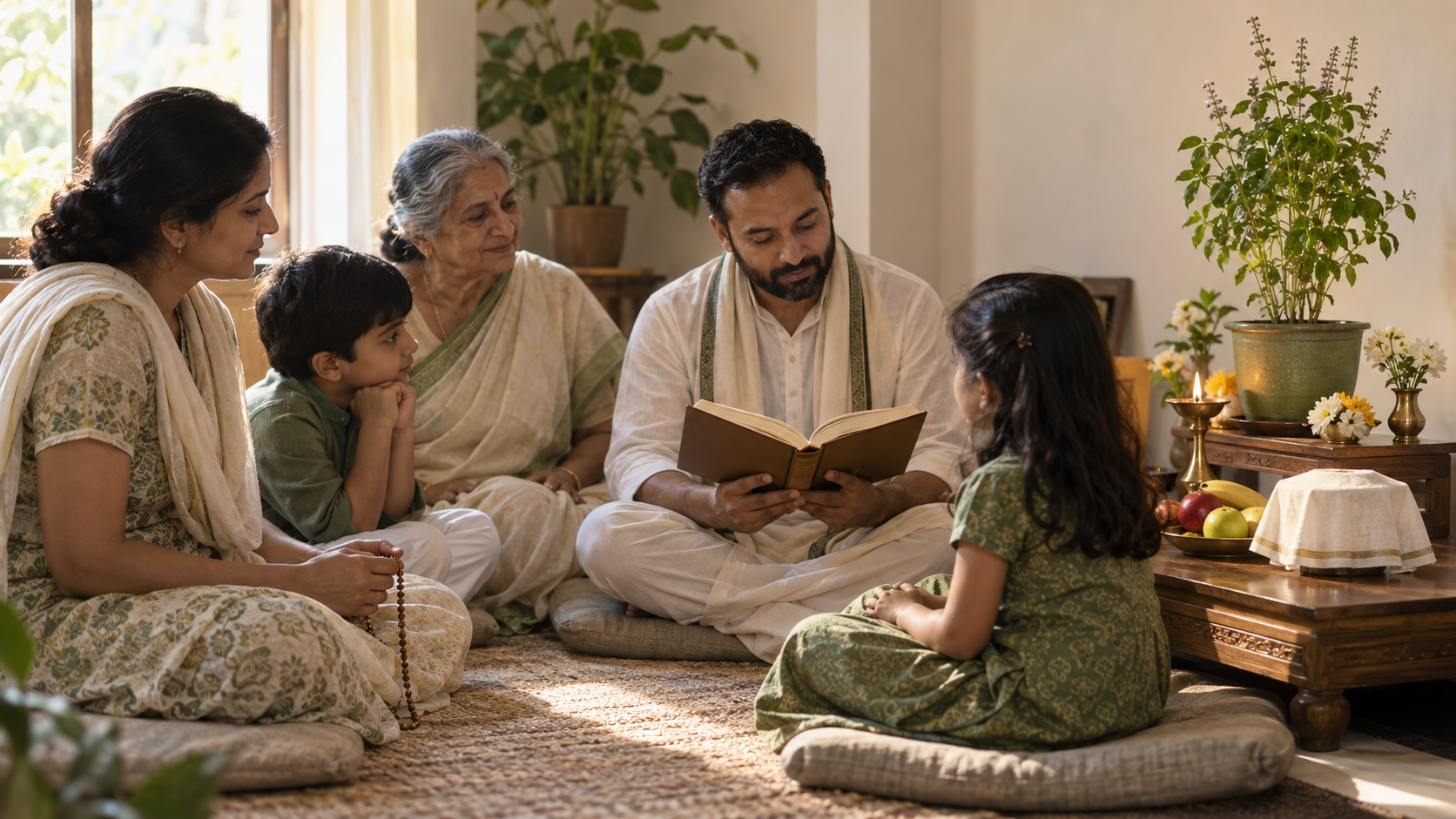
You can observe the day at home even when you cannot attend a full temple programme. The following sequence is deliberately simple. It gives each devotional activity a purpose and avoids imposing a supposedly universal ritual where local Gaudiya Vaishnava guidance may differ.
- Confirm the date and local guidance. Check the calendar used by your temple, sangha, or spiritual teacher. Also ask whether the community has prescribed a particular fast, reading, offering, or programme. Do this before making private vows.
- Prepare the place of worship. Clean the altar or prayer space and remove ordinary distractions. If you already honour an image of Haridasa Thakura within your established practice, arrange it respectfully. Use lamps, incense, flowers, or other offerings according to your household and lineage practice rather than assembling unfamiliar procedures from scattered online instructions.
- Offer pranama and state your intention. Use a prayer taught in your community if you know it. If you do not, speak plainly and reverently in your own language. Ask for steadiness in hearing and chanting instead of trying to improvise Sanskrit or claim a devotional mood you do not yet possess.
- Hear focused katha. Choose a trusted temple class or lineage presentation about Haridasa Thakura. Listen as a student, not as a browser. Put other notifications away and identify the instruction that most directly exposes a weakness in your own practice.
- Chant the holy name attentively. Complete your regular japa commitment before adding anything ambitious. If your household can hold kirtan, let congregational chanting follow the hearing. Clear pronunciation, prayerful dependence, and the willingness to return when the mind wanders matter more than creating an impressive public count.
- Translate remembrance into service. Help with a temple programme, clean a worship space, prepare and offer food according to your tradition, assist another devotee, or share an authenticated teaching with someone who has asked for it. Choose a service that is real, needed, and within your responsibility.
- Honour prasada and close quietly. Follow the fasting and prasada practice given by your community. After the programme, leave enough silence to consider what must change in your conduct. Moving immediately into entertainment or online argument weakens the attention you have just cultivated.
Do not invent a fast merely because the day feels important. Vaishnava observances do not all carry identical fasting rules, and austerity gains no authenticity from being self-appointed. When you do not know the standard, ask the relevant temple authority and keep the rest of your observance simple.
Keep the holy name at the centre after the programme ends
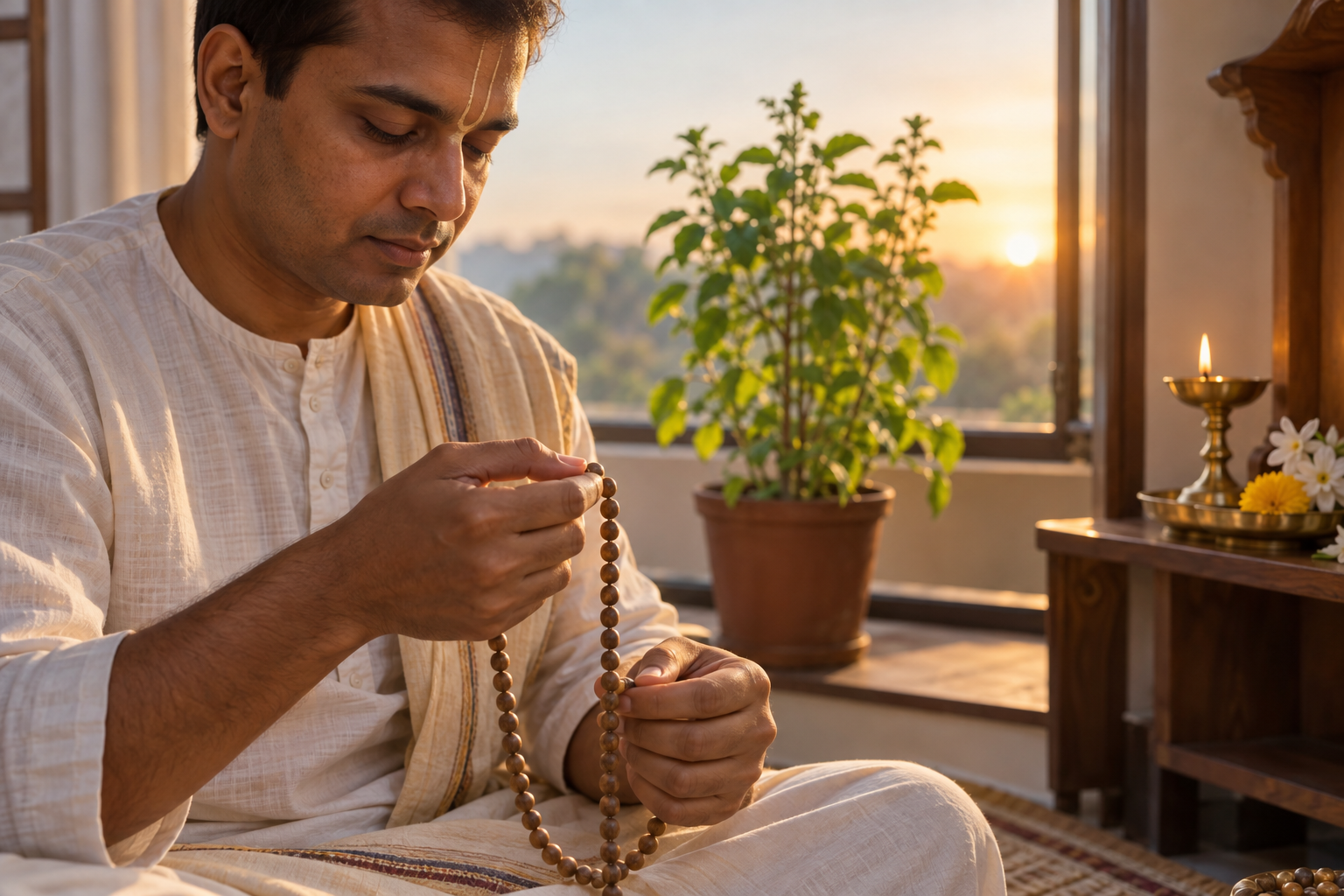
Haridasa Thakura’s remembrance becomes truthful when the holy name is more than the day’s theme. Your real point of examination is ordinary japa: the practice done when no festival is underway, no audience is watching, and the mind would rather be elsewhere.
Begin with the commitment you already have. Put the phone beyond reach. Sit in a place where interruption is less likely. Pronounce each mantra carefully enough to hear what you are chanting. When attention wanders, return without turning the lapse into either an excuse or a drama. Afterward, notice the distraction that recurred most often and remove one practical cause before the next session.
Resist the temptation to imitate an extraordinary saint by making an extraordinary numerical promise. A sudden increase that produces hurried chanting, neglected duties, or abandonment a few days later does not express steadiness. The proper response to an exalted example is not theatrical imitation but honest movement in the same direction, according to your adhikara and the guidance you have received.
Choose a sustainable continuation. You might keep the phone outside the chanting space, begin japa at a fixed point in your morning routine, attend regular nama-kirtan, or stop a form of careless speech that contradicts remembrance of the holy name. Make the commitment modest enough to keep and definite enough to verify.
Common mistakes that weaken the observance
- Treating the day as passive media consumption. A livestream can bring temple darshan and katha into your home, but continuous viewing is not the same as participation. Set aside a defined presentation, listen without multitasking, and follow it with your own chanting or service.
- Arguing over the civil date. Calendar questions should be clarified, not weaponised. Follow the recognised calendar of the community with which you actually practise and ask respectfully when another community’s timing differs.
- Inventing austerities. Do not assume that every sacred day requires the same fast. Unauthorised severity can shift attention from remembrance to personal endurance. Follow the vrata you have actually been given.
- Copying external achievement without inner preparation. Admiration for Haridasa Thakura should reveal how casually you may approach the holy name, but it should not produce a vow beyond your capacity. Strengthen regularity, attention, and humility first.
- Reducing remembrance to historical information. Biography is valuable when it produces discipleship. After hearing, name the teaching you will practise. If nothing changes in your chanting, speech, or service, gather less information and apply more of what you already know.
- Turning tribute into self-display. Photographs, announcements, and public messages can inform others, but they are not the measure of devotion. Complete the private substance of the observance before presenting its visible form.
None of these corrections requires you to imitate someone else’s household. A temple resident, a family with young children, and a devotee observing alone may have very different schedules. The common test is whether the form you choose protects attentive hearing, sincere chanting, and responsible service.
Key takeaways
- Follow the date and observance instructions given by your temple, sangha, or spiritual teacher.
- Build the day around focused katha, attentive chanting of the holy name, prayer, and concrete seva.
- Use the 2026 Vrindavan presentation as a hearing and darshan opportunity if you are observing from home.
- Do not invent a fast, an unfamiliar ritual, or an unsustainable chanting vow.
- Let Haridasa Thakura’s example correct your ordinary japa rather than merely inspiring a special programme.
- Carry one clear and sustainable improvement into the days that follow.
Before the observance begins, decide what you will hear, when you will chant, and which service you will offer. Then keep the day quiet enough for those choices to affect the way you invoke the holy name the next morning.
References

Leave a Reply
You must be logged in to post a comment.