
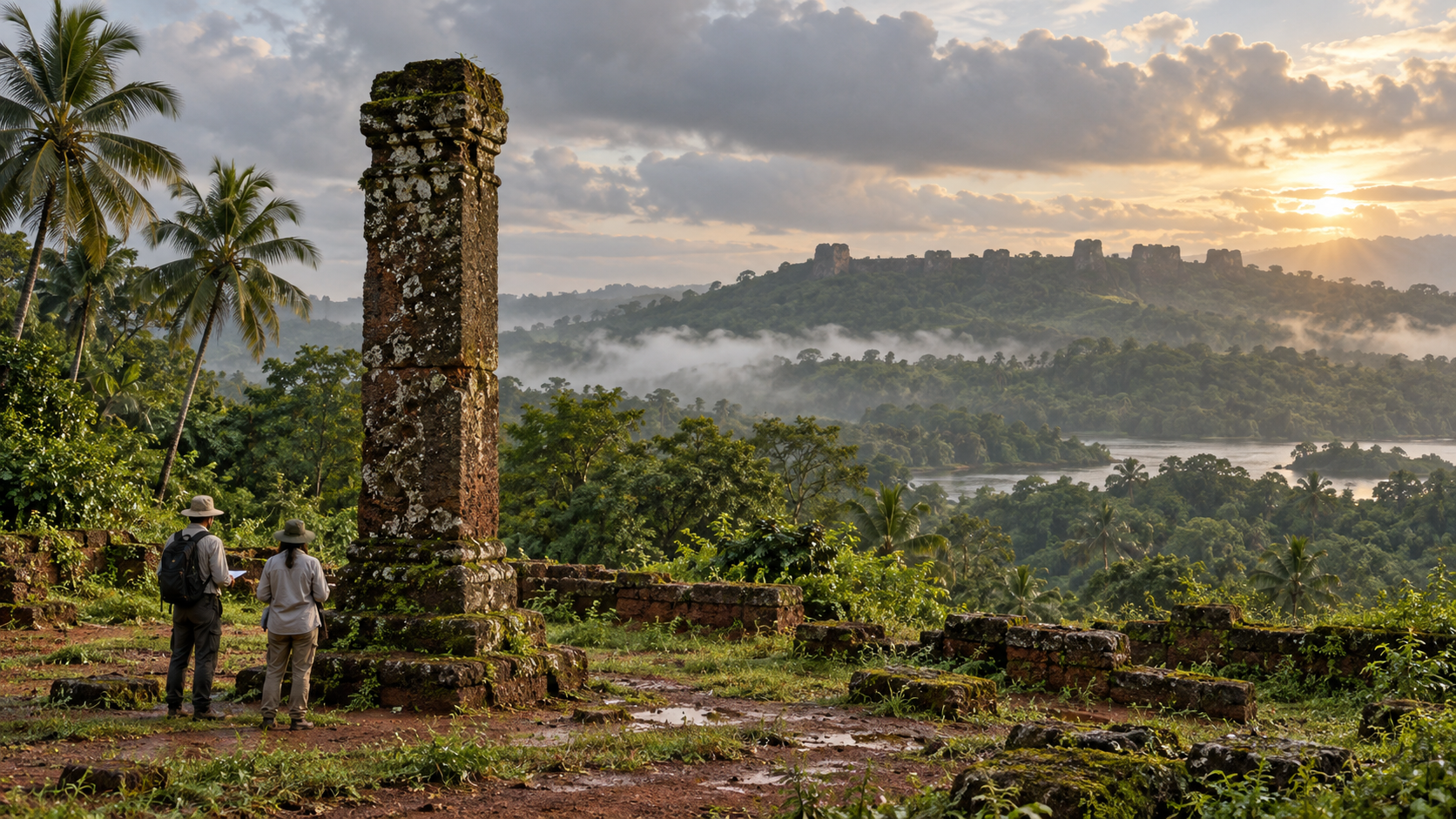
If you care about Goa’s Hindu past, the word “protected” can sound like the end of a long struggle. It is better understood as the beginning of a more disciplined one. A legal declaration can recognize a monument, but only sustained stewardship can preserve its fabric, setting, meaning, and place in public memory.
Goa has declared Haat Katro Khamb in Old Goa and Mardangad in Ponda protected monuments under the Goa Ancient Monuments and Archaeological Sites and Remains Act, 1978. If you welcomed that decision, your next question should be practical: what must happen now so that protection produces visible, durable results?
Protected status creates a duty to follow through
Recognition matters because an unnamed or administratively invisible place is easier to neglect. Once a site enters a formal protection framework, citizens can stop arguing only about whether it deserves attention and start asking how that attention will be delivered.
The declaration does not, by itself, answer every conservation question. It does not automatically tell you the present condition of the structure, the precise protected boundary, who will inspect it, what work has been approved, how visitors will understand it, or how nearby activity will be managed. Those questions should now become the centre of public engagement.
Begin by obtaining the official notification rather than relying on a social-media image or a forwarded message. Read the schedule and any accompanying description. Confirm the monument’s recorded name, location, boundary, responsible authority, and the legal instrument used. If a community organization discusses the site publicly, it should link to or reproduce the official particulars accurately.
Then separate four kinds of protection that are often collapsed into one word:
- Legal protection: the site has an official status and falls within an administrative framework.
- Physical conservation: its material remains are inspected, stabilized, maintained, and protected from avoidable damage.
- Interpretive protection: its history is presented carefully, with evidence distinguished from tradition and unresolved questions.
- Civic protection: local people know why the place matters and have a responsible way to report threats.
A campaign that secures only the first layer has achieved something important, but it has not completed the work. When you write to an authority, speak at a community meeting, or discuss funding, ask which of the other layers is being addressed next.
Build a reliable public record before damage occurs
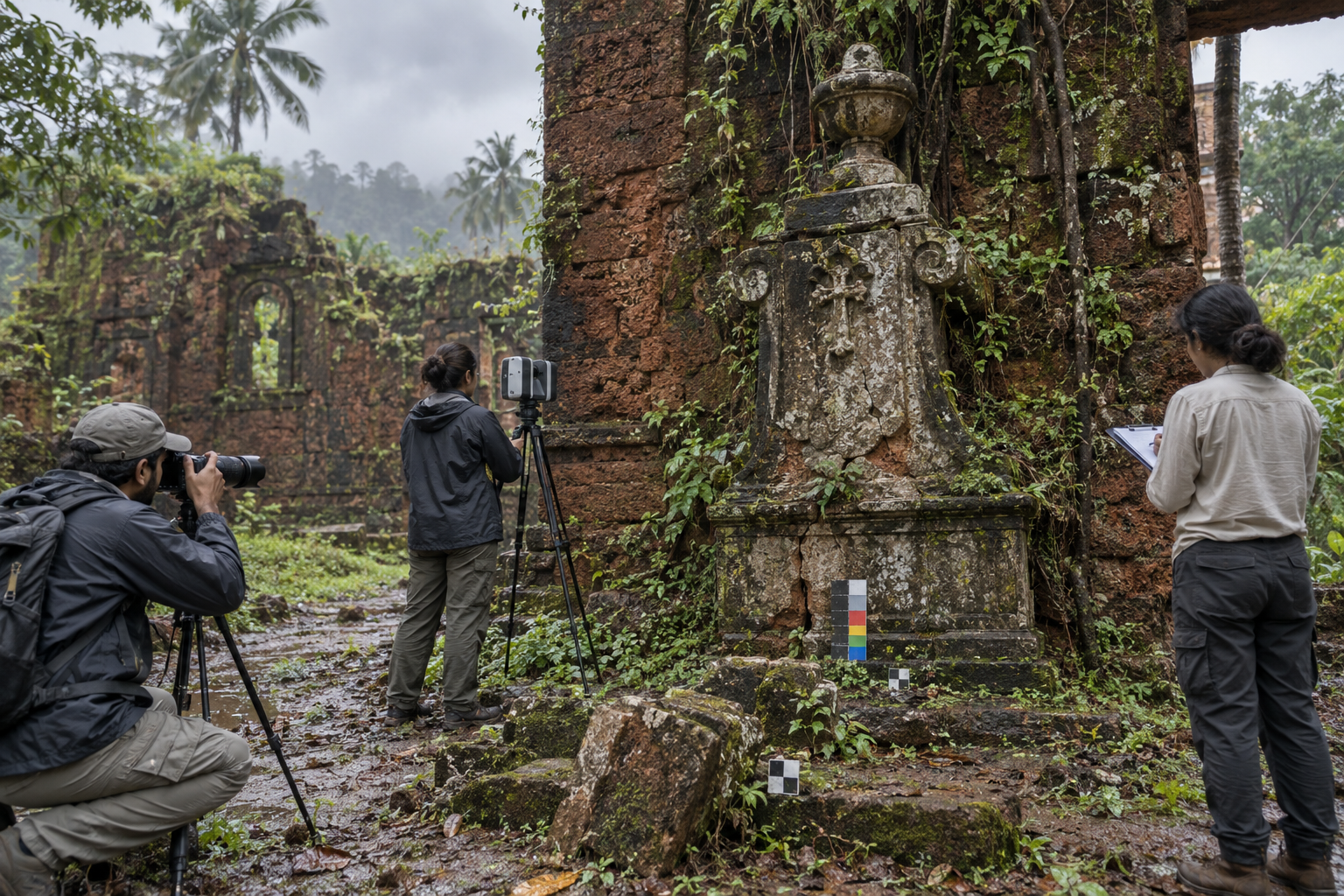
The most useful citizen contribution is often not a slogan. It is a clean, dated record of what exists. Without a baseline, a later crack, missing fragment, displaced stone, new encroachment, or altered approach can become a dispute about memory.
A local heritage group can prepare a basic condition record without touching the monument. Coordinate with the responsible authority or custodian where access is controlled. From publicly accessible areas, document:
- the monument from several fixed viewpoints, including its wider setting and approach;
- visible inscriptions, carvings, structural joints, foundations, and drainage conditions;
- existing cracks, vegetation growth, staining, water accumulation, litter, or nearby ground disturbance;
- fences, gates, signboards, lighting, pathways, and other visitor infrastructure;
- the date, location, photographer, viewing direction, and a short factual caption for every image.
Keep the original files. Do not apply filters, erase inconvenient details, or replace originals with compressed copies from messaging platforms. Store a working copy separately, use consistent filenames, and keep a simple index so another person can locate the relevant image later. A record that cannot be searched or authenticated will be much less useful when a real problem arises.
If you notice possible damage, describe what can actually be seen. Write “a stone appears displaced beside the eastern edge” rather than immediately alleging who moved it or why. Include the date, photographs, and a location description, then send the report to the responsible public authority. Ask for an acknowledgement and preserve the correspondence. If there is active vandalism or an immediate safety risk, keep your distance and contact the appropriate authorities instead of confronting anyone.
Public documentation also needs restraint. Do not circulate close location details for loose artefacts or vulnerable fragments merely to attract attention online. Share sensitive information directly with the custodian or archaeological authority. Visibility should protect the site, not advertise an opportunity for removal.
Keep conservation separate from devotional enthusiasm
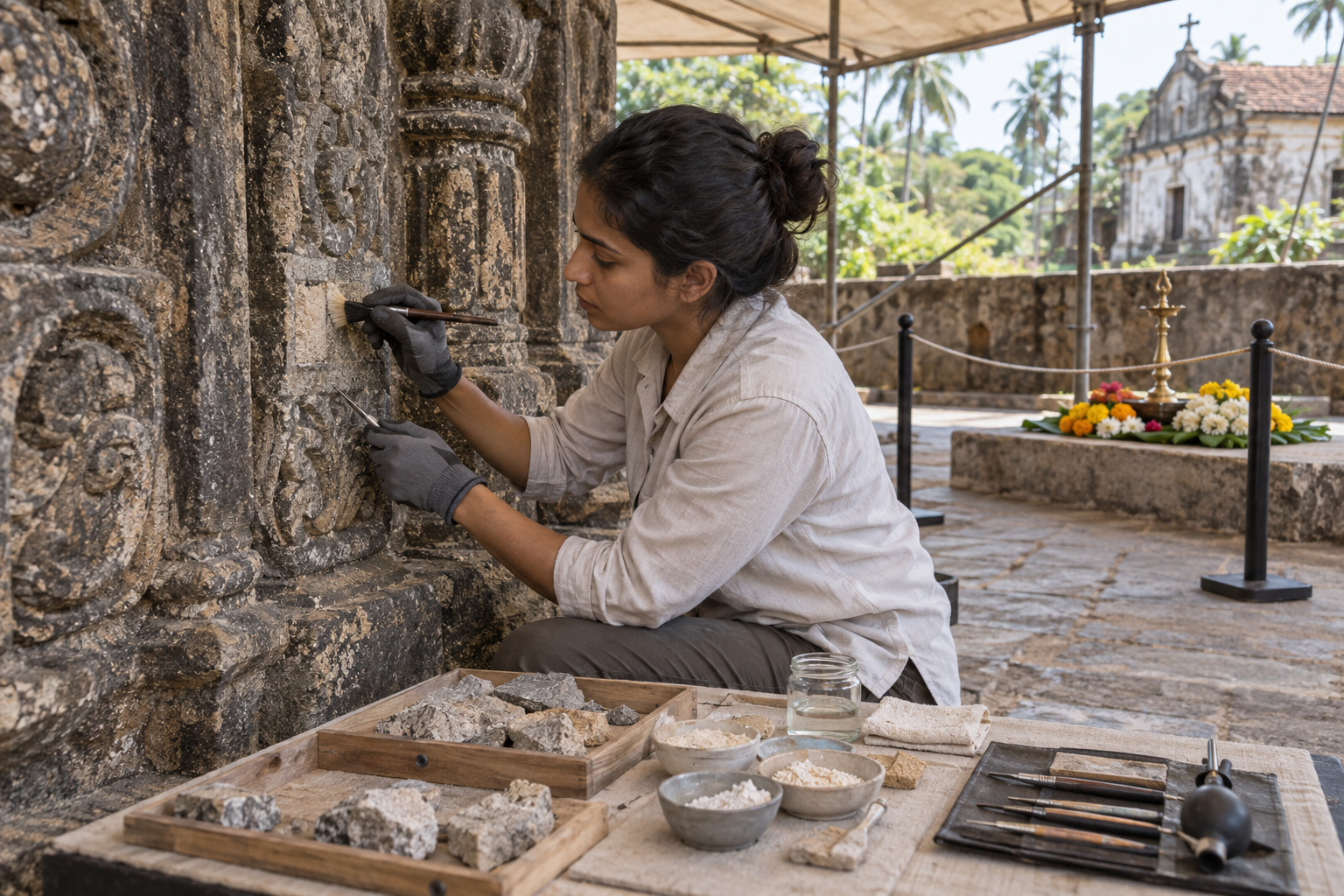
People who love a monument naturally want to improve it. That impulse can become destructive when cleaning, painting, cementing, digging, fixing plaques, attaching flags, lighting lamps against historic surfaces, or moving stones is undertaken without professional assessment and authorization.
Old material does not behave like a modern wall. A substance that makes a surface look cleaner today can remove historic marks, trap moisture, accelerate decay, or make later conservation harder. Even a well-meant coat of paint can conceal tool marks, inscriptions, pigments, or evidence of earlier construction. Do not treat the monument as a volunteer repair project.
You can still contribute without touching historic fabric. Community members can keep the public approach free of litter where permitted, organize educational visits, translate verified information, help elderly visitors, record oral memories, and report maintenance problems. Donations should be tied to a defined, authorized need rather than handed over for an unspecified “renovation.” Before supporting work, ask who approved it, who designed it, who will supervise it, what material will be used, and how the intervention will be documented.
The same discipline applies to religious observance near a protected place. If the site has living devotional significance, conservation and worship should be planned together with the relevant custodians and community. The aim is not to strip a Hindu site of sacred meaning. It is to ensure that present practice does not unintentionally erase the material inheritance that carries that meaning forward.
Give each monument an honest and accessible public memory
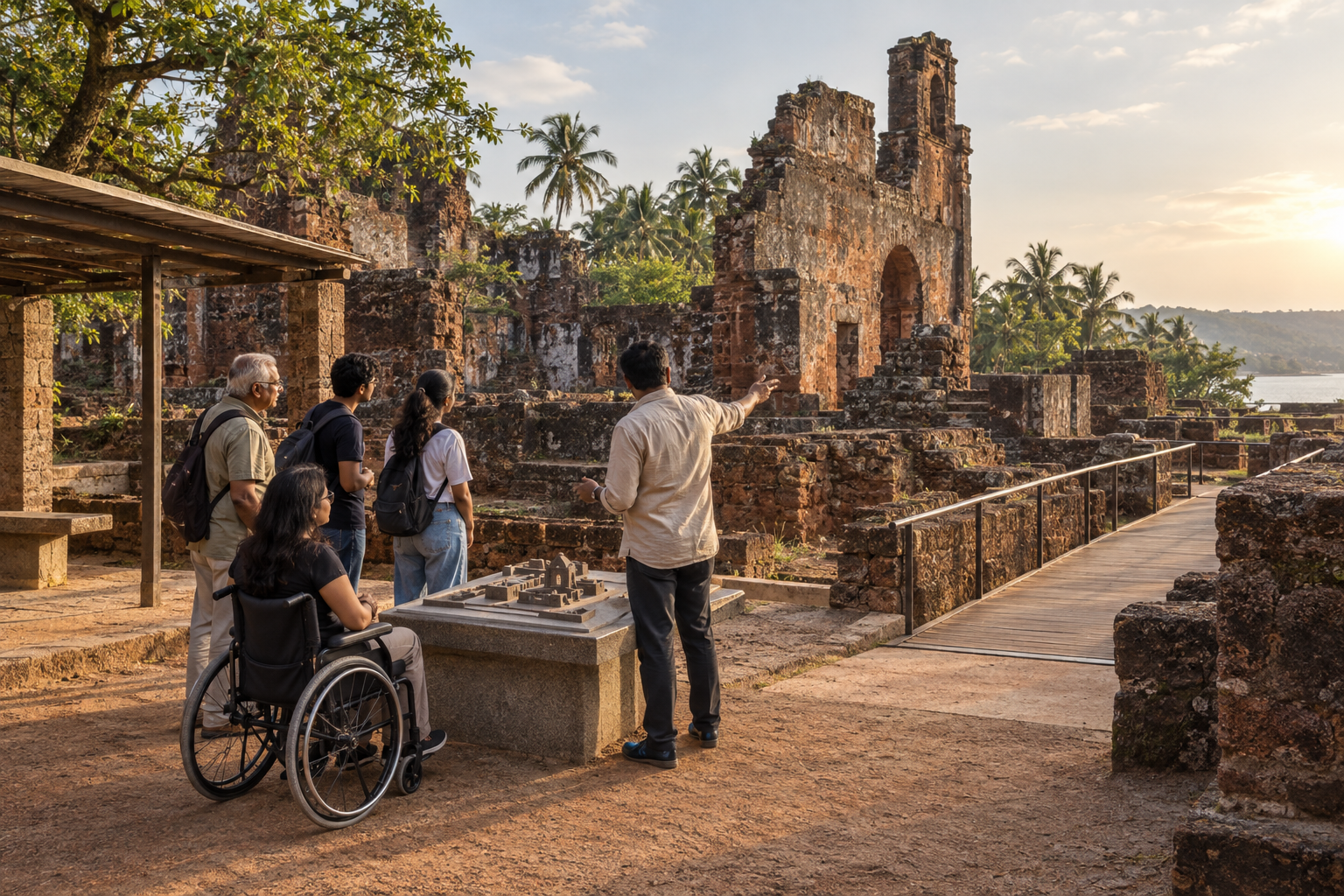
A monument can remain culturally unprotected even when its stonework survives. If visitors encounter no accurate sign, no intelligible account, and no way to distinguish evidence from speculation, the place becomes an empty object onto which anyone can project a convenient story.
Good interpretation should tell visitors what the place is, why it matters, what evidence supports the account, and what remains uncertain. It should not flatten every kind of knowledge into a single claim. Keep official records, physical or archaeological evidence, archival material, community memory, and modern interpretation clearly labelled. Oral tradition deserves preservation, but presenting it as oral tradition makes it stronger, not weaker.
This standard is especially important for Hindu heritage. Overstatement gives critics an easy reason to dismiss a legitimate conservation demand. Understatement can make Hindu memory disappear behind neutral administrative language. The sound approach is evidence-led and unafraid: state verified facts plainly, preserve attributed community memories, and identify contested points rather than pretending that no disagreement exists.
Ask for interpretation that works for the people who will actually visit. A useful sign should have legible text, a clear site plan where needed, responsible translations, and a route to further verified information. A digital page can carry photographs, records, and longer explanations that will not fit on a physical board. It should also display the date of its last revision so that readers can tell whether the information is being maintained.
Schools, temple organizations, historians, neighbourhood groups, and cultural bodies can help by adopting a shared evidence standard. Before publishing a booklet, video, exhibition, or social-media thread, check every proper name, location, legal designation, image caption, and historical assertion. If a claim cannot yet be verified, label it honestly and record what evidence would be needed. Protecting a monument also means protecting its history from careless repetition.
Key takeaways
- Treat protected status as the start of accountable conservation, not as proof that every physical and interpretive need has been met.
- Obtain the official notification and identify the recorded boundary, responsible authority, and next administrative action.
- Create dated, searchable condition records from permitted locations, preserving original photographs and factual captions.
- Report visible problems without guessing at causes, and keep a written trail of reports and responses.
- Do not clean, paint, excavate, attach objects, move fragments, or repair historic fabric without authorization and conservation expertise.
- Present verified history, oral memory, and unresolved claims as distinct categories so that Hindu heritage is defended with precision.
The declarations for Haat Katro Khamb and Mardangad give Goa an opportunity to establish a better pattern: recognition followed by documentation, professional care, honest interpretation, and public accountability. Choose one concrete contribution now. Obtain the notification, begin a condition archive, request an interpretation plan, or organize a responsible local monitoring group. A monument stays protected when citizens keep asking specific questions long after the announcement has passed.
References

Leave a Reply
You must be logged in to post a comment.