
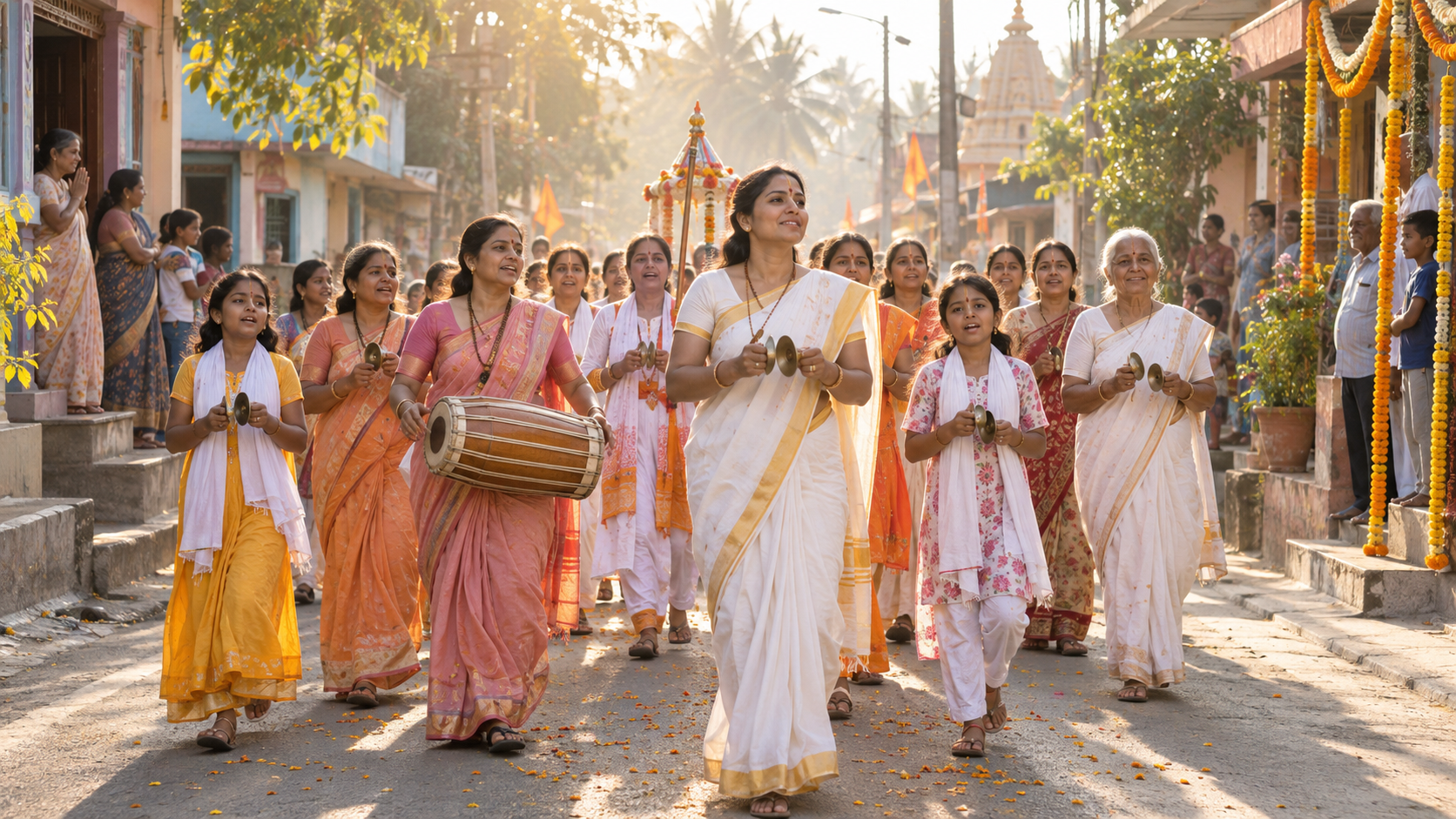
You want women and girls to carry Krishna-bhakti into public space, but a successful padayatra needs more than a route, a banner, and a kirtana group. The real question is whether the walk will make devotion visible in a form that participants can sustain and the public can understand.
Treat the event as walking seva. Give it a clear sankalpa, place women in genuine leadership, protect the devotional atmosphere, and plan the closing as carefully as the procession itself. That turns a one-day gathering into meaningful outreach rather than a passing spectacle.
Begin with a sankalpa the public can understand
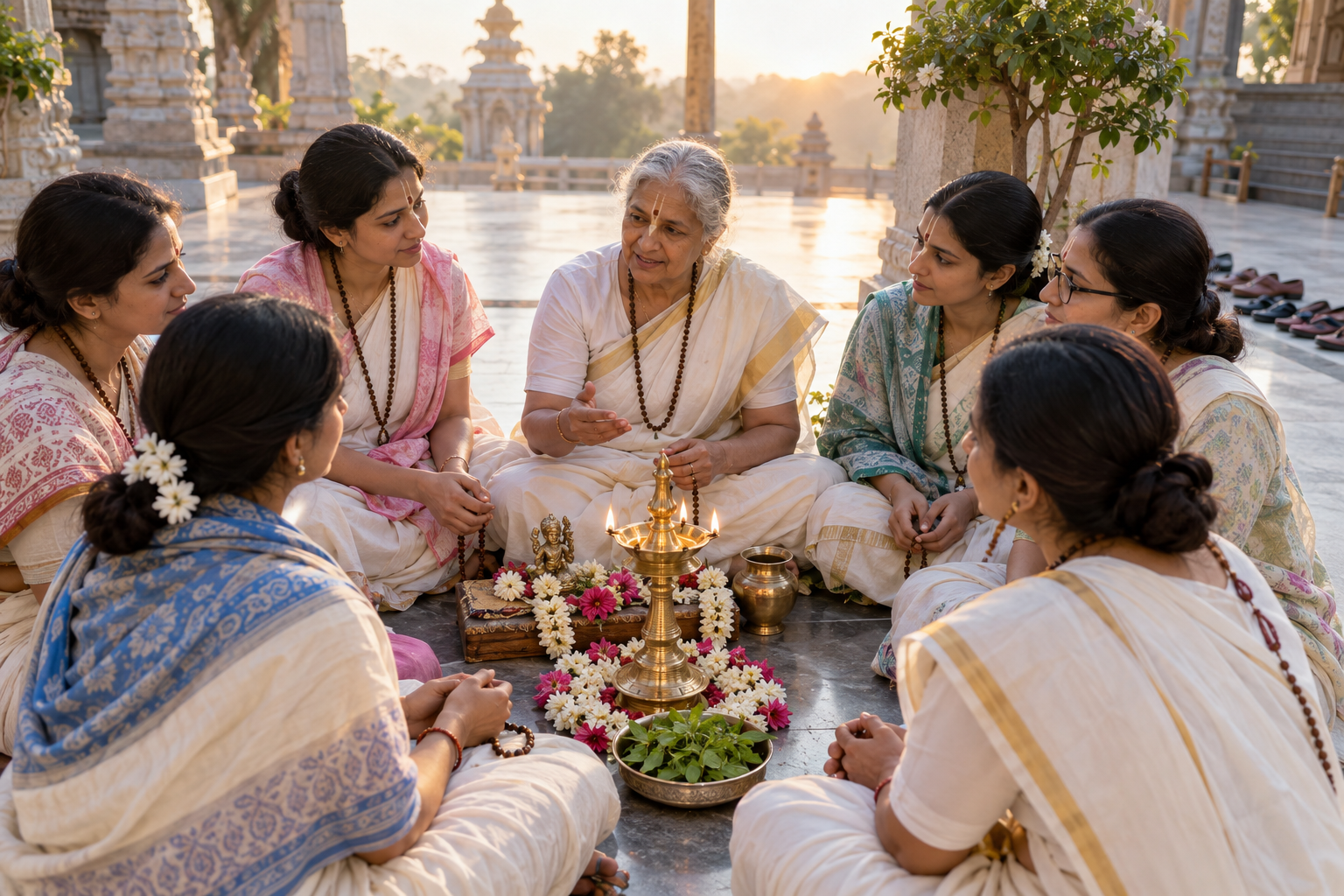
A Vaishnavi is a woman devoted to Vishnu or Krishna, and a padayatra is a devotional journey on foot. Yet those definitions alone do not tell your volunteers what kind of event they are organizing. Before discussing flags, clothes, transport, or publicity, write one sentence that answers three questions: who is walking, why they are walking, and what they hope to offer others.
A workable sankalpa might be: “Women and girls will walk together in kirtana to share Krishna’s message of peace, compassion, humility, and respect for all living beings.” That is specific enough to guide conduct without turning the procession into a lecture.
This distinction matters because the boundary around participation is not the boundary around outreach. The Vaishnavi Padayatra organized in Nagpur on 15 August 2026 was exclusively for girls and women, while its message was directed toward the wider public. If you are planning a similar event, state both facts clearly: who may join the walking group and whom the group hopes to serve.
Use these questions to test your sankalpa before approving the event:
- Can every volunteer explain the purpose in one or two sentences?
- Are kirtana, bhajans, prayer, and respectful conduct central, or have they become decorations around a social gathering?
- Will a passer-by understand what the procession stands for without already knowing ISKCON terminology?
- Does the plan express compassion and humility in practice, especially when someone is indifferent, hurried, or argumentative?
- Have you separated the devotional purpose from unrelated political slogans, commercial promotion, and personal publicity?
Put the final sankalpa on the volunteer briefing sheet. When questions arise during planning, return to it. If an activity does not serve that purpose, it probably does not belong in the padayatra.
Build a complete devotional arc, not merely a walking route
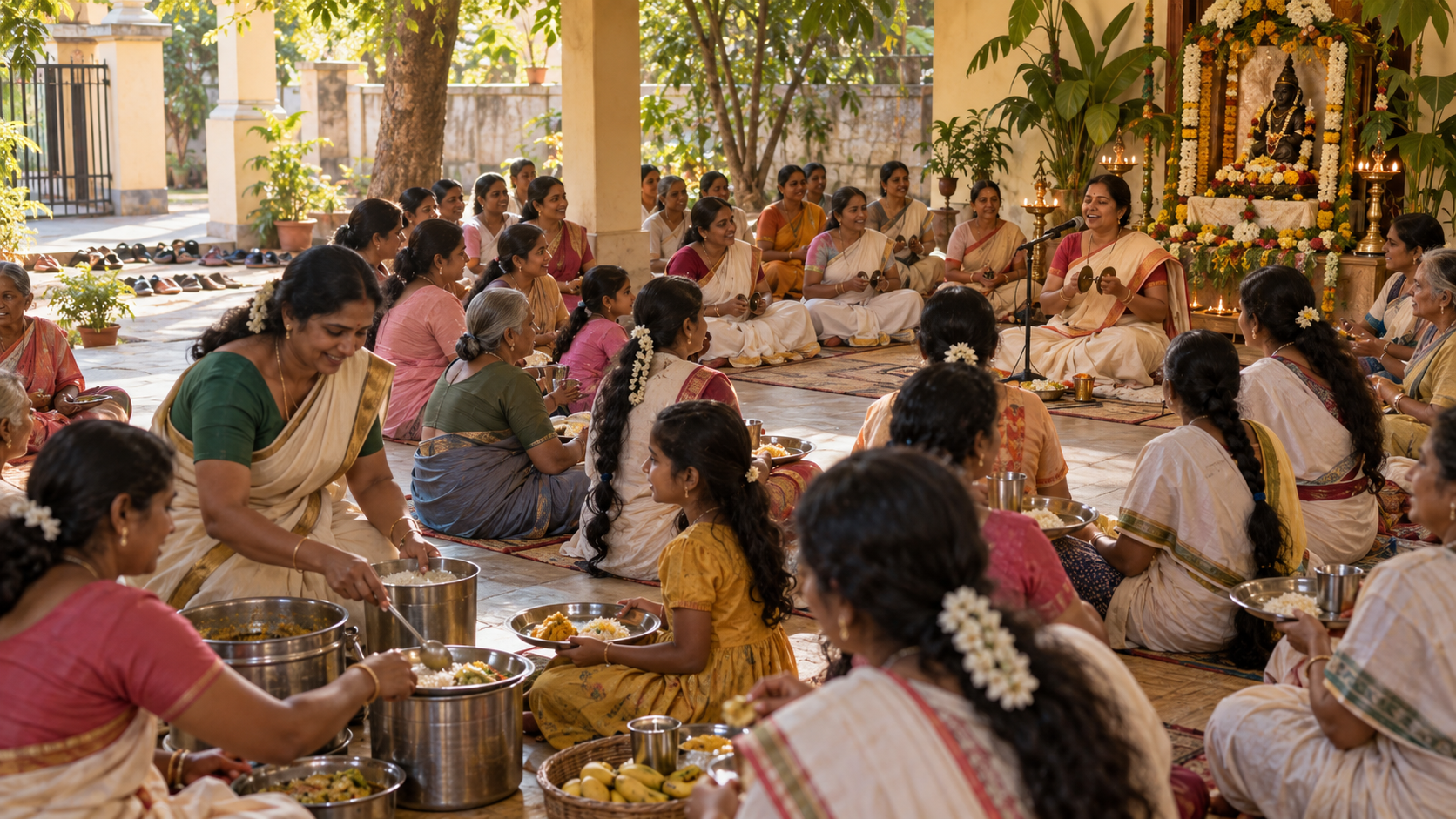
The route is part of the spiritual design. In Nagpur, the procession began and ended at Shri Laxmi-Narayan Mandir in Sakkardara, passed through different parts of the city, and kept the Hare Krishna maha-mantra and devotional bhajans at its centre. Beginning and concluding at one mandir also gives participants a recognizable place for assembly, prayer, belongings, prasadam, and dispersal.
Organize your own event as a sequence with a clear beginning, middle, and end:
- Assembly: Register participants, identify the route stewards, review conduct, and explain what to do if the group becomes separated.
- Invocation: Begin with prayer, blessings, and a concise statement of sankalpa. Participants should know why they are walking before they enter the street.
- Procession: Maintain an intelligible pattern of mantra, bhajans, and responses. The sound should feel devotional rather than competitive or chaotic.
- Public contact: Let designated volunteers answer questions while the main group keeps moving and chanting.
- Return and closure: Bring everyone back into a focused setting for prayer, gratitude, prasadam, and the next invitation.
Walk the proposed route with the core team at the same general time of day that you intend to hold the procession. Notice narrow pavements, difficult crossings, traffic pressure, construction, toilets, drinking-water access, shaded stopping points, and places where the group could accidentally split. A route that looks simple on a map may be unsuitable for children, older participants, or anyone with limited mobility.
Confirm procession, sound, traffic, flag, and food-distribution requirements with the mandir leadership and the relevant local authorities before announcing the route. Do not assume that a previous temple event establishes permission for a new public procession. Put the name and telephone number of the responsible organizer on every route steward’s briefing sheet.
Prepare a bad-weather and disruption decision as well. The team should know who may shorten, pause, redirect, or end the walk. That authority should never be argued over in the street.
Give women responsibility, visibility, and room to participate
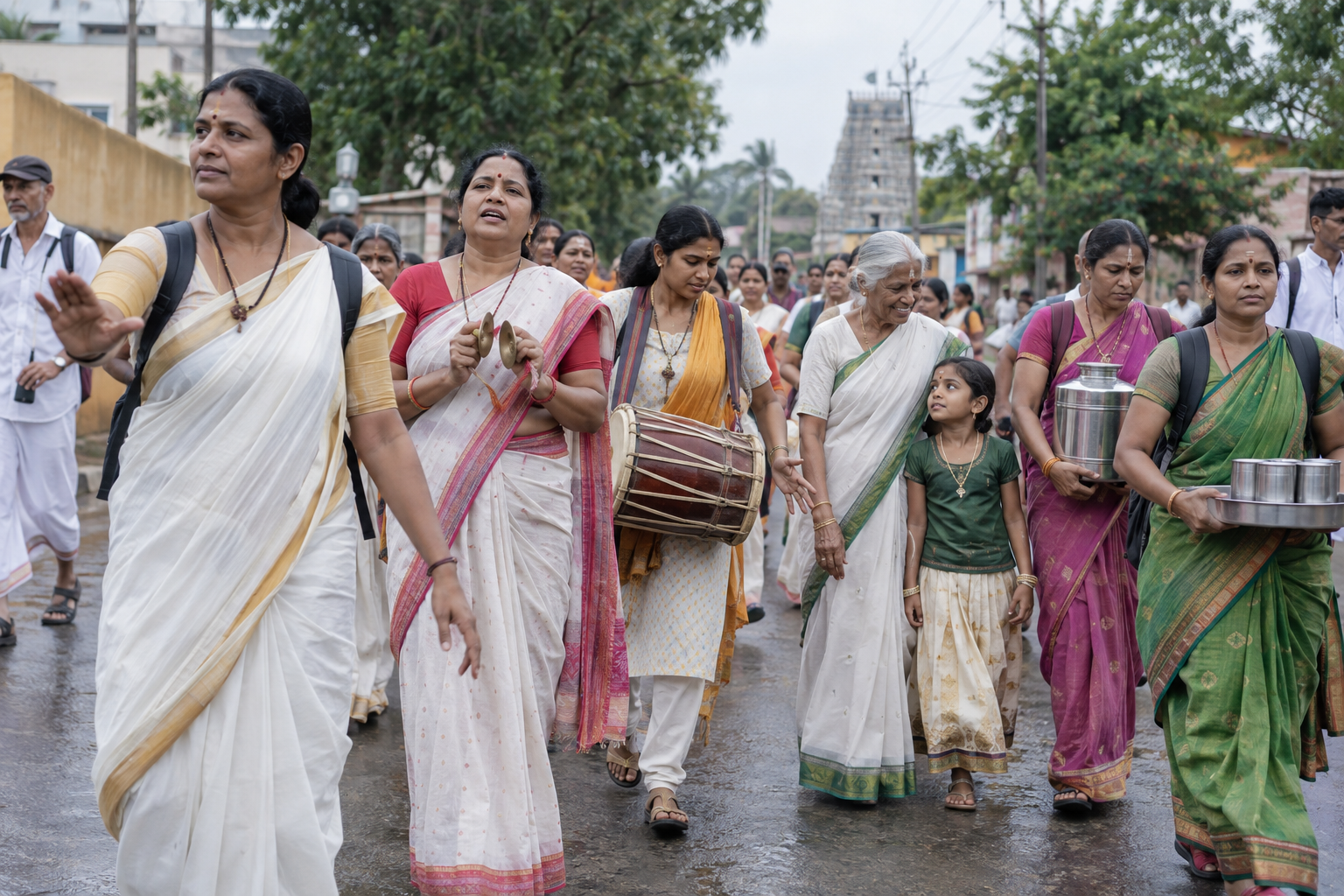
A women’s padayatra should not place women at the front for photographs while leaving every meaningful decision elsewhere. Women should hold the visible and operational responsibilities that make the event work: setting the devotional tone, leading kirtana, coordinating the route, caring for participants, speaking with the public, and conducting the conclusion.
Create a written role roster rather than asking for help informally on the day. Useful roles include:
- Spiritual anchor: opens the gathering, protects the sankalpa, and guides the concluding prayer.
- Kirtana leads and response leads: coordinate chants and bhajans so that different voices can serve without the sound becoming disjointed.
- Route coordinator: holds the approved route and communicates any change.
- Route stewards: keep the group together at crossings, turns, and crowded sections.
- Participant-care team: watches for fatigue, distress, lost belongings, separated family members, and accessibility needs.
- Public-engagement volunteers: answer questions without interrupting the kirtana.
- Prasadam team: prepares the serving area, gives ingredient information where needed, and handles distribution respectfully.
- Documentation coordinator: manages photographs and recordings with consent, especially where children are involved.
If girls will participate, use the mandir’s established safeguarding procedures and make guardian, supervision, check-in, and handover arrangements explicit. Do not improvise child-safety rules at the assembly point.
Traditional attire and devotional flags gave the Nagpur procession a coherent public identity. You can adopt the same visual clarity without turning clothing into a financial or social barrier. Tell participants what is expected well in advance, distinguish a requirement from a preference, and provide a modest alternative when someone does not own a particular garment. The purpose of a dress guideline is dignity and cohesion, not a test of status.
Make room for different kinds of participation. Not every woman will be ready to lead a bhajan or speak to strangers. Some may serve through route care, prasadam, registration, prayer, or welcoming first-time participants. A sound plan does not confuse public confidence with spiritual seriousness.
Let public conduct carry the message beyond the kirtana
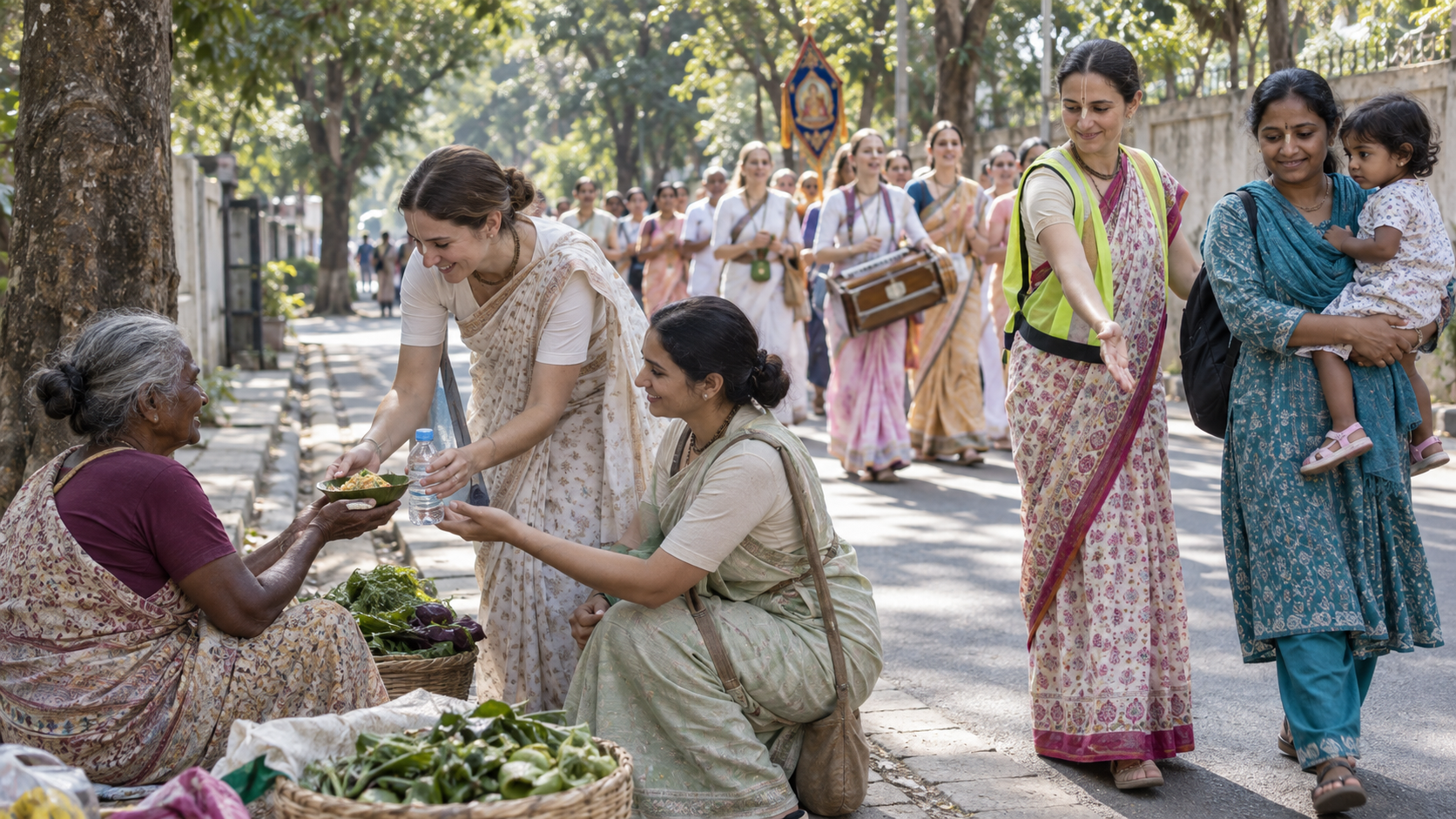
People along the route may hear the mantra before they understand the event. Your volunteers’ conduct supplies the missing explanation. Calm movement, patient answers, clean surroundings, consideration at crossings, and respect for people who do not engage are not secondary logistics. They are part of the teaching.
Give public-engagement volunteers a short, natural explanation they can adapt:
This is a Vaishnavi Padayatra, a devotional walk led by women and girls. We are chanting the Hare Krishna maha-mantra and sharing a message of peace, compassion, humility, and respect for all living beings.
Suggested outreach wording
That answer is enough for most brief encounters. If someone wants a deeper conversation, direct them to a designated speaker or invite them to an appropriate temple programme. Do not make every participant responsible for debating theology while walking. If someone tries to provoke an argument, the steward’s task is to keep the group peaceful and moving, not to win the exchange.
The conclusion is the moment when public visibility can become a continuing relationship. The Nagpur padayatra closed with special prayers and prasadam. For your event, decide in advance who will lead the prayer, where prasadam will be served, how queues will move, how ingredient questions will be answered, and who will clean the area. Sacred hospitality loses force when distribution feels confused or waste is left behind.
Offer one clear next step rather than a handful of vague promises. It might be the next women’s satsanga, an ISKCON Girls Forum gathering, a regular temple programme, or a service opportunity. If you collect contact details, ask permission and state what messages the person will receive. A photograph or telephone number is not evidence of spiritual follow-through; a respectful invitation is.
Hold a short debrief with the organizing team after the event. Ask questions that reveal whether the sankalpa survived contact with the street:
- Could participants and onlookers explain the purpose of the walk?
- Did women hold real leadership throughout the event?
- Where did the route become unsafe, inaccessible, or disorganized?
- Were questions answered with patience and clarity?
- Did prayer and prasadam provide a genuine conclusion rather than an abrupt dispersal?
- What specific invitation was offered to someone who wanted to continue?
Record the answers while details are still fresh. Those observations should shape the next padayatra more than attendance claims or flattering photographs.
Key takeaways for your organizing team
- Write a one-sentence sankalpa before planning publicity or visuals.
- State separately who may walk and whom the outreach is intended to serve.
- Design a devotional arc: assembly, invocation, kirtana, public contact, prayer, prasadam, and a clear next invitation.
- Inspect the route in person and confirm local requirements before announcing it.
- Assign women to spiritual, operational, care, and public-facing leadership roles in writing.
- Brief volunteers to answer genuine questions without turning the procession into a street debate.
- Treat safeguarding, accessibility, consent, food information, and clean-up as forms of seva.
- Judge the event by clarity, conduct, participation, and follow-through, not visibility alone.
Before you design the banner, gather the core Vaishnavi team, agree on the sankalpa, assign the responsible leads, and walk the proposed route together. Once those foundations are sound, the public expression of bhakti can remain joyful without losing discipline, safety, or spiritual purpose.
References

Leave a Reply
You must be logged in to post a comment.