
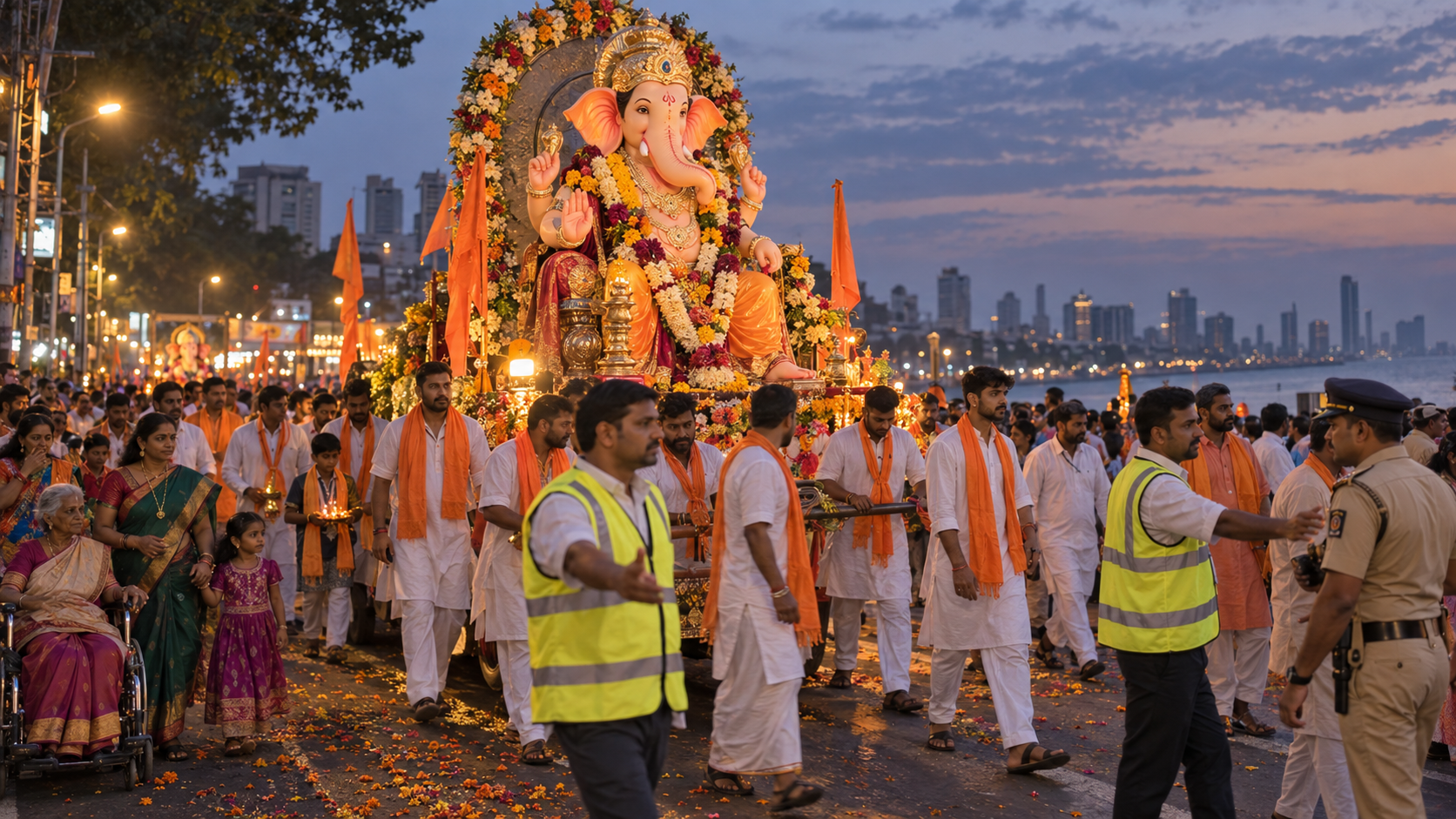
If you are helping organise or attend a Ganesh Visarjan procession, a last-minute threat creates two obligations at once: protect the devotees in front of you and defend their right to complete the observance. Treating those duties as opposites is a mistake.
The strongest response is prepared, disciplined and factual. You need a plan for danger, a plan for arbitrary disruption and a plan for preserving evidence. That lets the community act firmly without handing control of the procession to either panic or provocation.
Separate an attack, an official restriction and a rumour
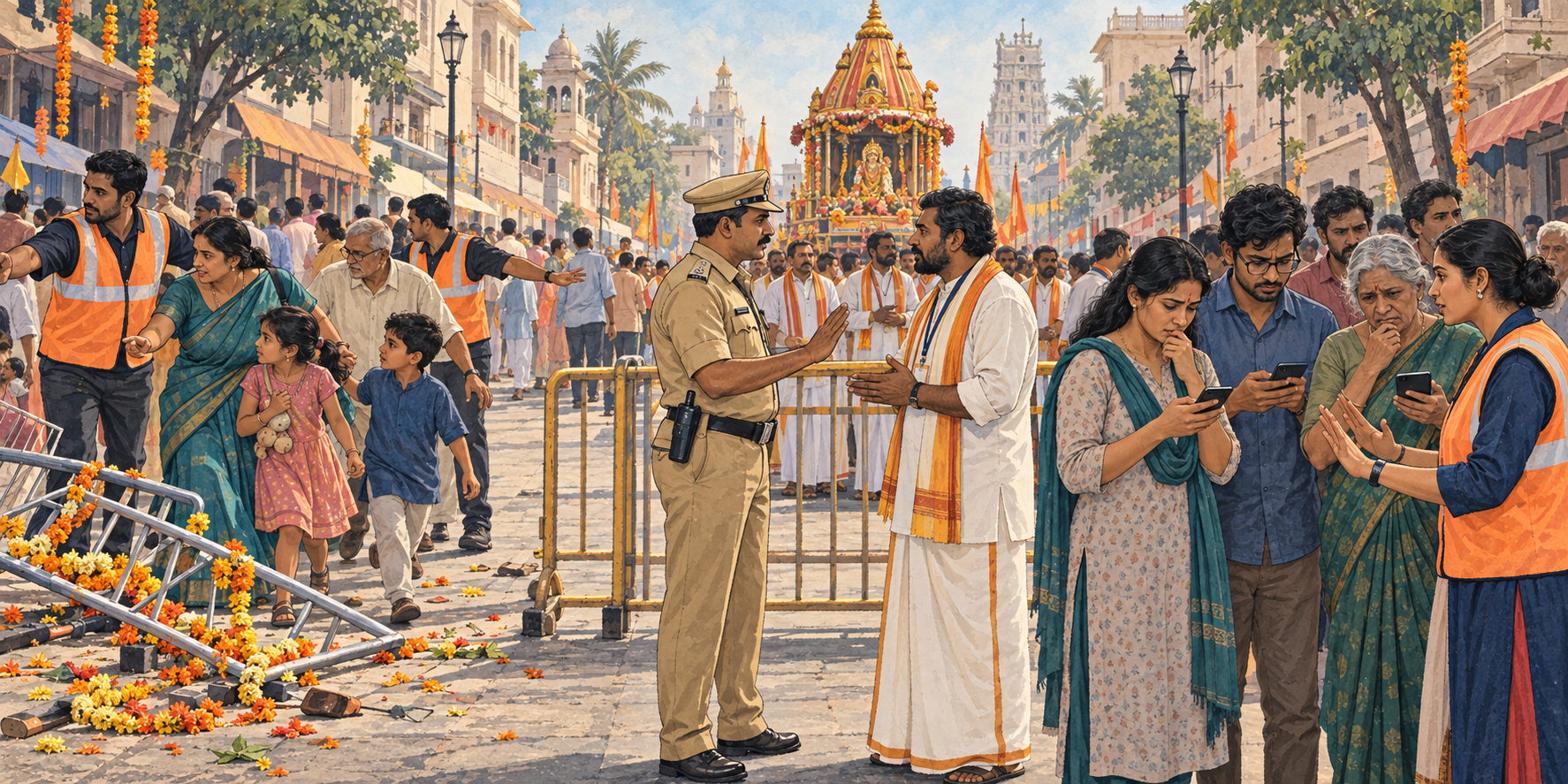
Recent disruptions reported across several states have included stone-pelting, a bomb threat, compelled route changes and other flashpoints, with Bhatkal, Srivilliputhur and Madannapet among the places named. Those events belong in the public record, but they do not all present the same operational problem.
- A physical attack or specific threat requires an immediate safety response. Move people out of exposure, contact emergency authorities and prevent retaliation.
- An instruction from police or another competent authority requires controlled compliance where immediate safety is at stake, followed by documentation of who gave the instruction, why it was given and how the procession can continue.
- An unverified message requires verification before it is announced or forwarded. A rumour about stones, explosives or a blocked route can produce dangerous crowd movement even when nobody has confirmed it.
This distinction matters because a report of several incidents does not, by itself, establish that every incident had the same motive or a common organiser. State what has been verified: the place, the conduct, the affected procession and the official response. If responsibility or motive has not been established, say that it remains unknown.
A Hindu rights case does not become stronger when gaps are filled with speculation. Precision makes it harder for officials, media outlets or political actors to dismiss a genuine grievance as communal rumour.
Build a plan before the murti begins moving
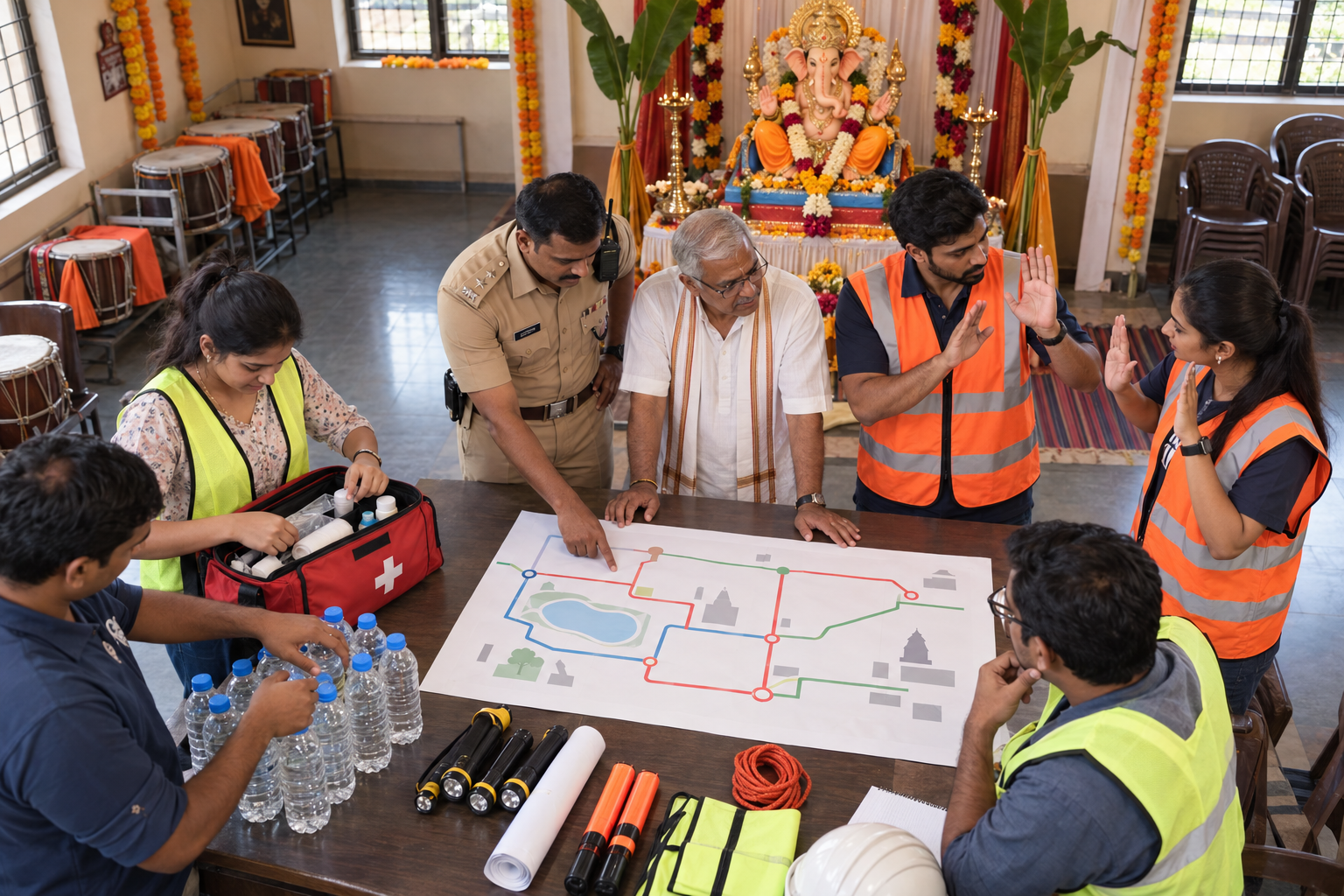
A route plan is not enough. Organisers need a disruption plan that still works when mobile networks are crowded, the procession is split or the person in charge cannot be reached. Put the essentials in writing and brief marshals before departure.
- Carry the route record. Keep the approved route, timing, immersion point and applicable conditions available both on a phone and in a printed copy. Record any prior communication with authorities.
- Use one command chain. Name a procession lead, a deputy and one police liaison. Marshal teams should know whose direction controls movement. Several people negotiating independently will create conflicting instructions.
- Mark safe pause points. Identify open locations where the procession can halt without compressing people into a narrow lane or trapping vehicles. Also identify exits that can be used if the route ahead becomes unsafe.
- Assign responsibility for vulnerable participants. Place children, older devotees and people with mobility needs in known groups with designated helpers. Set a meeting point for anyone separated from family.
- Create one trusted communication channel. Marshals need a way to receive verified instructions from the procession lead. Participants should be told not to treat forwarded messages or shouted claims as official directions.
- Prepare ordinary safety resources. Carry charged phones, drinking water, torches where needed and accessible first-aid supplies. Know who will contact emergency services and who can guide responders through the crowd.
- Decide the stop conditions. Organisers should know in advance what will pause the procession: stone-pelting, a suspicious object, a specific threat, dangerous crowd compression or a direct safety instruction from police.
- Designate an evidence team. One or two people should document instructions and incidents from a safe position. Everyone else should concentrate on moving, protecting dependants and following marshals.
This preparation is not the militarisation of a sacred observance. It is a way to prevent improvisation by an anxious crowd. Brief participants plainly: remain with the procession, do not leave the line to confront anyone, do not retaliate and do not obstruct emergency access.
Discipline also protects the meaning of Visarjan. Devotional music, prayer and the movement toward immersion should remain the centre of the event. A provocateur should not be allowed to replace that purpose with a street confrontation.
When disruption begins, protect life and deny the provocation
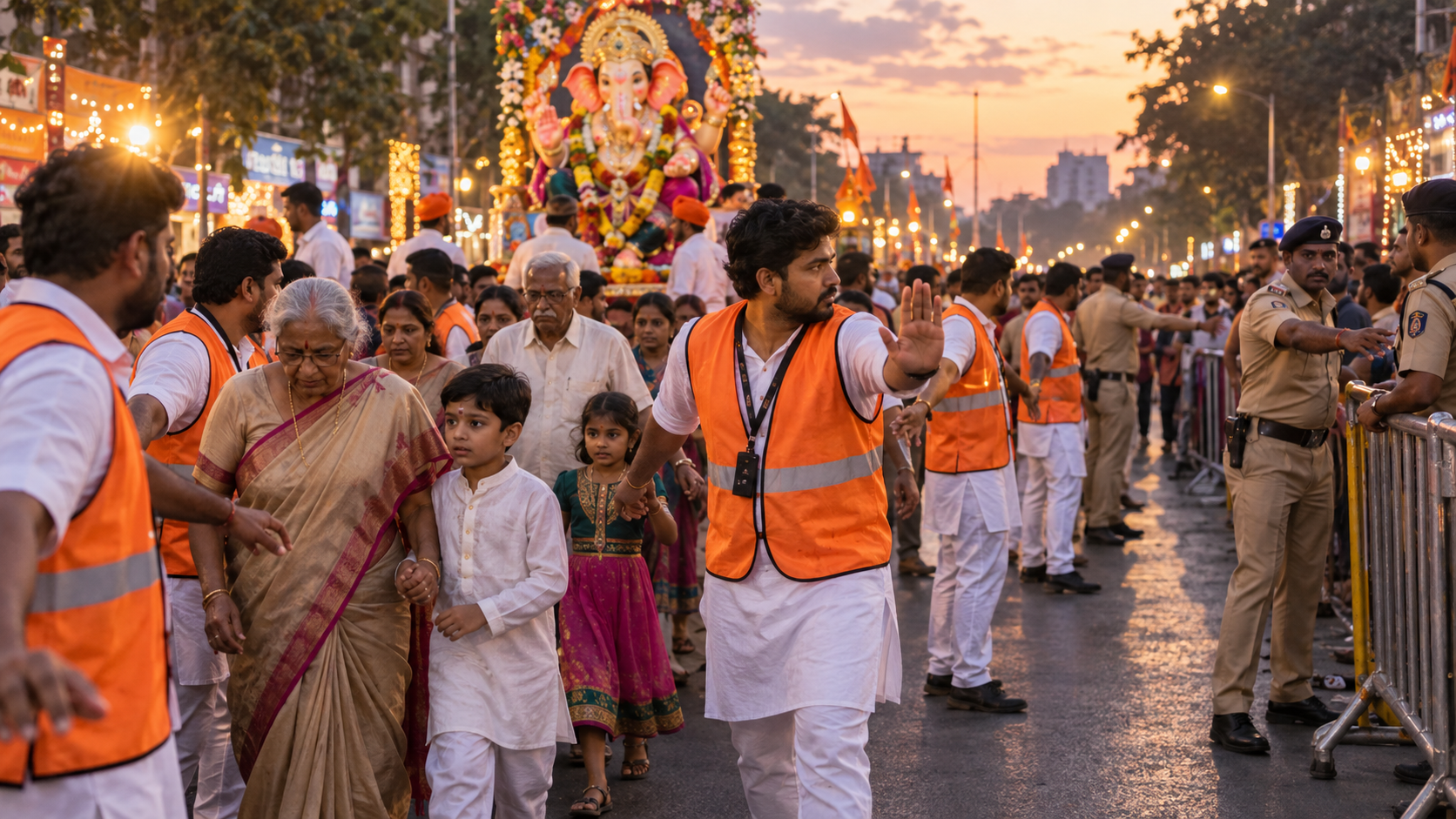
The first minutes determine whether a contained incident becomes a crowd emergency. Organisers should use a short response sequence that marshals can remember under pressure.
- Verify the location. Establish whether the danger is ahead, behind or beside the procession. Do not send participants toward a reported incident to investigate it.
- Stop crowd compression. Pause forward movement when the route is obstructed, but keep exits open. Use one calm announcement rather than competing instructions or inflammatory slogans.
- Move exposed people first. Guide children, older devotees and injured people away from the affected edge of the procession. Do not let spectators gather around the incident.
- During stone-pelting, seek solid shelter. Move away from the exposed direction, protect the head and do not throw objects back. Contact police or local emergency services as soon as it is safe to do so.
- Treat a bomb threat as a security matter. Do not touch, inspect or crowd around a suspicious object. Inform police, clear the area as directed and leave assessment to trained personnel.
- Handle a route order through the liaison. If authorities redirect the procession because they assess an immediate danger, avoid a roadside argument involving the crowd. The liaison should ask who issued the order, its stated reason, whether it is temporary and what safe route will permit the Visarjan to continue.
- Resume only after a clear decision. Participants should move again only after the procession lead has received reliable clearance and marshals are positioned to communicate it.
If someone is injured, care comes before recording. Call emergency services, create room for responders and avoid moving a seriously injured person unless remaining in place exposes them to further danger.
Leaving an exposed area is not an admission that the aggressor was right. Complying with an immediate safety direction does not prevent the community from challenging an arbitrary restriction afterward. The practical rule is simple: do not risk devotees’ bodies to settle a legal or political argument on the road.
A forced route change can be necessary in a genuine emergency and still deserve later scrutiny. Ask whether the restriction was based on a documented risk, whether a workable alternative was offered and whether the original arrangement will be restored for future observances. A threat should not quietly become a permanent veto over Hindu public worship.
Turn eyewitness material into evidence, not fuel
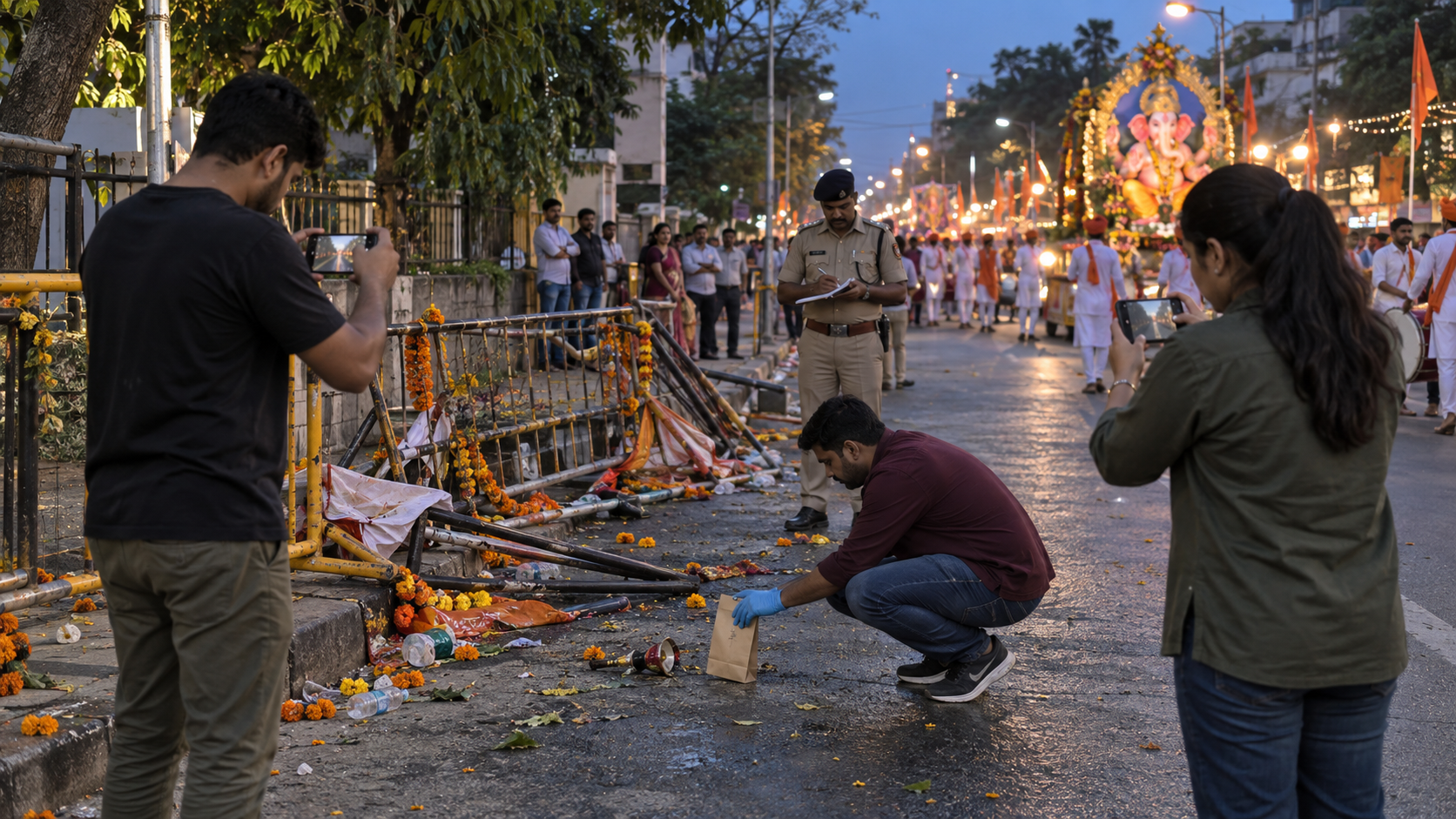
Video is useful only when it helps establish what happened. A dramatic clip without its original file, time, location or surrounding sequence can mislead viewers and weaken accountability. Build an incident record that an investigator, lawyer or responsible editor can examine.
- Start a contemporaneous log. Record the time, precise location, direction of movement, what was personally observed and what action followed. Separate eyewitness information from claims received second-hand.
- Preserve original files. Keep unedited photographs and video with their available metadata. Do not add music, captions or cuts to the evidentiary copy. Back it up before sharing compressed versions through messaging platforms.
- Collect accounts independently. Ask witnesses to write what they saw in their own words before discussing a common narrative. Note where each person was standing and whether they saw the event directly.
- Record official instructions. Note the authority, officer or official who communicated a route change or halt, the stated reason and the alternative offered. Request written confirmation when it is safe and practical.
- Make a formal report. Describe acts, locations, injuries or damage precisely and retain an acknowledgment or reference number. If allegations identify individuals or assert criminal responsibility, obtain qualified legal advice before publishing them.
- Request preservation of nearby footage. Where cameras may have captured the event, promptly ask the relevant owner or authority to retain the material for lawful investigation rather than posting demands for public release.
Public updates should distinguish confirmed facts, unresolved questions and the action being requested. Do not expose the faces of children or injured people merely to make a post more persuasive. Do not identify a suspect from appearance alone. Do not assign collective guilt to an entire religious or local community when the available evidence concerns particular acts by particular people.
This restraint is not silence. It is how you keep attention on the actual wrong: an attack, threat or unjustified obstruction of a sacred procession. Verified facts can support policing, legal review and future security planning. Viral anger usually cannot.
Key takeaways for devotees and organisers
- Carry the approved route and conditions in printed and digital form.
- Give one liaison responsibility for speaking with police and one procession lead authority over movement.
- Brief marshals on pause points, exits, vulnerable groups and the difference between verified instructions and rumours.
- During an attack or specific threat, move people out of exposure, prevent retaliation and let trained authorities assess the danger.
- Comply with immediate safety measures when necessary, but document the order and seek review of restrictions afterward.
- Preserve original evidence, record eyewitness accounts separately and publish only what has been verified.
Once the immediate danger has passed, hold a structured debrief. Record what worked, where communication failed, whether the route was restored and which official actions remain unresolved. Submit a factual written representation and request a planning meeting before the next major procession. Keep the incident file instead of rebuilding the record from social-media posts months later.
Equal citizenship requires that Hindu public worship not be treated as negotiable merely because someone threatens disorder. The most effective defence joins that principle to visible responsibility. Before the next murti leaves the pandal, decide who can stop the procession, who speaks to authorities, who protects vulnerable devotees and who preserves the record. That preparation keeps Visarjan an act of worship even when others attempt to turn it into a crisis.
References

Leave a Reply
You must be logged in to post a comment.