
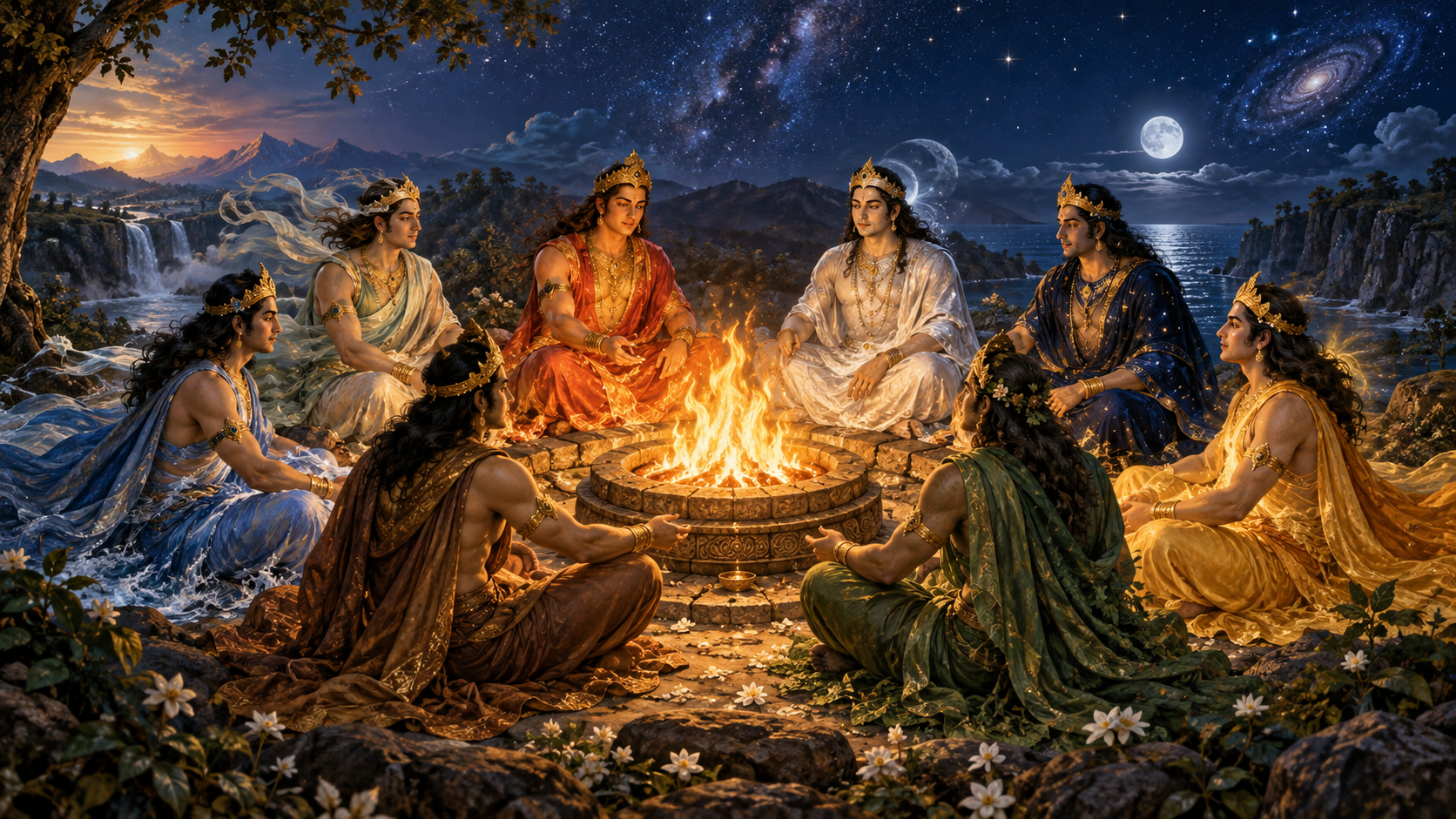
If you have encountered Anala in a temple description, a museum label, or a list of Hindu deities, calling him simply a “fire god” will not take you very far. The more useful question is: what does fire mean when it appears as one part of the eightfold order of the Ashtavasus?
You will understand Anala more clearly when you read the group before the individual, the sacred principle before the personality, and the sculptural setting before any isolated attribute. That method also protects you from confusing Anala with every other divine form connected to flame.
Begin with the eightfold group, not an isolated fire deity
Ashta means eight, and the Ashtavasus are eight cosmic beings whose names express elemental or celestial principles. Anala is the Vasu associated with sacred fire. His identity therefore depends on two connected facts: he embodies a fiery principle, and he embodies it as a member of a larger cosmic order.
This distinction matters. If you detach Anala from the other Vasus, you are likely to search for a self-contained biography or a separate cult comparable to that of a major deity. Within the group, however, he is better approached as a personified power woven into the structure of the cosmos. His individuality is real, but it serves the meaning of the collective.
The word Vasu carries the related senses of one who dwells and one who illumines. Both help you read the group. A Vasu is not merely assigned an external object, as though the cosmos had been divided into eight possessions. The name points toward a power present within the world and making some aspect of it perceptible. Anala’s fire is thus something that inhabits cosmic life, reveals it, and changes it.
When you meet Anala in a list, relief, or theological discussion, ask first what the eight beings are doing together. Are they presenting the world as an ordered whole? Are they attending a more prominent deity? Are they arranged as equivalent members of one class? Those relationships will usually tell you more than an isolated flame motif can.
Sacred fire gives Anala a precise philosophical role

Ordinary fire already teaches through its action. It turns fuel into heat, light, smoke, and ash. It makes a concealed potential visible, yet it does not leave what it touches unchanged. That combination of illumination and transformation provides a disciplined way to approach Anala.
Sacred fire adds another dimension. In Hindu ritual life, fire can receive an offering and mark the movement from private intention to consecrated action. What is inward becomes outward; what is possessed is deliberately released. Anala can therefore be read through four connected functions:
- Presence: fire must be kindled, tended, and kept within a fitting place. This directs your attention to disciplined presence rather than uncontrolled intensity.
- Illumination: flame makes forms visible. Applied inwardly, the image asks what discernment reveals when habit or confusion has concealed it.
- Transformation: fuel does not remain what it was. The relevant spiritual question is not whether change occurs, but what you are allowing the change to produce.
- Offering: sacred fire receives what is consciously given. It therefore points beyond consumption toward surrender, reciprocity, and responsibility.
This reading avoids two common extremes. Anala is not merely a poetic label for a physical substance, but neither does fire become an excuse for vague talk about “energy.” Stay with the observable character of flame: it illuminates, consumes, transforms, and requires proper boundaries. The symbolism gains force because it remains connected to those actions.
You can use the same discipline when reflecting on Anala personally. Do not ask only, “What does fire symbolize?” Ask, “What in my life needs illumination, what is actually being transformed, and what must be tended rather than merely intensified?” Those questions turn a general symbol into a practical contemplation without pretending that the deity is a slogan for self-improvement.
Anala and Agni are related, but context decides the name
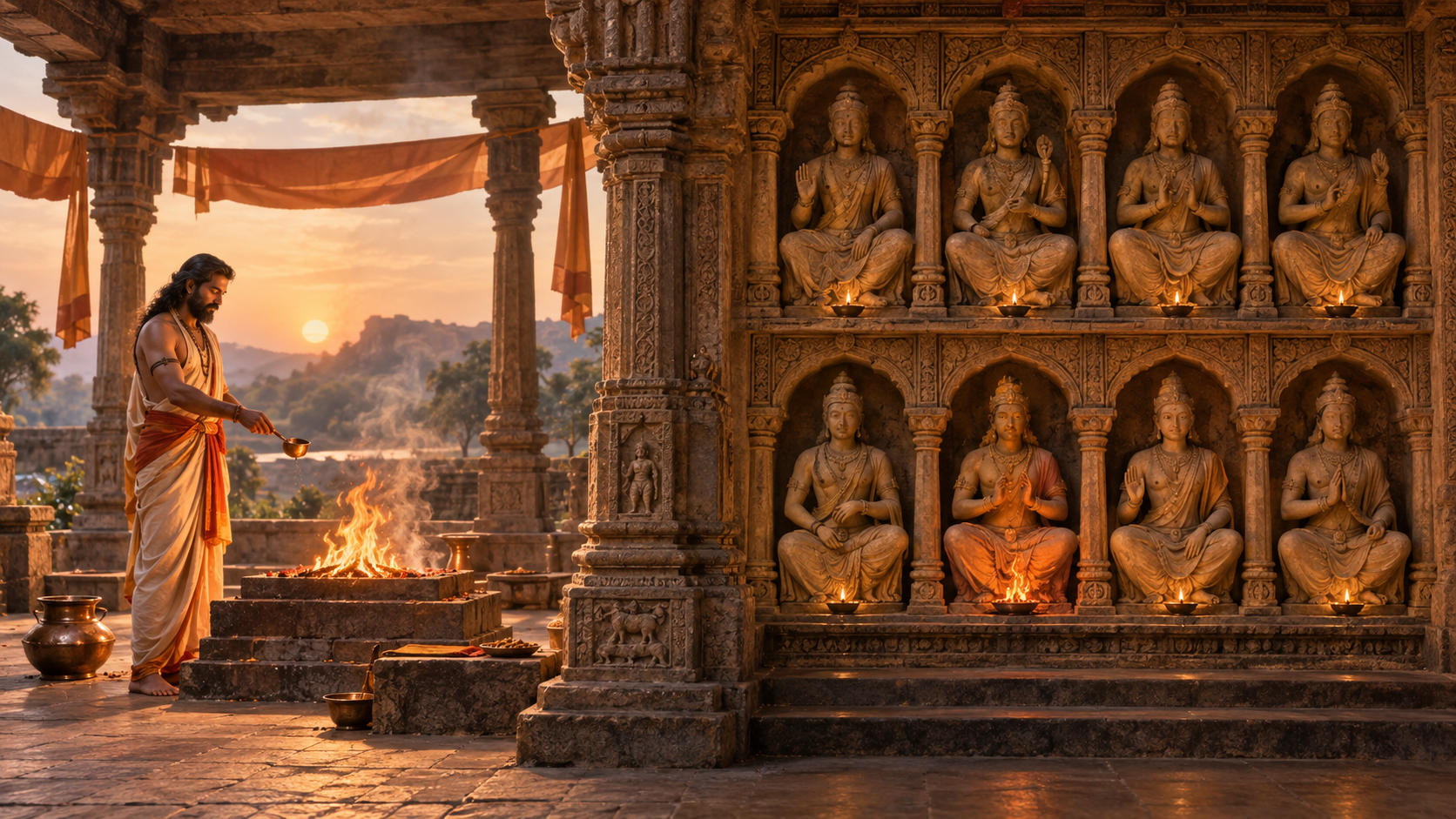
Anala and Agni occupy the same field of sacred fire, but you should not replace one name with the other automatically. Agni is the great Vedic deity of fire and the living ritual reality addressed through fire. Anala, when explicitly named among the Ashtavasus, identifies the fiery principle within an eight-member cosmic group.
This is not a claim that Hindu tradition divides fire into sealed, unrelated compartments. Divine names can overlap in meaning, and a name associated with fire may work differently in a hymn, a roster of deities, a ritual instruction, or an inscription. The mistake lies in assuming that shared symbolism erases every difference of role.
Use a simple context test. If Anala appears in an enumeration of eight Vasus, read the name through that collective identity. If the setting is a fire ritual or an invocation directed to Agni, let that ritual context govern the interpretation. If a translation renders both names merely as “fire,” preserve the original name in your notes; otherwise, an important distinction may disappear before you have examined it.
This approach is especially important when you compare descriptions from different temples, catalogues, or textual traditions. Begin with the role assigned in that particular setting. Similarity can then be considered without forcing identity, and difference can be respected without imagining a contradiction.
How to examine a possible image of Anala
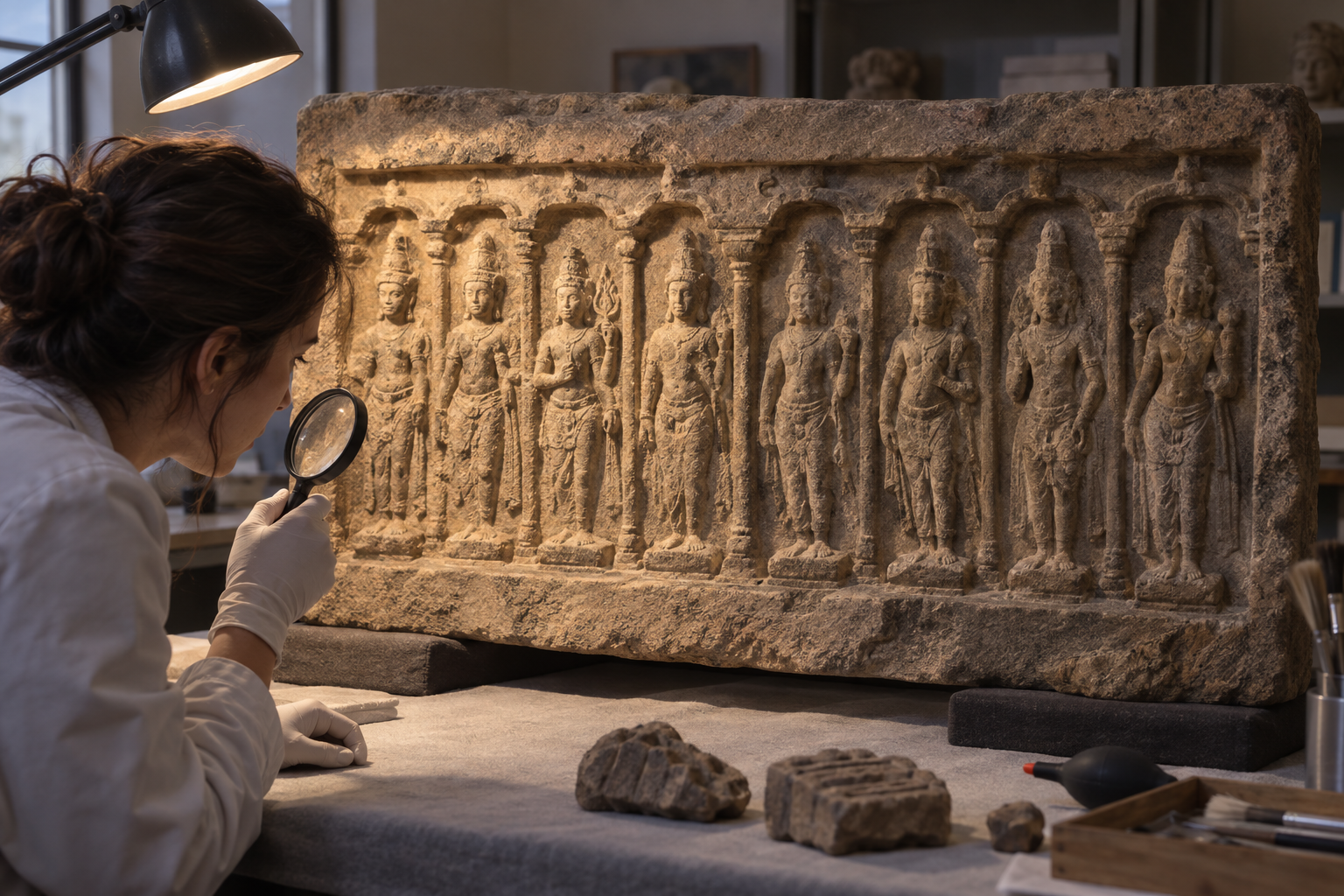
In sacred sculpture, identity often comes from placement and relationship rather than from a single portrait-like feature. A photograph cropped around one figure can remove precisely the evidence you need. If you are trying to determine whether a figure represents Anala, work outward from the whole composition.
- Establish whether the ensemble is complete. Count figures only after checking for broken sections, hidden sides, later repairs, or a cropped photograph. Fewer than eight visible forms do not by themselves disprove an Ashtavasu setting.
- Look for the grammar of a group. Comparable size, posture, spacing, and placement can indicate that several figures share one rank or function. Anala should first make sense as one member of such a class.
- Treat fire imagery as a clue, not a verdict. A flame-like form supports identification only when the surrounding context also points toward the Vasus. Damage and stylization can make an attribute look more obvious than it is.
- Record the exact label and location. Note whether “Anala” comes from an inscription, a local identification, a museum caption, or a modern description. Record the temple, panel, side, and neighbouring figures rather than saving only a detached image.
- Grade your conclusion. Use “identified” when a reliable label or inscription supplies the name, “probable” when group structure and attributes agree, and “possible” when fire is the only clue. This small habit prevents speculation from becoming a repeated fact.
The decisive move is to combine evidence. A group of eight without any individual identification establishes the Ashtavasu context but may not tell you which member is Anala. A fire attribute without the group establishes a fiery association but may point elsewhere. The strongest reading arises when name, attribute, number, placement, and surrounding figures converge.
This method also changes how you look at temple art. Instead of treating attendant figures as decoration around a principal deity, you begin to notice how the full ensemble presents a structured cosmos. A smaller or less prominent figure can carry a precise theological function even when it is not the focus of independent worship.
Key takeaways for reading Anala accurately
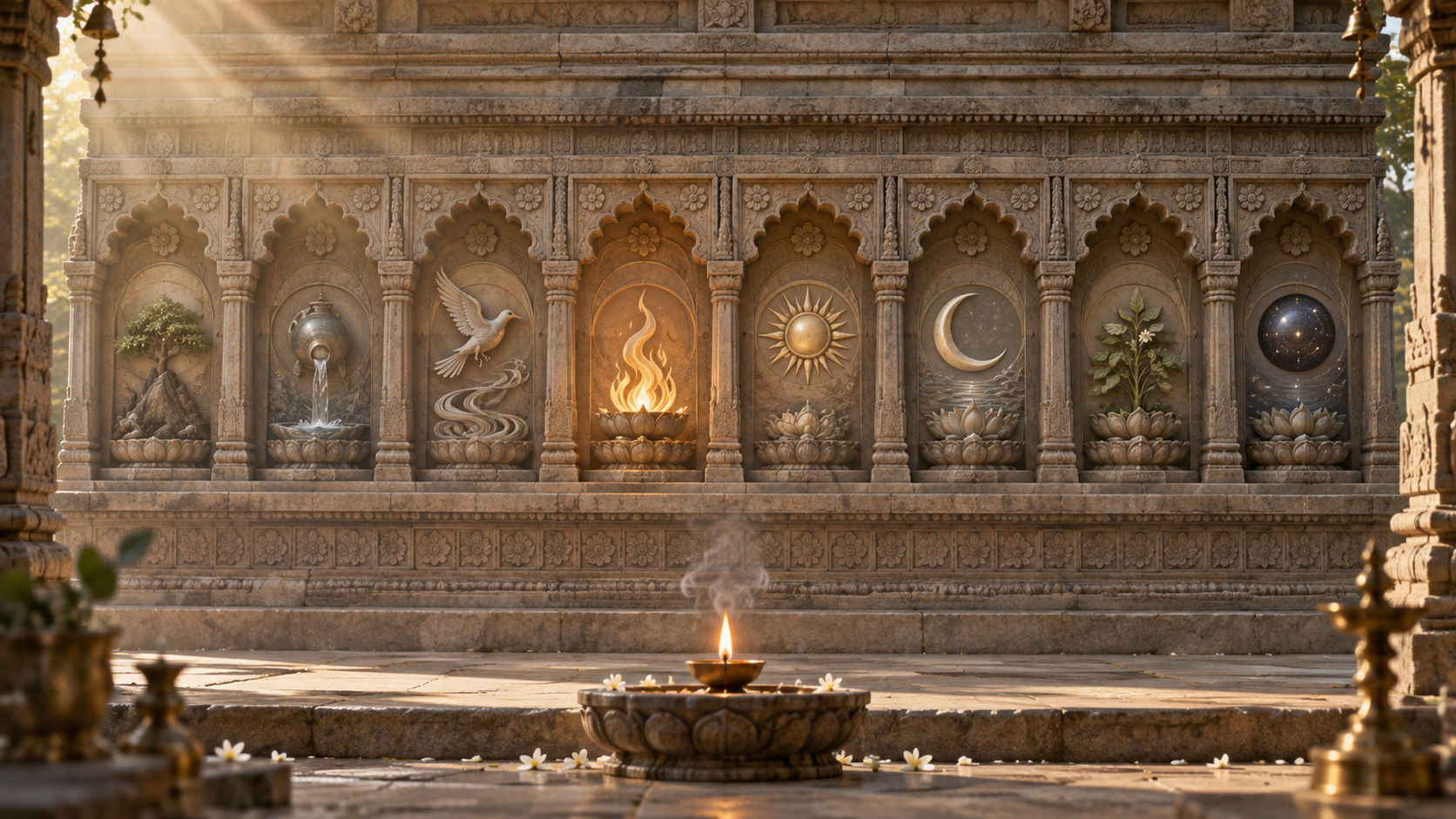
- Anala is most clearly understood as the sacred-fire principle within the eightfold company of the Ashtavasus.
- The meaning of Vasu directs you toward indwelling and illumination, not merely ownership of an element.
- Fire gives Anala a coherent symbolic field: presence, illumination, transformation, and offering.
- Anala and Agni are closely related through fire, but their names should not be treated as interchangeable in every setting.
- In sculpture, identify the group and its arrangement before relying on a single flame-like attribute.
- Keep certainty proportional to the evidence: labelled, probable, and possible are not the same conclusion.
The next time you encounter Anala, write down three things before interpreting the image or passage: the surrounding names or figures, the exact context in which “Anala” appears, and the evidence connecting him to fire. You will then be reading a Vasu in his proper cosmic setting, not reducing him to an isolated symbol.
References

Leave a Reply
You must be logged in to post a comment.