
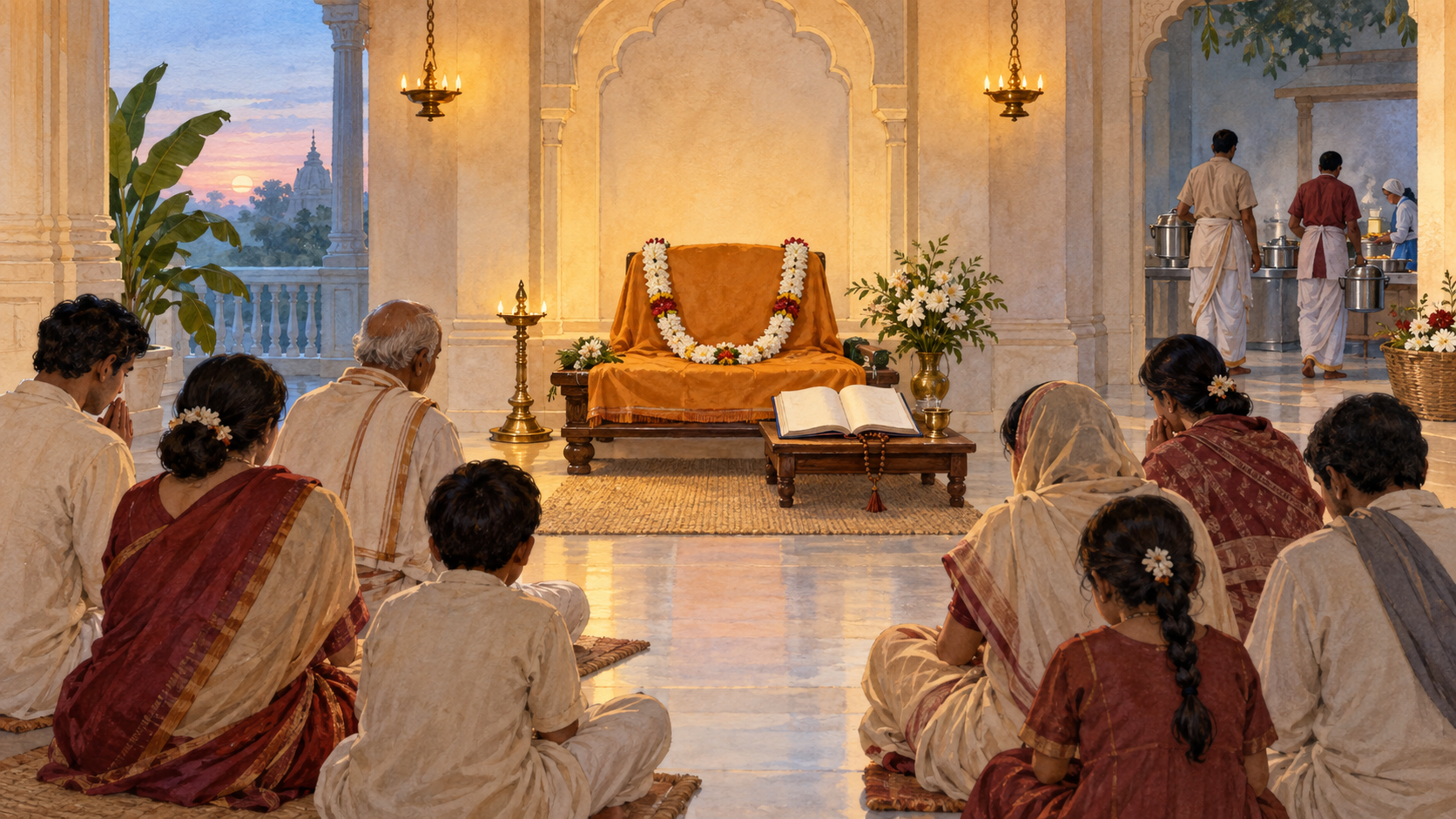
If you want to honour Bhakti Charu Swami but never met him, you do not need to borrow someone else’s memories or assemble an impressive biography. You can offer something honest: careful hearing, gratitude for the spiritual inheritance you received, and service that continues after the observance.
An 81st Vyasa-puja remembrance deliberately looks beyond extraordinary accomplishments to the person known through spiritual kinship and friendship. That gives you a sound way to remember him: begin with the relationship, remain truthful about what you know, and let appreciation become seva.
Let the relationship determine what you offer
Vyasa-puja is not merely a birthday testimonial for a respected public figure. It honours the spiritual teacher within the transmission of sacred knowledge. A fitting offering therefore does more than collect praise. It recognises the teacher, the lineage through which the teaching was received, and the responsibility placed on those who receive it.
One fellow disciple approached Bhakti Charu Swami as a godbrother and friend while first offering obeisances and glorifying Srila A. C. Bhaktivedanta Swami Prabhupada as their spiritual master. The order matters. Affection for a Vaishnava is not separated from gratitude to the guru-parampara.
Your own offering should begin from the relationship you actually have:
- If you met Bhakti Charu Swami: preserve one specific encounter. State where you were, what you directly observed, and what changed in your understanding or conduct. Do not stretch one experience into a claim about everything he did.
- If you received his teaching through a recording or text: identify the recording, publication, occasion, or archive when that information is available. Explain the instruction in context before saying what it means to you.
- If you know him only through other devotees: say so plainly. Attribute each recollection to the person who shared it and distinguish their memory from your reflection.
- If you are encountering him for the first time: begin with authenticated material and gratitude. You are not required to sound like a lifelong associate in order to offer sincere respect.
This distinction protects both truth and devotion. Reverence does not become weaker when you name the limits of your knowledge. It becomes more trustworthy.
Build the remembrance around hearing, response, and service
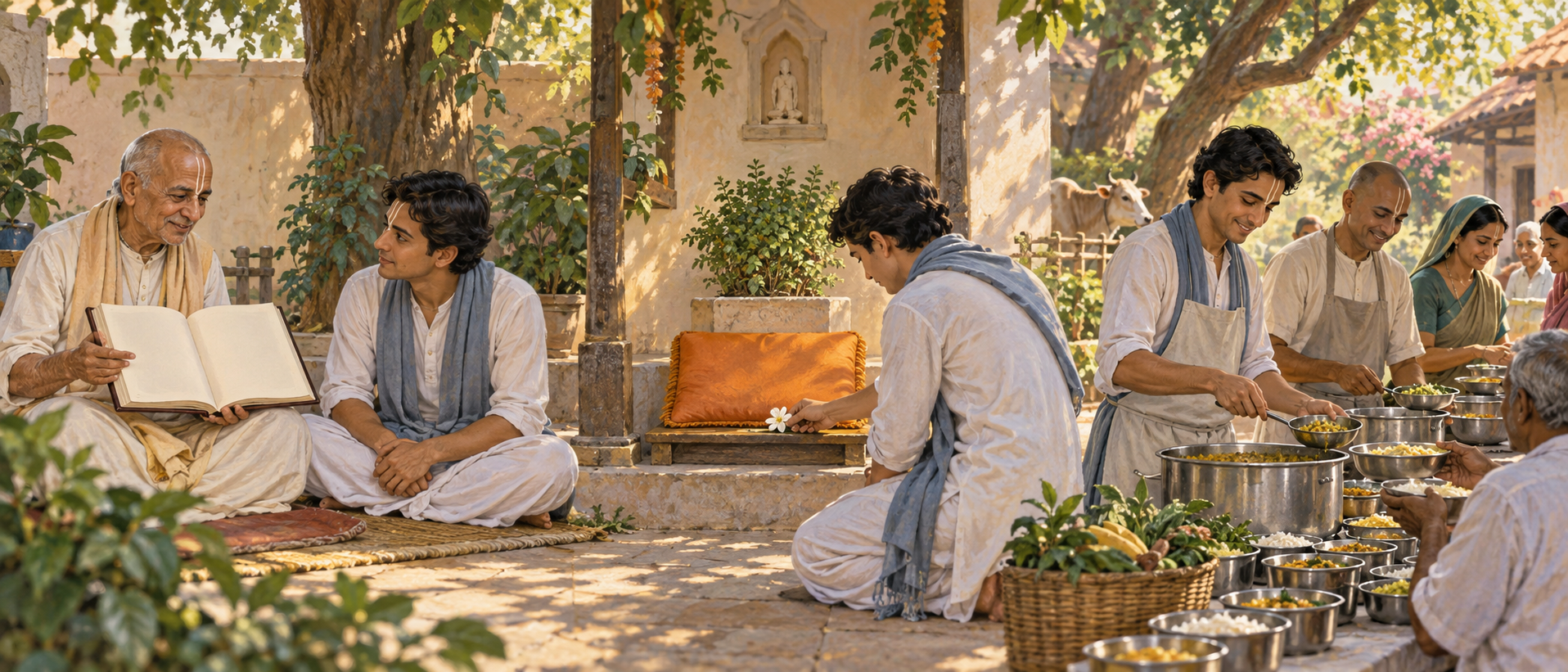
A remembrance can be simple enough for your home and substantial enough for a temple gathering. What matters is the movement from attention to practice. Use the following order.
- Prepare a clean focal place. Use a confirmed photograph, flowers if available, and the books or recordings you intend to hear. A smaller arrangement with reliable material is better than an elaborate display containing uncertain captions or quotations.
- Offer pranam and acknowledge the lineage. Address Bhakti Charu Swami respectfully and remember his connection with Srila Prabhupada. If you are leading a group, explain this order so that newcomers understand why the remembrance does not begin and end with an individual personality.
- Hear before you speak. Choose an authenticated recording or a verified transcript. Listen to enough of it to understand the actual subject. Do not build an offering around a quotation-card image whose wording and origin cannot be traced.
- Respond through devotional practice. Continue with attentive japa, congregational kirtan, reading, or another practice appropriate to your community. The purpose is not to manufacture an emotional atmosphere but to turn remembrance toward Krishna.
- Name one concrete seva. Choose an action you can actually perform: welcome a newcomer at the temple, help prepare or distribute prasada, care for a place of worship, assist a community programme, or study and discuss a teaching of Srila Prabhupada.
- Record the commitment. Write down what will be done, who will do it, and when it will be reviewed. Without that step, an inspiring observance can end as soon as the room is cleared.
Your service does not need to match the scale of the person being honoured. It needs to be real. A modest duty completed carefully is a more durable tribute than a grand intention that remains unperformed.
Write a tribute without turning affection into mythology
Devotional writing often goes wrong at the point where praise becomes an unsupported historical claim. You can avoid that without making your tribute cold or academic. Keep four kinds of statement separate.
- Direct memory: describe only what you personally saw or heard.
- Attributed recollection: identify the devotee whose experience you are repeating.
- Public record: give the title, occasion, date, or location when those details are available and verified.
- Personal application: explain what you learned and what you will do differently, without presenting your conclusion as Bhakti Charu Swami’s exact instruction.
Be especially careful with words such as “always,” “never,” “everyone,” and “greatest.” A single devotee’s experience may reveal something beautiful, but it does not prove a universal claim. Preserve the person’s perspective instead of enlarging it for dramatic effect.
A dependable offering can follow a clear sequence: state your relationship, recount one verified memory or teaching, express gratitude, and name the service that follows. If you lack a personal recollection, omit that part. Silence is more respectful than an invented intimacy.
The same discipline applies to accomplishments. Bhakti Charu Swami was remembered as someone whose accomplishments were extraordinary yet did not exhaust who he was. A list of institutions, journeys, or projects may provide context when verified, but it cannot replace attention to character, relationship, and spiritual purpose.
Key takeaways
- Speak from the relationship you truly have: personal association, received teaching, attributed memory, or respectful discovery.
- Place gratitude to Bhakti Charu Swami within the guru-parampara and his connection with Srila Prabhupada.
- Use authenticated recordings, texts, photographs, and recollections; leave uncertain details out.
- Distinguish direct memory, attributed testimony, public record, and your own application.
- End every remembrance with a specific act of seva and a clear commitment to complete it.
Preserve memories so the next generation can trust them
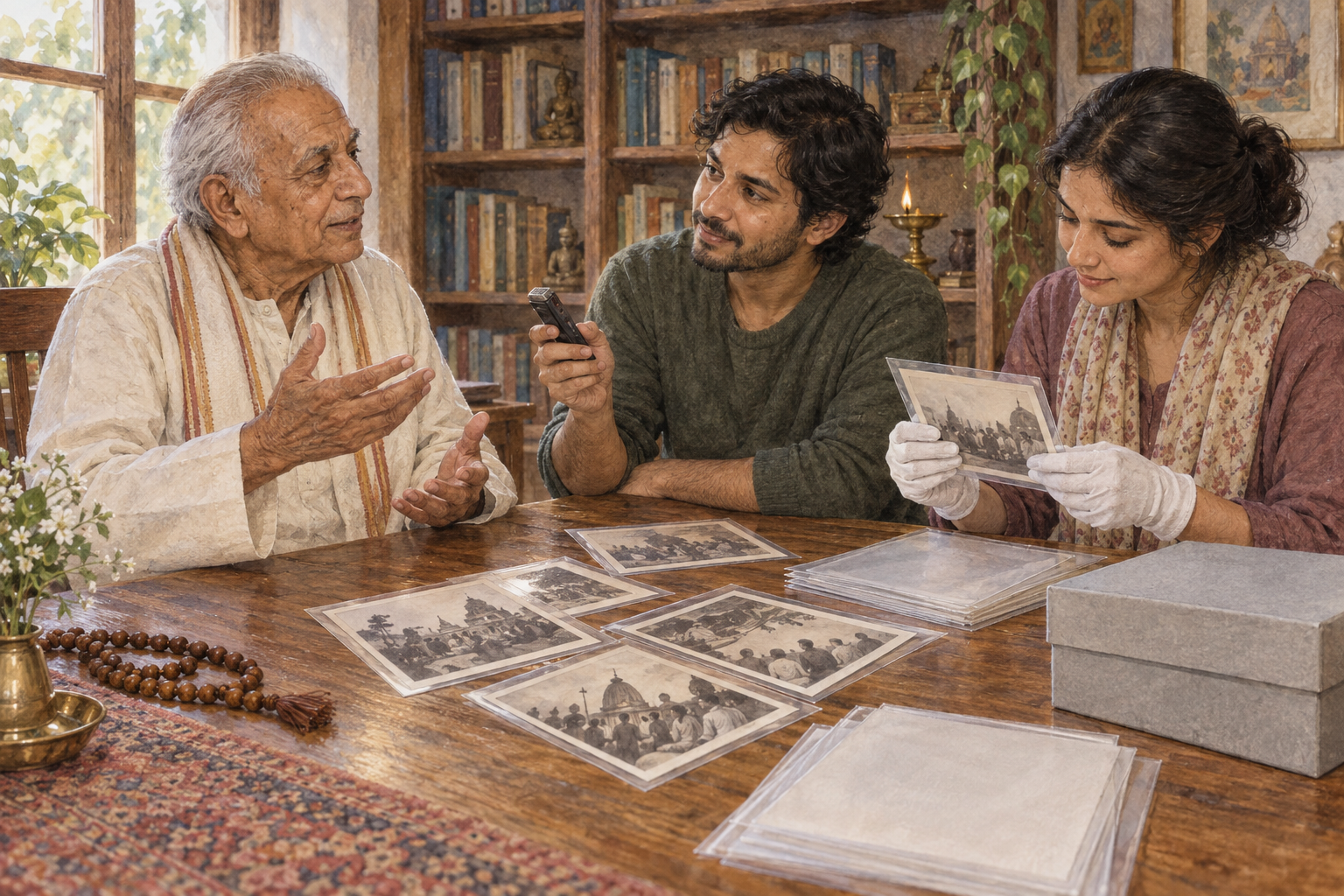
A remembrance gathering ends, but the material collected for it may circulate for years. A photograph loses much of its value when nobody knows who took it, where it was made, or whether its caption is accurate. A short quotation can travel even farther after its original context disappears.
If your temple or family is preserving material connected with Bhakti Charu Swami, use a basic archival discipline:
- Keep the original audio, video, photograph, or written file instead of retaining only an edited social-media version.
- Add names, places, dates, and occasions only when they are known. Mark an uncertain detail as uncertain rather than guessing.
- Store a quotation with the complete passage or recording location from which it came.
- Label a transcript as a transcript and a paraphrase as a paraphrase; they are not interchangeable.
- Ask permission before publishing a private letter, personal photograph, or sensitive recollection supplied by another devotee.
- Correct an error openly when better information becomes available. Quietly repeating a pleasing mistake does not serve the person being remembered.
This work may feel less elevated than speaking at a ceremony, but it is an important form of seva. It allows future readers and devotees to encounter a reliable memory rather than layers of untraceable repetition.
Carry the offering beyond the observance
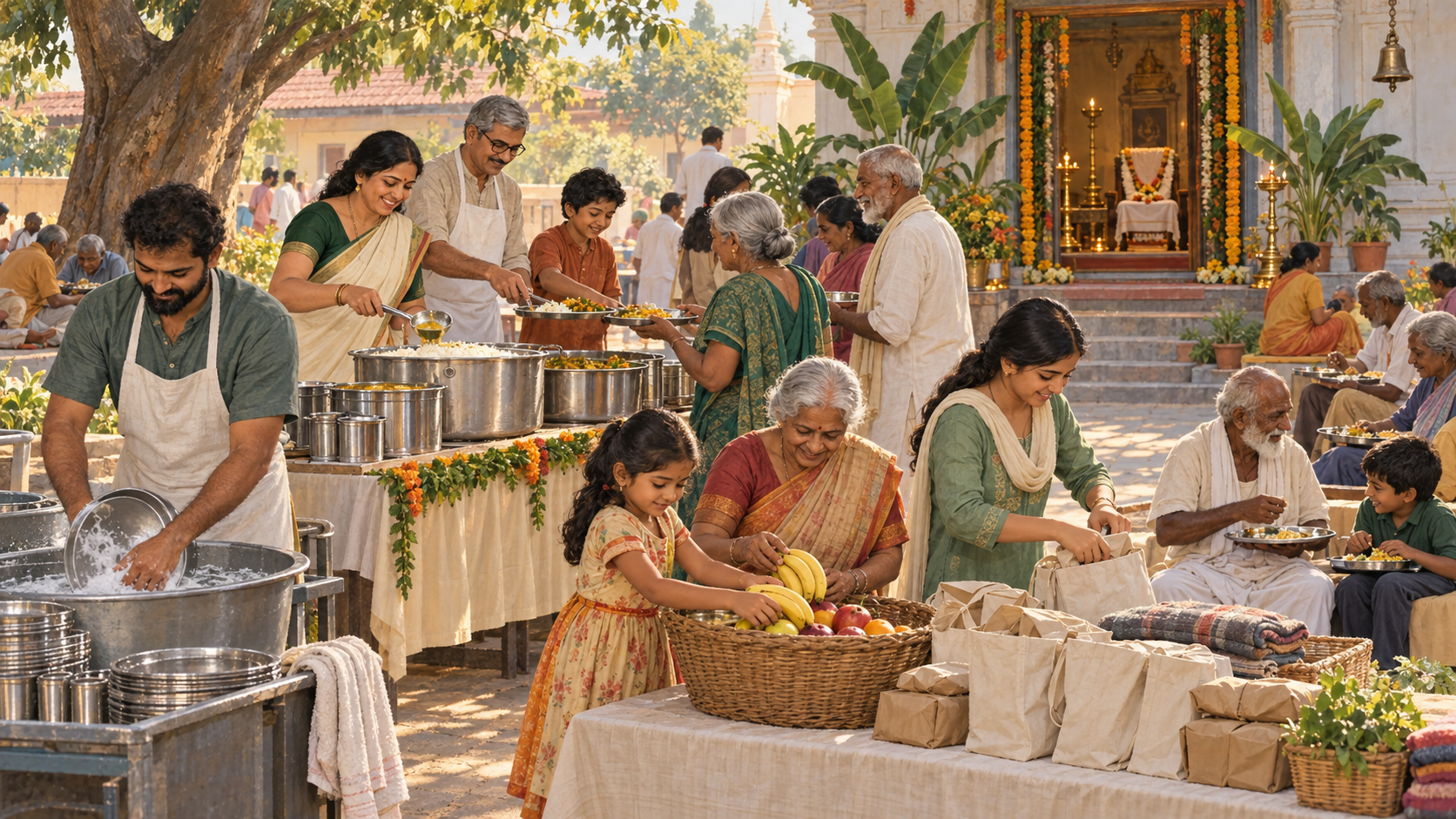
At your next remembrance of Bhakti Charu Swami, choose one authenticated passage to hear and one act of service to complete. Write the commitment before the gathering ends. When gratitude changes how you hear, speak, preserve memory, and serve, remembrance has entered daily practice.
References

Leave a Reply
You must be logged in to post a comment.