
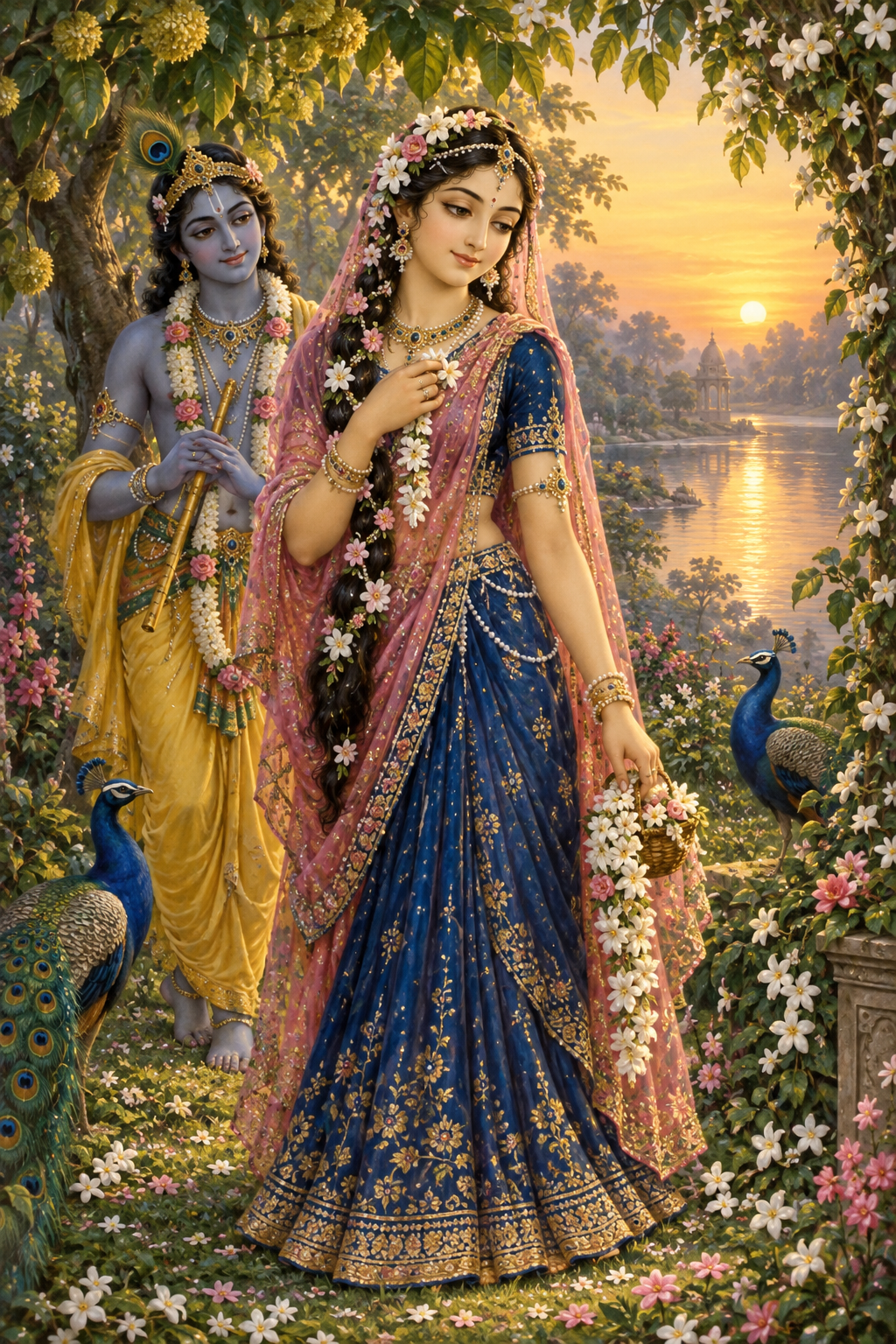
If you chant Krishna’s names but still wonder why devotees approach him through Srimati Radharani, the shortest answer is this: within Gaudiya Vaishnavism, she reveals pure bhakti in its fullest form. Her love seeks Krishna’s happiness without making a separate claim for itself. Understanding that changes how you hear sacred narratives, how you pray, and how you serve.
Two mistakes can hide this meaning. One reduces Radha to a conventional romantic heroine. The other surrounds her with beautiful praise but never asks what her example requires from the devotee. You can avoid both by learning what her glory means, hearing Radha-Krishna lila with the right discipline, and turning reverence into concrete seva.
What devotees mean by the glory of Radharani
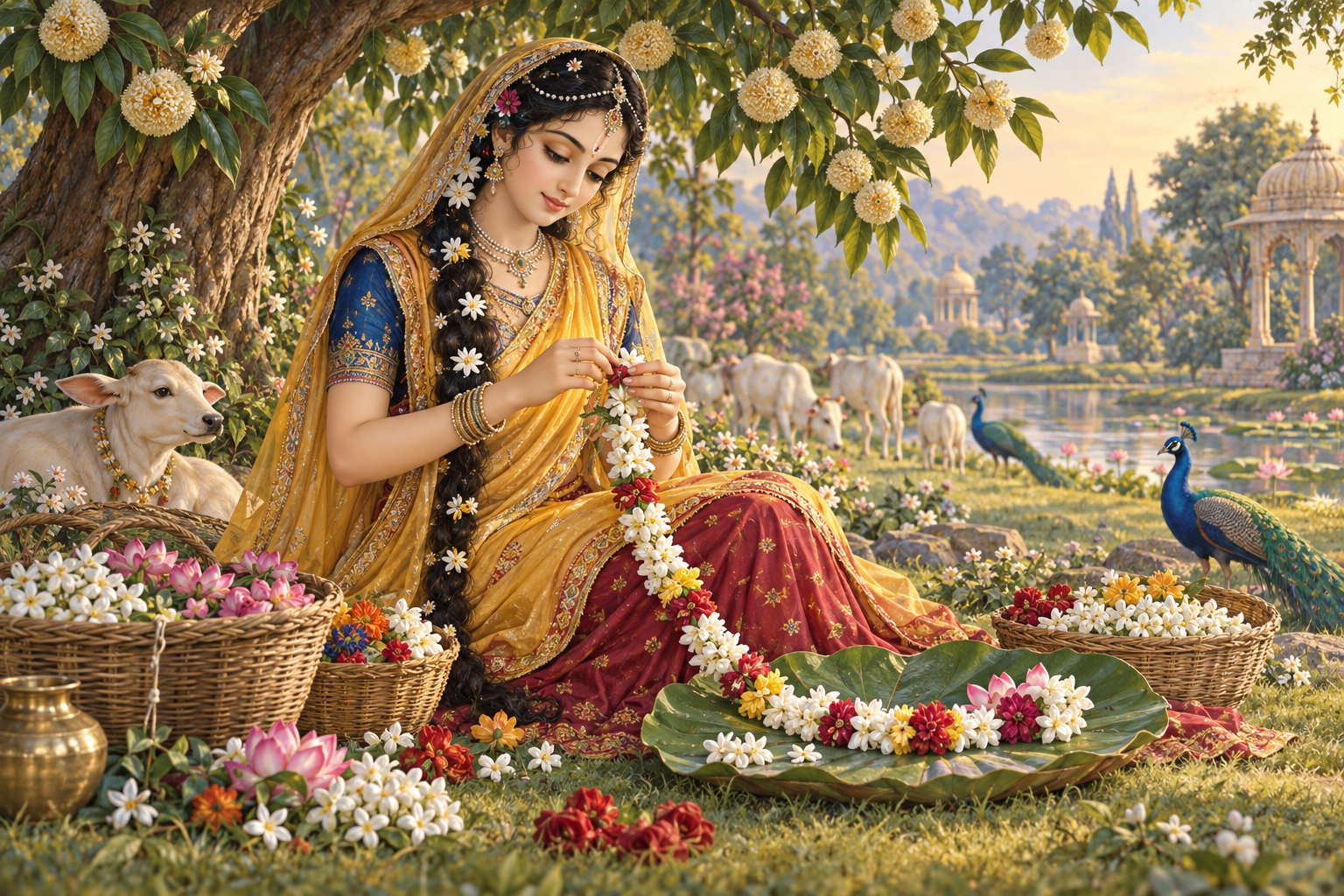
Glory here does not mean worldly fame, authority, or conquest. It means the spiritual excellence through which divine love becomes visible. Radharani is glorious because her entire being is directed toward Krishna. Her remembrance, longing, joy, and service disclose what devotion looks like when self-interest no longer occupies the centre.
Gaudiya Vaishnava theology honours her in two inseparable ways. She is Krishna’s hladini-shakti, his bliss-giving divine potency, and she is the foremost exemplar of devotion to him. These are not competing descriptions. She is divine, yet her devotional disposition also teaches the soul how to love the Divine.
The word shakti can sound abstract in English, as though Radha were merely an impersonal force. That is not how she is worshipped. Devotees address her personally, seek her mercy, remember her qualities, and honour her relationship with Krishna. Calling her hladini-shakti explains her inseparability from Krishna; it does not erase her personhood.
Acintya-bheda-abheda, the Gaudiya teaching of inconceivable simultaneous difference and non-difference, provides a useful theological grammar. Unity does not erase loving relationship, and distinction does not create rivalry between independent divinities. Radha and Krishna can therefore be worshipped together without turning one into an accessory of the other.
This gives you a practical question to carry into any katha, song, or festival: what quality of bhakti is being revealed? Ask how the narration directs attention toward Krishna, how service displaces self-importance, and how longing intensifies remembrance. That question takes you beyond the surface action of a sacred narrative and toward its devotional purpose.
Not every Hindu sampradaya defines Radharani’s status with the same technical vocabulary. Precision is therefore an act of respect. When explaining these teachings, say that this is the Gaudiya Vaishnava understanding rather than presenting one lineage’s formulation as a test for every Hindu. You can affirm Radharani’s glory without flattening the genuine diversity of Dharmic theology.
Hear sacred love without reducing it to ordinary romance

Radha-Krishna lila uses the language of intimate love, but its purpose is not to decorate worldly desire with sacred names. A useful distinction is the difference between kama and prema. Kama places personal gratification at the centre; prema places the beloved and the beloved’s happiness at the centre. Human motives are often mixed, but the distinction remains a valuable test of the direction in which your heart is moving.
This is why imitation is not the same as devotion. You do not honour an exalted spiritual mood by copying its external appearance or borrowing its vocabulary. You honour it by becoming less possessive, more truthful, more attentive, and more willing to serve without applause. The greater the intimacy of the lila being heard, the more necessary humility and ethical clarity become.
Use the following filter when you hear an explanation of Radharani’s pastimes:
- Does it treat Radha and Krishna as divine persons, or reduce them to celebrities, psychological symbols, or a licence for fantasy?
- Does it distinguish a description of transcendental lila from an instruction for ordinary human conduct?
- Does it lead toward remembrance, humility, self-restraint, and service rather than fascination with intimacy for its own sake?
- Is the teaching anchored in an accountable sampradaya and ordinary sadhana, or does someone claim that a supposedly advanced state places them beyond ethical limits?
- Does the listener leave more careful with other people, or merely more impressed with the speaker’s access to esoteric ideas?
The last questions matter outside the lecture hall. If anyone uses Radha-Krishna devotion to justify coercion, secrecy, sexual entitlement, or unquestioning surrender to a human authority, step back. That is not evidence of advanced bhakti. Surrender to the Divine never cancels consent, personal safety, or dharmic responsibility between human beings.
Selfless love also does not mean becoming passive in the face of abuse. Radharani’s Krishna-centred devotion belongs to a divine relationship; it cannot be invoked to demand that a person tolerate exploitation. A sound interpretation makes your conduct purer and your regard for others more responsible. It does not provide religious cover for harm.
Turn reverence for Radharani into daily sadhana
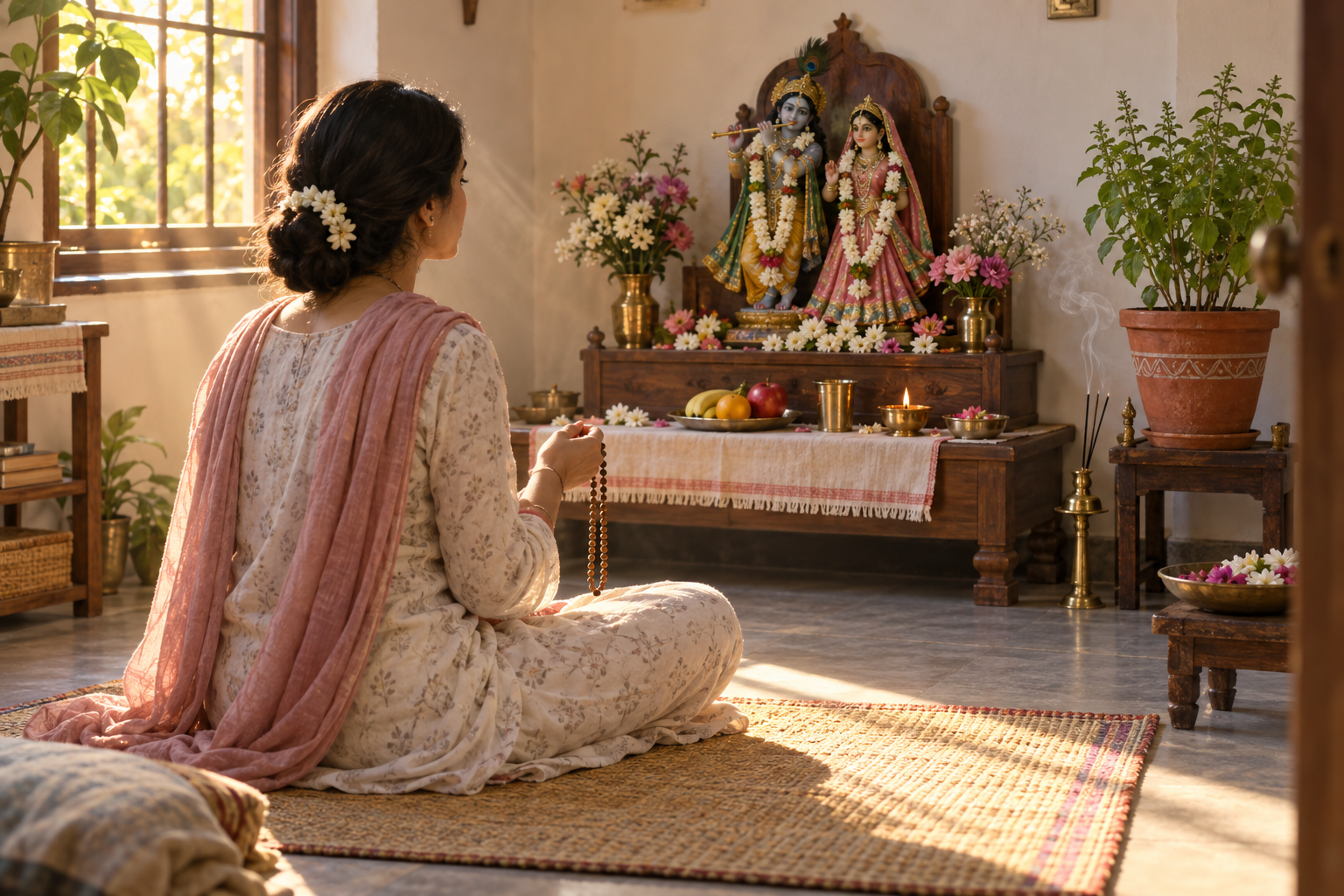
You do not need to manufacture an advanced devotional emotion. Begin where Radharani’s glory is immediately actionable: service without a separate claim to recognition. A modest practice performed faithfully will teach you more than trying to imitate feelings you do not yet possess.
- Set a clear intention. Before chanting or hearing, ask to become less possessive and more capable of serving Krishna and his devotees. Use a prayer received from your lineage if you have one. Otherwise, speak simply and respectfully in your own words rather than presenting an invented formula as a traditional mantra.
- Chant what you have actually received. Follow the names, mantra, and method taught within your sampradaya. If you have not received a formal practice, reverently remembering the names of Radha and Krishna is more honest than collecting esoteric mantras from unaccountable sources.
- Hear a manageable portion with attention. Choose a trusted katha or passage and stay with one teaching long enough to understand it. Afterward, identify the quality of devotion it revealed: undivided remembrance, eagerness to serve, freedom from personal claim, or concern for Krishna’s pleasure.
- Give that quality a visible form. Perform an act of seva that does not depend on being noticed. Care for a shrine, fulfil a neglected responsibility, help a devotee, prepare an offering carefully, or complete an ordinary duty without advertising your sacrifice.
- Examine the fruit. Ask whether the practice reduced your need for praise, strengthened remembrance of Krishna, and made you more considerate toward others. If it made you proud of being spiritually advanced, you have found the next attachment to offer.
- Return without demanding an experience. Tears, intensity, and unusual states are not achievements to stage. A quiet day of sincere practice is not a failed day. Return to the name, the teaching, and the next act of service.
This approach protects you from turning devotion into performance. It also gives longing a constructive direction. Instead of asking why a particular feeling has not appeared, ask whether you are becoming available for service. Instead of measuring the depth of your emotion, measure the honesty of your intention and the care in your conduct.
Devotees often pray for Radharani’s mercy because they wish to approach Krishna in the mood of service rather than possession. You can reflect that aspiration in very ordinary choices. Listen before speaking. Keep a promise that brings no recognition. Give attention to worship instead of rushing through it. Refuse to use another person as an instrument of your comfort. These are not substitutes for formal sadhana; they are tests of whether sadhana is entering your life.
Key takeaways
- Within Gaudiya Vaishnavism, Radharani is honoured as Krishna’s bliss-giving divine potency and the foremost exemplar of pure devotion.
- Her glory is understood through Krishna-centred love, not worldly status or romantic possession.
- Radha-Krishna lila should deepen humility, remembrance, ethical discipline, and seva rather than encourage imitation.
- Lineage-specific claims should be identified as such; reverence does not require pretending that every Hindu tradition uses identical theology.
- A practical way to honour Radharani is to hear attentively, follow an accountable sadhana, and perform service without demanding recognition.
- No appeal to divine surrender can justify coercion, exploitation, or the suspension of consent and dharmic responsibility.
The next time you hear Radharani’s name, pause before asking what blessing you might receive. Ask what kind of devotee her name calls you to become. Then choose one careful act that would please Krishna, help another person, and loosen your claim to praise. Do it quietly, and return to your sadhana.
Radharani’s glory is not distant from daily life when it changes the direction of your love. Let admiration become attention, attention become service, and service become a steadier remembrance of Radha and Krishna.
References

Leave a Reply
You must be logged in to post a comment.