

If you saw the claim that a Goa casino displayed a saffron flag, you may be asking two different questions: was a Hindu symbol treated disrespectfully, and what should a concerned Hindu do about it? Those questions deserve a firm answer, but they also require more care than a viral image or angry caption usually permits.
The useful response is neither indifference nor instant condemnation. You can defend the dignity of the bhagwa dhvaja while insisting on accurate evidence, proportionate language and a remedy tied to what actually happened.
What is established in the Goa dispute
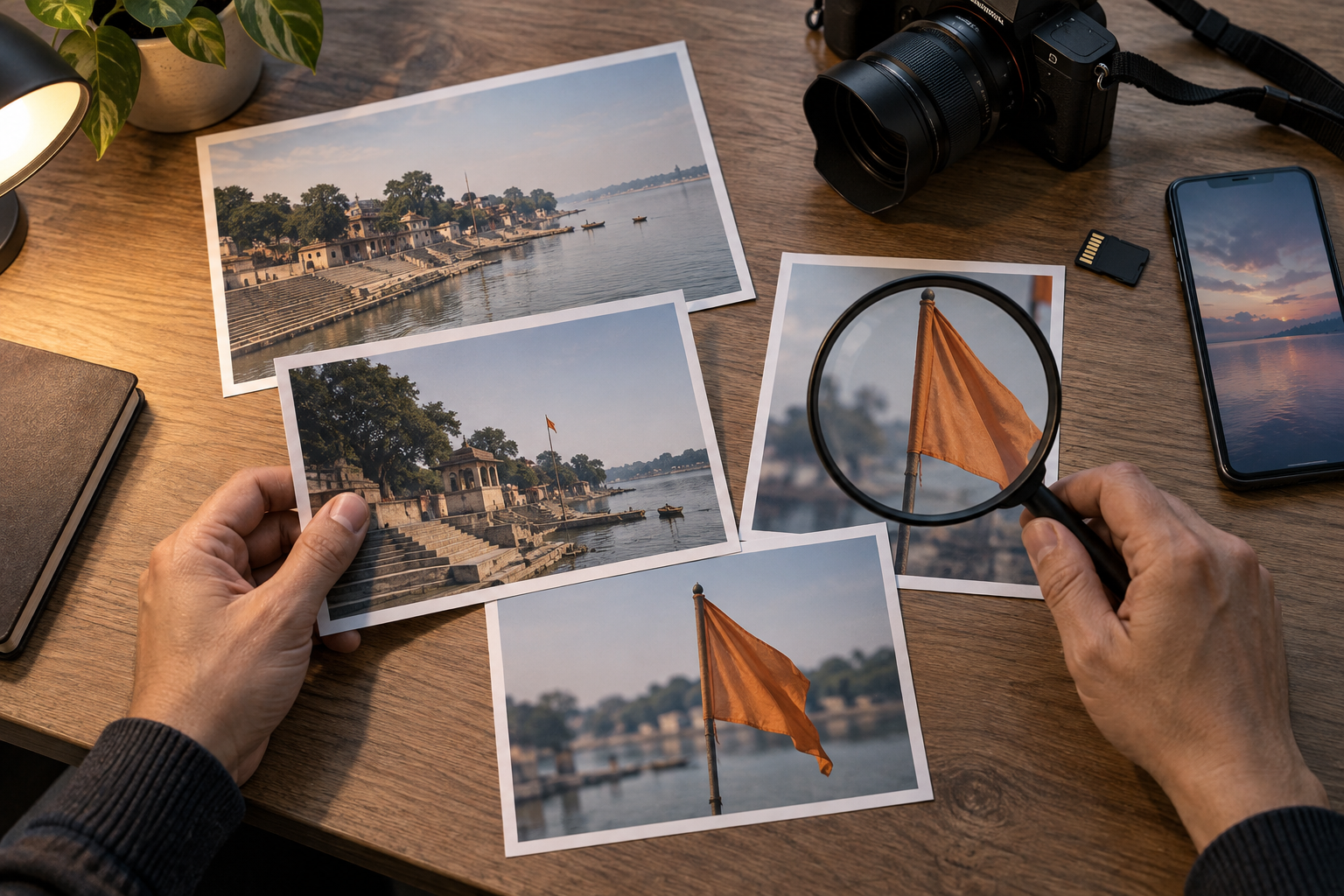
Hindu Janajagruti Samiti filed a police complaint against Big Daddy Casino, alleging that the casino hurt Hindu sentiments by hoisting a saffron flag atop its premises. That is the firm factual core available here: a named organisation made a formal complaint about a named establishment and described the display as disrespectful.
A complaint is an allegation placed before the authorities. It is not, by itself, a finding that an offence occurred, proof of the casino’s intention, or evidence that every relevant Hindu body interprets the display identically. If you discuss the episode, preserve that distinction. Say that a complaint was filed and explain its stated basis; do not convert an allegation into a verdict.
The available facts also do not establish whether the flag carried a sacred emblem, religious wording or another identifying feature. They do not establish why the venue displayed it, how long it remained there, whether it was part of branding or decoration, or how management answered the objection. Those missing details are not minor. They determine whether the strongest description is inappropriate association, careless commercial use, deliberate provocation or a misunderstanding.
Why the saffron flag cannot be treated as mere decoration

Saffron has a civilisational meaning much larger than party politics or contemporary branding. Within Hindu traditions, it commonly evokes renunciation, tapas, self-mastery, sacrifice, courage and service to Dharma. A saffron dhvaja can therefore function as a moral standard: it points beyond personal appetite toward duty and a disciplined life.
That is why placement matters. For many Hindus, a dharmic emblem positioned above a gambling business can appear to confer sacred legitimacy on an activity they regard as incompatible with restraint. Even without physical desecration, the association can feel degrading because the symbol and the commercial setting communicate sharply different values.
But you should not collapse colour, flag and consecrated symbol into one category. A plain saffron-coloured cloth is not automatically a temple dhvaja. A recognisably religious flag bearing sacred words or emblems carries a clearer meaning than generic decoration. Disrespect can arise from deliberate mockery, degrading treatment or exploitative use, but the conclusion must follow the evidence rather than precede it.
This distinction strengthens cultural advocacy. If every use of saffron is labelled desecration without examining form and context, serious objections become easier to dismiss. A precise case explains what the object was, what made it religiously meaningful, how it was used and what correction is being requested.
Use a four-part test before judging the display

If you encounter photographs, video or commentary about this dispute, test the claim through four questions.
- What exactly was displayed? Determine whether it was a plain coloured flag, a traditional shape, or a flag carrying sacred language or iconography. Do not infer details that cannot be seen.
- How was it presented? A flag kept aloft, a promotional prop, a damaged flag and an object placed in a degrading position do not communicate the same thing. Look for the full physical setting rather than a tightly cropped image.
- What meaning did the venue give it? Check signage, advertising text or a direct public statement. The colour alone cannot prove a religious claim, political message or intention to offend.
- What remedy fits the verified problem? If the concern is an inappropriate association, removal and an explanation may answer it. If sacred imagery was mishandled, an acknowledgement, apology and clear policy against recurrence may also be warranted.
Intent matters, but it is not the only consideration. A business may cause a legitimate cultural injury through ignorance rather than malice. At the same time, impact should not be used to invent motive. You can say, “This display is inappropriate and should be removed,” without claiming, absent evidence, that everyone involved acted from hatred toward Hindus.
Evidence should retain its context. Save the original page or file, not only a forwarded screenshot. Keep the uncropped frame, visible signage and surrounding location. Record a date or identity only when you can substantiate it. Separate what you personally observed from what another account asserted. These habits prevent a valid grievance from being weakened by an avoidable factual error.
How to make a firm, lawful and effective objection

A strong response asks for a defined correction. General anger may attract attention, but a specific request gives management and authorities something concrete to assess.
- Describe the verified act. Identify the location and the display without embellishing either.
- Explain the cultural objection. State why the flag is recognisably dharmic and why its placement at the venue is considered inappropriate.
- Attach primary evidence. Use original photographs, video or published promotional material where available. Label forwarded material honestly.
- Request a proportionate remedy. Ask for removal, clarification, an apology or a policy change according to the nature of the conduct.
- Keep a record. Retain the text of your representation, its attachments and any reply. This makes follow-up factual rather than repetitive.
- Correct misinformation publicly. If a circulating caption adds an unverified claim, do not repeat it merely because you support the underlying concern.
If you submit information to the police, distinguish first-hand evidence from interpretation and let the authorities determine whether any law applies. Do not threaten staff, publish private personal information, trespass or direct abuse at workers who may have had no role in the decision. Such conduct exposes participants to harm and possible legal consequences while shifting attention away from the flag itself.
There is also a useful role for direct engagement. A concise representation to the business can ask three questions: what did the flag signify, who authorised its use, and will the venue remove or reconsider it? A clear response from management could resolve uncertainty; an evasive or dismissive response would itself become relevant to further lawful advocacy.
The standard should remain consistent. Hindus are entitled to ask that sacred and civilisational symbols not be reduced to convenient commercial scenery. Businesses, meanwhile, should be judged on verified conduct rather than attributed motives. Cultural confidence is shown by the ability to hold both principles at once.
Key takeaways
- The confirmed event is the filing of a police complaint alleging disrespect; the allegation should not be presented as an official finding.
- The saffron flag carries serious dharmic associations, but the precise design, treatment and context determine the strength of a disrespect claim.
- Inappropriate association can justify an objection even when deliberate anti-Hindu intent has not been established.
- Uncropped evidence, exact language and a specific requested remedy make cultural advocacy more credible.
- Threats, harassment and unsupported accusations do not defend Dharma; they weaken the case and can create harm of their own.
If further verified material emerges, judge it with the same discipline. Identify the flag, establish its context, seek the venue’s explanation and ask for the narrowest remedy that fully addresses the disrespect. That is how you turn concern for a dharmic symbol into credible public action.
References

Leave a Reply
You must be logged in to post a comment.