
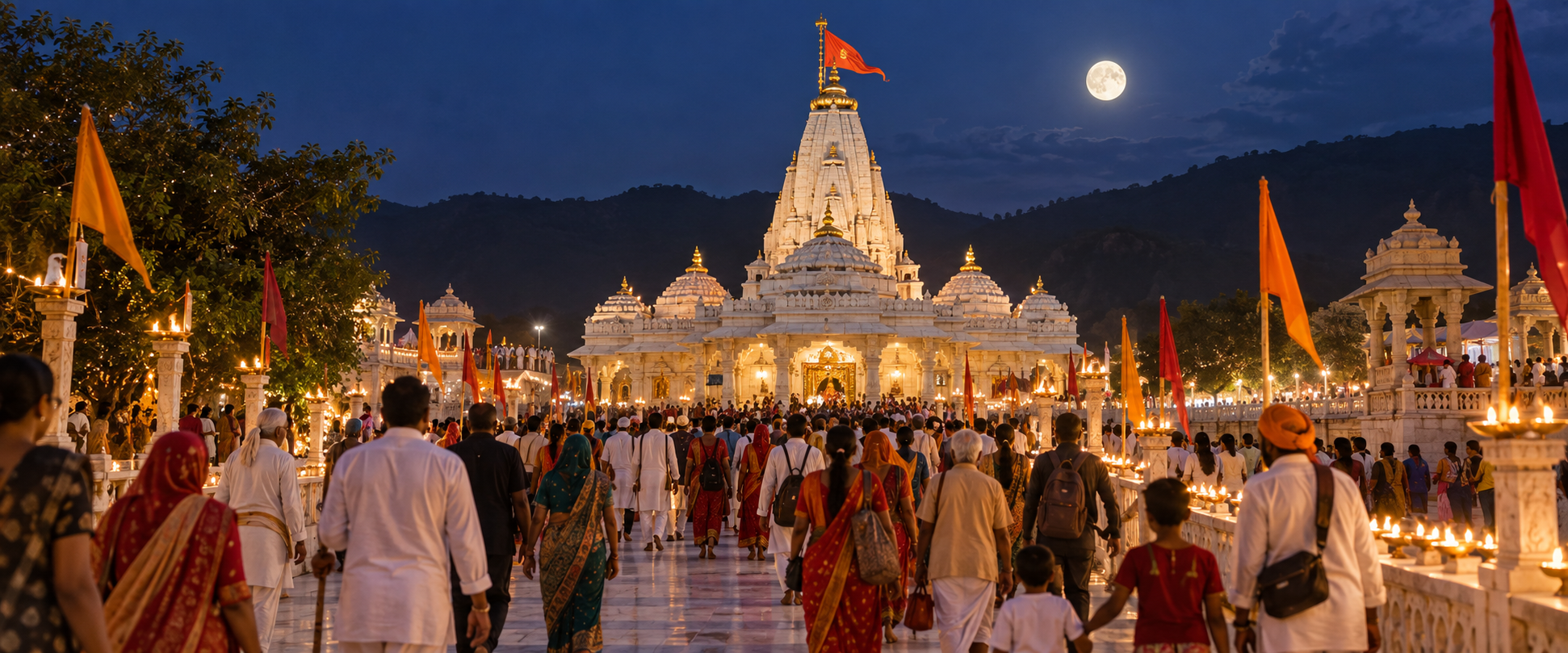
If you are deciding whether to travel to Ambaji or keep Bhadrapad Purnima at home, do not begin with an offering list. Begin with your sankalpa: are you seeking the darshan of Goddess Ambaji, undertaking Uma-Maheshwara worship as a married couple, or observing both as distinct acts of devotion?
That distinction will make your preparation simpler and your worship more focused. In 2026, Bhadrapad Purnima falls on September 26 and is observed especially in Gujarat as Bhadarvi Poonam, Bhadrapad Poonam, and Ambaji Bhadra Purnima. Uma-Maheshwara Vrata is also observed on that date.
Choose the observance before you plan the day
The Ambaji pilgrimage and Uma-Maheshwara Vrata share a sacred date, but they are not interchangeable rituals. Treating them as one generic full-moon celebration usually produces a crowded schedule without a clear devotional centre.
- Choose Ambaji pilgrimage if your central intention is Devi darshan and participation in the Bhadarvi Poonam gathering. The pilgrimage is dedicated to Goddess Ambaji at Ambaji village, situated at the foothills.
- Choose Uma-Maheshwara worship if your central intention concerns married life. The vrata brings Lord Shiva and Uma, or Parvati, together as the focus of worship.
- Observe both only with separate intentions. You might undertake Ambaji darshan as your pilgrimage and reserve another part of the day for worship of Shiva and Uma. Do not merge their names, offerings, or purposes into an invented ritual.
Write your sankalpa in one sentence before making travel or puja arrangements. It can be as simple as: “On Bhadrapad Purnima, we will seek the grace of Goddess Ambaji with patience and discipline,” or, “We will worship Uma and Maheshwara for steadiness, affection, and right conduct in our marriage.” This is not a prescribed formula. Its purpose is to stop the practical details from displacing the reason you are observing the day.
Do not assume that every online checklist describes a universal vrata. Rules concerning fasting, food, offerings, mantras, and the conclusion of worship can vary by family and sampradaya. If you have an inherited method, follow it. If you do not, ask a trusted priest or teacher rather than assembling strict rules from unrelated traditions.
Plan the Ambaji fair as a pilgrimage, not an ordinary visit
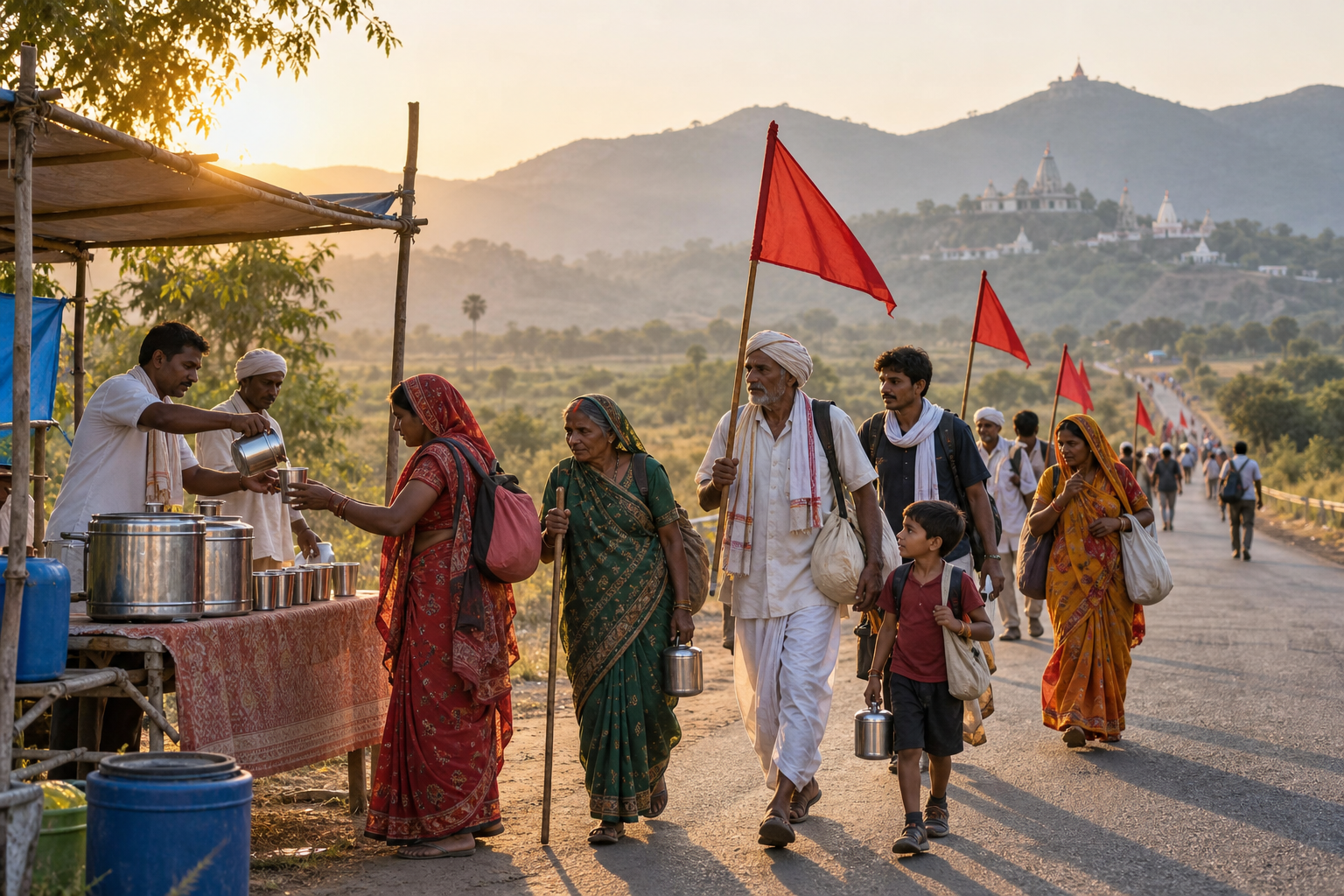
Bhadarvi Poonam at Ambaji is associated with a fair as well as temple worship. That changes the practical demands of the visit. Your plan should protect the elderly, children, and anyone who may struggle with prolonged standing, walking, heat, or a dense gathering. A difficult journey can still be devotional, but preventable confusion is not a spiritual achievement.
- Verify the local calendar. September 26 is the stated 2026 date. If you are observing outside India, confirm the local tithi with a reliable panchang or nearby temple because lunar-day boundaries depend on location.
- Search under the regional names. Travel and event notices may use Ambaji Poonam, Bhadarvi Poonam, Bhadrapad Poonam, or Ambaji Bhadra Purnima. Checking several names reduces the chance of missing a relevant notice.
- Confirm current arrangements directly. Before departure, check darshan hours, entry routes, transport changes, accommodation, permitted belongings, and rules for offerings with the temple or recognised local organisers. Do not infer these details from a previous year.
- Set a group protocol. Choose one meeting point outside the busiest area, place a contact card in a child’s pocket, and decide who remains responsible for each elderly or vulnerable pilgrim. Mobile connectivity should be treated as useful, not guaranteed.
- Carry only what you can manage. Bring identification, necessary medicines, weather protection, and water where permitted. Keep valuables to a minimum and confirm restrictions before packing ritual materials.
- Use recognised channels. Follow marked queues and official instructions. Make payments or donations only through channels you can identify as authorised; religious urgency should never be allowed to suspend ordinary caution.
If fasting or extensive walking could worsen a medical condition, choose a form of observance compatible with your clinician’s advice and continue prescribed medication. Neither pilgrimage nor vrata requires you to conceal a genuine limitation. A quieter visit, supported travel, or worship at home can preserve the intention without creating avoidable harm.
Give the journey a devotional rhythm. Before leaving, state the quality you intend to practise, such as patience or restraint. While waiting, return to a familiar prayer instead of measuring your experience by the speed of the queue. At darshan, keep one clear prayer in mind. On the return journey, decide what part of that prayer should become conduct. This turns travel to a sacred place into pilgrimage rather than religious tourism.
Keep Uma-Maheshwara worship simple and recognisable
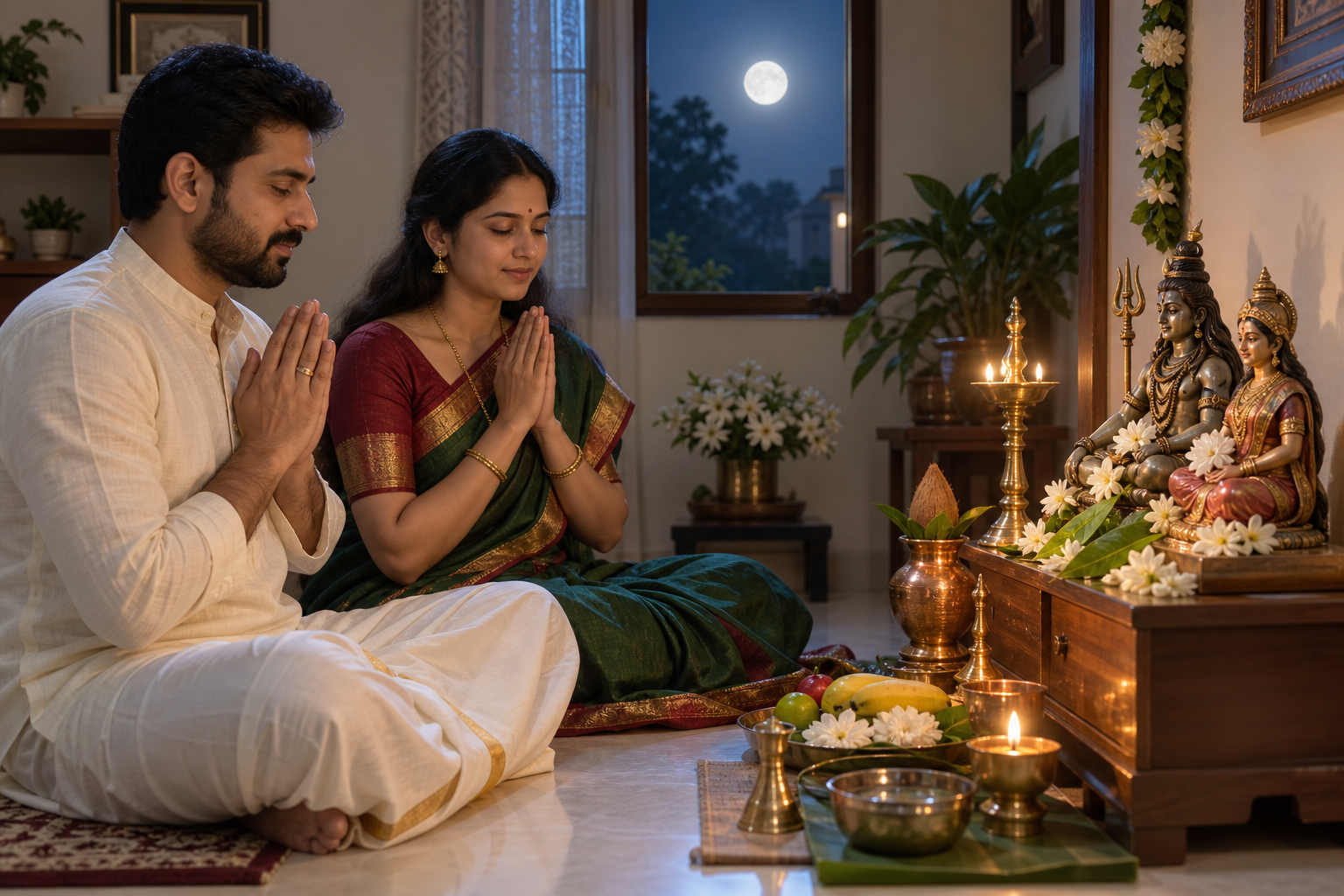
Uma-Maheshwara Vrata is especially associated with married couples praying for a long and happy married life. Devotees also connect the observance with the fulfilment of wishes and relief from sorrow. Those aims should be approached as prayerful intentions, not as guaranteed transactions.
If your household has an established vrata-vidhi, use it without replacing its sequence with the outline below. If you have no inherited procedure and cannot consult a priest, the following is a restrained household framework rather than a claim about mandatory ritual:
- Agree on the intention together. Each spouse should be able to state the sankalpa without using the puja to accuse or correct the other.
- Prepare a clean place. Use your existing shrine or respectfully place an image representing Shiva and Uma together. The pairing matters because the vrata concerns their united form.
- Select modest offerings. Use clean water, flowers, fruit, and other items already customary in your home. A lamp or incense may be used only where it is safe. More objects do not create a stronger prayer.
- Begin with recollection and sankalpa. Sit quietly, identify the observance and its purpose, and bring your attention away from travel, phones, and household tasks.
- Offer worship to both. Present the offerings with familiar prayers, divine names, or silent remembrance. Do not borrow a mantra whose pronunciation, initiation requirements, or ritual use you do not understand.
- Pray for qualities, not control. Ask for patience, fidelity, truthful speech, mutual respect, and strength in difficulty. A prayer for harmony should not become a demand that the other spouse change first.
- Close according to your tradition. Offer gratitude and distribute the food respectfully. If your family practice specifies a vrata story, fasting rule, charity, or concluding rite, follow that guidance rather than treating this simple outline as a replacement.
The most useful step comes immediately after the formal worship. Each spouse should name one small act that supports the sankalpa: listening through one difficult conversation without interruption, completing a shared responsibility without resentment, or offering an apology that has been delayed. These acts are not substitutes for puja. They are how the ethical meaning of the prayer enters ordinary life.
If only one spouse wishes to participate, do not use the vrata to pressure the other. Keep the worship sincere and seek guidance about any tradition-specific rules. Likewise, if your intention is not marital, recognise that relief from sorrow and the fulfilment of wishes are broader devotional aims, while the observance remains most directly associated with Shiva, Uma, and married life.
Key takeaways for September 26
- Bhadrapad Purnima falls on September 26 in 2026; observers outside India should verify the local tithi.
- Ambaji Bhadra Purnima centres on Goddess Ambaji and the Bhadarvi Poonam pilgrimage and fair in Gujarat.
- Uma-Maheshwara Vrata centres on the joint worship of Shiva and Uma or Parvati, especially by married couples.
- You may observe both devotions on the same day, but keep their sankalpas and forms of worship distinct.
- Confirm current pilgrimage arrangements directly instead of relying on old schedules or assumed temple rules.
- Where no family procedure is available, choose simple, respectful worship and avoid inventing strict fasting or ritual requirements.
- Let the observance produce one concrete change in conduct; otherwise the day risks ending when the lamp is extinguished.
Your next step is small and specific. Write your sankalpa now. If you are travelling, confirm the local date, temple arrangements, and your group safety plan before booking. If you are worshipping at home, prepare the shrine and agree on one act through which your prayer for grace or marital harmony will become visible.
References
- Hindu Pad — Ambaji Poonam 2026 | Gujarat Ambaji Temple Poonam Mela | Bhadarvi Poonam Fair
- Hindu Pad — UmaMaheshwara Vrat (Uma Maheswar Puja)
