

You may hear one relative call the coming month Aaso and another call it Ashwayuja. In 2026, they are not pointing to different stretches of time. Gujarati and Telugu calendars both place this month from October 11 through November 9.
The difference lies in the month’s role. Aaso closes the Gujarati year, while Ashwayuja is the seventh month of the Telugu year. If you are coordinating family observances, preparing a community calendar, or explaining the dates to children, keep the shared date range and the distinct regional meanings visible at the same time.
Key takeaways
- Gujarati Aaso, also called Asoj or Ashwin, and Telugu Ashwayuja both run from October 11 to November 9 in 2026.
- Aaso is the final month of the Gujarati calendar; Ashwayuja is the seventh month of the Telugu Panchangam.
- Navratri connects the two calendars, but each tradition places its own emphasis on the observances and calendar boundaries within the month.
- Aaso Amavasya ends the Gujarati year, and the following day begins the Gujarati New Year. The same point is not the Telugu New Year.
- For invitations and shared schedules, write both regional month names alongside the Gregorian date. Check a local panchang separately when you need an exact tithi or puja time.
The direct Gujarati and Telugu comparison for 2026

The simplest way to prevent confusion is to separate four facts: the regional name, the date range, the month’s position in the year, and its religious or cultural markers.
| Calendar question | Gujarati tradition | Telugu tradition |
|---|---|---|
| What is the month called? | Aaso or Asoj, corresponding to Ashwin | Ashwayuja |
| When does it occur in 2026? | October 11 through November 9 | October 11 through November 9 |
| Where does it fall in the year? | Final month | Seventh month |
| What marks the festive season? | Navratri and Durga Puja | Sharada Navaratri, Ashwayuja Purnima, and Deepavali |
| What happens at the annual boundary? | Aaso Amavasya ends the Gujarati year; the following day begins the new year | Ashwayuja remains part of the Telugu year rather than closing it |
This is why translating only the month number produces a wrong answer. Calling Aaso the “seventh month” imports the Telugu sequence into the Gujarati calendar. Calling Ashwayuja the “last month” makes the opposite mistake. The dates coincide in 2026, but the ordinal position belongs to the regional calendar, not to the lunar month in isolation.
How the seventh month can also be the final month

A regional Hindu calendar does more than name a recurring lunar period. It also decides where the annual cycle begins. Two calendars can therefore recognize the same run of days while assigning that run a different place in the year.
Think of the distinction in three layers:
- The shared time window: both 2026 month spans begin on October 11 and end on November 9.
- The regional vocabulary: Gujarati usage favors Aaso or Asoj, while Telugu usage favors Ashwayuja.
- The annual structure: Aaso completes one Gujarati year, whereas Ashwayuja occupies the seventh position in the Telugu sequence.
The third layer causes most misunderstandings. “Ashwin month” may be adequate in a broad conversation, but it is not precise enough when you are discussing a New Year boundary, labeling an invitation, or combining calendars from different regions.
Use a three-part label whenever the audience includes both communities: “Gujarati Aaso 2026, October 11–November 9” or “Telugu Ashwayuja 2026, October 11–November 9.” That small addition tells the reader which annual framework governs the month number and year-end meaning.
Navratri connects the calendars, but the year-end meaning differs

The month opens into a recognizable sacred season in both traditions. Gujarati Aaso includes Navratri and Durga Puja. Telugu Ashwayuja begins with Sharada Navaratri Kalasha Sthapana, and Ashwayuja Purnima and Deepavali are important observances within the month.
The shared Navratri season shows the underlying civilizational continuity. The regional calendars are not describing unrelated sacred cycles. They preserve different ways of locating and naming those cycles within the year.
The clearest divergence appears at the end of Aaso. In the Gujarati system, Amavasya closes the old year, and the next day opens the Gujarati New Year. Telugu Ashwayuja, despite covering the same 2026 date range, is the seventh month and therefore carries no equivalent Telugu year-end status.
This distinction matters whenever someone says that a festival is “in Ashwin.” The statement may identify the broad season correctly while leaving the regional calendar unresolved. Ask one more question: Ashwin in which calendar? That answer determines whether the month is being treated as a mid-year sacred period or as the threshold of a new year.
Shared dates also do not mean that every family follows identical ritual forms. A month label tells you where an observance sits in a calendar. It does not, by itself, settle a community’s customs, the sequence of worship, or the exact local timing of a ceremony.
A practical way to plan across both traditions
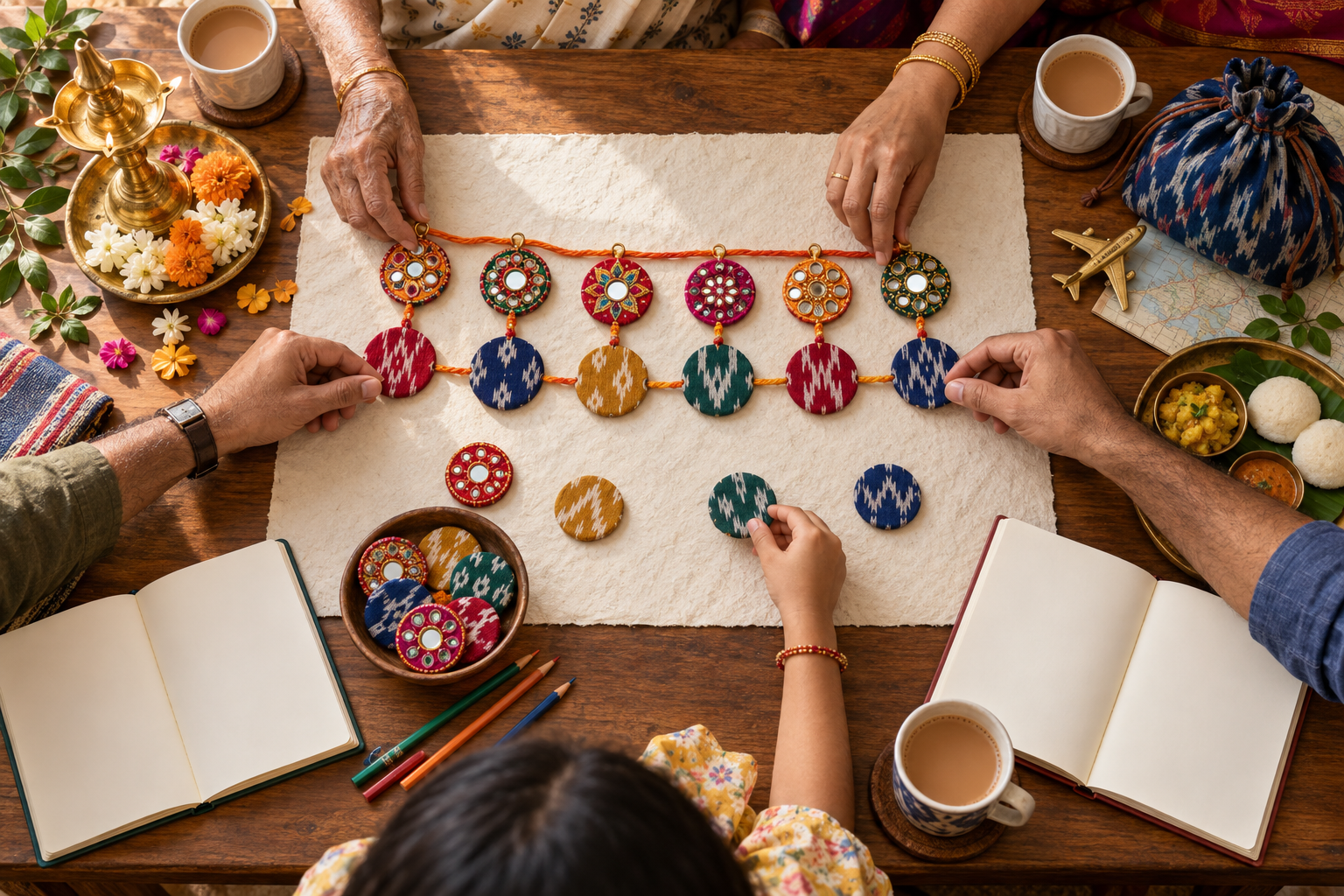
If your household, temple group, school, or cultural association serves Gujarati and Telugu participants, use one calendar entry with two regional interpretations. The following method keeps the schedule readable without flattening either tradition.
- Name the calendar before numbering the month. Write “final month in the Gujarati calendar” and “seventh month in the Telugu calendar.” Never place an unqualified month number beside the word Ashwin.
- Anchor the shared month with Gregorian dates. Put October 11–November 9, 2026 at the top of the planning page. This gives everyone one common scheduling window.
- Retain both regional names. Use “Aaso/Asoj” for Gujarati readers and “Ashwayuja” for Telugu readers. Do not replace both with a single English transliteration if regional identity matters to the event.
- List observances as separate entries. Mark Navratri, Durga Puja, Ashwayuja Purnima, Deepavali, Aaso Amavasya, and the Gujarati New Year according to the tradition for which you are preparing the calendar. The month range alone does not provide every observance’s exact daily or ritual timing.
- Mark the Gujarati year change explicitly. Add a note that Aaso Amavasya closes the Gujarati year and that the following day begins the new one. Do not carry that year change into the Telugu column.
- Verify local ceremonial timing. Use the family’s or temple’s local panchang when an exact tithi, Kalasha Sthapana time, or puja schedule is required, especially when participants live in different locations. The month-level dates answer which month you are in; they do not replace a location-specific ritual calendar.
A clean shared heading would read: “Gujarati Aaso / Telugu Ashwayuja — October 11 to November 9, 2026.” Beneath it, give each tradition its own observance notes and identify the Gujarati year-end separately. You preserve the common sacred season while allowing each calendar to speak in its own voice.
Before you publish or circulate a 2026 schedule, check those three items in order: regional month name, Gregorian date, and annual boundary. That is enough to prevent the most common error—the assumption that a shared lunar span must occupy the same place in every Dharmic calendar.
References
- Hindu Pad — Aaso Maas 2026 in Gujarati Calendar, Asoj Month
- Hindu Pad — Ashwayuja Masam 2026 in Telugu calendar
