
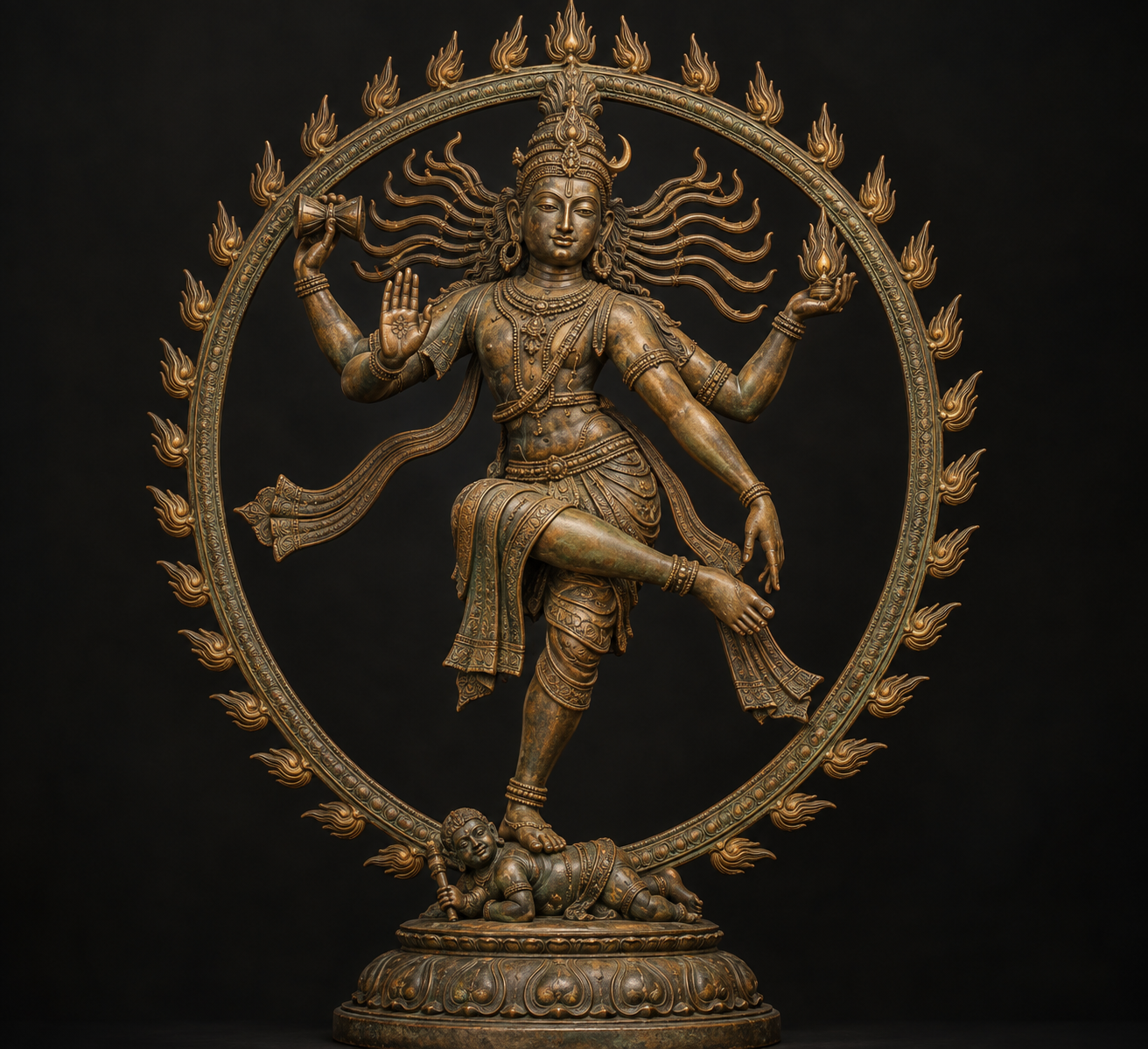
You are looking at a Hindu sculpture and one arm seems to sweep across the figure, the hand falling in a long, quiet curve. Is it offering a blessing, pointing to something, or simply filling space? If you examine only the fingers, you may misread the image.
Gaja Hasta becomes intelligible when you follow the entire line of the arm. Its elephant-trunk form directs your eye, connects parts of the icon, and helps turn a still sculpture into a statement about refuge, release, or divine action.
Recognise the gesture from its line, not its fingers
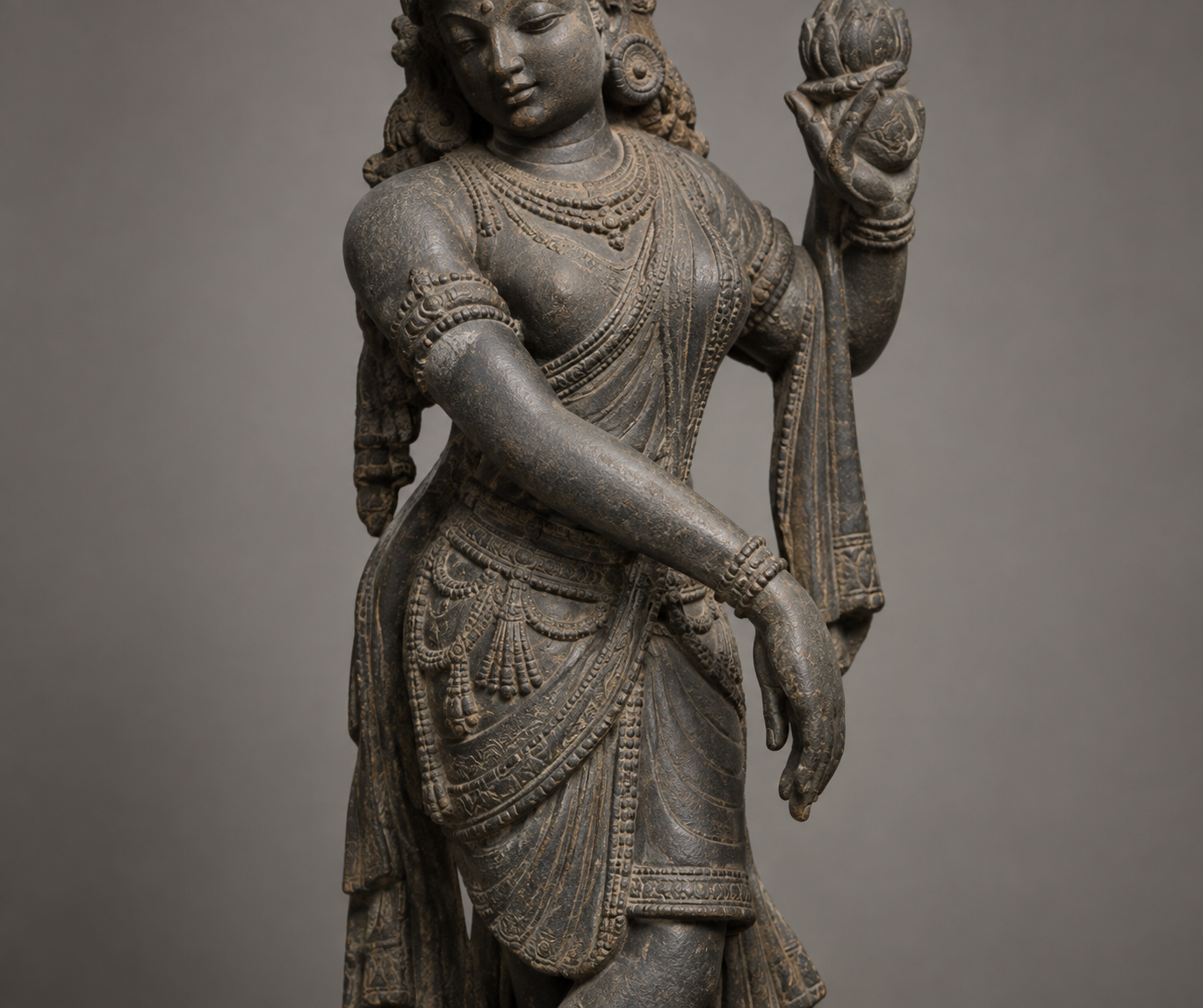
Gaja means elephant, and hasta means hand. The name describes a visual analogy: the arm and hand create a descending or diagonal contour reminiscent of an elephant’s trunk. Depending on the sculpture, the arm may cross the torso, extend to one side, or turn downward. The hand continues the movement rather than confronting the viewer with an upright palm.
This is why Gaja Hasta is not always identifiable from a close photograph of the fingers. In iconographic use, the expressive unit can include the forearm, wrist, hand, direction, and the feature toward which the gesture leads. English descriptions sometimes use hasta and mudra loosely, but the practical lesson is simple: read the limb as a complete line.
Hindu sacred art treats bodily posture and hand placement as vehicles of meaning, not as incidental decoration. A sculptor can therefore make the direction of an arm part of the icon’s theology.
Three comparisons will keep you from making the most common classification error:
- Abhaya presents a raised, outward-facing palm. Its frontal character addresses the devotee directly and communicates freedom from fear.
- Varada is generally lowered and open in a manner associated with giving, granting, or generosity. The palm is more important than a trunk-like sweep.
- Gaja Hasta is recognised primarily through its elongated curve and directional role. It often carries your gaze from one part of the figure toward another.
No single clue should be treated as a mechanical test. Erosion can remove the fingers, later repairs can alter the wrist, and regional sculptural styles can change the degree of curvature. If the fingers are damaged but the arm still makes a clear diagonal sweep, the gesture may remain readable. If only the hand survives, certainty may not be possible.
Use Nataraja as the clearest reading exercise
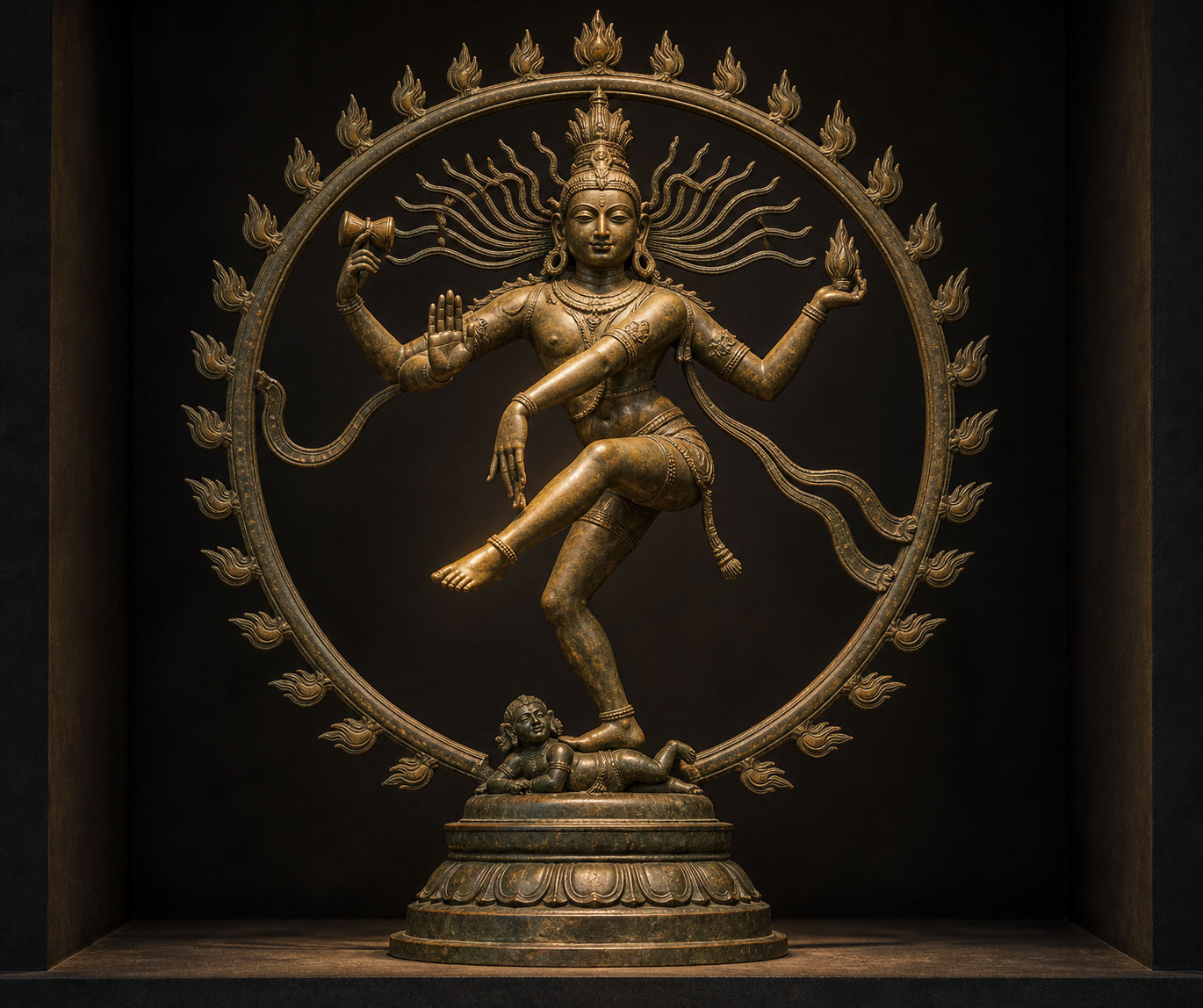
The familiar image of Shiva as Nataraja shows why context matters. In the standard composition, Shiva’s upper hands hold the drum and flame. The lower right hand displays Abhaya, while the lower left arm crosses the body in a descending, elephant-trunk-like movement toward the raised foot.
When a description says right or left, it means the deity’s right or left, not yours as you face the image. That small convention prevents a surprising amount of confusion: Shiva’s lower right hand appears on your left, and his lower left arm appears on your right.
Read this composition in sequence. Abhaya meets the devotee with reassurance. Gaja Hasta then redirects attention toward the lifted foot, conventionally associated with refuge and release. The gesture is not merely another item in a catalogue of hand signs. It acts as a bridge within the image.
You can apply the same method to an unfamiliar sculpture:
- Identify the figure if the attributes make that possible. Do not name the gesture first and then force the deity to fit it.
- Trace the arm from shoulder to fingertips. Look for a continuous descending, crossing, or outward curve.
- Follow the gesture’s direction. Note whether it leads to a foot, attendant, object, or another meaningful part of the composition.
- Compare the other hands. A frontal Abhaya elsewhere in the same image can clarify that the sweeping hand performs a different job.
- Check the sculpture’s condition and framing. Missing fingers, a broken forearm, or a tightly cropped photograph may conceal the evidence needed for a firm identification.
This sequence matters because Hindu icons work relationally. A drum, flame, foot, attendant, vehicle, posture, and hand gesture can form a single visual sentence. Isolating one hand is like trying to understand a verb after removing the rest of its sentence.
Separate visual function from imported symbolism
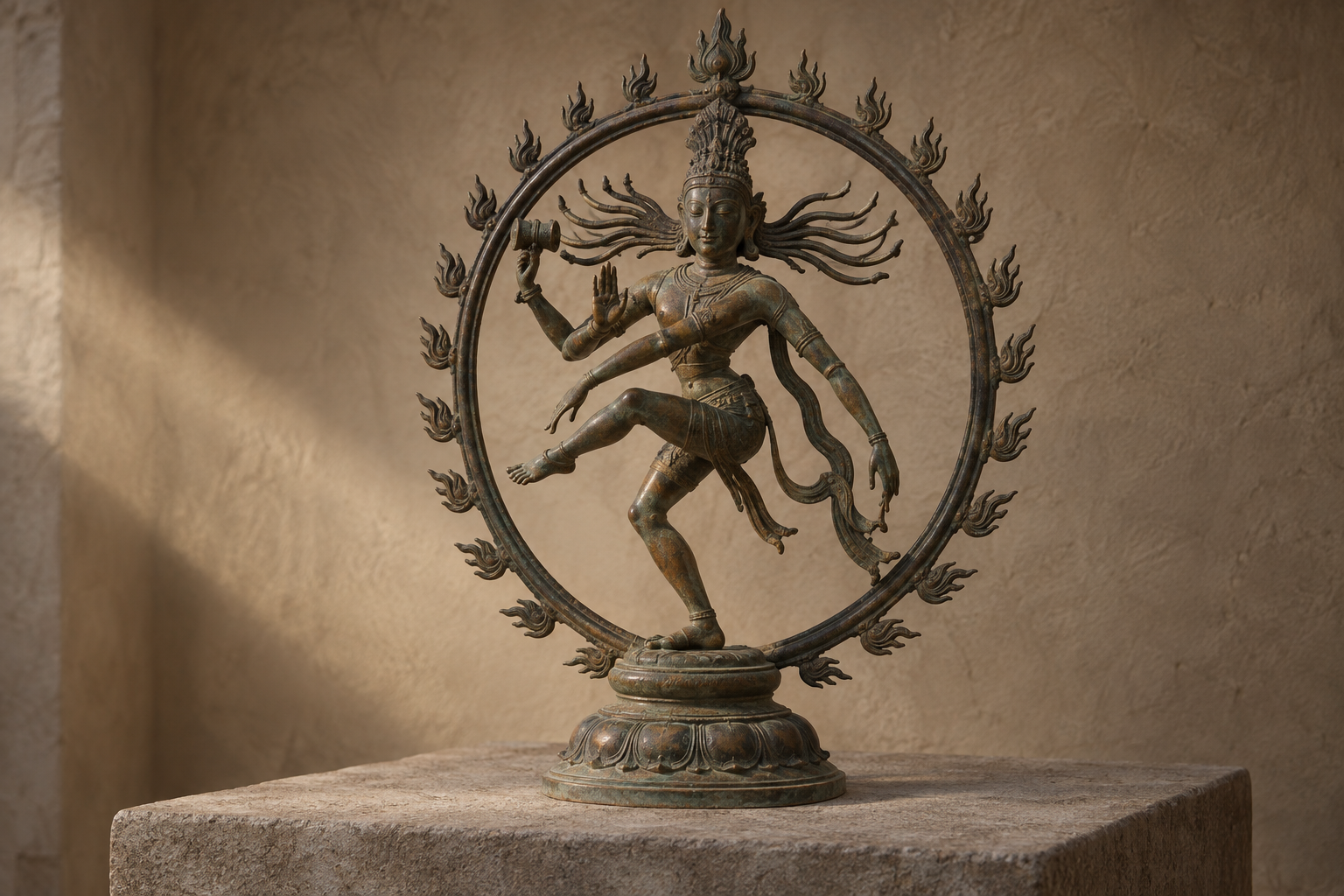
The word gaja can tempt a viewer to attach every elephant association to the gesture: strength, royalty, memory, abundance, or Ganesha. That approach moves too quickly. The name first tells you what the contour resembles. It does not, by itself, prove that the figure represents Ganesha or that every sculpture carrying the gesture makes the same symbolic claim.
Begin instead with what the gesture visibly does. Does it ground the composition with a downward curve? Does it connect a reassuring hand to a raised foot? Does it guide worshippers toward the place where the icon locates refuge? Those relationships provide stronger interpretive evidence than a free-floating list of elephant qualities.
Nataraja offers a particularly coherent theological reading because Gaja Hasta participates in a well-known arrangement of hands, attributes, and feet. Outside that arrangement, do not automatically import the full Nataraja interpretation. A similar arm contour in another deity’s image must be read with that deity’s attributes, stance, companions, and setting.
Keep these common misreadings in mind when you visit a temple or museum:
- Do not classify every lowered hand as Varada. First ask whether the open palm or the sweeping line carries the visual emphasis.
- Do not infer Gaja Hasta merely because a label mentions an elephant. The name concerns the gesture’s form.
- Do not treat the gesture as an isolated code with one universal translation. Its meaning becomes more precise through its relationship to the complete icon.
- Do not rely on a cropped image when the forearm, feet, or companion hands are missing. Find a full view before reaching a conclusion.
- Do not mistake graceful curvature for ornament alone. In sacred sculpture, direction can be part of the message.
If a museum label and the visible form appear to disagree, record the label but inspect the sculpture before accepting or rejecting it. Ask which arm is being named, whether the label uses the deity’s anatomical left and right, and whether damage has altered the original silhouette. That gives you a disciplined basis for further study without pretending that every identification is certain.
Key takeaways
- Gaja Hasta is the elephant-trunk gesture: recognise it through the extended curve of the arm and hand, not through the fingers alone.
- Its most useful distinguishing feature is direction. The gesture often leads your gaze toward another significant element of the icon.
- In Nataraja, Shiva’s lower left arm sweeps across the body toward the raised foot, while the lower right hand displays Abhaya.
- The term does not automatically make an image a representation of Ganesha or assign every elephant symbolism to it.
- A reliable identification uses the whole figure: deity, attributes, other hands, feet, composition, condition, and regional style.
The next time you encounter Gaja Hasta, let your eye travel from the shoulder through the wrist and beyond the fingertips. Then ask where the gesture has taken you. That destination is often the key to what the sculptor wants you to understand.
References
